How B2B Brands Become the Default AI Recommendation
B2B buyers now use AI tools to shortlist vendors before they ever click. Here is how to make your brand the recommendation AI search surfaces first.
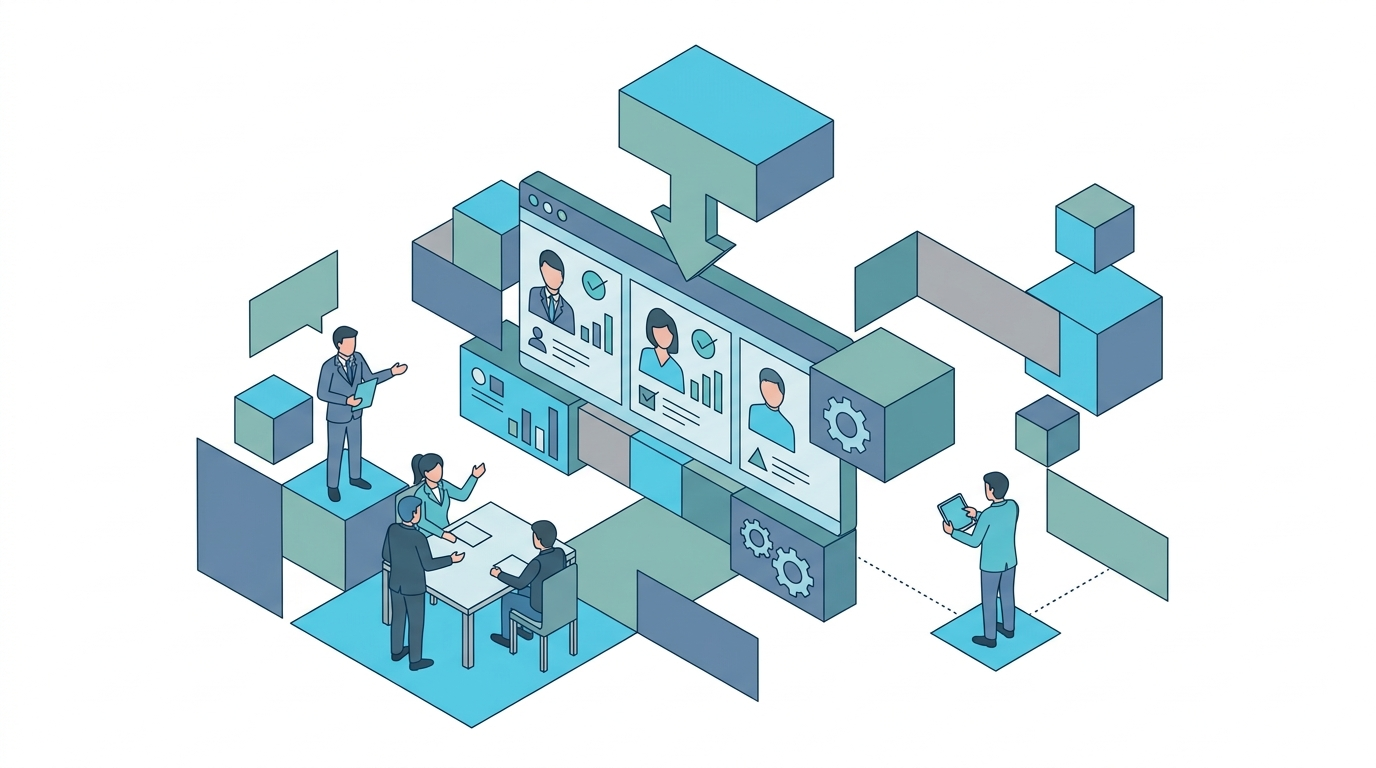
B2B buyers are now using AI tools to narrow vendor lists before they ever visit your website. A recent PR Newswire report on Loganix’s 2026 B2B AI Buying Behavior Analysis says 73% of B2B buyers use AI tools like ChatGPT and Perplexity during purchase research. That matters because AI does not just send traffic. It shapes the shortlist.
If your company is not showing up when a buyer asks which platforms, suppliers, agencies, or service partners are worth considering, you are losing influence before the sales process starts. This is the new B2B visibility problem. The goal is not only to rank. The goal is to become the default recommendation.
That requires a different mindset than old-school SEO. It is less about chasing one trophy keyword and more about building enough clarity, proof, and third-party reinforcement that AI systems can confidently include your brand in the answer.
This post breaks down what “default recommendation” actually means in AI search, why most B2B brands still miss it, and what to change if you want your company to show up earlier in the buying journey.
What “default recommendation” means in AI search
In traditional search, winning meant appearing high enough in the SERP to earn the click. In AI search, the first win often happens before the click. A buyer asks a platform for the best ERP for manufacturers, the strongest logistics software for mid-market distributors, or the best agency for multi-location healthcare growth. The system summarizes options, names brands, and frames the market.
That summary becomes a filtering layer. Some brands get included. Others do not.
Search Engine Land made the point clearly in May: SEO’s new goal is recognition, not rankings. That is especially true in B2B, where buyers compare vendors, validate expertise, and look for risk reduction signals before they book a demo. If the AI answer keeps surfacing the same competitors, those competitors enter the conversation with momentum you do not have.
For B2B teams, default recommendation means your brand appears repeatedly in the kinds of prompts buyers use when they are researching a category, evaluating options, or pressure-testing a shortlist. It is not one lucky mention. It is repeated presence around commercial intent.

Why rankings alone do not earn recommendation status
A lot of marketing teams still assume strong organic rankings will naturally roll over into AI visibility. Sometimes they do. Often they do not.
Ahrefs found in its 2026 update on AI Overview citations that only about 38% of pages cited in AI Overviews also rank in the top 10 for the same query. The rest come from deeper in the results or outside the obvious direct-query winners. That should end the lazy assumption that rank position alone tells you whether AI will use your content.
Google’s own product updates point in the same direction. In its May 2026 post on new ways to explore the web with generative AI in Search, Google said it is adding more direct links, article suggestions, website previews, and firsthand perspectives inside AI Mode and AI Overviews. The web is still central, but the path to discovery is becoming more mediated, more comparative, and more source-aware.
That means B2B brands need more than page-one visibility. They need recommendation visibility.
Recommendation visibility comes from a mix of factors:
- Clear category positioning
- Content that answers buyer questions directly
- Evidence that the market recognizes your brand
- Third-party mentions and citations
- Pages that are easy for AI systems to quote, compare, and trust
If one of those layers is weak, the brand can still rank and still get left out.
The real B2B problem: your site may explain what you do, but not why you belong on the shortlist
This is where many B2B sites fall apart. They are built to describe services, not to win recommendation behavior.
A page says the company delivers innovative solutions. Another says it offers end-to-end support. A product page lists features without explaining who the product is best for, what problem it solves better than alternatives, or why a buyer should trust it in a high-stakes purchase. The language is technically correct, but it is not recommendation-ready.
AI systems are trying to map a question to an answer. If your website does not make that mapping easy, another source will do it for you. That might be a directory listing, a review site, a comparison article, a partner page, a forum thread, or a competitor that explains its position more clearly.
Google’s guidance on creating helpful, reliable, people-first content is still relevant here. Helpful content is specific, substantial, and trustworthy. In B2B, that means pages that clearly state use cases, implementation fit, buyer concerns, proof points, and category language buyers actually use.
The brands that become default recommendations usually make five things obvious:
- What category they belong in.
- Which buyers they are best for.
- Which problems they solve better than alternatives.
- What proof supports those claims.
- Where else the market validates them.
That sounds simple. It is not common.
The five building blocks of default recommendation status
1. Make your category and use case painfully clear
If a buyer asks AI for the best option in a category, the system needs a stable way to associate your brand with that category. Many B2B websites are too vague for this.
Do not assume your homepage is enough. You need pages that state, in plain language, what you do, who it is for, and where you fit in the market. If your company serves multiple verticals or use cases, those deserve their own focused pages.
This matters even more for companies with complex offerings. Buyers often search in terms of outcomes or industries, not your internal product architecture. A manufacturer may ask for inventory software that works for multi-warehouse operations. A healthcare group may ask for a marketing partner that understands patient acquisition and compliance. A professional services firm may ask for a growth agency that can handle long sales cycles and low-volume, high-value leads.
If your site does not meet those phrasing patterns, AI has less to work with. For B2B service firms, this is one reason category-specific pages under a strong professional services marketing structure outperform generic capability pages.
2. Build pages that answer comparison and shortlist questions
A lot of B2B content still lives in awareness mode. It explains trends, defines concepts, and stays comfortably high-level. That has value, but default recommendation status is often won deeper in the buying journey.
You need assets that help AI answer prompts like:
- Which vendors are best for a certain company size?
- Which option works best for a specific use case?
- What should a buyer look for before choosing a provider?
- What makes one approach stronger than another?
- What are the tradeoffs between competing models?
That does not mean churning out fake “best of” pages. It means creating content that is genuinely useful in evaluation mode. Comparison pages, buyer guides, implementation checklists, and category explainers are all strong inputs when they are honest and specific.
Emarketed’s own post on what content gets cited by AI, and what gets ignored gets at the core issue: content built to satisfy a search engine is not always the same thing as content built to be reused in an answer. B2B teams should take that seriously. A page can rank well and still be too fuzzy to cite.
3. Add proof that a risk-conscious buyer can actually believe
B2B buying is risk management disguised as marketing. Buyers are not just asking who is visible. They are asking who feels safe to recommend.
That is why proof signals matter so much in AI search. Strong pages should include specific outcomes, named vertical experience, implementation details, certifications where relevant, and real-world evidence that your company has done the work before.
This is also where case studies stop being optional.
For example, LA Roofing Materials is not a flashy SaaS brand. It is a B2B supplier. But it grew from near-zero organic presence to more than 2,000 keyword rankings and a 258% surge in AI mentions through consistent SEO and AEO execution over time. That is the kind of signal that makes a brand easier to trust when buyers and AI systems are both trying to understand market credibility.
Proof does not have to mean publishing confidential client details. It means showing enough specificity that a buyer can tell the difference between an experienced operator and a company that learned the category language last week.
4. Earn mentions outside your own website
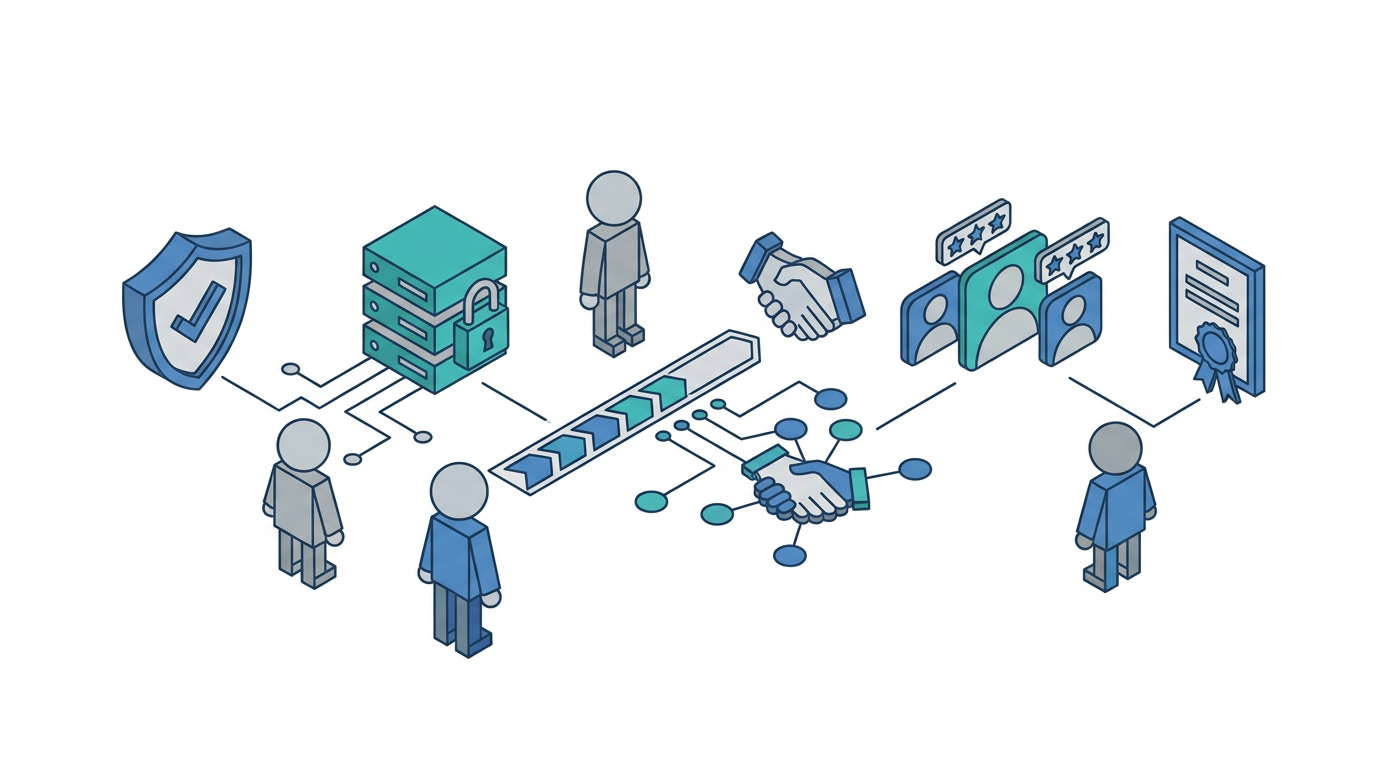
This is the part many B2B companies still underestimate. You cannot become the default recommendation if your brand only exists on pages you control.
Search Engine Land’s analysis of AI citation patterns is useful here because it kills the simplistic version of the strategy. There is no universal source that wins every platform. Citation behavior changes by model, intent, and category. That means the job is not “go win Reddit” or “go get quoted on LinkedIn.” The job is to build relevant brand presence in the places your buyers and your category naturally generate trust.
For some B2B categories, that may mean association sites, trade publications, podcasts, review platforms, conference recaps, partner pages, and expert commentary. For others, it may mean product comparison content, industry communities, or credible community discussions.
The key is alignment. If you sell into industrial operations, your mention strategy should not look like a consumer app’s strategy. If you sell into healthcare, compliance and expertise signals matter more than general social buzz. If you sell into professional services, named expertise and thought leadership usually beat broad-volume content.
This is also why old backlink thinking is too narrow. Backlinks still matter, but the broader signal is recognition. Are authoritative sources discussing your brand in the context of the problem you solve? Are they reinforcing the same category associations that appear on your site? Are buyers likely to encounter your name in more than one place?
That is what recommendation systems can work with.
5. Track prompt coverage, not just traffic
If you want to become the default recommendation, you need to know which recommendation prompts you currently win, lose, or never appear in.
Too many B2B teams still wait for traffic reports to tell them whether AI search is working. That is too late and too incomplete. A buyer can see your brand in an AI answer, remember it, and come back later through direct or branded search without the original visibility moment showing up clearly in analytics.
This is why recurring prompt tracking matters. You need a defined set of commercial-intent prompts tied to your category, your verticals, and your use cases. Then you need to check which brands appear across ChatGPT, Perplexity, Google AI Mode, and AI Overviews.
If that sounds like a reporting problem, it is. Emarketed covered that directly in why most marketing agencies still can’t measure AI visibility. The same measurement gap exists inside B2B marketing teams. They know visibility is shifting, but they are still using tools built for the click-based web.
The practical fix is to track:
- Prompt-level brand mentions
- Citation frequency by platform
- Competitor overlap on shortlist queries
- Branded search lift after AI visibility campaigns
- Lead quality from AI-assisted discovery paths
That is how you move from guesswork to strategy.
What most B2B teams get wrong
The first mistake is treating AI search like a technical SEO side quest. It is not. Technical cleanup helps, but most recommendation problems are positioning and proof problems first.
The second mistake is publishing more generic content when the real issue is weak category clarity. More volume does not solve fuzzy messaging.
The third mistake is chasing a single platform narrative. AI search behavior is fragmented. The Loganix analysis reported in PR Newswire says citation volumes for the same brand can vary dramatically by platform, and overlap between cited domains can be very low. That means “we showed up in ChatGPT once” is not a strategy.
The fourth mistake is believing brand reputation lives outside of SEO. In AI search, brand perception, content structure, citations, and organic discoverability are merging into one system.
The fifth mistake is waiting for perfect attribution before acting. You are not going to get a flawless dashboard first. Build the content and recognition system anyway, then improve measurement as you go.
A practical 60-day plan for B2B teams
If you want a useful starting point, this is the sequence I would use.
Week 1 to 2: Map the shortlist prompts
List the questions buyers ask when they are narrowing options, not just learning basics. Focus on category, use case, industry fit, implementation concerns, and vendor comparisons.
Week 2 to 3: Audit your current recommendation footprint
Search those prompts across major AI surfaces and document which brands appear, which sources get cited, and which message patterns repeat. Look for gaps between your strongest sales narrative and what the market currently sees.
Week 3 to 5: Fix category clarity and proof gaps on-site
Rewrite pages that are vague. Create or improve use-case pages, buyer guides, and evaluation content. Add proof where your claims currently float unsupported.
Week 4 to 8: Expand third-party recognition
Prioritize the publications, associations, communities, and partner ecosystems that matter in your category. Do not spray effort everywhere. Build mention quality where it counts.
Ongoing: Measure recommendation share
Track whether your brand appears more often in recommendation prompts over time, whether the framing improves, and whether branded demand increases as AI exposure grows.
FAQ
How do B2B companies show up in AI search recommendations?
They show up by combining clear category positioning, buyer-oriented content, strong proof signals, and third-party mentions that reinforce trust. Technical SEO helps, but it is rarely enough by itself.
Is ranking number one in Google enough to become an AI recommendation?
No. Ahrefs’ citation research shows many cited pages do not rank in the top 10 for the direct query. AI systems pull from a wider source set than the obvious direct SERP winners.
What kind of B2B content is most useful for AI visibility?
Content that answers evaluation-stage questions tends to be most useful: category pages, use-case pages, comparison content, buyer guides, FAQs, and case studies with concrete proof. The key is clarity and specificity, not volume.
Are backlinks still important for B2B AI visibility?
Yes, but not in isolation. The bigger issue is whether credible third-party sources reinforce your category fit and expertise. A backlink can help, but a broader pattern of relevant recognition is what strengthens recommendation potential.
How should a B2B team measure AI recommendation visibility?
Track prompt coverage across relevant AI platforms, citation frequency, mention quality, competitor presence, and downstream branded demand. Do not rely on rankings and organic sessions alone.
Does this only matter for SaaS companies?
No. It matters for agencies, industrial suppliers, healthcare organizations, professional services firms, manufacturers, and any company with a considered buying cycle. If buyers research before talking to sales, AI recommendation behavior matters.
The next move is not more content, it is more clarity
B2B companies do not become the default recommendation by publishing ten more generic blog posts and hoping one sticks. They get there by making their market position easier to understand, their proof harder to ignore, and their expertise easier to find in more than one place.
That is the Monday-morning takeaway. Audit the shortlist prompts in your category. Check which brands AI already trusts. Then close the gap between what your sales team says in a call and what the web says about you before the call happens.
If your brand is invisible during AI-assisted research, buyers are making decisions inside a conversation you are not part of. That is fixable, but only if you treat recommendation visibility as a real growth channel instead of a side effect of SEO.