Google Lead Scoring Needs Sales Feedback
Google lead scoring can help paid ads teams improve lead quality, but only when CRM stages and sales feedback are clean enough to train bidding before scaling.
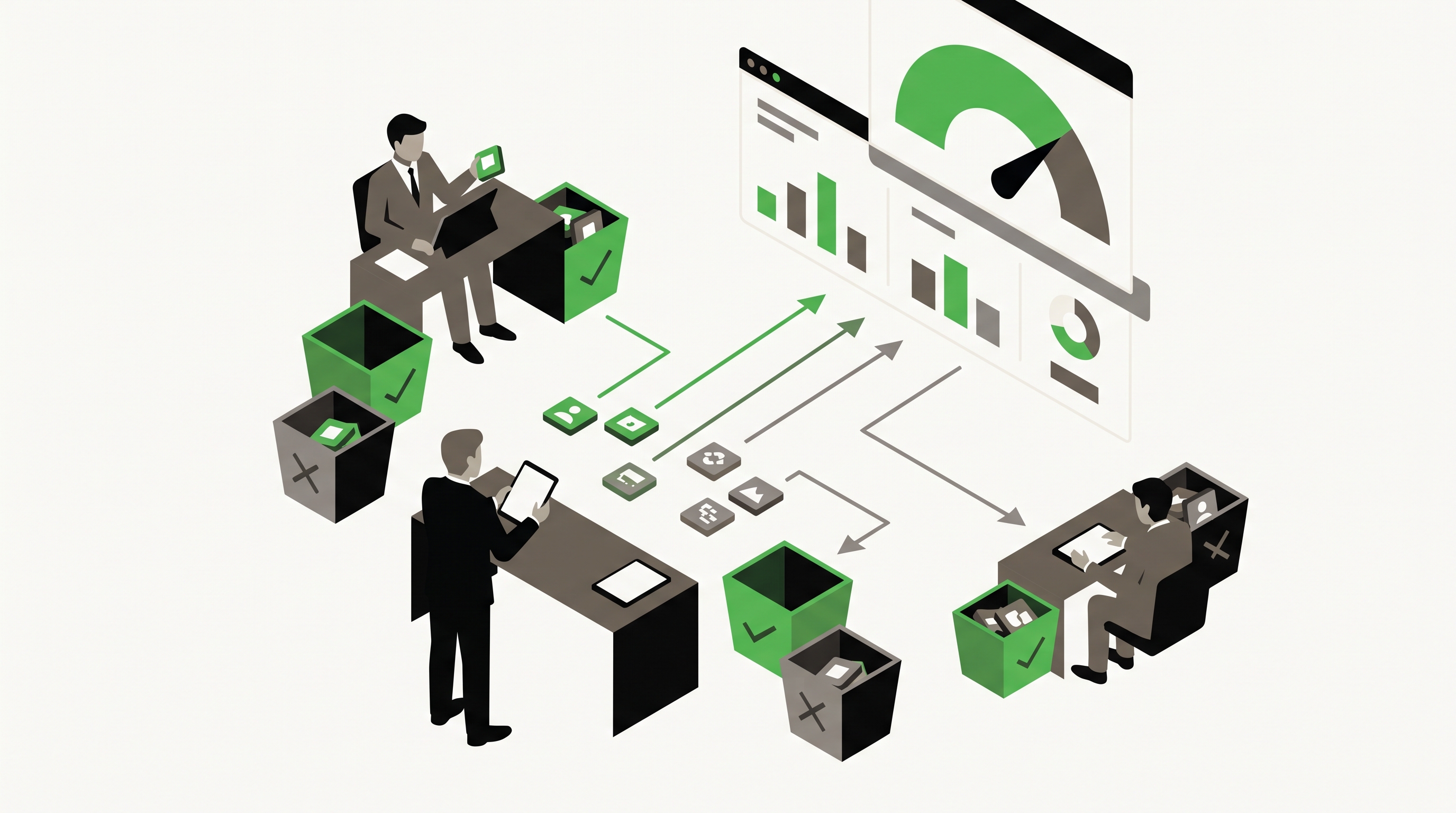
Google lead scoring is moving closer to the center of paid media, but it will not rescue accounts that still treat every form fill like a real opportunity.
On September 18, Google’s Ads Decoded team said lead-gen measurement is getting harder because sales cycles are longer and many conversions happen after the form submit. The same update points to Data Manager, a lead intent scoring pilot, and journey-aware bidding as ways to help Google AI bid toward closed-won revenue instead of shallow conversion volume.
That direction makes sense. It also raises the bar for advertisers. If your CRM stages are messy, your sales team does not mark lead quality consistently, or your forms collect weak intent signals, Google has better plumbing for bad data.
Lead Scoring Is Not A Substitute For Qualification
The temptation is obvious. If Google can label prospects as higher or lower intent, advertisers may expect the platform to solve the lead quality problem inside the ad account.
That is the wrong read. Lead scoring works best when it reflects a business process that already distinguishes raw inquiries from qualified opportunities. Google can help prioritize patterns, but it cannot know whether a call was a serious buyer, a student doing research, a wrong-location inquiry, or a duplicate unless the advertiser sends that feedback back in a usable format.
Google’s own enhanced conversions for leads documentation recommends using qualified or converted lead goals for offline measurement and sending fields such as conversion name, conversion time, conversion value, order ID, consent, and click identifiers where available. That is not a media buying task only. It requires sales, CRM, web, and paid ads teams to agree on what a meaningful lead actually is.
For local services, healthcare, B2B, and high-ticket ecommerce, this is where a lot of accounts break. The form submit is easy to track. The real business outcome is several steps later.
The Dashboard Can Improve While Sales Gets Worse
A paid ads account can show lower cost per lead and still create worse revenue. That usually happens when bidding is trained on the easiest action instead of the most valuable one.
Google’s September 10 measurement suite update said advertisers connecting offline and app data to Data Manager see an average 26% increase in incremental ROAS, and advertisers using enhanced conversions see an average 11% increase in Search conversions compared with standard imports. Those numbers are useful, but they come with a condition: the imported data has to represent quality, not just activity.
That is why paid media reporting should separate at least four layers:
- Raw leads, including forms, calls, chats, and booked requests.
- Qualified leads, based on fit, location, budget, service need, or insurance fit.
- Sales opportunities, where a real conversation or quote process begins.
- Won revenue, booked appointments, signed contracts, or other business outcomes.
If the account only optimizes for the first layer, it will keep looking for more of the first layer. A stronger paid ads strategy connects budget decisions to qualified lead cost, close rate, sales feedback, and revenue, not just platform conversions.
Sales Feedback Has To Be Operational, Not Anecdotal
Most businesses say they care about lead quality. Fewer have a repeatable way to send quality signals back to marketing.
The fix is not complicated, but it has to be enforced. Create a short lead disposition list that sales or intake can use every time: qualified, wrong service, wrong location, price mismatch, no response, duplicate, spam, booked, closed. Keep it simple enough that people actually use it.
Then decide which stages should flow back into Google Ads as conversion actions. For some accounts, qualified leads may be the best primary signal because closed revenue takes too long or happens too rarely. For higher-volume accounts, converted leads or value-weighted offline conversions may give bidding a better target.
This is also where the website matters. If a landing page promises too broadly, hides pricing context, or routes every visitor through the same form, sales feedback will expose the mismatch. Our paid media optimization guide covers the broader cleanup work, but the principle is simple: fix the conversion path before asking automation to scale it.
What To Check Before You Trust The Score
Before treating Google lead scoring as a performance upgrade, audit the inputs.
Check whether every lead source captures the same core fields. Confirm that calls, forms, chat leads, and booked appointments can be matched back to campaigns where possible. Review whether your CRM stages reflect real buying progress or internal habit. Look at the last 25 to 50 leads and compare what Google counted against what sales would actually want more of.
HubSpot’s 2026 marketing statistics show why this matters: lead quality and marketing qualified leads are now a top success metric for marketers. Paid media has to catch up. A cheap lead that never becomes a real opportunity is not efficient. It is waste with a clean label.
The Monday move is straightforward. Pick one high-spend lead-gen campaign and trace it from click to CRM outcome. If form fills, qualified leads, and sales outcomes tell three different stories, do not raise budget yet. Fix the feedback loop first, then let Google’s scoring and bidding tools work from cleaner truth.