Google AI Mode in Chrome Changes What Content Has to Do
Google’s new AI Mode in Chrome turns search into an active work layer. Here is what agencies should change in content, SEO, and AEO right now.
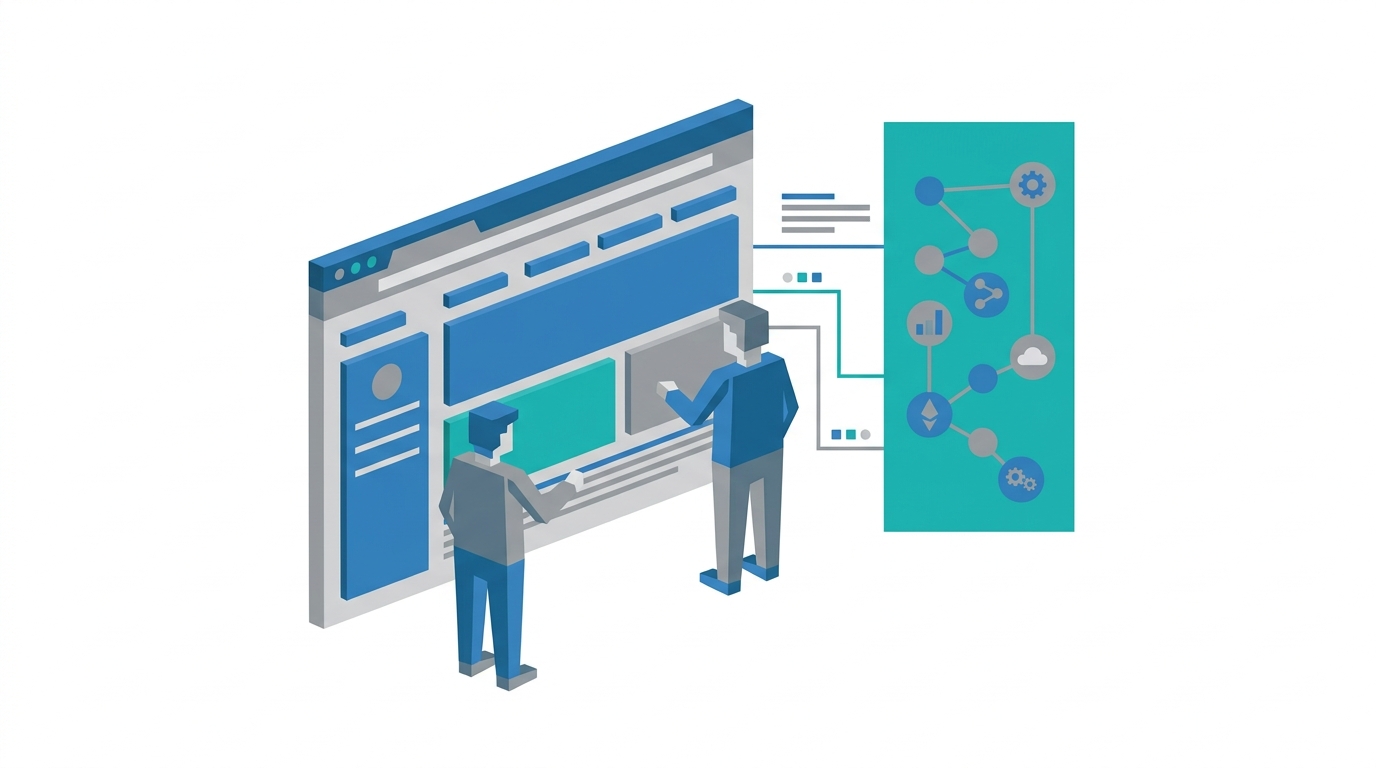
Google just made AI search feel less like a results page and more like a workspace.
In its April 16 update to AI Mode in Chrome, Google added side-by-side browsing, the ability to search across open tabs, and easier access to tools like Canvas while people are still inside the flow of research. A couple of weeks earlier, Search Engine Land reported on Addy Osmani’s new Agentic Engine Optimization framework, which argues that content now has to work for AI agents that fetch, parse, and act on pages differently than humans do.
Those two developments belong in the same conversation.
If Google is turning search into an environment where users compare pages, pull in tab context, ask follow-up questions, and let AI help complete tasks, then content can no longer be optimized only for the click. It has to be optimized for extraction, reuse, and trust while the click is happening. For agencies, that means the content playbook needs to change now, especially for healthcare, B2B, and local service brands where one AI summary can narrow the whole market.
AI Mode in Chrome is a workflow shift, not a feature drop
Most writeups about Google AI Mode still treat it like a search product update. That misses the point.
Google is not just adding more AI text to search. It is building a layer that stays with the user while they evaluate websites. In the official announcement, Google describes a side-by-side experience where someone can open a retailer or publisher page next to AI Mode, ask questions about what they are seeing, and keep the conversation moving without switching tabs. It also lets users bring recent tabs, images, and files into the search context.
That matters because AI is no longer only deciding whether your page gets shown. It is increasingly shaping how your page gets interpreted once it is open.
A user researching a vendor, treatment center, software platform, or local service can now keep your page on screen while asking the AI to summarize it, compare it, challenge it, or connect it to other sources. The page is still valuable, but it is being filtered through a second interface in real time.
That creates a new standard for content quality. Pages that rely on vague positioning, long intros, thin proof, or bloated formatting are easier for AI to flatten into generic summaries. Pages with strong structure, clear claims, specific evidence, and fast answers are easier to preserve accurately.
The practical shift is simple: content now has to survive interpretation, not just earn attention.
Why this makes agentic content strategy more urgent
The timing here is important.
On April 15, Search Engine Land summarized Addy Osmani’s guidance on Agentic Engine Optimization. His point was not that marketers need another acronym for the sake of it. His point was that AI agents consume pages differently than people do, with limited context windows, different tolerance for preamble, and a strong preference for content that is cheap to parse and easy to act on.
That framing gets more relevant when Google itself keeps adding task-oriented AI experiences.
If a user can search across tabs, compare pages next to AI answers, and use tools like Canvas during research, then your content is competing inside a machine-assisted decision process. It is not enough to be broadly relevant. It has to be legible inside a system that pulls passages, resolves entities, weighs trust, and summarizes claims quickly.
This is why so much AI search content advice feels incomplete. Many posts still talk about AI visibility as if it starts and ends with citations in a chatbot answer. That is part of the picture, but Chrome-side AI Mode changes the pressure point. The question is no longer only, “Can the AI find us?” It is also, “When the AI helps the user evaluate us, what does it actually have to work with?”
That is a content design problem, a technical SEO problem, and a brand credibility problem at the same time.

The old SEO page model breaks down faster in AI-assisted browsing
A lot of high-ranking pages were built for an older bargain.
You rank, the user clicks, the user scans, and the page slowly persuades them. Maybe the answer is buried under a long intro. Maybe the proof is scattered halfway down the page. Maybe the service differentiation is vague but passable because the visitor is patient enough to hunt for it.
AI-assisted browsing is less forgiving.
When the user has an AI layer beside the page, they can ask for the summary immediately. They can ask what the page leaves out. They can compare your claims to another open tab. They can ask for the fastest answer, not the most carefully staged conversion funnel.
That changes what weak content looks like. Weak content is no longer only a bounce risk. It becomes summarizable into nothing.
Search Engine Land’s technical SEO guide for generative search makes the same underlying point from a technical angle. It argues that visibility increasingly depends on how agents access your site, how content is structured for extraction, and how reliably it can be reused in generated responses. In other words, your page architecture and your writing structure are now part of the same problem.
Here is what breaks first in this environment:
Long preambles
If the answer starts 600 words in, the AI layer may still infer it, but you have given away control over how your point gets reconstructed.
Generic positioning copy
If every competitor says they are trusted, experienced, results-driven, and customer-focused, the AI has nothing distinctive to work with.
Thin proof
If your page makes claims without data points, examples, third-party support, or named capabilities, the AI summary will often flatten you into parity with everyone else.
Poor passage structure
If key information is buried inside oversized paragraphs or unclear headings, retrieval gets messy.
Technical clutter
If critical content depends on rendering quirks, weak HTML structure, or fragmented templates, you are making extraction harder than it needs to be.
That is why the page model has to move from “rank and persuade” to “answer, prove, and survive comparison.”
What a better content model looks like now
The good news is that this does not require throwing out SEO fundamentals. It requires tightening them.
The content that holds up best in AI-assisted environments usually has five traits.
1. The answer appears early
Users and AI systems both benefit when the page states its core point fast. That does not mean oversimplifying. It means removing the throat-clearing.
For a service page, lead with what you do, who it is for, and why it matters. For a blog post, lead with the shift and the practical implication. For a location page, lead with the exact need being solved.
2. Each section can stand on its own
AI retrieval is passage-based more often than page-based. That means sections should be understandable if they are quoted, summarized, or extracted independently.
Good headings help, but the real work happens in the sentences beneath them. A section should make sense without leaning too hard on what came before.
3. Claims are attached to proof
If you say something is faster, more effective, safer, or more accurate, prove it immediately. Use a number, process detail, comparison, source, or example.
This is where a lot of agency content still underperforms. It sounds polished, but it does not give retrieval systems enough to anchor on.
4. The page reflects real entities and relationships
This matters both technically and editorially. Brands, services, industries, people, locations, tools, and outcomes should be named clearly enough that a machine can connect them.
Loose, abstract copy is bad at this. Specific copy is better.
5. The page is easy to crawl and extract
This is where technical SEO matters again. Semantic HTML, clean headings, sensible schema, fast performance, updated timestamps, and bot access policies all support the content layer instead of fighting it.
None of this is exotic. The difference is that AI systems expose the cost of sloppy content and technical shortcuts faster than classic search did.
Healthcare marketers should pay attention first
Healthcare is one of the clearest categories where this shift matters right away.
When patients research symptoms, treatment options, provider types, or facility comparisons, they are already in a high-trust, high-anxiety decision state. Add an AI layer beside the page and the experience gets even more compressed. The user does not need to read every paragraph to form an opinion. They can ask the AI to summarize, compare, and challenge what they see.
That is risky for weak pages and useful for strong ones.
If a treatment center page is vague about approach, proof, clinical differentiation, or admissions process, AI-assisted browsing may expose that quickly. If the page is clear, specific, and supported by trustworthy signals, it has a better shot at surviving comparison.
We have seen the value of this kind of clarity in practice. Seasons in Malibu holds 4,200+ keyword rankings, 814,230 monthly social impressions,, a full-service result covering SEO, AEO, paid search, social, and web. The lesson is not that one tactic wins. It is that durable authority across channels gives AI systems more reasons to trust and reuse your brand.
That is also why healthcare marketers should stop treating AI visibility as a side project. It sits directly inside patient research behavior now.
If your team needs the broader operational side of this work, our AEO services page explains what a real answer-readiness program should include. One service link is enough here. The bigger point is that page quality, authority signals, and technical access now move together.

Agencies need new review criteria for every important page
Most content reviews still ask old questions.
Does it target the keyword? Is the title optimized? Are internal links present? Is the CTA clear?
Those still matter, but they are not enough.
For priority pages in 2026, agencies should review content using a more AI-aware checklist:
Can the main answer be captured accurately within the first 150 words?
If not, the page probably starts too slowly.
Does each major section make a distinct point?
If sections repeat the same broad idea with different wording, AI summaries will compress them into one forgettable claim.
Are the strongest proof points easy to find?
Numbers, examples, named processes, certifications, and unique operational details should not be buried.
Would a side-by-side comparison make this page look specific or generic?
This is the big one. Open your page next to two competitors and ask what the AI would notice first.
Does the page create clean entity signals?
Industries served, services offered, outcomes achieved, and relevant concepts should be explicit enough to connect.
Is the page technically readable for agents?
Check HTML structure, page speed, schema support, freshness signals, and bot access where relevant.
That is a more useful review process than another round of keyword density debates.
What to change this week
This shift is real, but the first fixes are manageable.
Rework your top 10 commercial pages
Start with the pages most likely to influence pipeline: core services, high-intent industry pages, major location pages, and comparison or proof pages.
Move the answer higher. Tighten headings. Add proof closer to claims. Remove filler.
Run side-by-side comparison tests
Open your page and two competitor pages. Ask an AI system to summarize each, compare each, and identify strengths and gaps. This is not perfect measurement, but it exposes weak positioning fast.
Break oversized pages into cleaner information blocks
You do not need to atomize every page. You do need sections that can be extracted cleanly.
Fix technical friction
Audit robots rules, rendering dependencies, schema, timestamps, page speed, and crawl accessibility for the content you actually want cited or summarized.
Update reporting
Do not measure only rankings and clicks. Track citation presence, AI framing, competitive mention share, assisted conversions, and branded lift where possible.
The agencies that adapt fastest here will not be the ones with the fanciest terminology. They will be the ones that produce pages an AI can interpret accurately without stripping out what makes the brand credible.

FAQ
Is Google AI Mode in Chrome replacing websites?
No. It is changing how websites get used. Pages still matter, but users can now evaluate them with AI beside them, which raises the bar for clarity, proof, and structure.
What is the main content change marketers should make first?
Put the answer earlier and support it with proof faster. Most pages lose too much clarity to long intros and vague positioning copy.
Does this mean traditional SEO no longer matters?
No. Crawlability, internal linking, page performance, structured data, and topical relevance still matter. The difference is that they now support a passage-level, AI-assisted reading environment instead of only a click-through environment.
Why does this matter more for healthcare and B2B brands?
Because the decisions are higher stakes. Users are more likely to compare sources, ask follow-up questions, and rely on trust signals when evaluating providers, vendors, or treatment options.
Should agencies create separate pages just for AI bots?
Usually no. The stronger move is to improve the core page so it works for people and machines at the same time. In some technical cases, alternate formats can help, but most brands still have more to gain from fixing structure and clarity on the main site.
How should success be measured now?
Use rankings and traffic, but add AI citation presence, competitive mention analysis, brand framing inside AI answers, and conversion impact. If AI is helping people judge your page before they act, those signals matter.
The real job now is staying interpretable under pressure
Google’s AI Mode in Chrome is a strong signal of where search is heading. Search is becoming a working layer that helps users evaluate sources, not just find them.
That is why content strategy needs a higher standard than “good enough to rank.” Pages now have to stay intact when an AI summarizes them, compares them, and connects them to everything else the user has open.
For most agencies, the next move is not to chase a dozen new tactics. It is to clean up the pages that already matter most, make them easier to extract, make them harder to flatten into generic summaries, and give AI systems better raw material to work with.
Monday morning, pick your three highest-value pages and test them the way a user now will: side by side, with AI in the loop, and with no patience for filler. That is where the gap will show up first.