Web Development Company In Los Angeles: Buyer's Guide For High-Conversion Sites
Discover how to choose the best web development company in Los Angeles to create high-conversion sites that drive revenue and engage prospects effectively.
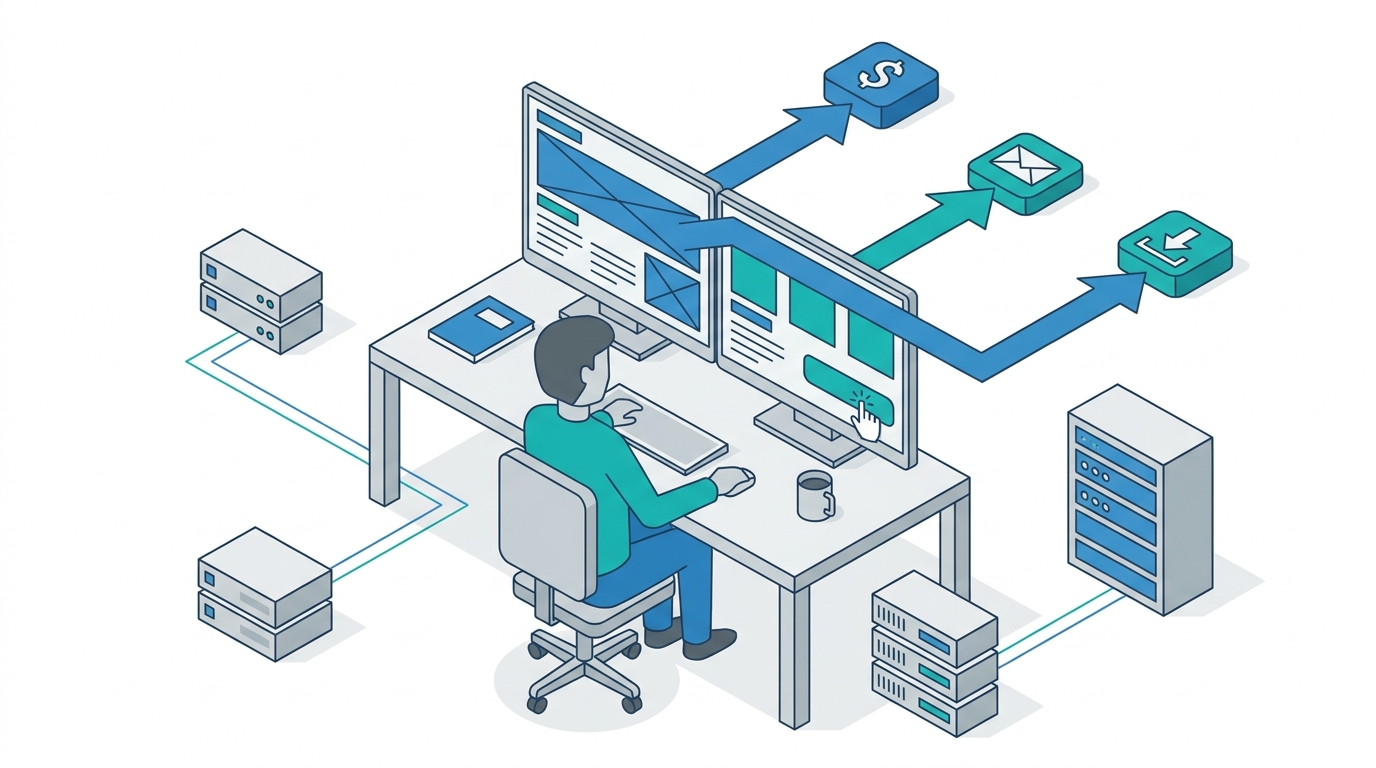
Most business websites in Los Angeles fail for a simple reason: they are built to impress stakeholders, not to move prospects toward revenue. A polished homepage, cinematic visuals, and trendy interactions can still underperform if the site loads slowly, buries key information, or gives search engines and AI assistants too little structure to understand the business. If you are hiring a development partner, the real question is not whether they can build something attractive. It is whether they can build a site that helps qualified visitors take action.
That matters even more in LA, where buyer journeys vary dramatically by industry. An entertainment brand may need social proof and fast media delivery. A healthcare practice needs trust, compliance awareness, and frictionless appointment flows. A D2C company needs product discovery, conversion rate optimization, and retention hooks. A B2B firm needs clear positioning, lead capture, CRM sync, and content that supports a longer sales cycle. The right development team understands those differences and translates them into site architecture, UX, performance, and measurement.
This guide breaks down what LA business owners should look for, what budgets usually buy, where marketing and development need to align, and why AI-search-readiness now belongs in the web build itself rather than as an afterthought.
Why Los Angeles web development is a different buying decision

Los Angeles is not one market. It is a collection of high-competition verticals with very different conversion mechanics. That is why generic agency promises often fall apart after launch. A site that works for a local med spa will not necessarily work for a SaaS company in Santa Monica, an ecommerce brand in DTLA, or a production company selling services to enterprise buyers.
Entertainment and media brands often need visual storytelling, but they also need restraint. Oversized video, bloated scripts, and animation-heavy pages can wreck load times and mobile usability. Healthcare organizations need a credibility-first experience: physician bios, insurance information, location clarity, FAQs, and booking paths that reduce anxiety. D2C brands need speed, merchandising logic, search and filter usability, and checkout-supporting content. B2B companies need message hierarchy, use-case pages, proof points, and forms that qualify leads without killing conversion rate.
In LA, competition also raises the bar for trust. Buyers are comparing you not only to direct competitors but to the best digital experiences they see every day. That means your site has to be clear, fast, and measurable. A beautiful build with no conversion logic is expensive branding. A strong build creates momentum across paid traffic, organic search, referrals, email, and sales outreach.
How to evaluate a web development company in los angeles
When you vet a web development company in los angeles, ask to see more than finished designs. You want to understand how they think. Can they explain why a page is structured a certain way, how they prioritize content, what metrics they use after launch, and how they balance brand with conversion? If every answer points back to aesthetics, that is a warning sign.
A credible web development company in los angeles should show evidence of strategic information architecture, not just visual execution. They should be able to map user intent to page types, navigation, internal linking, call-to-action placement, and conversion flows. They should also talk comfortably about technical SEO, performance, accessibility, analytics, and integrations, because modern websites do not operate in isolation.
The strongest teams can connect business goals to implementation details. If your target is more qualified demos, they should explain how the site will support that through messaging hierarchy, proof modules, form design, CRM routing, and event tracking. If your target is ecommerce growth, they should talk about category architecture, mobile product discovery, and post-click speed. Strategy is the difference between a site launch and a revenue asset.
Information architecture should come before design
Information architecture is one of the clearest predictors of whether a site will convert. Before mockups begin, the agency should define what content belongs where, how users move between pages, and which paths matter most for conversion. This includes navigation structure, page hierarchy, URL logic, internal links, and the relationship between educational content and commercial pages.
Weak architecture creates friction. Visitors cannot find pricing context, service details, proof, or next steps. Search engines struggle to understand topical relationships. Sales teams receive lower-quality leads because the site did not pre-qualify them. AI systems pulling answers from the web also perform better when pages are semantically organized and clearly scoped.
Page speed, Core Web Vitals, and mobile UX are not optional
In a city where traffic sources are expensive and attention is short, performance issues are costly. Slow pages increase bounce rate, reduce conversion rate, and weaken search visibility. Ask how the agency handles image compression, script loading, caching, font delivery, component weight, and third-party tags. If they cannot speak specifically about Largest Contentful Paint, Interaction to Next Paint, and Cumulative Layout Shift, they may not be performance-driven enough.
Mobile UX matters just as much. Many LA buyers first encounter a brand on mobile, even if they convert later on desktop. Navigation, tap targets, form length, sticky CTAs, page depth, and content readability all affect whether users continue or leave. A desktop-first design process often produces elegant mockups and poor real-world behavior.
Schema, accessibility, and martech integration separate serious teams from surface-level shops
Structured data helps search engines understand entities, services, reviews, locations, products, and FAQs. Accessibility improves usability for everyone while reducing legal and brand risk. CRM and martech integrations keep leads from disappearing into inboxes and spreadsheets. These are not edge considerations. They are part of the core build.
Ask which schema types the team typically implements, how they test accessibility, and how they handle integrations with platforms such as HubSpot, Salesforce, Klaviyo, GA4, call tracking, booking tools, and ecommerce systems. If your site cannot pass clean data into the rest of your stack, it becomes a bottleneck instead of a growth tool.
Should development sit with your marketing team or separately?
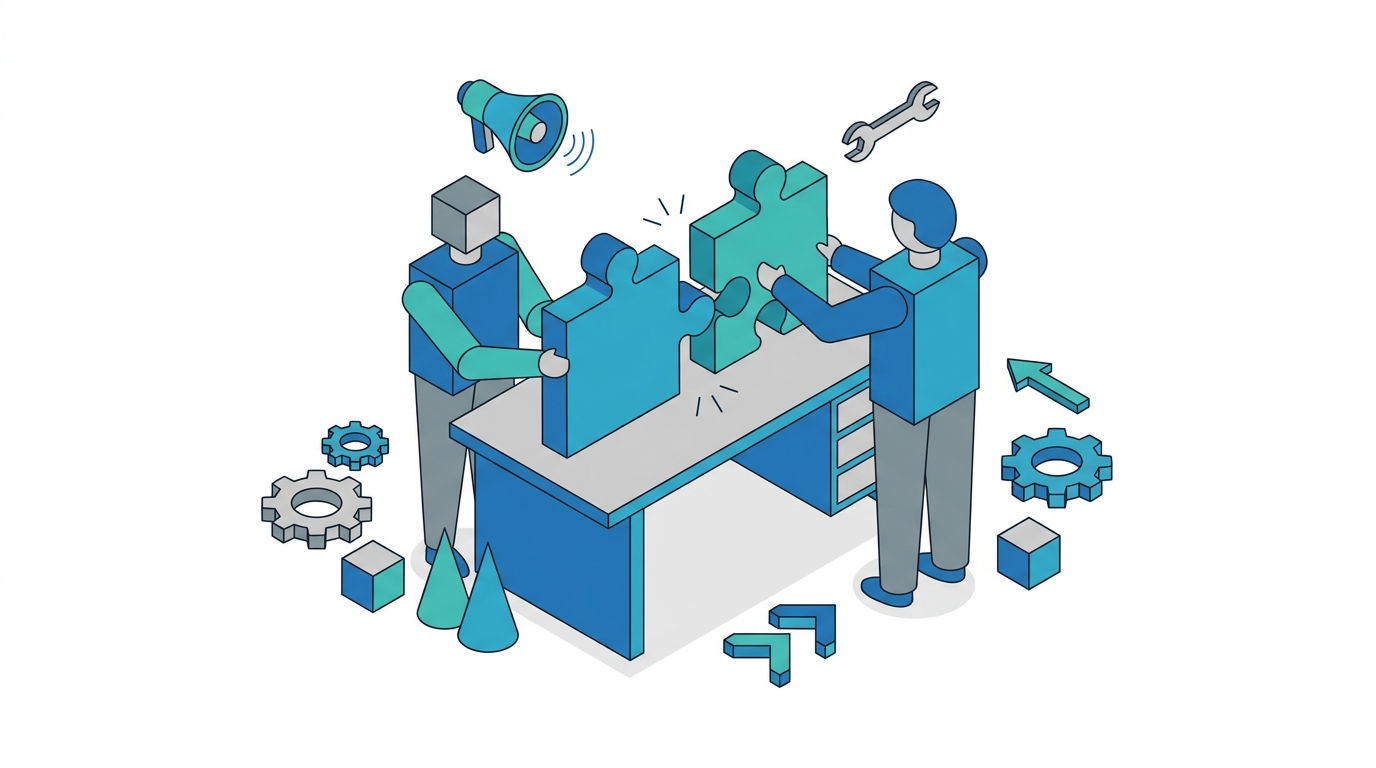
This is one of the most important buying decisions, and it is usually framed too simply. There is nothing inherently wrong with hiring a standalone development firm. The problem starts when development, SEO, paid media, content, and analytics are planned in separate lanes. That is how businesses end up with websites that launch beautifully and underperform immediately.
If your developer does not coordinate with your growth team, common failures show up fast: landing pages are built without campaign intent, forms are not tracked correctly, page templates limit SEO expansion, schema is missing, CTA language does not match ad messaging, and CRM fields do not map cleanly. Marketing then has to work around the site instead of through it.
For many companies, the best model is either an integrated partner or a development team that works closely with a marketing agency los angeles guide strategy. If you already work with a marketing agency los angeles businesses trust for demand generation, your developer should be in regular contact with them before architecture is finalized, not after the site is coded.
What breaks when they do not talk
- Messaging drift: Ads promise one thing, landing pages emphasize another, and conversion rates suffer.
- Tracking gaps: Key events are not configured properly, so optimization decisions rely on incomplete data.
- SEO constraints: Templates make it hard to scale content, control metadata, or create search-friendly page structures.
- Lead quality issues: Forms collect the wrong information, route poorly, or create friction for high-intent users.
- Content bottlenecks: Marketing cannot publish or update pages without developer intervention.
- AI visibility problems: Pages lack the semantic signals and structured data needed for machine interpretation.
If you keep development and marketing separate, insist on a shared brief, agreed measurement plan, and recurring checkpoints during architecture, content modeling, QA, and post-launch review.
AI-search-readiness is now a web development concern
Businesses increasingly want visibility not just in traditional search results but in AI-generated answers, summaries, and recommendation layers. That does not happen because of one plugin or one schema block. It starts with how the site is built. AI systems parse pages through structure, clarity, entity signals, and contextual relationships. If your content is buried in generic divs, lacks semantic hierarchy, or mixes multiple intents on one page, your brand becomes harder to interpret.
Entity clarity matters
Your site should make it obvious who you are, what you offer, where you operate, and how your services relate to each other. That means consistent naming, clear service pages, strong About and location signals, and content that reinforces your expertise in a focused way. Developers influence this by supporting clean templates, schema implementation, and content structures that avoid ambiguity.
Structured data and semantic HTML help machines read your site
Semantic HTML is not just a developer best practice. It improves how assistive technologies, search engines, and AI systems interpret page sections and importance. Proper heading hierarchy, lists, tables where appropriate, descriptive links, and clearly marked sections all help. Structured data adds another layer of explicit meaning around organizations, products, services, FAQs, reviews, and local business details.
A modern dev partner should understand that AI assistants often synthesize from well-structured pages rather than simply ranking blue links. If your site is technically sound but semantically vague, you may miss opportunities to appear in those answer pathways.
Content management affects AI visibility too
Many companies launch with a strong homepage and service pages, then stall because nobody can update the site efficiently. That hurts both search and AI visibility over time. Ask whether the CMS allows your team to publish FAQs, case studies, comparison pages, location pages, and expert commentary without custom development each time. Ongoing content velocity only works when the build supports it.
Red flags that should change your shortlist
Some warning signs are obvious. Others only become visible after contracts are signed. Watch for these early.
- Design-first, analytics-light process: If the agency cannot define success metrics before design begins, they are guessing.
- No discussion of search: A build that ignores SEO usually creates expensive rework after launch.
- Performance hand-waving: “We will optimize later” often means it never becomes a priority.
- No accessibility process: This signals weak QA discipline and a narrow view of usability.
- Template lock-in: If marketing needs a developer for every page update, your growth team will move slowly.
- Weak handoff plan: You should receive documentation, training, admin access, and clear ownership of assets.
- Case studies with no business outcomes: Screenshots are not proof. Ask for conversion, speed, lead quality, or revenue impact.
Also pay attention to the questions they ask you. Strong partners want to know your margins, sales cycle, close rates, customer segments, CRM setup, and traffic mix. Weak partners ask mostly about colors and competitors.
Budget realities for Los Angeles web development
Pricing varies widely, but most serious LA projects fall into a few recognizable bands. The key is understanding what each level usually includes and what it does not.
Founder-led businesses: $15k–$40k
This range typically buys a smaller custom site or a well-executed template-based build with strategy, copy guidance, basic SEO setup, analytics, and a focused conversion path. It can be enough for local services, early-stage B2B, or a streamlined brand refresh if scope is controlled. It usually does not include deep custom functionality, extensive content migration, or a large library of bespoke page templates.
Growth-stage companies: $40k–$100k
This is where stronger strategy, custom design systems, more robust information architecture, CRM integration, advanced tracking, CRO input, and broader technical SEO become realistic. For businesses investing seriously in paid media, organic growth, or sales enablement, this range often offers the best balance of quality and return.
Enterprise and complex builds: $100k+
At this level, you are usually paying for multi-stakeholder discovery, deeper research, custom functionality, multiple integrations, governance, accessibility rigor, compliance needs, multilingual or multi-location complexity, and a more extensive QA process. Enterprise budgets can be justified, but only if the project is tied to measurable business outcomes and internal operational requirements.
Whatever the price point, ask for a line-item view of strategy, UX, design, development, SEO, analytics, QA, content migration, training, and post-launch support. Cheap proposals often hide costs in change orders. Expensive ones can still be vague. Clarity matters more than polish in the proposal stage.
What to ask before you sign
- How do you define success for this project, and what metrics will you track after launch?
- What is your process for information architecture and content planning?
- How do you handle Core Web Vitals, mobile performance, and third-party scripts?
- What structured data and technical SEO elements are included by default?
- How will the site integrate with our CRM, analytics, forms, and marketing tools?
- What can our internal team update without developer help?
- What training, documentation, and post-launch support do you provide?
- Can you show examples where your work improved conversion rate, lead quality, or revenue?
The best partner will answer these without defensiveness and will tailor the discussion to your business model. If you hear mostly generic process language, keep looking.
Choosing a partner that can support revenue, not just launch day
A website should not peak on the day it goes live. It should become easier to improve over time through testing, content expansion, cleaner data, and tighter coordination with sales and marketing. That requires a development partner who understands business goals, technical foundations, and how users actually make decisions.
For LA businesses, the right choice is rarely the agency with the flashiest portfolio. It is the team that can build clear architecture, fast pages, measurable conversion paths, AI-readable structure, and a practical handoff for ongoing growth. If you want a site that supports visibility and revenue together, emarketed approaches web development as part of a larger acquisition system, aligning technical build decisions with SEO, AI search readiness, analytics, and conversion strategy from the start. For the broader agency-selection framework see our marketing agency Los Angeles guide, and for the channel-specific decisions read the deep-dives on search engine optimization in Los Angeles and why fit beats “marketing agencies near me” proximity.