AI Marketing Agents vs. Human Marketers: A Detailed Comparison
What AI does better, where humans win, and how to use both.
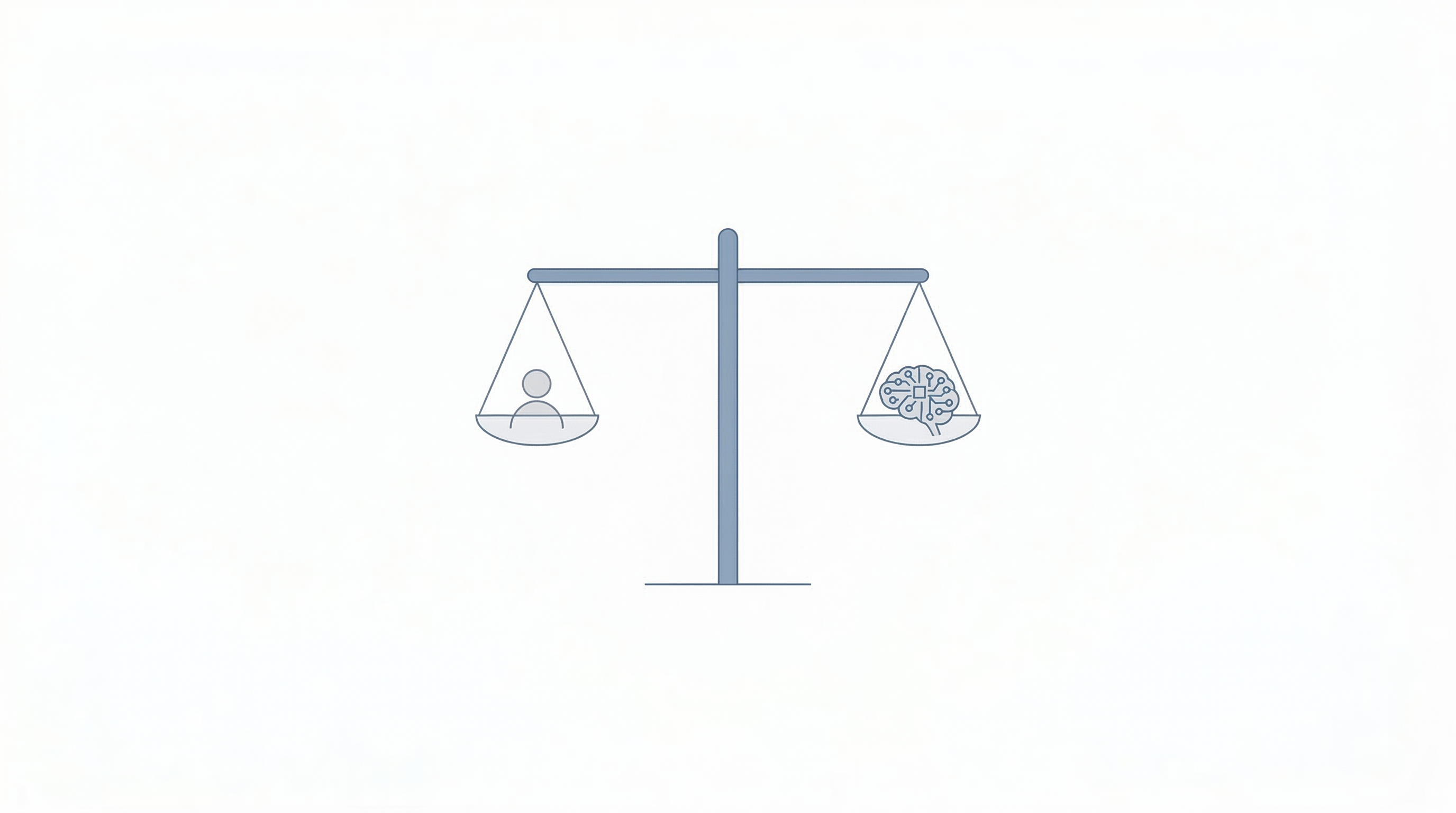
This is the question that comes up in every conversation about AI marketing: “Will this replace my marketing person?” Or if you are the marketing person: “Is this going to replace me?”
The short answer is no. The longer answer is more interesting, and more useful, than a simple yes or no. AI marketing agents and human marketers are good at fundamentally different things. The businesses getting the best results right now are the ones that have figured out how to use both, playing to the strengths of each while covering for the other’s weaknesses.
This comparison is built for small business owners who need to make practical decisions about where to invest their limited marketing budget and time. We are not here to hype up AI or defend the status quo. We are here to give you a clear, honest breakdown so you can make a smart call.
This article is part of our Ultimate Guide to AI Marketing Agents for Small Businesses, which covers the full landscape of AI marketing for small businesses.
Where AI Marketing Agents Outperform Humans
Let us start with the areas where AI has a clear, measurable advantage.
Speed and Volume
An AI agent can generate 50 email subject line variations in the time it takes a human to write three. It can analyze thousands of customer records, segment them into groups, and personalize messages for each segment in minutes. A human marketer doing the same work would need days, possibly weeks.
This is not about quality (we will get to that). It is about throughput. If your business needs to produce a high volume of content, test multiple creative variations, or process large amounts of data regularly, AI handles the volume in a way no individual or small team can match.
Consistency and Reliability
AI agents do not have bad days. They do not forget to send the follow-up email. They do not accidentally post to the wrong social account. They execute tasks the same way every time, with the same level of attention, whether it is Monday morning or Friday afternoon.
For small businesses where the marketing person is also handling customer service, operations, and a dozen other things, this consistency is valuable. The AI keeps the marketing engine running even when everyone on the team is pulled in different directions.
Data Processing and Pattern Recognition
This is probably AI’s biggest advantage. Humans are decent at spotting trends in small data sets, but we are terrible at processing thousands of data points and finding non-obvious patterns. AI agents can look at your entire customer database and identify that customers who buy product A within their first week are 3x more likely to become repeat buyers than those who start with product B. That kind of insight takes a human analyst significant time. An AI surfaces it automatically.
Testing at Scale
Running A/B tests manually is tedious and slow. You set up two versions, wait for statistical significance, pick the winner, and move on to the next test. AI agents can run dozens of tests simultaneously across subject lines, send times, creative elements, and audience segments. They identify winners faster and apply those learnings automatically. Over months, this compounding optimization produces results that manual testing simply cannot keep pace with.
24/7 Operation
AI agents do not clock out. They can respond to customer inquiries at 2am, trigger abandoned cart emails on Saturday night, and adjust ad bids on holidays. For small businesses competing with larger companies that have round-the-clock teams, this always-on capability helps close the gap.
Where Human Marketers Still Win
Now for the other side. These are the areas where human marketers have advantages that AI cannot replicate, at least not yet.
Strategic Thinking and Business Context
AI agents optimize within the parameters you give them. They cannot step back and ask whether you are focused on the right market, whether your pricing strategy makes sense, or whether a new competitor changes your positioning. Strategic thinking requires understanding your business, your industry, and your customers at a level that goes beyond data patterns.
A human marketer can look at a campaign that is performing well by the numbers and recognize that it might create a brand perception problem six months down the road. AI does not have that foresight.
Creative Originality
AI can produce competent content. It can write emails that sound professional, generate social posts that follow best practices, and create ad copy that hits the right keywords. What it struggles with is genuine originality. The unexpected angle. The campaign concept that makes people stop scrolling. The brand voice that feels distinctly human.
AI-generated content tends to cluster around the average of what already exists. It is very good at producing B+ work quickly. It is not good at producing the A+ creative idea that breaks through the noise. For small businesses where differentiation matters, that creative spark still comes from people.
Empathy and Emotional Intelligence
When a customer leaves an angry review, or a crisis hits your industry, or a sensitive cultural moment makes certain messaging inappropriate, humans read the room in a way AI cannot. Empathy, judgment, and emotional context are still firmly in the human column.
This matters most in customer-facing communication. AI can handle routine inquiries well. But the frustrated customer who needs to feel heard? The long-time client going through a tough patch? Those interactions require a human touch that builds loyalty in ways an algorithm cannot measure.
Relationship Building
Marketing is not just about messages and campaigns. It is about relationships with customers, partners, vendors, and your community. A human marketer can attend a local networking event, build a genuine connection with a potential referral partner, or spot a collaboration opportunity during a casual conversation. AI does not build relationships. It processes data about them.
Adaptability to Unusual Situations
AI agents work best in situations they have seen before (or variations of those situations). When something truly novel happens, like a global event that shifts consumer behavior overnight, or a viral moment that creates an unexpected opportunity, humans adapt faster. They can throw out the playbook and respond creatively to circumstances the AI was never trained on.
The Comparison at a Glance
Here is how they stack up across the key marketing functions:
Content creation: AI wins on speed and volume. Humans win on originality and brand voice. Best approach: AI generates drafts and variations, humans edit and direct the creative vision.
Email marketing: AI wins on personalization, timing, and A/B testing at scale. Humans win on strategic campaign planning and handling sensitive communications. Best approach: AI manages automation, segmentation, and optimization. Humans design the overall strategy and review key messages.
Social media: AI wins on scheduling, analytics, and content variation testing. Humans win on community engagement, real-time responses to trends, and brand personality. Best approach: AI handles the operational side while humans focus on genuine interaction and creative direction.
Paid advertising: AI wins on bid optimization, budget allocation, and performance analysis. Humans win on creative strategy, audience insight, and knowing when to pivot. Best approach: AI manages daily optimization while humans set the strategy and review results weekly.
Customer communication: AI wins on response time, consistency, and handling routine inquiries. Humans win on complex problem-solving, empathy, and relationship building. Best approach: AI handles first-line support and common questions, humans step in for anything that requires nuance.
Analytics and reporting: AI wins on data processing, pattern recognition, and real-time monitoring. Humans win on interpreting results in business context and making strategic recommendations. Best approach: AI generates the reports and surfaces insights, humans decide what to do about them.
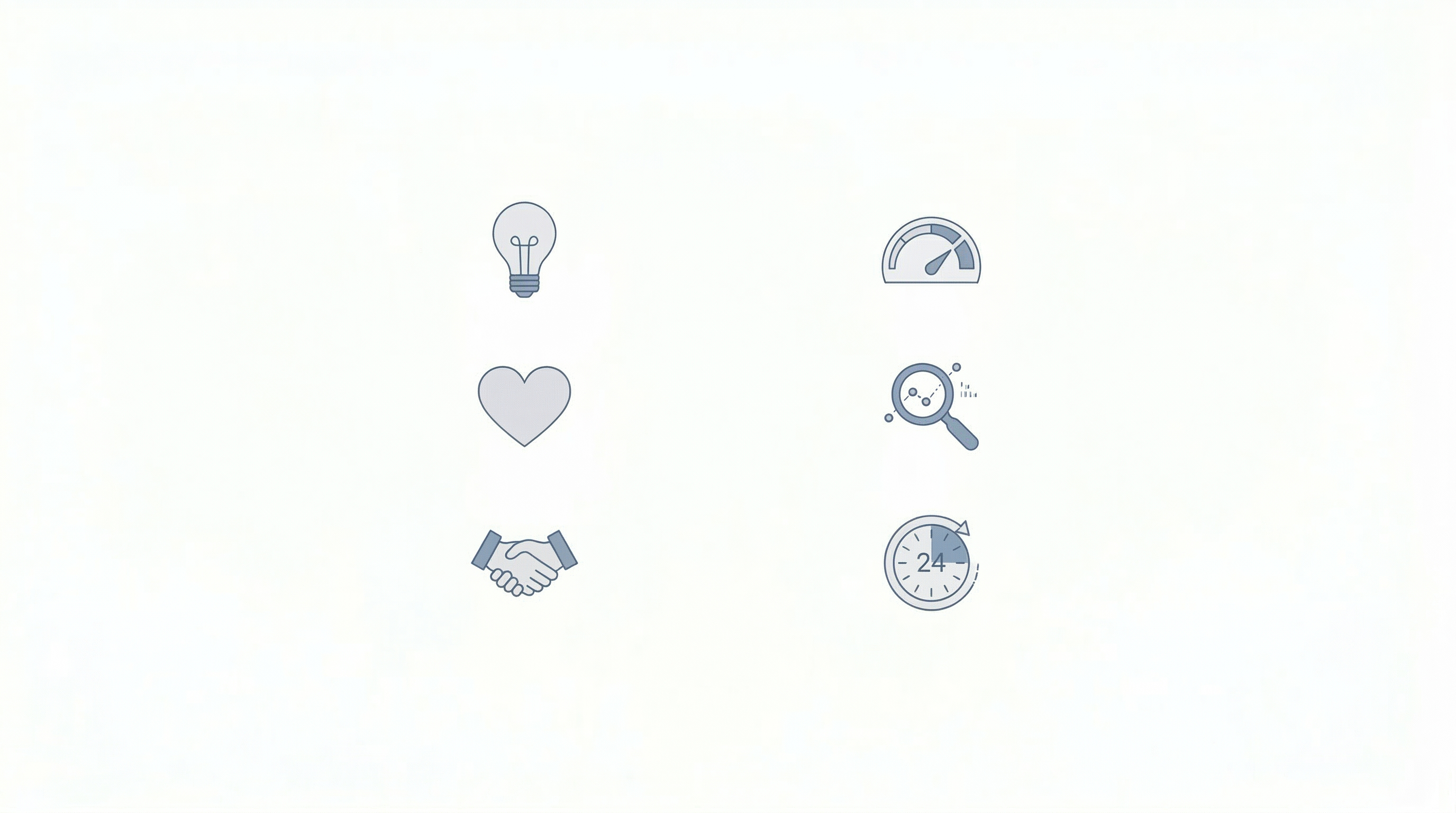
The Real Answer: It Is a Team Sport
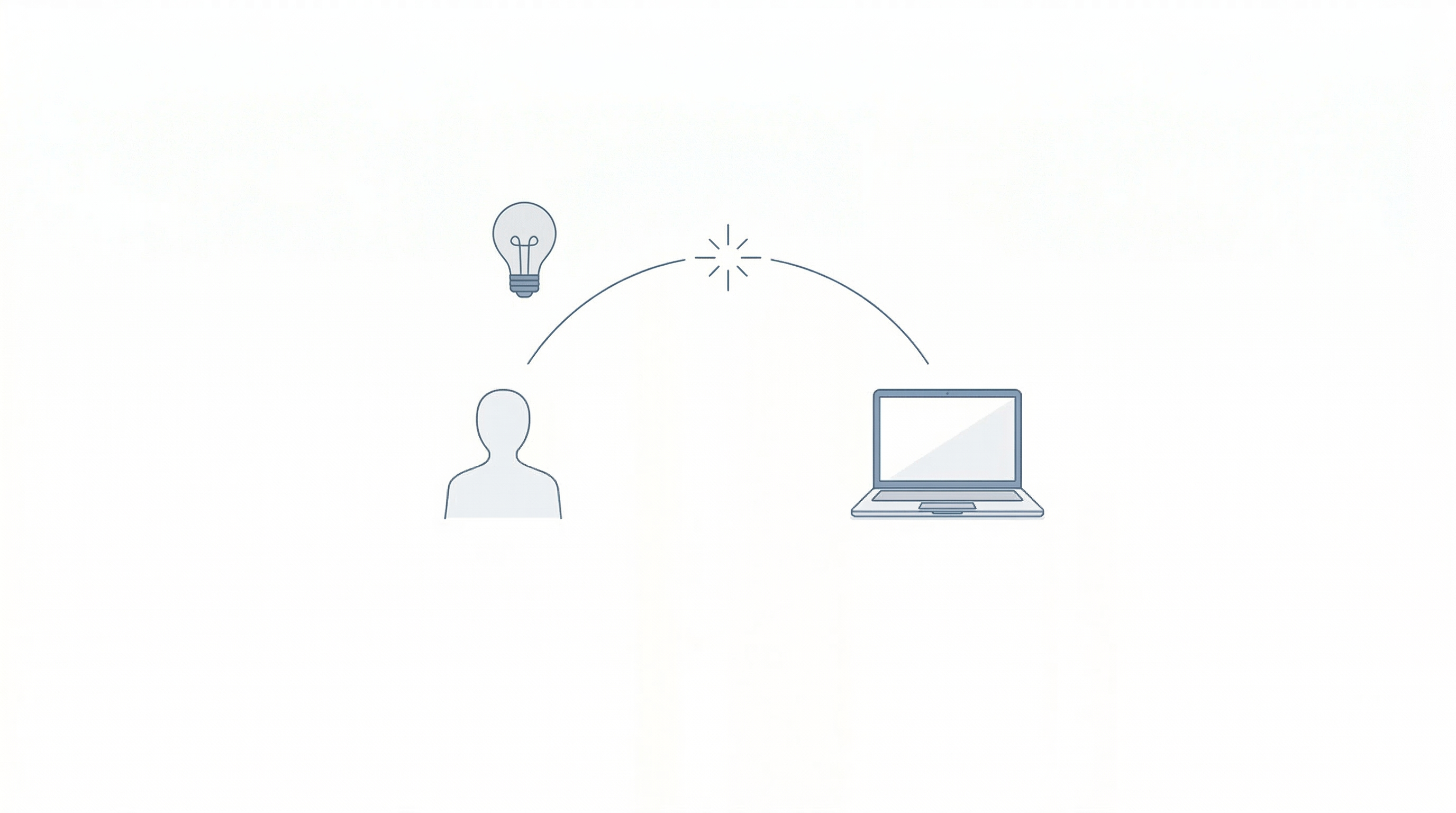
The businesses getting the best results are not choosing between AI and humans. They are using AI to handle the work that benefits from speed, scale, and data processing, while keeping humans focused on the work that benefits from creativity, empathy, and strategic judgment.
Think of it as a division of labor based on strengths. The AI agent is your most reliable executor. It does not get bored, does not forget, and gets incrementally better every week. Your human marketers are the strategists and creative directors who set the vision, make the judgment calls, and build the relationships that define your brand.
For a small business, this combination is powerful because it gives you output that would normally require a much larger team, without the payroll to match.
Making the Decision for Your Business
If you are a solo operator with no marketing help, an AI agent is probably the single best investment you can make. It fills the role of a tireless assistant who handles the execution while you focus on strategy and running your business.
If you already have a marketing person or a small team, an AI agent makes them significantly more productive. The repetitive work gets automated, freeing your people to focus on higher-value activities that actually move the needle.
If your marketing requires a heavy personal touch (think high-end services, luxury goods, or relationship-driven B2B), AI still plays a role in the background with data analysis, segmentation, and scheduling. But the customer-facing interactions should stay human.
Whatever your situation, the goal is the same: use each resource where it is strongest.
For guidance on getting started, see How to Implement an AI Marketing Agent in Your Small Business. For a practical look at how this balance plays out on one of the most human-feeling channels, see AI Marketing Agents for Social Media: Tools, Strategies, and Results. And for a broader understanding of how AI agents fit into the small business marketing landscape, head to our Ultimate Guide to AI Marketing Agents for Small Businesses.
Trying to figure out the right balance of AI and human marketing for your business? Talk to the Emarketed team and we will help you build a plan that makes sense for your budget and goals.