AI marketing agents.
The complete guide.
What AI marketing agents are, how they work, and how to implement them. The reference we wish existed when we started building them for clients.
Why AI Marketing Agents Matter for Small Businesses
Small business marketing has always been a balancing act. You have limited time, a tight budget, and more channels to manage than any one person can handle well. For years, the advice was the same: hire more people, outsource to agencies, or accept that you would fall behind bigger competitors with deeper pockets.
That equation is finally shifting. AI marketing agents are giving small businesses something they have never had before: the ability to execute sophisticated, data-driven marketing strategies without needing a full team to pull it off.
This guide walks you through everything you need to know about AI marketing agents—what they actually are, how they work under the hood, which platforms are worth your attention, and how to get started without wasting time or money.
Who this guide is for: Small business owners, solo marketers, and lean marketing teams who want practical, no-fluff guidance on using AI marketing agents to grow their business.
What Are AI Marketing Agents?
An AI marketing agent is software that uses artificial intelligence to plan, execute, and optimize marketing tasks on your behalf. Think of it as a digital team member that handles repetitive work, analyzes data patterns, and makes decisions based on rules and objectives you set.
But these are not just glorified scheduling tools or basic chatbots. Modern AI marketing agents can learn from your customer data, adapt their approach over time, and work across multiple channels simultaneously. They can draft email campaigns, adjust ad spend based on real-time performance, segment your audience, and personalize messaging at a scale that would take a human team weeks to accomplish.
The Core Capabilities
At their foundation, AI marketing agents handle five key areas:
- Content Generation and Optimization: Creating email copy, social media posts, ad variations, and blog outlines tailored to your audience and brand voice.
- Audience Segmentation and Targeting: Sorting your contacts into meaningful groups based on behavior, preferences, and purchase history, then targeting each segment with relevant messaging.
- Campaign Automation: Running multi-step campaigns across email, social, SMS, and paid channels without you manually managing every trigger and workflow.
- Performance Analysis: Tracking what is working and what is not, then surfacing insights so you can make smarter decisions faster.
- Personalization at Scale: Delivering individualized experiences to hundreds or thousands of customers—something that used to require a large marketing department.
What AI Marketing Agents Are Not
AI marketing agents are not magic. They do not replace the need for strategy, brand thinking, or human creativity. They are tools that amplify what you are already doing. If your messaging is off, an AI agent will distribute bad messaging faster. If your strategy is solid, these tools can multiply your impact dramatically.
They also are not sentient decision-makers. They operate within boundaries you set. You still need to define your goals, approve your brand voice, and review outputs—especially in the early stages.
How Do AI Marketing Agents Actually Work?
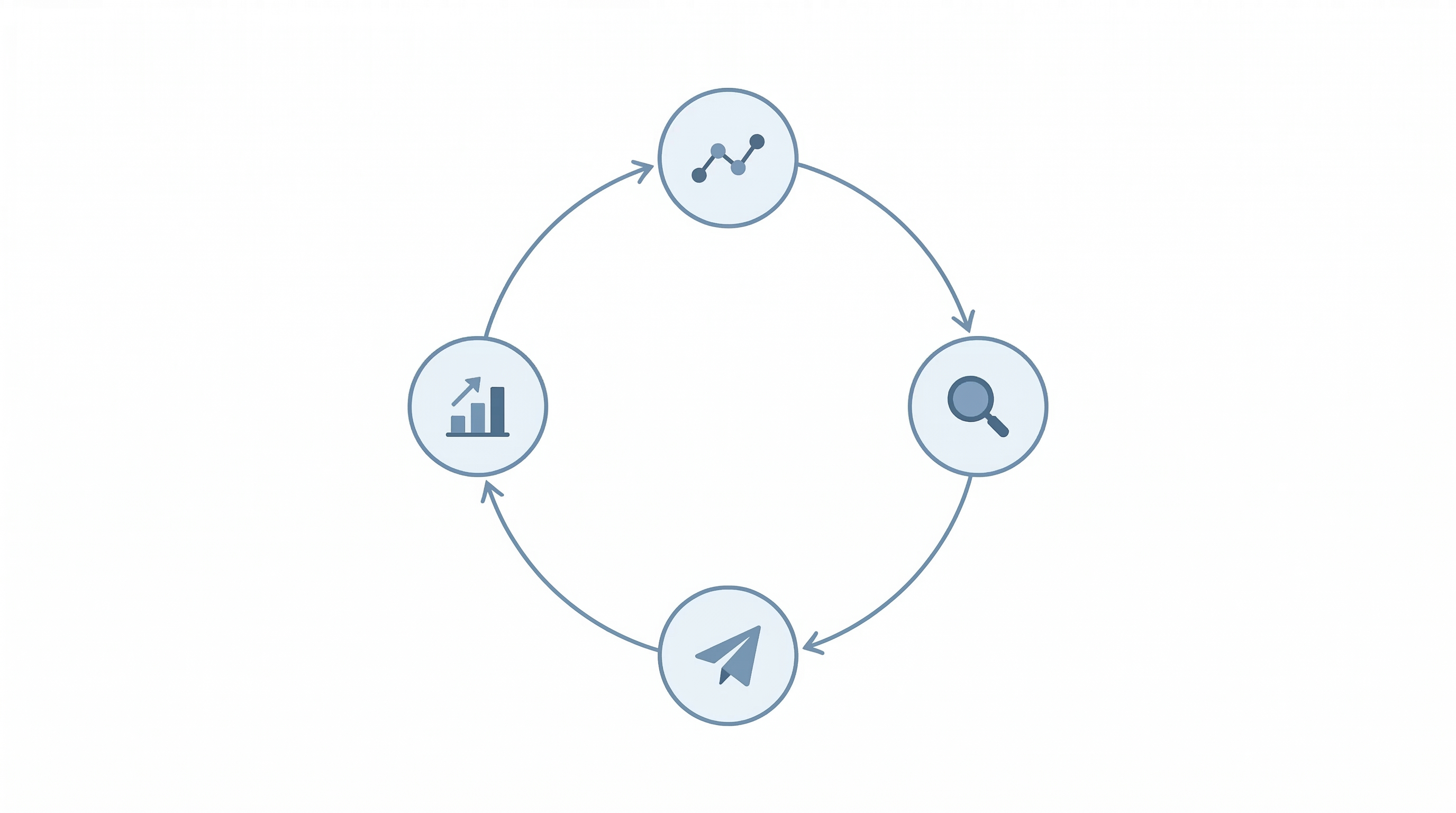
Understanding how these tools function helps you use them better and set realistic expectations. Most AI marketing agents operate on a cycle of data collection, analysis, action, and learning.
The Four-Phase Cycle
Phase 1: Data Collection. The agent gathers information from your connected sources—your CRM, website analytics, email engagement data, social media metrics, ad platforms, and customer purchase history. The more data sources you connect, the better the agent performs.
Phase 2: Analysis and Pattern Recognition. Using machine learning models, the agent identifies trends and patterns in your data. It might discover that your email open rates spike on Tuesday mornings, or that customers who view a specific product page three times are 70% more likely to buy. These are the kinds of insights that take humans weeks of spreadsheet work to uncover.
Phase 3: Action. Based on its analysis, the agent takes action. This could mean sending a triggered email sequence, adjusting your ad bid strategy, publishing a social post at the optimal time, or creating a personalized landing page for a specific audience segment.
Phase 4: Learning and Optimization. After each action, the agent measures results and feeds that information back into its models. Over time, it gets better at predicting what will work. This feedback loop is what separates AI agents from static automation tools.
Key Takeaway: The real power of AI marketing agents is not in any single task they perform. It is in the feedback loop that makes every subsequent action smarter than the last.
What Are the Benefits of AI Marketing Agents for Small Businesses?
The advantages go beyond saving time—though reclaiming hours each week alone is worth the investment for most small businesses. Here is what we see consistently across the businesses we work with.
Time and Resource Savings
Tasks that used to take your marketing person several hours each day—scheduling posts, segmenting lists, drafting email variations, pulling performance reports—can be handled by an AI agent in minutes. For a small business running lean, this changes everything.
Better Personalization Without More Headcount
Personalization used to be a luxury that only large companies with dedicated marketing teams could afford. AI agents change that. They tailor messages, product recommendations, and offers for individual customers based on behavior and preferences. Your customers get a better experience without you needing to hire additional staff. For more on how this applies to content strategy, see our Content Marketing Playbook.
Data-Driven Decision Making
Most small businesses make marketing decisions based on gut feeling or what worked last quarter. AI agents give you access to real-time performance data and actionable insights. Instead of guessing whether your Facebook ads are outperforming your Google ads, you can see the numbers clearly and let the agent reallocate budget accordingly.
Consistency Across Channels
When you are managing everything manually, messaging drifts across platforms—one tone on Instagram, a different voice in emails, something else entirely on your website. AI agents help maintain consistency because they work from the same data, rules, and brand guidelines across every touchpoint.
Competitive Edge
Your competitors are already exploring these tools. Early adopters who integrate AI marketing agents now will build a data advantage that compounds over time. The longer an agent learns your business, the better it performs. Starting sooner means better results by the time the broader market catches up.
The Numbers
Businesses using AI-driven marketing tools report up to 30% reductions in cost per acquisition, and 79% of high-performing companies have been using marketing automation for three or more years—compounding their advantage every quarter.
What Are the Top AI Marketing Agent Platforms for Small Businesses?
The market is growing fast, and new platforms launch regularly. The landscape in 2026 looks very different from even a year ago. Here is a snapshot of what is available and what to look for.
What to Look For
Before diving into specific tools, know what matters most for a small business:
- Ease of setup and a learning curve that does not require a developer on staff
- Pricing that scales with your business rather than penalizing growth
- Native integrations with the tools you already use (your CRM, email platform, e-commerce system)
- Transparent AI decision-making so you understand why the agent is doing what it does
- Solid customer support, ideally with onboarding help for the first 30 to 60 days
Platform Categories
| Category | Best For | Examples |
|---|---|---|
| All-in-One Platforms | Businesses wanting a single tool for email, social, ads, and analytics | HubSpot AI, ActiveCampaign AI, Salesforce Marketing Cloud |
| Email-Focused Agents | Businesses prioritizing email marketing and list management | Mailchimp AI, Klaviyo, Brevo AI |
| Social Media Agents | Brands heavily invested in social channels | Jasper, Lately AI, Sprout Social AI |
| Ad Optimization Agents | Businesses running paid campaigns on Google or Meta | Adzooma, Albert AI, Smartly.io |
| Personalization Engines | E-commerce and service businesses focused on customer experience | Dynamic Yield, Optimove, Insider |
A Note on Choosing
Do not pick a tool because it has the most features or the flashiest demo. Pick the one that solves your most pressing problem, integrates with your existing tech stack, and fits your budget. A simpler tool you actually use consistently beats a complex platform gathering dust.
How Do You Implement an AI Marketing Agent in Your Small Business?
Getting started does not have to be overwhelming. The businesses that succeed with AI marketing agents follow a deliberate, phased approach rather than trying to automate everything at once.
Step 1: Audit Your Current Marketing
Before bringing in any new tool, take an honest look at what you are doing now. Map out your current marketing activities, the tools you use, where you spend the most time, and which tasks produce the best results. This audit gives you a clear picture of where an AI agent can have the biggest impact. Our free AI Search Optimizer can help identify gaps in your current digital presence as part of this baseline.
Step 2: Define Your Goals
Be specific. “Get more leads” is not a goal. “Increase qualified leads from email by 25% over the next quarter” is a goal. AI agents work best when they have clear, measurable objectives to optimize toward.
Step 3: Choose the Right Platform
Based on your audit and goals, pick a platform that fits your needs and budget. Start with a free trial whenever possible. Test the interface, run a small campaign, and evaluate the results before committing to a paid plan.
Step 4: Connect Your Data Sources
The agent needs data to do its job. Connect your CRM, website analytics, email platform, and any other relevant data sources. The setup process varies by platform, but most modern tools make this straightforward with pre-built integrations.
Step 5: Start Small and Scale
Pick one marketing function to automate first. Email is usually the best starting point because it is measurable, high-impact, and relatively low-risk. Let the agent run for a few weeks, review the results, and then expand to other channels.
Step 6: Monitor, Adjust, Repeat
AI agents improve over time, but they still need oversight. Check in weekly during the first month, then shift to biweekly or monthly reviews once you are confident in the results. Look for patterns: what is the agent doing well, and where does it need guardrails?
Pro Tip: The most common mistake we see is businesses trying to automate everything on day one. Start with one channel, prove the value, then expand. Patience here pays off significantly.
AI Marketing Agents vs. Human Marketers: Finding the Right Balance
This is not an either-or conversation. The businesses getting the best results use AI agents and human marketers together, playing to the strengths of each.
Where AI Agents Excel
AI agents are better than humans at processing large volumes of data, executing repetitive tasks consistently, running multi-variant tests at scale, and optimizing campaigns based on real-time performance metrics. They do not get tired, do not forget to follow up, and can work across channels simultaneously without dropping the ball.
Where Humans Still Win
Humans are better at brand strategy, creative direction, relationship building, crisis management, and understanding the nuances of your market. A human marketer can read the room. They know when a campaign might land wrong given current events. They can build genuine connections with customers and partners that no algorithm can replicate.
The Sweet Spot
The most effective approach puts AI in charge of execution, optimization, and data analysis while keeping humans focused on strategy, creative direction, and relationship management. Think of the AI agent as your most reliable and tireless team member, and your human marketers as the creative directors guiding the operation.
| Task Type | Best Handled By |
|---|---|
| A/B testing and campaign optimization | AI Agent |
| Brand voice and creative direction | Human |
| Email scheduling and segmentation | AI Agent |
| Customer relationship management | Human |
| Performance reporting and analysis | AI Agent |
| Crisis communications | Human |
| Content ideation and strategy | Human |
| Content distribution and scheduling | AI Agent |
How Do AI Marketing Agents Help with Social Media?
Social media management is one of the most time-consuming aspects of small business marketing. Between creating content, scheduling posts, engaging with followers, and analyzing performance, it can easily consume 15 to 20 hours a week.
AI marketing agents are particularly useful here because social media rewards consistency and speed. An agent can maintain a regular posting schedule, identify trending topics relevant to your business, generate post variations for testing, and respond to common customer inquiries faster than any human team.
Practical Applications
- Content creation and scheduling based on audience engagement patterns
- Sentiment analysis to gauge how people feel about your brand
- Automated responses to frequently asked questions and common messages
- Competitor monitoring so you know what is working in your space
- Hashtag and keyword optimization for organic reach
For businesses looking to extend their social visibility into AI-powered search, social signals also feed into your broader Generative Engine Optimization (GEO) strategy—AI search platforms like Perplexity increasingly surface community and social content.
A Word of Caution
Social media is inherently personal. Over-automation can make your brand feel robotic, which defeats the purpose. Use AI to handle the heavy lifting, but keep a real person involved in conversations that require empathy, humor, or nuance.
How Do You Maximize ROI from AI Marketing Agents?
Buying the tool is the easy part. Getting real returns requires intentional effort. Here are the strategies that consistently produce the best outcomes.
Set Clear KPIs from Day One
Define what success looks like before you start. Track metrics tied directly to business outcomes: cost per lead, customer acquisition cost, email revenue, conversion rates, and customer lifetime value. Avoid getting distracted by vanity metrics like follower counts or impressions unless they directly connect to your bottom line.
Feed the Agent Quality Data
AI agents are only as good as the data they work with. Clean your contact lists, fix duplicate records, and make sure your tracking is set up correctly. Garbage in, garbage out applies to AI tools more than almost anything else in marketing.
Test and Iterate Constantly
Let the agent run A/B tests on your behalf. Test subject lines, send times, ad creative, audience segments, and landing page variations. The compounding effect of small improvements over weeks and months is substantial.
Do Not Set It and Forget It
AI agents improve with oversight. Regular check-ins help you catch issues early, spot new opportunities, and refine the guardrails you have set. Treat it like managing a new hire: more oversight early on, then gradually more autonomy as trust builds.
Invest in Training
Spend time learning the platform. Watch the tutorials, read the documentation, and attend any onboarding sessions offered. The businesses that get the most from their AI agents are the ones where the team actually understands how to use the tool.
ROI Reality Check
AI marketing agents do not produce overnight results. Expect a 60-to-90-day learning period before the agent is operating at full effectiveness. Companies that commit to this runway consistently report stronger long-term returns than those who abandon tools after 30 days.
What Are the Most Common AI Marketing Agent Mistakes to Avoid?
Most of the mistakes businesses make with AI marketing agents are avoidable if you know what to watch for.
Automating Before You Have a Strategy
AI amplifies whatever you give it. If your messaging is unclear, your targeting is off, or your offer is weak, the AI will execute those problems faster and at larger scale. Get your SEO fundamentals and marketing fundamentals right first, then layer in automation.
Ignoring the Human Element
Customers can tell when they are talking to a machine. If every touchpoint feels automated and generic, you will lose the personal connection that makes small businesses special. Keep humans involved in the moments that matter most.
Choosing the Wrong Platform
Do not pick a tool because it has the most features or the flashiest demo. Pick the one that solves your most pressing problem, integrates with your existing tech stack, and fits your budget.
Expecting Immediate Results
AI marketing agents get better with time and data. The first few weeks are a learning period for the tool and for you. Give it at least 60 to 90 days before making a judgment call on whether it is working.
Not Reviewing AI-Generated Content
Always review what the AI produces before it goes live. This is especially important for customer-facing content like emails, social posts, and ad copy. AI can miss context, misread tone, or generate content that does not quite fit your brand voice.
What Is the Future of AI Marketing Agents?
The AI marketing landscape is moving fast. Here are the trends small businesses should pay attention to heading into 2026 and beyond.
Multimodal Agents
Expect agents that work across text, images, video, and audio simultaneously. Instead of needing separate tools for each content type, a single agent will generate a blog post, create social graphics, produce a short video clip, and write the email that promotes all of it.
Voice and Conversational Commerce
As voice search and smart assistants become more common, AI marketing agents will need to optimize for conversational interactions. This means creating content and campaigns designed for how people talk, not just how they type. This trend connects directly to the rise of AI-powered search—see our GEO Guide for how to structure content for AI retrieval.
Deeper Personalization Through Predictive Analytics
Current AI agents react to customer behavior. The next generation will predict it. Imagine an agent that identifies a customer is about to churn before they show obvious signs, and proactively sends a retention offer that keeps them engaged.
Tighter Privacy and Compliance Integration
With privacy regulations tightening globally, future AI agents will have compliance built into their core architecture. They will automatically handle consent management, data retention policies, and regional privacy rules so you do not have to worry about inadvertent violations.
More Accessible Pricing
Competition is driving prices down. Tools that cost thousands per month two years ago are now available at price points that work for small businesses. This trend will continue, making enterprise-level AI marketing accessible to everyone.
The Window
47% of small businesses still have no deliberate AI marketing strategy in place. Early adopters building competency now will have a compounding data advantage by the time the rest of the market catches up.

Frequently Asked Questions About AI Marketing Agents
What is an AI marketing agent?
An AI marketing agent is software that uses artificial intelligence to plan, execute, and optimize marketing tasks autonomously. Unlike basic automation tools that follow fixed rules, AI agents learn from data, adapt over time, and can make decisions across multiple channels simultaneously—handling tasks from email segmentation to ad bid adjustments to social scheduling.
How much do AI marketing agents cost?
Pricing varies widely by platform and feature set. Entry-level tools designed for small businesses start around $30 to $100 per month. Mid-tier platforms with more advanced automation and analytics typically run $200 to $800 per month. Enterprise platforms can reach several thousand per month. Most offer free trials, which makes it easy to test before committing.
How long does it take to see results from an AI marketing agent?
Initial improvements—like faster execution, more consistent posting, and basic personalization—are visible within the first two to four weeks. Meaningful ROI tied to lead generation, conversion rates, and cost per acquisition typically emerges after 60 to 90 days as the agent learns your audience and your data accumulates.
Do AI marketing agents replace human marketers?
No. AI agents handle execution, optimization, and data analysis. Human marketers remain essential for brand strategy, creative direction, relationship building, and crisis management. The most effective setups use AI for the work that benefits from speed and scale while keeping humans focused on judgment-intensive tasks.
Are AI marketing agents safe for small businesses to use?
Yes, with appropriate oversight. The main risks are publishing AI-generated content without review, over-automating customer-facing interactions, or choosing a platform that does not integrate well with your existing tools. Start with a limited scope, review outputs regularly, and expand as you build confidence in the system.
Which AI marketing agent platform is best for beginners?
For most small businesses starting out, an all-in-one platform like HubSpot AI or ActiveCampaign provides the best combination of accessible setup, built-in integrations, and meaningful AI capabilities without requiring technical expertise. Email-first platforms like Klaviyo are a strong choice for e-commerce businesses. Start with the platform that connects to the tools you already use.
Can I use an AI marketing agent alongside my existing tools?
Yes. Most modern AI marketing agents are designed to integrate with common CRM systems, email platforms, e-commerce tools, and analytics platforms through native integrations or APIs. The key is to verify compatibility with your specific tech stack before committing to a platform.
Getting Started with AI Marketing Agents
At Emarketed, we work with small businesses, professional services firms, and direct-to-consumer brands to build AI-powered marketing strategies that actually deliver results. We have seen firsthand how AI marketing agents are reshaping what is possible for lean teams—and we have built the tools and frameworks to help you get there faster.
Our Approach
- We start with strategy. AI amplifies what you already have, so we make sure your positioning, messaging, and offer are solid before we layer in automation.
- We build for the long game. The data advantage compounds over time. We help you set up systems that get smarter with every campaign.
- We connect AI marketing to AI search. As more of your customers find you through ChatGPT, Perplexity, and Google AI Overviews, your content strategy needs to perform in both traditional search and AI-generated answers. We build for both. See our GEO Guide for how AI search visibility works.
- We have built tools to help. Our free tools let you assess where you stand today before investing in a full strategy.
AI marketing agents are not a passing trend. They represent a fundamental shift in how small businesses can compete with larger organizations. The technology is mature enough to deliver real results today, and it is improving rapidly.
Start with a clear goal. Pick one area to test. Give it time to learn. Review the results honestly. Then scale what works.
Free Tools from Emarketed
- AI Search Optimizer – Check how well your site is optimized for AI discovery
- Brand Presence Checker – See how AI engines describe your brand today
- LLMs.txt Generator – Create an llms.txt file for AI systems
- AI Keyword Researcher – Discover keyword clusters and search intent
- Topic Authority Builder – Map topic clusters to strengthen your content authority
- Website Audit Tool – Analyze your site’s SEO and performance baseline
Topics Covered in This Guide Series
Each article below goes deeper on a specific aspect of AI marketing agents:
- Beginner’s Guide to AI Marketing Agents — What they are, how they work, and whether you are ready
- Top 10 AI Marketing Agents for Small Businesses in 2026 — Honest reviews of the leading platforms
- How to Implement an AI Marketing Agent — A step-by-step setup guide
- AI Marketing Agents vs. Human Marketers — Finding the right balance for your business
- AI-Powered Email Campaigns: A Practical Tutorial — Setting up automated, personalized email from scratch
- AI-Powered SMS Campaigns: A Practical Tutorial — Setting up compliant automated SMS campaigns with AI agents
- Best AI Marketing Agent Platforms for SMBs — In-depth platform comparison and recommendations
- 7 Tips for Maximizing ROI from Your AI Marketing Agent — Getting the most from your investment
- The Future of AI Marketing Agents: Trends to Watch — What is coming and how to prepare
- Case Study: How AI Marketing Agents Increased Leads for a Local Retailer — A real-world example with results
- Common Mistakes to Avoid When Using AI Marketing Agents — The errors that hurt results and how to sidestep them
- AI Marketing Agents for Social Media: Tools, Strategies, and Results — What to automate, what to keep human
- Personalization at Scale: How AI Agents Tailor Customer Experiences — From generic campaigns to individual experiences
Further Reading
- The Complete Guide to Generative Engine Optimization (GEO) — How to get your brand cited in AI-generated answers
- SEO Fundamentals — The foundation your AI marketing strategy builds on
- Content Marketing Playbook — Building a content engine that supports both SEO and AI visibility