Get cited by AI search.
Not just ranked.
A complete guide to Generative Engine Optimization (GEO) — how to get your brand found, cited, and recommended by ChatGPT, Perplexity, Claude, and Google AI Overviews.
What Is Generative Engine Optimization (GEO)?
Generative Engine Optimization (GEO) is the practice of structuring and enhancing content so it gets cited, referenced, and recommended in AI-generated responses from platforms like ChatGPT, Perplexity, Google AI Overviews, and Claude. Unlike traditional SEO, which focuses on ranking high in search engine results pages to earn clicks, GEO optimizes for inclusion within the AI’s synthesized answer itself. The priority shifts from earning clicks to earning citations and brand mentions.
Here’s the fundamental shift: in traditional search, you compete for a spot on a list of links. In generative search, you compete to become part of the answer. When someone asks ChatGPT “What’s the best CRM for small businesses?” or queries Perplexity about “how to improve website conversion rates,” these AI systems don’t just return links. They synthesize information from multiple sources into conversational responses and cite the most authoritative content.
Why This Matters Now
User behavior is changing rapidly. AI-referred sessions jumped 527% between January and May 2025, and ChatGPT now serves over 800 million weekly active users, double what it was just eight months prior. Meanwhile, 58% of users have already replaced traditional search engines with AI-driven tools for product and service discovery.
For marketers, the implication is clear: if your content isn’t structured for AI retrieval and citation, you’re becoming invisible to a rapidly growing segment of your audience.
How Does GEO Differ from Traditional SEO?
GEO and SEO share foundational principles but differ in their primary objectives, optimization focus, and success metrics. SEO aims to rank pages high in SERPs to drive clicks. GEO aims to get content cited within AI-generated answers, often without any click occurring at all.
| Aspect | Traditional SEO | Generative Engine Optimization |
|---|---|---|
| Primary Goal | Rank in top 10 search results | Appear in AI-generated answers |
| Target Platforms | Google, Bing search engines | ChatGPT, Perplexity, Claude, Google AI Overviews |
| Content Format | Keyword-optimized pages | Conversational, fact-dense, structured content |
| Success Metric | Rankings, CTR, organic traffic | Citations, brand mentions, AI visibility |
| Optimization Focus | Backlinks, keywords, page authority | Semantic clarity, structure, citation-worthiness |
| Query Length | Short (avg. 4 words) | Conversational (avg. 23 words) |
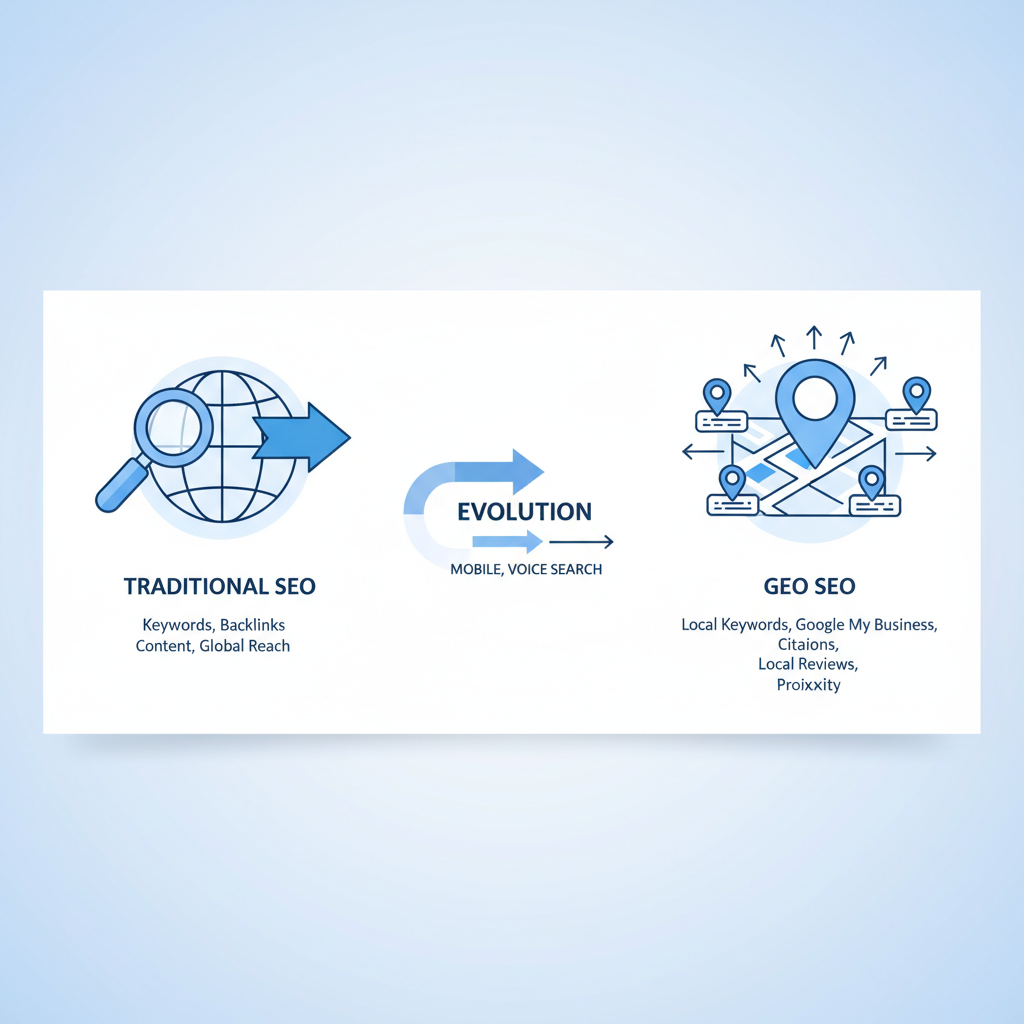
The Good News
GEO doesn’t replace SEO. It extends it. Many SEO best practices still apply: high-quality content, mobile optimization, fast load times, and topical authority all contribute to GEO success. Content with proper schema markup shows 30-40% higher AI visibility, and 76.1% of URLs cited in Google AI Overviews also rank in Google’s traditional top 10.
That said, some traditional SEO tactics are losing effectiveness in the AI era. Keyword stuffing, thin content, and over-reliance on backlinks without substantive content don’t impress AI systems that prioritize semantic understanding and factual density over keyword matching.
At Emarketed, we view GEO as the natural evolution of search marketing. The brands winning today are those optimizing for both traditional search and AI discovery simultaneously, building content that ranks well in SERPs while being structured for AI extraction and citation. Learn the SEO fundamentals first, then build your content strategy with our Content Marketing Playbook.
Why Does GEO Matter for Marketing in 2026?
GEO has become essential because the way people search for information is fundamentally changing, and the pace of that change is accelerating faster than most marketers realize. If your brand isn’t appearing in AI-generated answers, you’re invisible to a growing majority of information seekers.
The Numbers Tell the Story
- 800M Weekly ChatGPT Users - As of October 2025, doubled from 400M in 8 months
- 29.2% AI Adoption Rate - Up from 14% in February (doubled in 6 months)
- 43% Professionals Using AI - Now use ChatGPT for work-related tasks
- 64% Ready to Purchase - Customers ready to buy products suggested by AI
Perhaps most striking: when an AI Overview appears in search results, traditional webpages experience a 34.5% lower average click-through rate. Zero-click search behavior (where users get answers without visiting any website) has accelerated dramatically with generative AI.
The Opportunity
Early adopters can establish citation authority now, while 47% of brands still lack any deliberate GEO strategy. Being cited first establishes immediate credibility. The competition has shifted from fighting for the #1 SERP position to fighting for presence, accuracy, and influence inside the answer itself.
How Do AI Search Engines Select and Cite Sources?
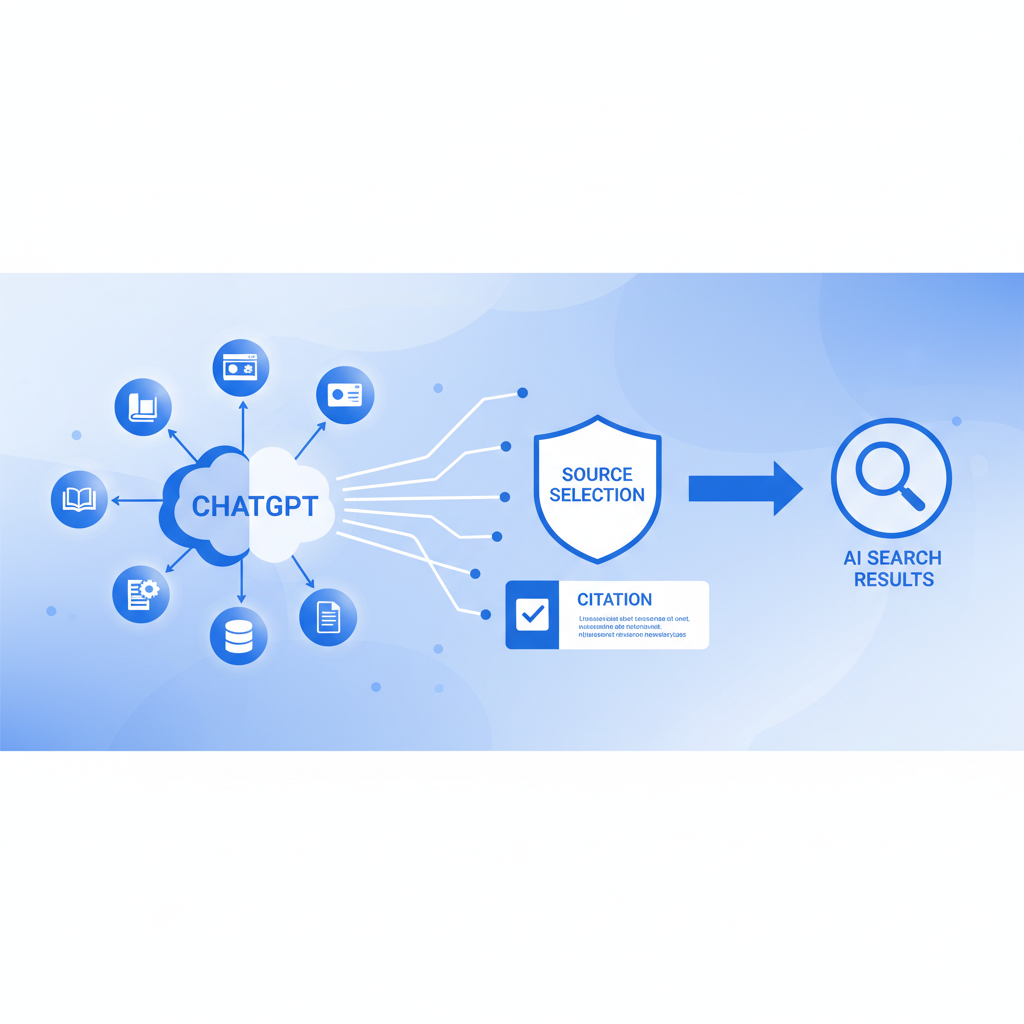
AI search engines use a process called Retrieval-Augmented Generation (RAG) to select sources. RAG combines traditional information retrieval with large language model generation to produce grounded, citation-backed responses. Understanding this process is essential for optimizing your content to be selected.
How RAG Works in Practice
1. Query Processing
When a user submits a question, the AI converts the natural language query into a semantic representation. It translates human language into a format optimized for searching knowledge databases.
2. Retrieval
The system searches its knowledge base for documents semantically similar to the query. This isn’t keyword matching—it’s concept matching. Content about “generative engine optimization” might surface for a query about “AI search optimization” even without exact phrase matches.
3. Ranking and Reranking
Retrieved documents get scored based on relevance, authority, recency, and structural quality. A reranking model then reorders sources based on quality signals. This is where GEO optimization makes its impact.
4. Answer Generation
The AI reads selected source documents and generates a coherent response that synthesizes information from multiple sources. It doesn’t copy text verbatim—it understands concepts and rewrites them conversationally.
5. Citation Inclusion
Finally, the engine attributes information to specific sources through inline citations or footnotes. Citation decisions depend on how directly a source contributed to specific facts in the generated answer.
Platform-Specific Citation Preferences
Different platforms show different citation preferences:
- ChatGPT cites Wikipedia 47.9% of the time for factual questions
- Perplexity heavily favors Reddit (46.7% of top sources) and recently published content
- Google AI Overviews strongly favor content that already ranks well organically and demonstrates strong E-E-A-T signals
Key Insight for Marketers
RAG systems prioritize content that is semantically clear, structurally organized, factually dense, and authoritative. Traditional keyword-stuffed content fails because semantic search identifies concepts, not keyword density.
What Are the Most Effective GEO Strategies?
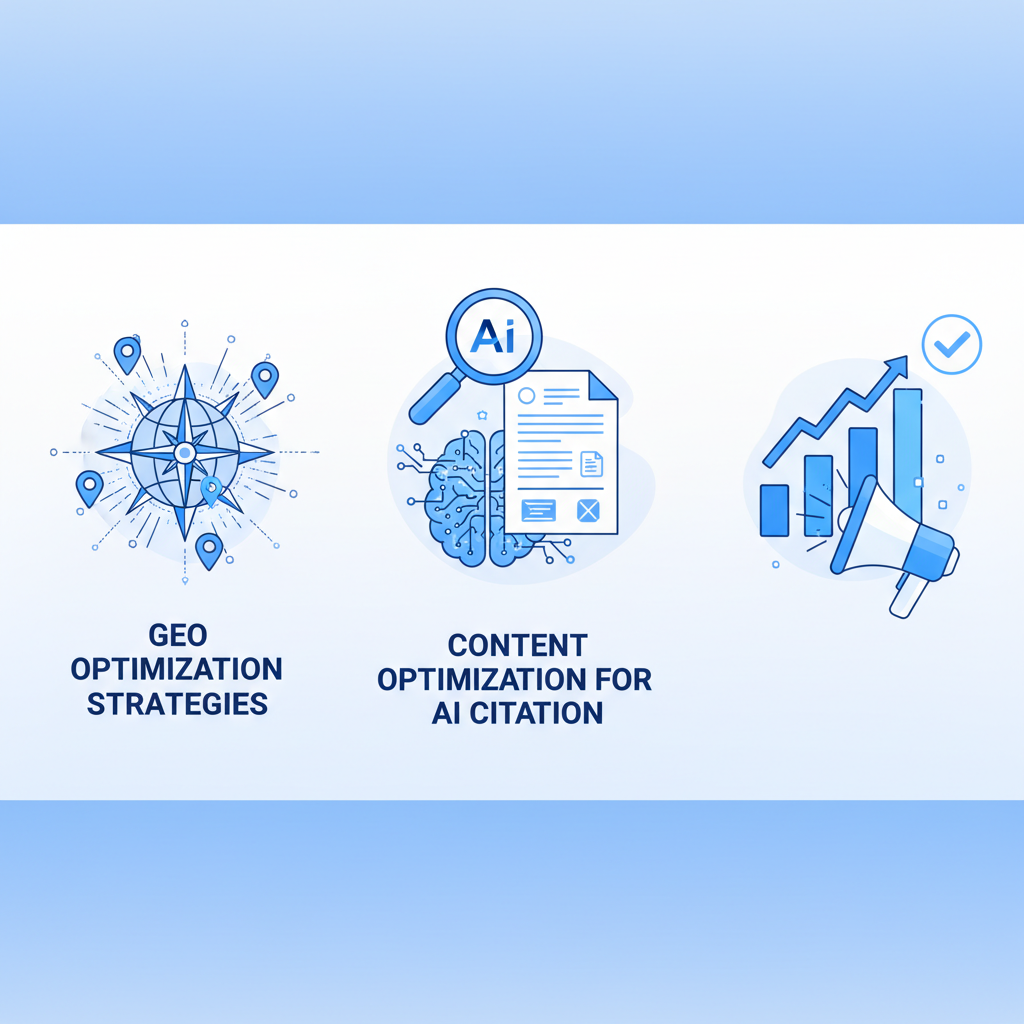
Research from Princeton University and Georgia Tech analyzing over 1 million AI-generated responses identified specific content characteristics that correlate with significantly higher citation frequency. Three strategies stand out as particularly impactful, each producing measurable improvements in AI visibility.
Strategy 1: Cite Authoritative Sources
Content that cites credible sources gets cited more frequently than content without citations. The mechanism is straightforward: AI engines prioritize content that demonstrates research rigor and factual grounding.
When an AI engine evaluates content for citation-worthiness, it assesses credibility signals. Outbound links to .edu domains, .gov resources, peer-reviewed research, and established industry publications signal that your content is research-backed rather than speculative.
How to Implement:
- Identify credible sources in your niche: universities, government agencies, industry associations, research institutions
- Link to primary research—when citing statistics, link directly to the original study, not secondary coverage
- Use inline citations where claims appear, not just in a references section
- Verify recency and link to the most recent authoritative data available
Strategy 2: Include Direct Quotations
Content featuring direct quotes from industry experts receives significantly more AI citations than content without expert perspectives. Quotes serve as credibility markers and provide specific, attributable facts that AI engines prioritize.
AI models are trained to recognize quoted material as established facts or expert opinions. Quotes carry implicit authority because someone credible enough to quote publicly is likely a reliable source.
How to Implement:
- Interview subject matter experts for original quotes
- Pull quotes from published interviews, research papers, or official statements
- Format quotes clearly with proper attribution immediately following
- Include expert credentials—“Jane Smith, VP of Marketing at [Company]” carries more weight than just a name
Strategy 3: Maintain High Fact Density
Content with statistics and data points distributed regularly throughout (approximately every 150-200 words) gets cited significantly more frequently than general content. AI engines gravitate toward quantifiable information because it’s verifiable, specific, and directly answers the types of factual questions users ask.
How to Implement:
- Aim for one statistic, percentage, or numerical data point every 150-200 words
- Use statistics to open sections—starting with a relevant stat signals fact-based content to AI
- Vary stat types: percentages, absolute numbers, ratios, time periods, year-over-year comparisons
- Always cite the source—every statistic should link to its original source
The Synergy Effect
These three strategies work together. An article combining authoritative citations, expert quotes, and regular statistics presents exactly the kind of trustworthy, extractable content that AI systems prefer to cite.
How Should Content Be Structured for AI Citation?
Content structure is crucial for GEO success because AI engines need information formatted in ways that enable easy extraction and synthesis. The goal is making your content machine-legible while remaining human-readable—organized so AI can extract specific facts without requiring surrounding context.
Answer-First Structure
Position direct answers to primary questions in the first 40-60 words of your content. AI engines frequently extract these opening sentences for citations because they clearly state the core concept without requiring users (or AI systems) to parse through introductory material.
Example:
If your article addresses “What is content marketing?”, open with:
“Content marketing is a strategic approach focused on creating and distributing valuable, relevant content to attract and retain a clearly defined audience. According to Content Marketing Institute, 73% of B2B marketers use content marketing as part of their overall strategy.”
Notice the pattern: definition first, followed by attributed statistics establishing relevance.
Semantic Chunking
Organize content into self-contained sections where each can stand alone conceptually. AI engines extract individual passages, not full articles. A single 60-word paragraph might be cited while the rest of a 3,000-word article is ignored entirely.
Test your structure: Read any H2 section in isolation. Can someone understand the concept without reading preceding sections? If not, add necessary context within that section.
Question-Format Headers
Convert a meaningful portion of your H2 and H3 headings into question format when it feels natural. Questions directly map to how users query AI engines, making your content structure align with user intent.
Instead of: “Content Marketing Benefits”
Use: “What Are the Main Benefits of Content Marketing?”
FAQ Sections
Include dedicated FAQ sections with 5-10 questions formatted as H3 headings. Structure answers as concise paragraphs (40-60 words) that can be extracted and cited independently. FAQ schema markup (FAQPage) explicitly tells AI engines which content sections answer common questions.
Lists, Tables, and Scannable Formats
AI systems prefer content they can break into clear, meaningful pieces:
- Use bullet points and numbered lists for multi-part information
- Use tables for comparisons and structured data
- Include clear subheadings that signal content shifts
- Bold key terms and statistics
Long, meandering paragraphs are harder to interpret. Straightforward formats make it obvious what you’re saying, why it’s credible, and whether it’s safe to include in an AI-generated response.
Schema Markup Implementation
Implement structured data to help AI engines understand content context:
- Article schema (BlogPosting): headline, datePublished, dateModified, author, image
- FAQ schema: Question and Answer pairs for each FAQ item
- HowTo schema: For instructional content
- Product schema: For e-commerce pages
Content with proper schema markup shows 30-40% higher visibility in AI-generated answers.
Check Your AI Readiness
At Emarketed, our AI Search Optimizer scans your website and provides a score indicating how well your content is structured for AI retrieval, along with specific recommendations for improvement.
How Important Is E-E-A-T for GEO?
E-E-A-T (Experience, Expertise, Authoritativeness, Trustworthiness) remains critical for GEO. In some ways, it matters even more than for traditional SEO. AI systems must decide which sources to trust enough to cite, and E-E-A-T signals provide the evidence they need to make that determination.
In GEO, E-E-A-T qualities aren’t just assessed through on-page signals like author bios or credentials. They’re interpreted through entity graphs, embeddings, and retrieval consistency. What matters is how reliably and accurately your brand appears across the knowledge ecosystem that AI systems draw from.
Experience: Content demonstrating first-hand experience with a topic carries more weight. Case studies, original research, real-world examples, and practical insights signal that the author has actually done what they’re writing about.
Expertise: AI systems favor content from recognized experts in their fields. Professional credentials, industry recognition, published work, and consistent authority on specific topics over time all contribute.
Authoritativeness: Your content’s authority comes not just from your own site, but from how you’re referenced elsewhere. Mentions from trusted publications, inclusion in sources like Wikipedia, and consistent references across the web all act as confirmation signals.
Trustworthiness: Clear sourcing, transparent authorship, accurate information, and professional presentation all contribute to trust signals. Content that includes citations, uses precise language, and avoids sensationalism is more likely to be cited.
Build E-E-A-T Systematically
Include author bios with credentials on all content. Link to and get linked from authoritative sources. Maintain consistent, accurate information across all digital touchpoints. Over time, these signals compound into the kind of domain authority that AI systems recognize and reward.
How Do You Optimize for Different AI Platforms?
Different AI platforms prioritize different content characteristics when selecting citation sources. What works for ChatGPT doesn’t necessarily optimize for Perplexity or Google AI Overviews. Successful GEO requires understanding these platform-specific preferences.
ChatGPT Optimization
ChatGPT exhibits strong preference for encyclopedic, authoritative content modeled after Wikipedia’s structure. Analysis reveals that Wikipedia receives nearly half of factual query citations, followed by educational institutions and established news sources.
Key Tactics:
- Structure content Wikipedia-style with clear definitional sections, history, current applications, and future trends
- Start with a concise definition in the first 60 words
- Adopt an authoritative tone—favor neutral, third-person content over first-person narratives. Replace “We recommend” with “Research indicates.”
- Aim for comprehensive coverage—ChatGPT tends to cite longer, more comprehensive resources (averaging 2,800 words), though topical completeness matters more than word count
- Create comparative content—“X vs. Y” and “Top 10” formats perform well for comparison queries
Perplexity Optimization
Perplexity’s citation patterns skew toward recent, community-vetted content with practical examples. Unlike ChatGPT’s encyclopedic preference, Perplexity heavily favors Reddit content and strongly prioritizes recently published material.
Key Tactics:
- Emphasize recency—Perplexity strongly favors fresh content. Publish dates within 90 days receive significant ranking boosts
- Include community perspectives with real examples, case studies, and user experiences. “How we did X” content performs well
- Use a conversational tone with accessible language over academic formality
- Format headings as questions when natural
Google AI Overviews Optimization
Google AI Overviews leverage existing ranking factors but add emphasis on structured data and direct answer formats. Content that already ranks in the top 10 has significantly higher likelihood of being cited.
Key Tactics:
- Maintain strong traditional SEO—AI Overviews still prioritize content that ranks well organically
- Implement schema markup—add Article, FAQPage, and HowTo schema types
- Optimize for featured snippets—content holding featured snippets receives preferential treatment
- Strengthen E-E-A-T signals by including author bios, credentials, and comprehensive About pages
Multi-Platform Strategy
Rather than creating separate content for each platform, optimize core content to satisfy multiple requirements:
- Create comprehensive base content (2,500-3,000 words) covering topics thoroughly
- Structure with clear hierarchy (H1 → H2 → H3) making information extractable
- Include both encyclopedia-style definitions (for ChatGPT) and practical examples (for Perplexity)
- Implement schema markup (for Google AI) while maintaining conversational readability
- Update quarterly to satisfy Perplexity’s recency preference
How Do You Measure GEO Performance?
Measuring GEO success requires new metrics and methodologies beyond traditional SEO measurement. Unlike rankings and organic traffic, AI citations often happen invisibly—users receive your information through AI responses without ever visiting your site.
Track AI Bot Traffic
Configure Google Analytics 4 to segment traffic from AI user agents. Known AI user agents include:
- ChatGPT-User (OpenAI’s browsing)
- PerplexityBot (Perplexity’s crawler)
- Claude-Web (Anthropic’s web search)
- GPTBot (OpenAI’s training crawler)
Create a custom segment: Navigate to Explore → Create new exploration → Add segment → Custom segment → Conditions: User agent contains any of the above strings.
Limitation
This only captures identifiable bot traffic. AI platforms using standard user agents remain untracked. Treat this as a directional metric.
Manual Citation Checking
The gold standard for measuring GEO success remains manual verification:
- List 10-15 questions your content definitively answers. Make them specific enough to avoid hundreds of possible citations but broad enough to generate AI responses.
- Query each question monthly on ChatGPT, Perplexity, and Google. Document whether you’re cited (yes/no), citation position, what information was attributed to your source, and competing sources cited.
- Track citation rate over time to identify trends.
Key Performance Indicators
- AI citation rate: Frequency of mentions in AI responses
- Brand context accuracy: How AI engines describe your offerings
- Conversion quality: Higher intent users from AI platforms (early data suggests they convert at higher rates)
- Share of voice: Competitive presence in AI results
- Content extraction rate: How often AI extracts and uses specific passages
Get Your Baseline
Our AI Search Optimizer provides a baseline score for how well your site is optimized for AI discovery, giving you a starting point for measurement and improvement.
Track Your Progress: Download our free KPI Dashboard Template to monitor these metrics over time and visualize your GEO performance trends.
Can You Optimize for Both SEO and GEO Simultaneously?
Yes, and you should. GEO doesn’t replace SEO; it extends it. The most successful content strategies optimize for both traditional and AI-driven search simultaneously, recognizing that many optimization tactics benefit both channels.
Where SEO and GEO Overlap
- High-quality, comprehensive content
- Clear topical authority and expertise
- Proper technical optimization (site speed, mobile-friendliness, crawlability)
- Strategic use of structured data
- Strong E-E-A-T signals
Where They Diverge
- SEO emphasizes keyword optimization; GEO emphasizes semantic clarity
- SEO measures rankings and clicks; GEO measures citations and mentions
- SEO optimizes pages; GEO optimizes passages
- SEO targets short keyword queries; GEO targets conversational questions
The practical approach: build comprehensive base content that satisfies both requirements. Structure it with clear hierarchies and question-format headings (good for GEO) while maintaining keyword relevance and earning backlinks (good for SEO). Include statistics and citations throughout (excellent for GEO) while ensuring technical optimization and user experience (essential for SEO).
Interesting Finding
Content optimized for GEO often performs better in traditional SEO as well because it aligns with Google’s helpful content guidelines.
Traditional SEO Tactics That Are Becoming Less Effective
The rise of AI search has accelerated the decline of certain SEO tactics:
- Keyword stuffing: AI engines penalize over-optimization and semantic search identifies concepts, not keyword density
- Thin content: Surface-level information doesn’t establish authority in either SEO or GEO
- Over-reliance on backlinks without substance: Backlinks now function as eligibility signals rather than ordering mechanisms
- Generic, templated content: AI systems favor unique, expert perspectives over mass-produced content
- Neglecting freshness: AI engines actively weight recency, especially Perplexity and Google AI Overviews
Which Industries Are Most Impacted by AI-Powered Search?
Industries with high informational search volume are seeing the most significant impact from AI-powered search—particularly where users seek advice, comparisons, and expert guidance before making decisions.
Professional Services: Law firms, consulting, accounting—clients research extensively before engaging, asking AI systems for recommendations, comparisons, and guidance on complex topics. GEO optimization helps firms appear as trusted authorities.
Healthcare & Treatment: Health-related queries dominate AI platforms. Patients and families research conditions, treatments, and providers through AI. Our work with drug rehab and addiction treatment centers has shown that AI citations directly influence admissions inquiries.
Technology & SaaS: AI users frequently query about software features, comparisons, and technical concepts. Tech companies publishing comprehensive documentation and comparison content see strong citation rates.
E-commerce & DTC: Product research, comparisons, and “best of” queries increasingly happen through AI. Ecommerce AEO has become a core channel in our direct-to-consumer marketing work, helping brands appear in AI recommendations before the click ever happens.
Financial Services: Complex financial decisions prompt extensive AI-assisted research. Institutions providing clear, authoritative guidance can establish significant citation authority.
Industries with primarily transactional or navigational intent (local services, branded searches) are less immediately impacted, but the influence continues to grow as AI capabilities expand.
Step-by-Step Process for Implementing a GEO Strategy
Implementing GEO effectively requires systematic optimization across content, technical elements, and measurement. Here’s a practical process:
Week 1: Audit and Baseline
- Test current visibility by querying 10-15 relevant questions across ChatGPT, Perplexity, and Google AI Overviews. Document where your brand appears (or doesn’t).
- Assess content structure—evaluate existing content for answer-first formatting, question headers, FAQ sections, and semantic chunking.
- Check technical foundation—verify schema markup implementation, site speed, and mobile optimization.
- Identify top opportunities—which existing content is closest to citation-ready? Which topics have the highest potential impact?
Our free Website Audit Tool and AI Search Optimizer can help establish your baseline. For a comprehensive audit framework, download our SEO & GEO Audit Checklist covering 75 optimization points.
Week 2: Quick Wins
- Add FAQ schema to your top 10 pages with question-answer structured data
- Restructure key pages with clear headers, bullets, and answer-first paragraphs
- Update author bios with credentials and expertise signals
- Add TL;DR summaries to long-form content
Use our AI Search Optimization (AEO) Checklist to ensure you’re covering all 60 critical optimization points for AI citation.
Week 3: Content Optimization
- Rewrite top performing content using GEO principles: statistics every 150-200 words, expert quotes, authoritative citations
- Create comparison content targeting “best,” “vs.,” and “alternative” queries
- Build comprehensive FAQ content addressing questions your audience asks
Use our Topic Authority Builder to map out content clusters that strengthen your topical authority.
Week 4: External Expansion
- Pursue guest contributions on industry publications
- Participate in relevant communities (Reddit, industry forums) where AI systems source perspectives
- Update or create entries in directories, databases, and reference sites
- Issue newsworthy announcements that may earn media mentions
Ongoing: Measure and Iterate
- Conduct monthly citation audits by checking target queries across platforms
- Track AI referral traffic by monitoring GA4 segments for AI bot traffic
- Refresh content quarterly by updating statistics, examples, and timestamps
- Expand coverage by adding new content addressing emerging queries and topics
Stay organized with our AI-Ready Content Calendar Template to plan content that performs in both traditional SEO and AI search.
Frequently Asked Questions About GEO
Will GEO replace SEO?
No. GEO complements SEO rather than replacing it. Traditional search remains dominant for navigational queries, local searches, and transactional intent. Google still drives 345x more traffic than all AI platforms combined. The most effective approach combines both: maintain strong SEO fundamentals while optimizing content structure for AI citations.
How long does GEO take to work?
Initial citation wins can appear within 2-4 weeks—faster than traditional SEO’s 3-6 month timeline—because AI models update knowledge more frequently than search engines recrawl the web. However, building sustained citation authority takes 6-12 months as signals compound across platforms and content accumulates.
What’s the ROI of GEO?
ROI varies by industry and implementation, but early indicators are positive. B2B companies tracking GEO report that AI-referred visitors often convert at higher rates than organic search visitors, likely because AI pre-qualifies intent. Calculate ROI by tracking AI bot traffic value, brand awareness lift (via branded search volume increases), and assisted conversions.
Which platform should I optimize for first?
Start with the platform most relevant to your audience. Choose ChatGPT if your audience includes knowledge workers and professionals (43% use it for work tasks). Choose Perplexity if you publish frequently updated content or serve audiences valuing recency. Choose Google AI Overviews if you already rank well organically. Most content strategies benefit from universal GEO principles that work across platforms.
Does GEO work for e-commerce?
Yes, but differently. Product pages rarely get cited directly (AI platforms avoid appearing to recommend specific products), but e-commerce brands can leverage GEO through educational content: buying guides, comparison articles, and product category information that informs purchase decisions and associates your brand with expertise.
Can small businesses benefit from GEO?
Absolutely. AI platforms don’t inherently favor large brands—they prioritize content quality and relevance. A small business publishing authoritative content in a specialized niche can achieve high citation rates because competition is limited. Focus on long-tail queries, industry-specific expertise, and local content where you have advantages.
Getting Started with GEO
At Emarketed, we’ve been at the forefront of AI search optimization since these platforms emerged. As a boutique answer engine optimization agency Los Angeles-based brands trust, we’ve seen firsthand how GEO is reshaping client acquisition across industries—from professional services to healthcare to direct-to-consumer brands.
Our Approach to GEO
- We build for both SEO and GEO. Content optimized for AI citation should also perform well in traditional search. We create comprehensive content strategies that capture visibility across all discovery channels.
- We measure what matters. While the GEO measurement landscape is still maturing, we’ve developed processes for tracking AI citations, monitoring brand mentions across platforms, and connecting AI visibility to actual business outcomes.
- We’ve built tools to help. Our free tools reflect our commitment to making GEO accessible.
- We’re seeing real results. Our clients are getting found in AI search and seeing leads come in from ChatGPT, Perplexity, Claude, and Google AI Overviews.
The brands winning in 2026 and beyond will be those who adapt to how people actually search today—not just how they searched five years ago. If your content isn’t structured for AI retrieval, you’re becoming invisible to a rapidly growing segment of your potential customers.
Free Tools from Emarketed
- AI Search Optimizer – Check how well your site is optimized for AI search
- LLMs.txt Generator – Create an llms.txt file for AI systems
- AI Keyword Researcher – Discover keyword clusters and insights
- Topic Authority Builder – Map topic clusters for content authority
- Website Audit Tool – Analyze SEO and performance
- Meta Description Generator – Generate click-worthy meta descriptions
- AI Prompt Generator – Create optimized SEO prompts
Further Reading
The sources cited throughout this guide provide additional depth on specific GEO topics. Key references include:
- What is GEO? The complete guide to AI-era search visibility from Search Engine Land
- What is Generative Engine Optimization (GEO)? Complete Guide 2025 from Frase.io
- Generative engine optimization: What we know so far from HubSpot
- What is Generative Engine Optimization (GEO)? Guide for 2025 from Go Fish Digital