AI Agents Are Visiting Your Website Right Now: Are You Ready?
In 2026, AI agents from ChatGPT, Perplexity, and Gemini crawl your site before customers do. Here is how to make sure they actually understand what you offer.
Before a single customer finds your business through ChatGPT, Perplexity, or Gemini, an AI agent has already visited your site. It scanned your pages, tried to understand what you do, and made a judgment call about whether you are worth citing in an answer.
Most businesses have no idea this is happening. And most websites are not set up to pass that test.
What AI Agents Are Actually Looking For
AI search platforms do not index the web the way Google does. Google’s crawlers follow links and build a keyword index. AI agents are doing something closer to reading comprehension. They are trying to understand what your business does, who it helps, and whether your content answers specific questions clearly.
When a ChatGPT or Perplexity agent visits your site, it is looking for a few things:
Clear, direct answers to questions your customers are already asking. Structured data that labels your content (FAQ schema, LocalBusiness schema, Product schema). A logical content hierarchy that is easy to parse. And increasingly, a file called llms.txt that acts as a table of contents specifically for AI systems.
Sites that are easy for AI to read get cited. Sites that are not, even with strong Google rankings, get skipped.
The 58% Problem
Google AI Overviews coverage increased roughly 58% year over year between early 2025 and early 2026. That is not a niche statistic. That is a majority of informational queries now getting answered directly in the search interface before the user sees any organic results.
The same shift is playing out across every AI platform. ChatGPT launched search ads. Perplexity is monetizing its answers. Gemini is pulling content from the web for its AI Mode. Each platform has its own crawling behavior, its own way of evaluating sources, and its own criteria for what gets surfaced.
If your site was built for Google 2022, it is probably invisible to all of them.
What You Can Do Starting This Week
The good news is that making your site AI-agent friendly does not require a full rebuild. It requires a different way of thinking about content.
Start with your FAQ content. Every service page on your site should answer the five most common questions a potential client would ask about that service. Write them out in plain language. Use an H2 for the question and a direct answer in the first sentence of the paragraph. This is exactly how AI systems prefer to parse content for retrieval.
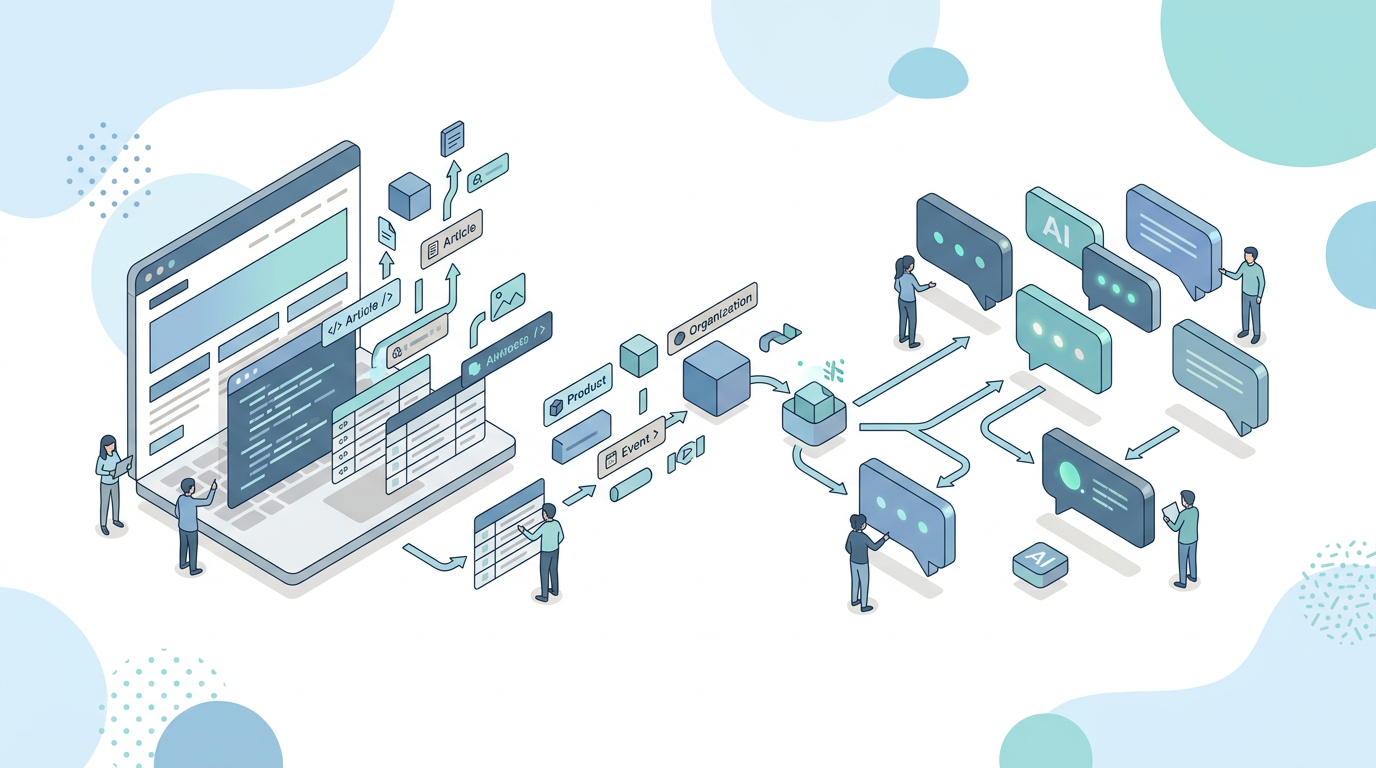
Add structured data. If you do not have FAQ schema, LocalBusiness schema, or Service schema on your key pages, that is your first technical priority. Schema markup is how you tell AI crawlers the meaning behind your content, not just the text.
Create or update your llms.txt file. This file lives at your domain root and gives AI systems a structured map of your most important pages. Sites with a clean llms.txt are seeing significantly more accurate AI-generated summaries and citations. If you have not set one up yet, our guide on optimizing your LLMs.txt for AI search walks through the format step by step.
Review your page clarity. Read your homepage out loud. If you cannot explain what your business does in two sentences from the content on that page, an AI agent cannot either. Cut the jargon. Lead with the value.
Why This Is an AEO Problem, Not Just an SEO Problem
Traditional SEO gave you a set of ranking signals to optimize for. You could chase keywords, build links, and improve page speed. The signals were relatively stable and the playing field was defined.
AI search does not work that way. There is no single ranking algorithm. Each AI platform has its own retrieval logic, its own training data, and its own way of deciding which sources to trust. Optimizing for AI search, what we call answer engine optimization, requires a different approach entirely. It is less about signals and more about clarity, authority, and structure.
Businesses that understand this distinction are getting cited in AI answers. The ones still running a 2022 SEO playbook are watching their organic traffic erode with no clear explanation.
The Window Is Still Open
Most businesses are behind on this. That is actually an opportunity. The companies that show up consistently in AI search answers over the next 12 months are the ones doing this work now, before it becomes standard practice.
If you want to know how your site performs when an AI agent visits it, we offer a free AEO audit through our SEO services page. We will show you exactly what AI crawlers see, what they miss, and what changes would make the biggest difference.
The agents are already visiting. The question is what they find when they get there.