Your Social Response Time Is A Sales Problem
Slow replies on social cost trust, weaken lead quality, and leave buyers hanging. In 2026, response speed is part of the sales experience.
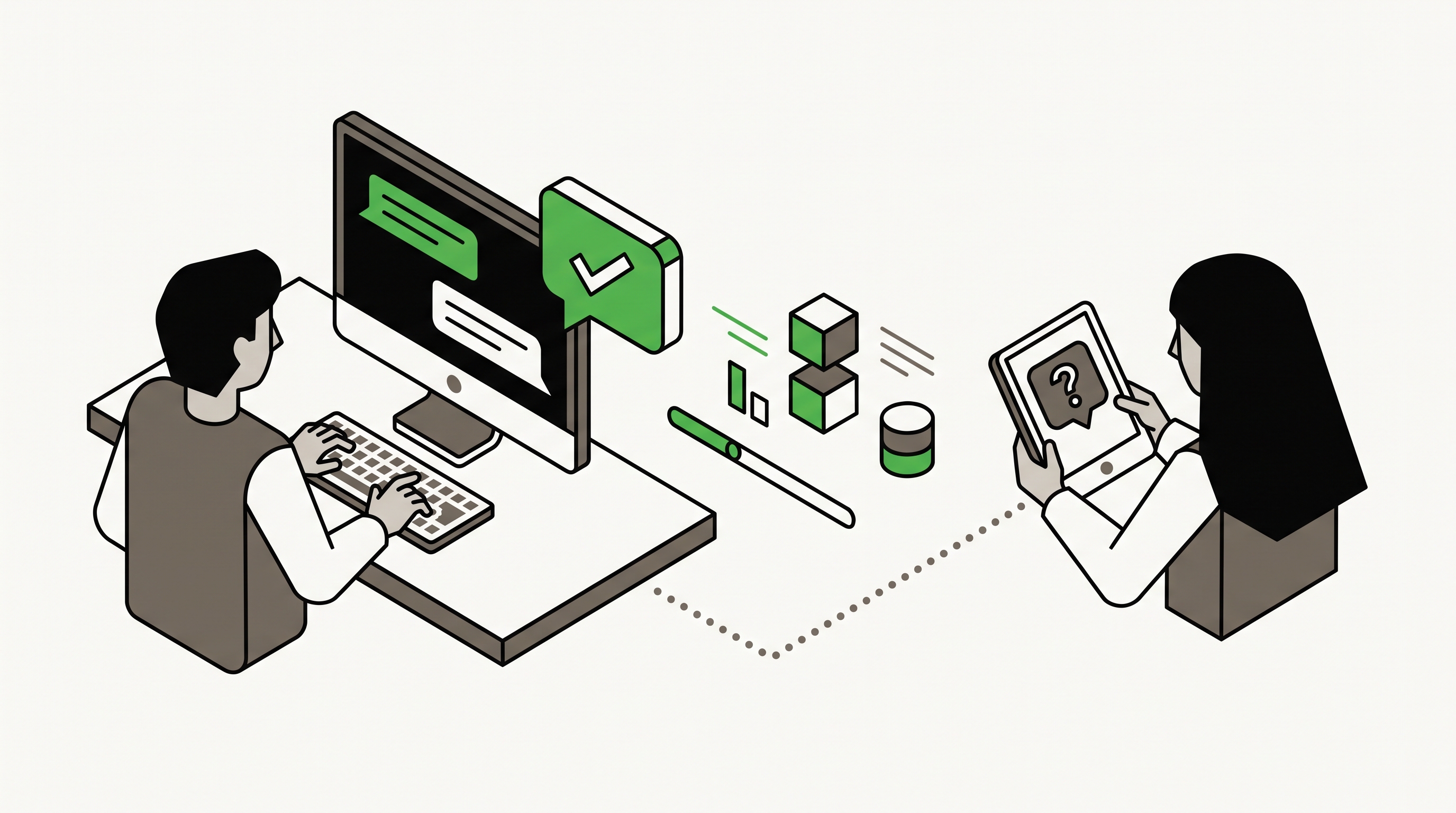
Your social response time is not a community-management metric anymore. It is part of the sales experience.
That matters because more buying journeys now pass through comments, DMs, and tagged posts before they ever reach a contact form. Hootsuite’s July 30, 2026 guide to social media customer engagement makes the problem plain: scattered DMs and missed comments cost brands trust, and for many brands social is the first real conversation a customer has with them.
This is the shift more businesses need to catch up with. Social used to sit off to the side of the funnel. Now it sits much closer to decision-making. HubSpot’s July 15, 2026 research on the future of social media says platforms are moving away from social graphs toward interest-based discovery, while social keeps absorbing search, shopping, and customer service into one place.
Slow Replies Change How Buyers Judge You
This is why response speed has stopped being a support-team detail.
Sprout Social’s 2026 State of Social Media found that 84% of consumers say speed of response affects how they perceive a brand. Buyers use response behavior as a shortcut for competence. If a business is slow in public, people assume it may be slow in private too.
That is especially true for local businesses, service companies, healthcare groups, and B2B firms where uncertainty is already part of the sale. A prospect who asks about pricing range, turnaround time, insurance, availability, or next steps is not casually browsing. They are trying to reduce risk. If they get silence, the silence becomes an answer.
This is also why our earlier post on social media for businesses that are not pretty or viral matters. Social works for serious, unglamorous businesses when it helps buyers verify the business is real, competent, responsive, and active. Response speed is one of the clearest ways to prove that.
Missed DMs Quietly Hurt Lead Quality
The biggest cost is not always the lost lead you can see. It is the lower-quality funnel that builds around weak expectations.
Hootsuite’s July 29, 2026 guide to social media best practices says timely responses build trust and drive sales, and that analytics should connect social activity to real business outcomes. If social replies are disconnected from sales, service, and operations, the team may still be posting regularly while missing the conversations closest to revenue.
Older benchmark data still helps explain the expectation gap. HubSpot’s updated guide to social media response time expectations says 79% of customers expect a response to social posts within 24 hours, while 39% expect a response within 60 minutes. You do not need to hit every message in under an hour to learn from that. You just need to admit that most brands are still staffed and routed like social is optional.
When that happens, lead quality drops in two ways:
- high-intent prospects leave before sales ever speaks to them
- lower-fit prospects keep filling the gap with assumptions, confusion, or public frustration
That second point gets missed a lot. A slower response process does not only reduce volume. It also makes the conversations you do get messier and harder to qualify.
The Real Fix Is Workflow, Not More Posting
Most teams do not have a content problem here. They have a routing problem.
Hootsuite’s customer engagement guide recommends centralized systems, standardized workflows, and clear routing rules so messages do not get stranded across platforms. Meta’s June 3, 2026 announcement for Meta Business Agent points to the same operational pressure from the platform side: more than one million businesses are already using the tool, and Meta says there are more than one billion active threads with businesses each day across WhatsApp, Messenger, and Instagram.
For most brands, the first fix is simpler than it sounds:
- route comments and DMs into one owned inbox
- separate sales questions from service issues and general chatter
- set response-time goals by channel
- give the team approved answers for common questions
- escalate nuanced leads to the right person fast
At Emarketed, we have seen how much public trust affects performance across channels. Seasons in Malibu generated 814,230 social impressions in a recent month while holding 4,200+ keyword rankings. That kind of visibility only helps if the brand also looks active and credible when people test it in public.
If your team wants a stronger social foundation, social media management should not be treated like a posting service. It should be treated like a response system tied to trust, lead quality, and revenue.
What To Do Monday Morning
Open your last 20 social DMs and comment threads that had any buying intent in them. Count how many got a useful answer fast, how many sat too long, and how many never reached the right person. That number will tell you more about your real social media performance than follower growth this month.
In 2026, buyers are using social to discover, verify, compare, and contact brands in the same session. If your response workflow is slow, social is not just underperforming. It is quietly teaching prospects to trust someone else first.