AI Search Sends Less Traffic — Why Your AEO Strategy Needs to Adapt Now
Organic CTR drops 61% with an AI Overview, but cited brands get 35% higher CTR — why your AEO strategy must adapt to less traffic.

The objection comes up in almost every conversation about AEO: “We’re not seeing the traffic from AI search.” It’s usually delivered as a reason to wait, to deprioritize, to keep focusing on what worked before. The implication is that if AI search isn’t moving the sessions needle, it doesn’t need to move up the priority list.
This argument is built on a misunderstanding of what AI search is doing to traffic, and what kind of traffic actually matters.
Here is what the data shows. When a Google AI Overview is present on a query, organic CTR for that query drops 61%. That’s the penalty for everyone who isn’t cited. But when your brand IS cited inside the AI Overview, your organic CTR on that same query is 35% higher than the baseline without any AI Overview at all. Same search. Same results page. Two completely different outcomes depending on whether you’re in the answer or not.
That’s not a traffic story. That’s a winner-take-most story.
The Metric That Actually Matters
Most marketing teams are measuring AI search impact by looking at sessions. Traffic from “AI referral” shows up in analytics, they benchmark it against organic, and it looks small. Conclusion: AI search isn’t a meaningful channel yet.
What they’re missing is that AI search doesn’t work the way organic search works. The volume-first logic that made traffic a reliable proxy for channel health breaks down entirely when the channel’s function is to filter and qualify rather than to distribute.
In traditional search, a lot of people click through to figure out if a page is what they need. Bounce rates exist because users are doing early-stage evaluation in the click itself. AI search moves that evaluation upstream. By the time someone follows a citation out of a ChatGPT or Perplexity answer, they’ve already processed a synthesized summary, compared providers, and decided they want to know more about that specific source. The click is not the beginning of consideration. It’s close to the end.
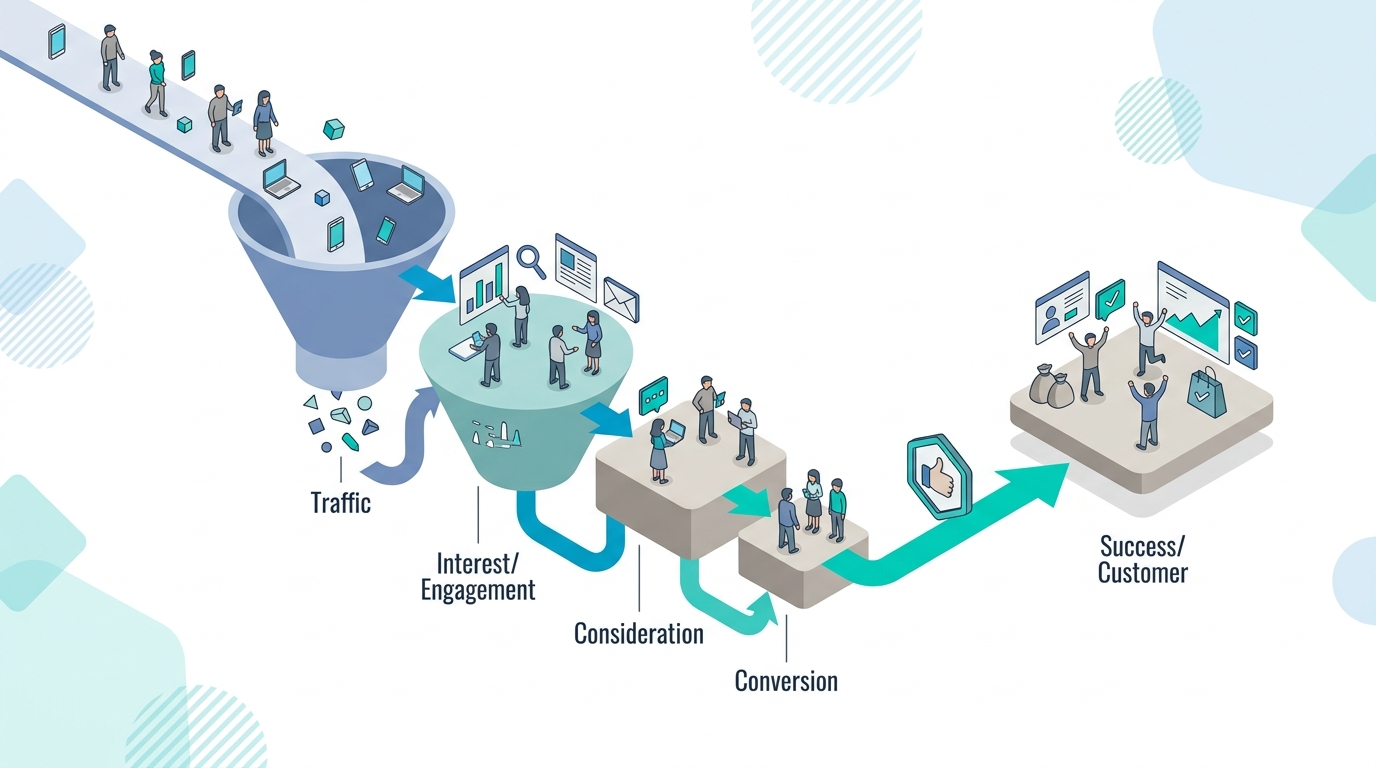
This shows up clearly in where AI referral traffic lands. Research compiled by Position Digital found that bottom-funnel content, specifically case studies, pricing pages, and comparison content, gets the highest AI referral traffic. Top-funnel “what is” and “how-to” content saw significant drops. AI search is collapsing the top of the funnel and delivering users who are closer to a decision.
For agencies, this is a meaningful shift. A client who gets 200 AI-referred visitors to their pricing page in a month is generating more pipeline value than 2,000 organic visitors who landed on a blog post and bounced. The sessions number looks worse. The business outcome is better.
The Third-Party Citation Advantage
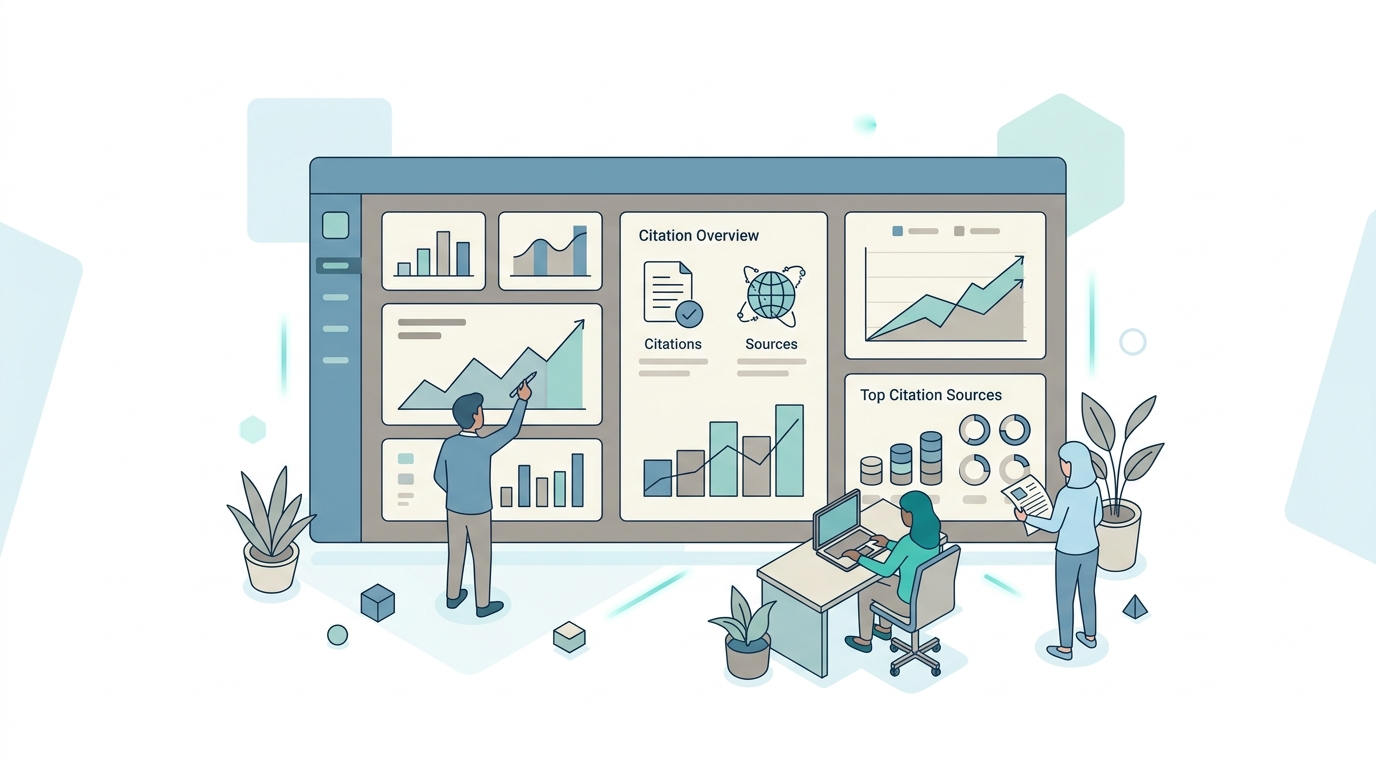
The same Position Digital research surfaces another data point that most agencies haven’t built into their strategy yet: brands are 6.5x more likely to be cited by AI search through third-party sources than through their own website content.
That single finding should reshape how agencies think about content strategy and PR. Writing content on your own domain is necessary but not sufficient. AI systems build authority models from the full web. A mention of your agency in a Search Engine Journal article, a quote from your team in a HubSpot report, or a citation of your case study data in an industry roundup contributes more to your AI citation probability than another blog post on your own site.
This is the core reason why clients who invest only in their own content are underperforming in AI search relative to clients who pair content with consistent outreach and editorial placement. The citation footprint that determines AI visibility is largely built off-site.
For B2B companies where target buyers are doing vendor research in Perplexity or ChatGPT, this has immediate implications. If the only places your brand appears are your own website and whatever ads you’re running, you are not building the kind of third-party signal that AI systems trust. You may have great content, optimized perfectly, and still not show up when a decision-maker asks an AI assistant for a shortlist.
Where the First 30% of Your Content Goes
One more specific finding worth building into your content process. Analysis of LLM citation patterns found that 44.2% of all citations pull from the first 30% of a page’s text.
This is counterintuitive if you write content the traditional SEO way, where introductions are treated as necessary preamble before the real substance begins. A lot of content leads with context-setting, background information, and definitions before getting to the actual substance. AI systems aren’t reading for context. They’re scanning for citable, authoritative statements they can pull into an answer.
If your most credible claims, your specific data points, and your clearest expert positions are buried in the second half of a 2,000-word post, they are not contributing to your citation probability. Restructuring content to lead with substance rather than setup is one of the highest-leverage, lowest-cost changes a content team can make. It does not require a site redesign or new tools. It requires editing the existing architecture of how you open every page.
For service pages, this matters as much as blog content. A service page that opens with three paragraphs about your company’s history and philosophy before explaining what you actually do and who you help is leaving most of its citation potential on the table.
How Hughes Auctions and LA Roofing Materials Got Cited
Two Emarketed clients in non-healthcare verticals illustrate what this looks like in practice. Hughes Auctions grew AI mentions by 165% with a strong surge in SERP Features as their AEO strategy began pulling in AI Overview placements. LA Roofing Materials went from near-zero organic presence to over 2,000 keyword rankings and a 258% surge in AI mentions.
Neither result came from traffic optimization. Both came from content architecture changes (leading with specific answers, adding structured data, building depth on core topics), paired with consistent off-site mention building in relevant directories and industry publications. The AI visibility followed from those structural changes. The traffic followed from the AI visibility.
This sequencing matters because it tells you what to fix first. Agencies that chase AI referral traffic directly, by trying to game citation patterns post-hoc, tend to get inconsistent results. The underlying authority signals either exist or they don’t. Building them is slower and less exciting than a campaign launch, but the results compound in a way that campaign-based approaches don’t.

The Content Format Question
One practical implication of the 44.2% first-30% stat: the format of your content matters, but not in the way most people think.
Structured content with clear headings, lists, and FAQ sections outperforms undifferentiated prose in AI citations. That’s been confirmed across multiple studies. But structure alone is not the variable. Structure in service of getting the right information in front of AI scanners early is what drives citation probability.
An FAQ section buried at the bottom of a page below eight H2 sections of background content is less effective than an FAQ that appears within the first third of the page, where the most common questions are addressed directly before the supporting explanation follows. Some content teams have started inverting their traditional structure: answer first, then support. That format is outperforming traditional narrative structures in AI citation rates, and it also tends to improve time-on-page and user satisfaction for human readers who came to find a specific answer.
The AI Search Optimizer can help you evaluate how your current content is positioned for AI citation and surface structural gaps before you spend time on content you don’t need.
The Correct Framing for 2026
The traffic objection to AEO investment is based on a category error. It applies volume logic to a channel that operates on quality and position logic. AI search does not reward reach. It rewards being the cited source on the queries that matter.
For a query where your buyer is making a vendor decision, being cited in a Perplexity answer is worth more than ranking third on a Google results page that also has an AI Overview, two ads, and a featured snippet above it. The page rank still matters, because AI systems draw on organic authority signals. But rank without citation is increasingly a metric for a world that no longer quite exists.
The share-of-model metric is the clearest way to measure this: what percentage of times your target queries are answered does your brand get named? That number is trackable, it moves with content and outreach work, and it correlates to business outcomes in ways that sessions from blog traffic often do not.
Building toward that metric is the work. The traffic will take care of itself.
FAQ
If AI search sends less raw traffic, how do I justify AEO investment to my clients?
Lead with the CTR data: a 61% drop for brands not cited vs. a 35% lift for brands that are. That framing resets the question from “how much traffic does AI send” to “what is it worth to be the cited source versus the invisible alternative on your most important queries.” For clients who can tie revenue to specific query categories, this math is usually compelling quickly.
Does organic SEO still matter if AI citation is the goal?
Yes, but the relationship is more complex than it used to be. AI systems do draw on organic authority signals, and strong rankings correlate with higher citation probability on many queries. But the correlation is not consistent across all AI platforms. Perplexity and ChatGPT both cite sources that have strong third-party mention footprints even when those sources don’t rank in the top three organically. SEO is an input, not a guarantee.
What content should I prioritize for AI citation?
Bottom-funnel content first: pricing pages, comparison pages, case studies, and anything that addresses specific purchase or decision-stage questions. These pages get the highest AI referral traffic and are closest to revenue. After those are optimized, work backward up the funnel on the specific questions your buyers are asking in AI search.
How important is schema markup for AI citation?
Schema helps AI systems correctly categorize and classify your content. It does not directly guarantee citation, but it reduces the chance of misinterpretation. For organizations with complex service structures (like multi-location healthcare systems or agencies with multiple practice areas), schema is particularly important for making sure AI systems understand what you do, where you do it, and who is qualified to speak to it.
Why are brands cited more through third-party sources?
AI systems are designed to synthesize across sources rather than to serve as a distribution channel for any single website’s content. A brand that appears across multiple authoritative third-party sources is seen as more established and trustworthy than a brand that only appears on its own domain. This mirrors how human credibility works: being quoted in an industry publication carries more weight than quoting yourself.
How do I build a third-party citation footprint?
Start with the sources that AI systems already trust: major industry publications, Wikipedia (where applicable), authoritative directories, and association websites. Guest contributions, expert quotes in roundup articles, data studies that get cited by other publishers, and podcast appearances all build the kind of distributed mention pattern that AI systems treat as an authority signal. This is slower than on-site content work, but it is also harder to replicate and tends to have a longer shelf life.