Service Pages That Rank, Convert, And Get Cited By AI
Learn how to build service pages that rank in search, convert qualified buyers, and earn AI citations with better structure, proof, FAQs, schema, and CTAs.
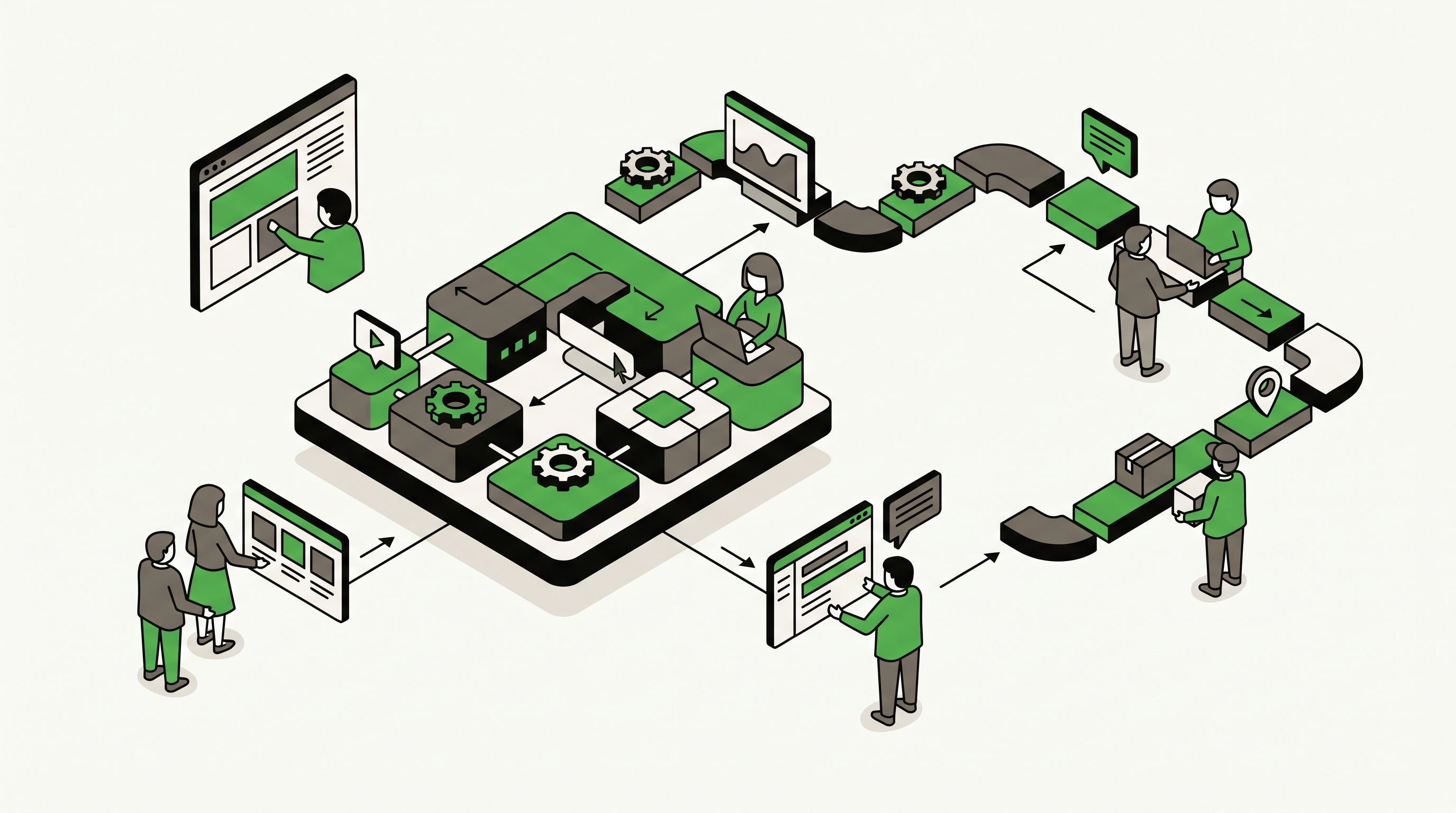
Service pages are doing three jobs now: they have to rank in traditional search, help a buyer decide, and give AI systems enough clear language to cite. If your page still reads like a brochure, it is underperforming on all three fronts.
That shift is measurable. In a March 2, 2026 Ahrefs analysis of 863,000 keyword SERPs and 4 million AI Overview URLs, only 38% of cited pages also ranked in Google’s top 10. Google also says its AI features may use a query fan-out technique, which means the system can test related subtopics and surface supporting pages beyond the obvious ranking set. A service page that barely explains the service is not built for that environment.
This is why strong SEO services now overlap with answer engine work. The page still needs search fundamentals, but it also needs direct answers, visible proof, structured FAQs, and a conversion path that survives both a click and a citation. If you want a companion read on citation patterns, our post on what content gets cited by AI fills in the retrieval side.
This playbook shows what a modern service page actually needs, block by block, so it can rank, convert, and hold up when AI systems summarize your offer.

Why Generic Service Pages Fail Faster In 2026
Generic service pages used to survive on domain strength, internal links, and a decent title tag. That is less reliable now because the page has to support two kinds of evaluation.
First, Google still wants helpful pages with a clear purpose. Its people-first content guidance asks whether the main heading offers a descriptive, helpful summary and whether the content shows first-hand expertise and depth of knowledge. Those are not soft editorial preferences. They are practical ranking criteria for commercial pages that need to prove they understand the service, the buyer, and the outcome.
Second, AI search systems are looking for passages they can reuse. Google says important content should be available in textual form, supported by internal links, and paired with structured data that matches the visible page copy. If your key details sit inside sliders, tabs, vague icon rows, or one-line blurbs, the machine has less to work with and the buyer has less reason to trust you.
That is why weak service pages tend to break in the same three places:
- They hide the answer. The page takes too long to say what the service is, who it is for, and what problem it solves.
- They hide the proof. The claims are polished, but there is no real evidence, operating detail, or buyer context.
- They hide the next step. The CTA asks for a call before the page has earned enough trust to get one.
For local businesses, healthcare brands, and B2B service companies, this problem is even sharper. Buyers are comparing options, asking pricing questions, checking fit, and looking for credibility before they convert. If your service page cannot carry that part of the journey, rankings alone will not save it.
The Nine Blocks Every Modern Service Page Needs
The easiest way to improve a weak service page is to stop treating it like one long sales pitch. Build it like a decision page. The structure below works because each block serves both SEO and conversion, while also making the page easier for AI systems to interpret.
1. A Direct-Answer Hero
The first screen should explain the offer in one plain sentence. Not brand poetry, not vague positioning, just the answer.
A strong hero usually includes:
- the service
- the audience
- the core outcome
- a clue about geography or niche when relevant
For example, a local SEO page should say whether it serves multi-location brands, a single metro area, or a niche like behavioral health or legal. A B2B paid media page should say whether it is built for lead generation, demand capture, or account-based campaigns.
This helps rankings because it aligns the page with the terms and modifiers buyers actually use. It helps conversion because the visitor can confirm fit immediately. It helps AI because the summary is easy to quote.
2. Buyer Fit And Service-Area Detail
Most service pages blur every possible client into one audience. That creates generic copy and weak intent alignment. A better page spells out who the service is best for, who it is not for, and what conditions make it a strong fit.
For local brands, this is where service-area detail matters. Google Business Profile says local visibility is mainly shaped by relevance, distance, and popularity. Your site cannot control distance, but it can strengthen relevance with language about markets served, common customer problems, and the service scenarios you handle best.
This section should answer questions like:
- What kind of company gets the most value from this service?
- What stage is the buyer usually in when they hire you?
- What problems are usually already present?
- What geographic or vertical constraints change the approach?
When pages skip this, they rank for broad terms and convert poorly. When they include it, they attract better-fit traffic and make the page more useful for comparison queries.
3. Pricing Variables, Not Fake Flat Rates
One of the fastest ways to improve a service page is to address price without pretending every engagement costs the same. Buyers ask AI tools about cost early, especially in healthcare, home services, and B2B. If your page never talks about pricing logic, someone else will frame the answer for you.
You do not have to publish a fixed package table if that does not match the business model. You do need to explain what affects cost.
Useful pricing-variable sections often cover:
- scope of work
- geography or number of locations
- technical complexity
- content or creative volume
- compliance requirements
- reporting depth
That kind of specificity does two jobs. It filters out low-intent leads who want a commodity price, and it reassures qualified buyers that there is a real delivery model behind the offer.
4. A Visible Process Section
Service pages convert better when the buyer can picture what happens after the form fill. They also rank better because process language adds meaningful, non-fluffy text about how the work is done.
Keep this section concrete. Five to seven steps is usually enough. Name the actions, the outputs, and the decision points.
A solid process section might include:
- Audit and baseline review
- Strategy and page priorities
- Implementation across site structure, copy, or campaigns
- Reporting and measurement
- Iteration based on performance
For AI retrieval, process sections are valuable because they answer operational prompts like “what does this service include?” or “how does an agency handle local SEO for multiple locations?” Those are common mid-funnel questions.
5. Proof That Sounds Like Operations, Not Advertising
Proof blocks are where most service pages lose the plot. They either dump logos with no context or make abstract claims about growth. Neither one helps much.
The best proof sections include one or two grounded examples that show the service working in a real setting. At Emarketed, we have seen how much this matters in high-trust categories. Seasons in Malibu holds 4,200+ keyword rankings and generated 814,230 social impressions in a recent month while building durable visibility across SEO, AEO, paid search, social, and web. That is stronger proof than generic language about integrated marketing.
Proof can take several forms:
- a short case-study snapshot
- one metric with context
- a before-and-after operational change
- a quote tied to a real outcome
- a niche-specific example of how the work differs
Google’s people-first guidance asks whether content provides substantial value and demonstrates real expertise. This is one of the clearest ways to do that on a commercial page.

6. Comparison Language That Reduces Buyer Confusion
Commercial pages should help a buyer sort adjacent options, not just repeat the name of the service. That means explaining what the service is not.
Useful comparisons include:
- SEO vs AEO
- local SEO vs paid ads
- in-house execution vs agency support
- one-off website work vs ongoing search growth
Comparison language helps rankings because it brings in natural modifier terms. It helps conversion because it lowers friction for buyers who are still choosing between categories. It helps AI because comparison passages are easy to retrieve for recommendation-style prompts.
Keep these sections balanced. The point is not to attack the alternative. The point is to help the reader make a better decision and show that you understand the tradeoffs.
7. FAQ Content Built From Real Sales Conversations
FAQ sections still work when they are built from actual objections and match what is visible on the page. Google’s FAQPage documentation is explicit that FAQ content must be visible to the user on the source page and that health-focused sites can still use this markup where appropriate.
That matters for healthcare and other high-consideration services, but the bigger lesson applies everywhere: FAQ is not a schema trick. It is a trust and retrieval format.
Good service-page FAQs tend to answer:
- how long the work usually takes to show movement
- what the service includes first
- whether it works for a certain business type
- what makes the approach different
- what happens if the business already has an agency or internal team
The mistake is writing throwaway FAQ copy that exists only to check a box. If the questions do not sound like something a prospect would actually ask on a call, rewrite them.
8. Schema And Visible Copy That Match
Structured data helps when it clarifies a page that is already good. It does not rescue a page that is vague.
Google says structured data should match the visible text on the page. That is important because many service pages add schema after the fact, while the copy itself still says almost nothing. Start with the visible explanation. Then mark up what is genuinely there.
Depending on the page, that can include:
- FAQPage when the page qualifies
- Organization details
- Local business information where relevant
- Breadcrumbs
- Review markup where supported and accurate
The principle is simple: if a buyer cannot see it, the schema should not be trying to invent it.
9. A CTA That Fits The Stage Of Intent
The final block is the CTA, and this is where a lot of otherwise solid pages get too aggressive. Asking for a strategy call is fine if the page has already answered fit, process, proof, and pricing variables. If not, the ask is premature.
A strong CTA does three things:
- reminds the reader who the service is for
- gives one clean next step
- reduces uncertainty about what happens next
That might be a call, an audit, or a contact form, but the wording should reflect the actual maturity of the buyer. High-intent pages perform best when the CTA feels like the next logical move, not a leap.
How To Audit An Existing Service Page In 30 Minutes
If you already have service pages live, use this fast audit before you rewrite anything.
Check The Top 300 Pixels
Read only the headline, subhead, and first paragraph. Can a stranger tell what the service is, who it is for, and why they would choose it? If not, start there.
Highlight Every Specific Detail
Mark every sentence that includes a real detail: audience, geography, deliverable, timeframe, proof point, or pricing variable. If the page has very little highlighted text, it is too generic.
Pull Questions From Sales Calls
Look at recent call notes, email threads, or intake forms. Add the four to six most common questions directly to the page. This is usually the highest-return rewrite you can make.
Review Internal Links
Make sure the page links out to the strongest supporting asset and that at least one related post links back in. This strengthens both user pathways and crawl paths.
Test The CTA Honestly
Ask whether the page has earned the ask. If the CTA comes before fit, process, and proof, move it down or strengthen the copy above it.

What To Do Monday Morning
Start with your highest-value service page, not your lowest-performing blog post. Rewrite the hero. Add buyer-fit language. Publish pricing variables. Show the process. Pull in one proof point. Add real FAQs. Then make sure the structured data matches what the page actually says.
That sequence matters because it fixes the page for rankings, for buyers, and for AI retrieval at the same time. When teams skip straight to schema or publish more top-of-funnel content instead, they usually leave the commercial page weak.
The opportunity is not theoretical. A better service page can improve organic relevance, produce better leads, and make your offer easier for AI systems to cite when prospects ask commercial questions. If your core pages still sound interchangeable, that is probably the next fix with the highest upside. If you want a second set of eyes, talk with Emarketed about where your service pages are losing clarity, trust, or retrieval value.
FAQ
Should Service Pages Target Rankings Or Conversions First?
They should do both. A page that ranks but does not explain fit or proof wastes traffic. A page that converts but lacks clear search signals struggles to get discovered. The best service pages are built as search assets and decision assets at the same time.
Do AI Systems Really Cite Service Pages For Commercial Queries?
Yes. Commercial prompts often ask who offers a service, how providers differ, what the process looks like, and what a buyer should expect. Those are questions a strong service page can answer directly.
How Many FAQs Should A Service Page Have?
Four to six is usually enough. More than that can work, but only if the questions are distinct and genuinely helpful. Repetitive filler makes the page longer without making it better.
Should Every Service Page Mention Pricing?
Every service page should address pricing logic, even if it does not publish fixed prices. Buyers want to know what changes the cost. Hiding that discussion creates mistrust and sends the question to another source.
What Is The Fastest Improvement For A Weak Service Page?
Rewrite the top of the page so it clearly states the service, the audience, and the outcome. Then add one proof block and one real FAQ section. Those changes usually improve clarity faster than a full redesign.