Why Your Service Pages Are Not Turning Traffic Into Leads
Service pages lose leads when they hide buyer fit, proof, and next steps. Here is how to fix the pages that rank but still fail to convert.
Your service pages do not need more traffic if the traffic already arriving cannot tell whether you are the right fit. That is the real leak on a lot of agency, local-service, and healthcare sites in 2026. The page ranks, the click happens, and the buyer still leaves because the page never answers the decision questions that matter.
That problem is getting more expensive. HubSpot’s 2026 marketing statistics say lead quality and MQLs are the most important success metric for marketers, while nearly 70% report that leads are arriving later in the buying process after doing more AI-assisted research. By the time someone lands on your service page, they are usually not looking for a soft introduction. They are checking fit, proof, friction, and next steps.
The Traffic Problem Is Usually A Decision Problem
A weak service page often gets blamed for the wrong thing. Teams say it needs more backlinks, more traffic, or a stronger CTA. Sometimes that is true. More often, the page is failing in the middle of the journey.
Buyers now verify almost everything before they act. Yext’s 2026 Consumer Search Behaviors Report found that more than 93% of AI users take at least one verification step before choosing a local business. Fifty-eight percent visit the business website directly, and 34% cite star rating as the top purchase influence after an AI recommendation. That means your service page is not just a pitch page. It is part of the verification stack.
This is why a page can rank and still underperform:
- It tells the visitor what you do, but not who you are best for.
- It makes claims, but does not offer enough proof to support them.
- It asks for a call before the page has lowered enough risk.
- It sends mobile visitors into a clumsy form or a weak next step.
If that sounds familiar, the page is not losing a visibility battle first. It is losing a trust and clarity battle.
Where Weak Service Pages Break First
The pattern is usually obvious once you stop reading like a marketer and start reading like a buyer.
They Describe The Service But Not The Buyer
Many service pages open with broad language about growth, results, or solutions. That sounds polished, but it does not help a real prospect decide whether the page is meant for them.
A better opening gets specific fast. It says whether the service is built for local brands, healthcare teams, B2B companies, ecommerce operators, or multi-location businesses. It names the actual problem, not just the category.
If someone lands on a page and cannot tell within a few seconds whether you solve their version of the problem, the page is forcing them to do unnecessary work.
They Hide Proof In The Wrong Places
Proof is often buried in a case study library, tucked into testimonials that say very little, or left off the page completely. That is risky because later-stage buyers are looking for evidence, not adjectives.
The strongest proof blocks usually include one of these:
- A short client example with a measurable outcome
- A narrow description of how the work is handled
- A specific before-and-after fix
- A niche detail that shows you understand the category
The page does not need a giant case study. It needs enough operational proof to make the offer believable.
They Ask For The Call Too Early
This is one of the biggest mistakes on service pages. The CTA appears before the page has explained process, scope, fit, or cost drivers. That can hurt lead quality as much as volume because the wrong people will convert while better-fit buyers stay uncertain.
The ask should match the maturity of the visitor. If the page has not answered the main objections yet, “Book A Strategy Call” can feel like a jump. In many cases, a softer but clearer next step performs better because it feels earned.
What Better Service Pages Do Instead
The fix is not to turn every page into a 3,000-word guide. The fix is to make the page easier to trust and easier to act on.
Unbounce’s conversion benchmark report is based on more than 41,000 landing pages, 464 million visitors, and 57 million conversions. One of its clearest takeaways is that message match and mobile performance still move results in a measurable way. In other words, the page should feel like the promised next step from the search, ad, or recommendation that brought the visitor there.
For most service pages, that means five practical upgrades:
1. Lead With Buyer Fit
Open with a plain sentence that explains the service, the audience, and the outcome. A local SEO page should not read like a B2B demand-gen page. A rehab marketing page should not sound like a generic agency template.
2. Add Pricing Logic Without Fake Precision
You do not need to post flat rates if your work is custom. You do need to explain what affects cost. Scope, geography, number of locations, technical complexity, creative load, and reporting depth are all useful signals. Buyers want to know whether your pricing has logic behind it.
3. Show The Process
A short process section lowers uncertainty. Audit, plan, implementation, reporting, and iteration is often enough. The point is to help the buyer picture what happens after the form fill.
4. Put Real Proof Near The Middle Of The Page
This is where a lot of pages go vague. Put one concrete proof block where it can actually help the buyer decide. If you do work in high-trust categories, this matters even more because the reader is often validating whether your expertise is real.
5. Reduce Mobile Friction
Unbounce also notes that mobile conversion rates often lag desktop even when mobile traffic volume is much higher. That makes service-page friction a real revenue issue, not just a UX issue. If your form is awkward on mobile, your CTA is buried, or the key proof sits too low, you are losing intent you already paid to earn.
The 30-Minute Teardown To Run This Week
If you want a fast way to audit an existing page, use this sequence.
Read Only The First Screen
Look at the headline, subhead, and first paragraph. Can a prospect tell who the page is for, what the service does, and why it is different? If not, start there.
Count Specific Details
Highlight every line that includes a real detail: audience, geography, process, timeline, pricing variable, or proof point. If the page reads smoothly but has almost no specifics, that is the problem.
Check The Verification Stack
Ask whether the page gives a buyer enough to verify you. Remember that Yext found 58% of people visit the business website directly and many then keep checking reviews, sources, and other signals. Your page should support that verification step, not force the visitor back to Google.
Compare The CTA To The Commitment
Is the ask bigger than the confidence the page has built? If yes, either improve the page or soften the next step.
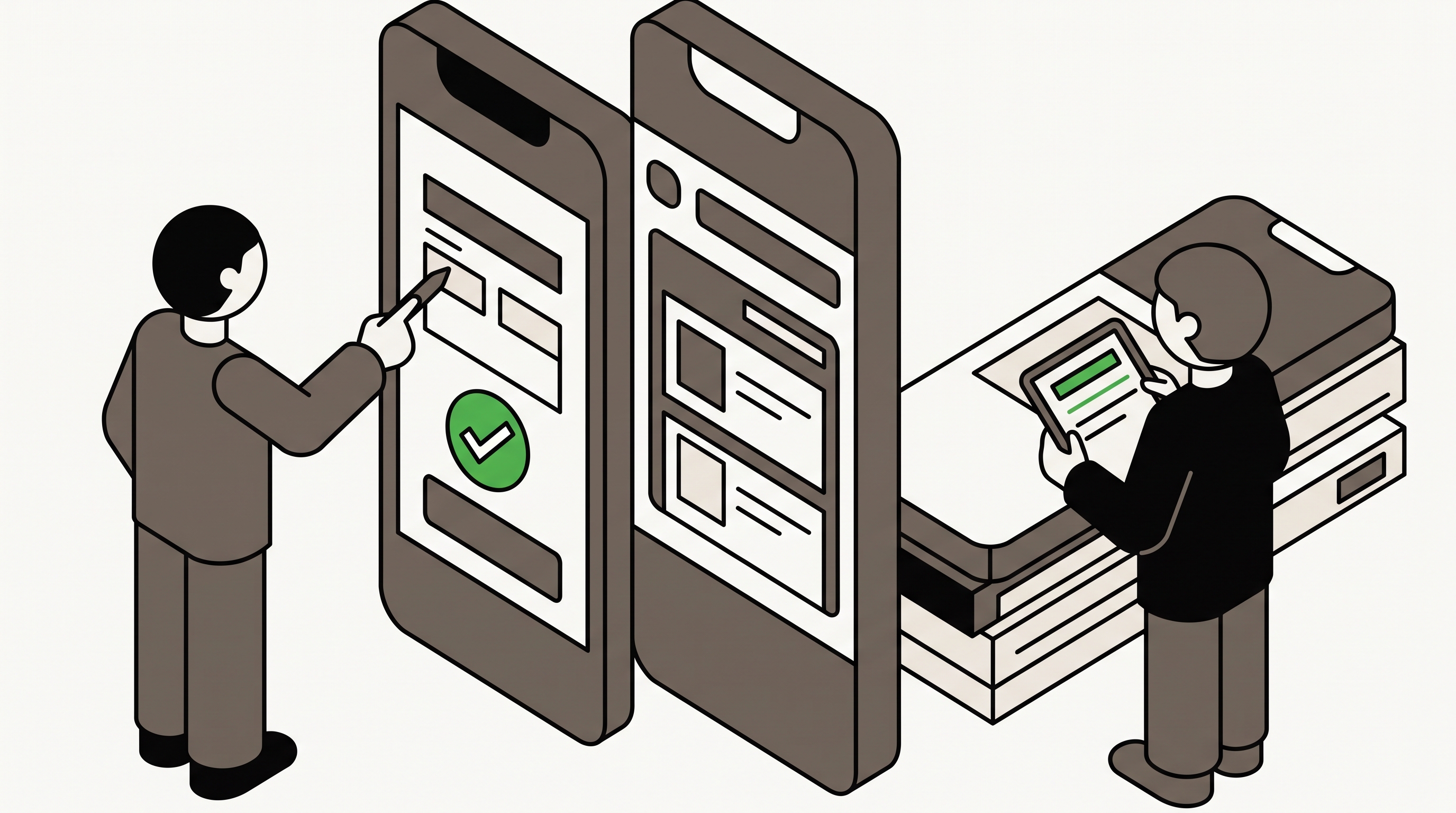
Test The Mobile Path
Open the page on a phone. Scroll like a distracted buyer. Can you find the proof, the process, and the CTA without pinching, hunting, or guessing? If not, the page is leaking intent on the highest-friction device.
What To Fix First If You Only Have One Sprint
Do not rewrite every section at once. Start with the biggest trust gaps.
First, rewrite the hero so the page names the buyer and the problem clearly.
Second, add one proof block that sounds like operations, not advertising.
Third, explain what shapes pricing or scope so qualified leads can self-sort.
Fourth, tighten the mobile CTA path and shorten any form that asks for more than the decision actually requires.
Fifth, make sure the page connects logically to the rest of the site. A strong SEO service page should not sit in isolation from supporting content. If the site itself still has technical or UX leaks, our recent post on website maintenance that prevents lead leaks is the right companion read. If the issue is broader trust in the work itself, how to know if your SEO agency is actually doing the work covers the reporting side.
The bigger point is simple: service pages are no longer just there to rank. They have to help a late-stage buyer decide. If they cannot do that, more traffic only makes the leak bigger. Fix the decision page first, then scale the visibility around it. That is usually the fastest route to better leads.