What Are Backlinks For SEO, And Do Small Businesses Still Need Them In 2026?
Backlinks still matter for small business SEO in 2026, but the winning strategy is trust, relevance, local proof, and AEO authority.
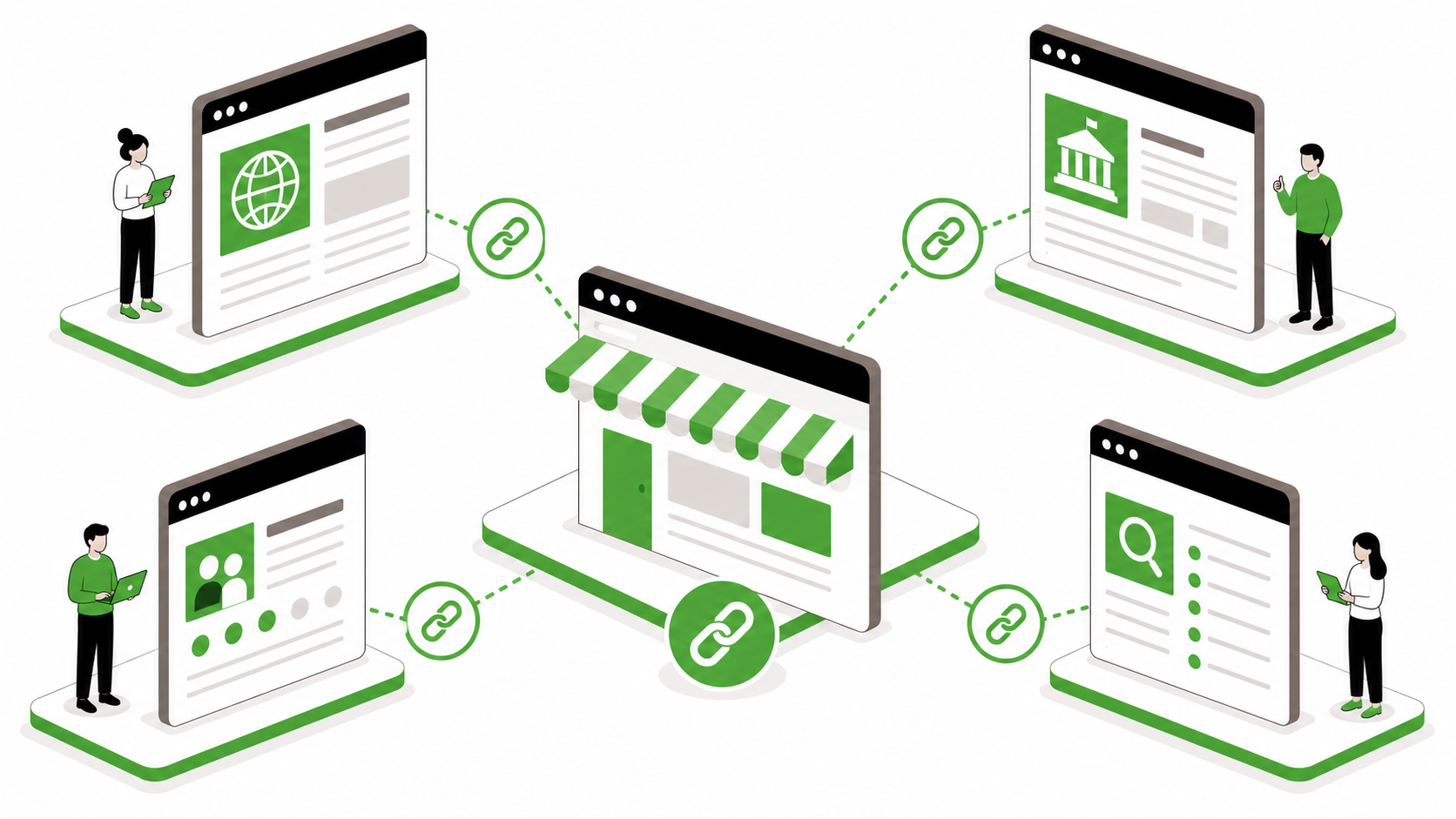
Backlinks are still one of the clearest ways the web tells search engines and AI systems that a business is real, relevant, and trusted.
That does not mean small businesses should chase every link they can buy, trade, or squeeze into a directory. The old backlink playbook was built around volume. The 2026 version is built around proof. A strong backlink today is less about gaming rankings and more about showing that credible third parties recognize your company, mention your services, and connect your brand to the topics you want to be known for.
For small businesses, that is good news. You do not need thousands of links to compete. You need the right links from the right places: local organizations, industry directories, partners, suppliers, media mentions, resource pages, case studies, and useful content that other sites have a real reason to cite.
That matters for SEO, and it now matters for AEO too. Search engines use links to discover pages and understand authority. Answer engines and AI assistants look across the web for corroboration. If your website says you are trusted but nobody else on the web supports that claim, the signal is thin. If your business appears consistently across credible sources, AI systems have more confidence when they summarize, cite, or recommend you.
What Is A Backlink?
A backlink is a link from another website to your website.
If a local chamber of commerce lists your business and links to your homepage, that is a backlink. If a supplier includes your company on a certified partner page, that is a backlink. If a local news site writes about your company and links to your services page, that is a backlink. If a blog references one of your guides as a helpful resource, that is a backlink too.
The simplest way to think about backlinks is this: every good link is a public reference. It tells search engines, AI crawlers, and buyers that another site thought your page was worth pointing to.
Not every backlink carries the same value. A link from a relevant local business association is usually more useful than a random link from a generic directory nobody visits. A link from a respected trade publication is stronger than a link from a low-quality guest post farm. A link from a real partner can help clarify your market relationships. A link from a spammy site built only to sell links can waste budget or create risk.
Google still explains links as part of how the web is discovered. In its guide to how Search works, Google says pages can be discovered when Google extracts a link from a known page to a new page. In its public explanation of ranking systems, Google also says one quality factor is whether other prominent websites link or refer to the content.
That is the core idea small businesses should understand. Backlinks are not just SEO points. They are discovery paths, authority signals, and trust references.
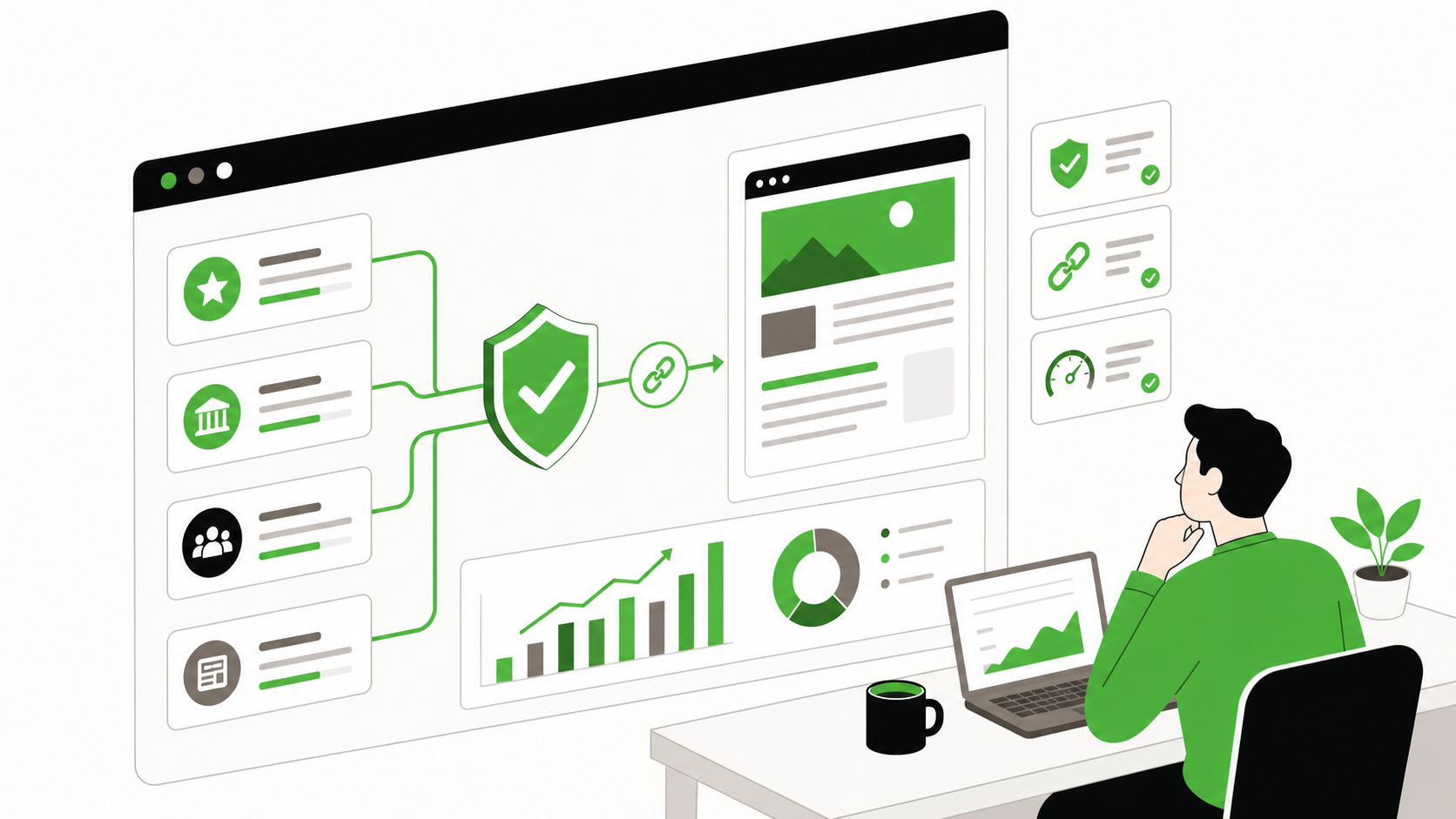
Why Backlinks Still Matter For SEO In 2026
Backlinks still matter because search engines do not evaluate your website in isolation.
Your own website can explain your services, locations, team, pricing, process, and results. That is the foundation. But search engines also look for external signals that help confirm whether your site deserves visibility. Links are one of those signals because they connect your site to the rest of the web.
For SEO, strong backlinks can help in five practical ways.
They Help Search Engines Discover Pages
Search engines crawl the web through links. If an important service page, resource, or location page is linked from other credible places, it has more routes into the index.
This does not replace technical SEO. Your site still needs clean navigation, XML sitemaps, internal links, and crawlable pages. But backlinks add outside discovery paths, especially for newer pages or smaller websites that do not have much authority yet.
They Support Authority
If credible sites repeatedly reference your business around the same topic, search engines get a stronger sense that your site is associated with that market.
For example, a local roofing supplier linked from contractor directories, home improvement resources, manufacturer partner pages, and local business organizations is sending a clearer signal than a roofing supplier with no outside references. A rehab center mentioned by health directories, treatment resources, professional associations, and local publications has more external proof than a center only describing itself on its own site.
Authority is not the same as popularity. For small businesses, authority often means being verifiably real in a specific market.
They Reinforce Relevance
The best backlinks come from sites that make contextual sense.
A dentist does not need links from random tech blogs. A law firm does not need links from coupon sites. A manufacturer does not need links from lifestyle guest post networks. Relevance matters because links are more useful when they help define what your business does and who it serves.
For small businesses, a smaller number of highly relevant links can be more valuable than a larger pile of weak ones.
They Build Local Trust
Local SEO still depends heavily on real-world proof.
Chambers of commerce, local news sites, sponsorship pages, community organizations, local guides, vendor pages, professional groups, and credible business directories can all help confirm that a company operates in a real place and serves a real market.
This is especially important in competitive local search, where many businesses have similar service pages. Links and citations from local sources help separate the companies that are visible in the community from the companies that only exist as websites.
They Create Referral Traffic
Not every link is valuable only because of rankings.
A link from a partner page, resource guide, local article, or niche directory can send buyers directly. That traffic may be smaller than organic search volume, but it can be high intent because the visitor arrives through a trusted context.
This is the practical test small businesses should use: would this link still be useful if search engines did not count it? If the answer is yes, it is probably the kind of backlink worth pursuing.
Why Backlinks Matter For AEO Too
AEO, or answer engine optimization, is about making your business easier for AI systems to understand, trust, cite, and recommend.
That changes how backlinks should be viewed. In traditional SEO, links are often discussed as ranking signals. In AEO, links and mentions also become corroboration signals.
AI systems do not only read your homepage. They pull context from across the web: articles, directories, review sites, public profiles, resource pages, schema, business listings, partner pages, and third-party references. When those sources consistently reinforce the same facts about your company, your entity becomes easier to understand.
That matters because answer engines often summarize rather than list. If a user asks for the best local service provider, a trusted healthcare option, a reliable manufacturer, or an agency with AEO experience, the system has to decide which businesses are worth including. It is more likely to trust a brand when claims are supported by sources beyond the brand’s own website.
This connects directly to our broader AEO services work. The goal is not just to publish content. The goal is to build a brand footprint that machines can verify.
Backlinks Help AI Systems Corroborate Claims
If your website says your company has served Los Angeles businesses for years, that is one claim. If your company also appears on local event pages, partner sites, industry directories, interviews, case studies, and client references, the claim gets stronger.
This is the difference between self-description and public evidence.
AI systems are increasingly built around source grounding, citations, and confidence. They need enough context to decide whether a business is credible. Backlinks and linked mentions give them additional paths to verify what your brand says about itself.
Backlinks Help Define Your Entity
Search engines and answer engines both need to understand entities: businesses, people, products, services, locations, and topics.
Backlinks can help connect those entities. A link from a trade association can connect your company to an industry. A link from a city business page can connect your company to a location. A link from a client case study can connect your company to a service category. A link from an event page can connect your founder or team to a topic.
This is one reason backlinks matter beyond raw domain authority. A relevant link tells machines what you are connected to.
Linked Mentions Are Easier For Machines To Follow
Unlinked brand mentions can still be useful because they add context. But linked mentions are cleaner because they create a direct machine-readable path.
If a trusted page mentions your company but does not link to your site, an AI system may still understand the association. If that page links to your site, the relationship is clearer. The link gives crawlers a path, users a route, and machines a stronger connection between the source and the destination.
Good Backlinks Versus Bad Backlinks
The question is not whether small businesses need backlinks. The better question is which backlinks are worth earning.
Google’s spam policies define link spam as creating links to or from a site primarily to manipulate search rankings. That is the line small businesses should avoid. If the link exists only because someone sold it as ranking fuel, it is probably not a durable asset.
Good backlinks usually have a few qualities:
- They come from real websites with a real audience.
- They are topically or locally relevant.
- They appear in a context that makes sense.
- They send potential buyers, partners, journalists, or researchers to a useful page.
- They use natural wording instead of forced keyword anchors.
- They reinforce a real relationship, resource, event, story, or credential.
Bad backlinks usually have the opposite qualities:
- They come from sites created mainly to sell links.
- They appear in irrelevant articles with no real audience.
- They use awkward anchor text stuffed with keywords.
- They are placed across hundreds of low-quality sites at once.
- They are part of link exchanges, private blog networks, or automated blasts.
- They would look suspicious to a human buyer, not just to Google.
The 2026 backlink strategy is simple: earn references that would make sense even if ranking algorithms did not exist.
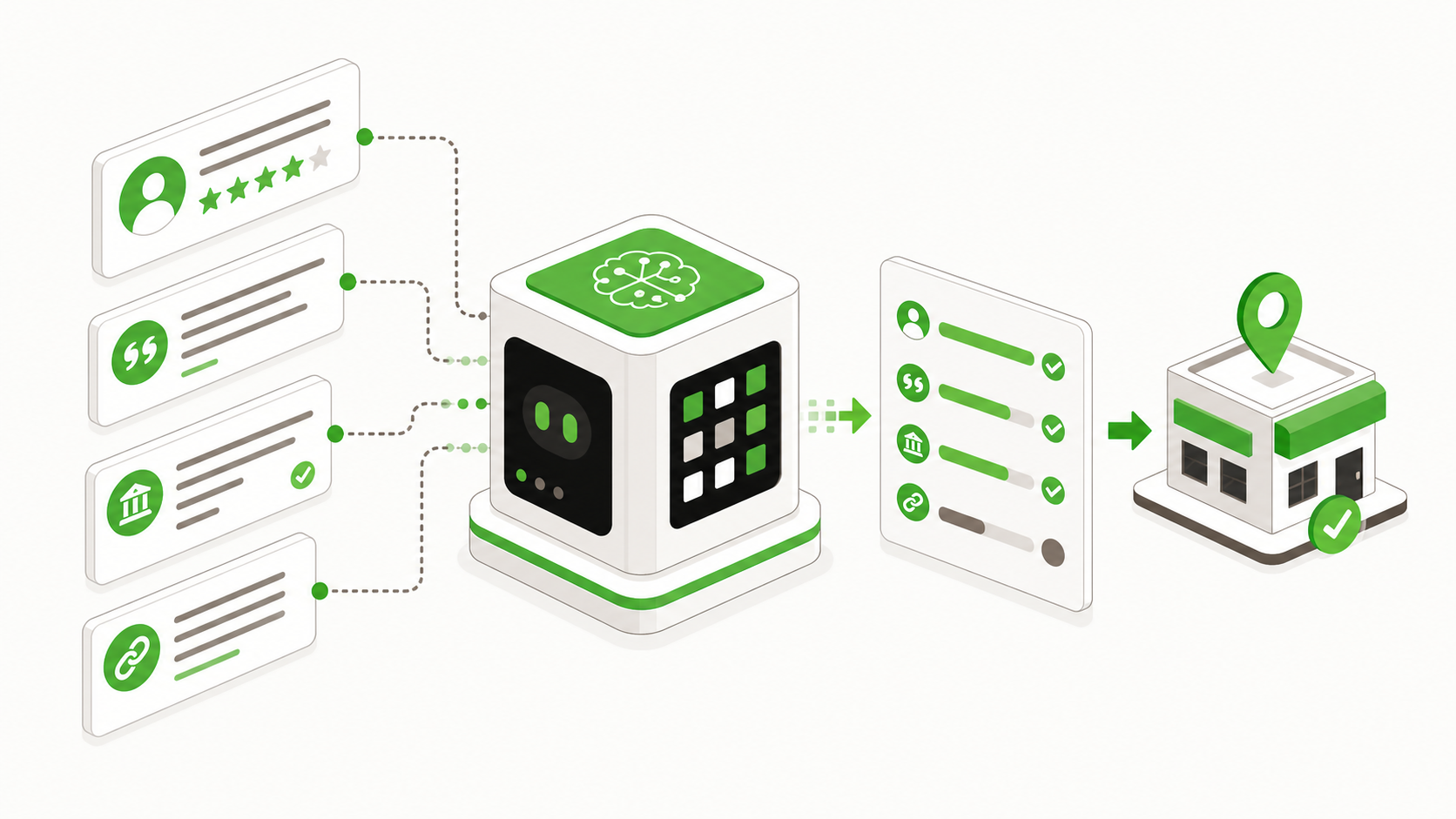
What Small Businesses Should Build First
Small businesses usually do not need an aggressive link building campaign. They need a clean authority foundation.
Start with the places where your business should already be visible.
Local And Industry Citations
Make sure your company is listed accurately on credible business directories, local directories, industry associations, and professional organizations. Keep your name, address, phone number, website, and service categories consistent.
This is especially important for local SEO because inconsistency creates confusion. For AEO, consistency also helps machines connect the same business across sources.
Partner And Vendor Pages
If you work with suppliers, manufacturers, software platforms, referral partners, or local organizations, look for legitimate places where your company can be listed.
This should not be forced. The link should reflect a real relationship. Partner, dealer, certified provider, sponsor, member, and client pages can all be useful when they are accurate.
Local PR And Community Mentions
Small businesses often overlook local press because it does not feel like SEO. But local articles, event pages, sponsorship mentions, and community stories can create strong trust signals.
These links also help answer engines understand that your business participates in a real market, not just a keyword category.
Useful Resources Worth Citing
The best long-term links usually come from useful content.
That could be a buyer’s guide, a checklist, a pricing explainer, a local resource, a comparison page, a data study, or a FAQ that answers questions better than competitors. This is where SEO services and AEO overlap. Content that earns citations from humans can also help AI systems understand what your brand knows.
Testimonials And Case Studies
Client stories and vendor testimonials can create natural links. If you give a thoughtful testimonial to a vendor you actually use, they may publish it with a link. If a partner writes a case study about your work together, that can create a highly relevant reference.
These links tend to be strong because they are tied to real relationships.
What To Avoid
Small businesses get into trouble when they treat backlinks like a commodity.
Avoid cheap link packages, irrelevant guest posts, private blog networks, automated directory submissions, comment spam, fake awards, and mass link exchanges. These tactics may look tempting because they promise fast authority. In practice, they often create noise, waste budget, or trigger cleanup work later.
Also avoid over-optimized anchor text. If every link to your site says the exact keyword you want to rank for, it does not look natural. Real links use brand names, page titles, plain descriptions, URLs, and varied language.
The safer approach is slower but stronger: build visibility through real relationships, useful content, local credibility, and industry participation.
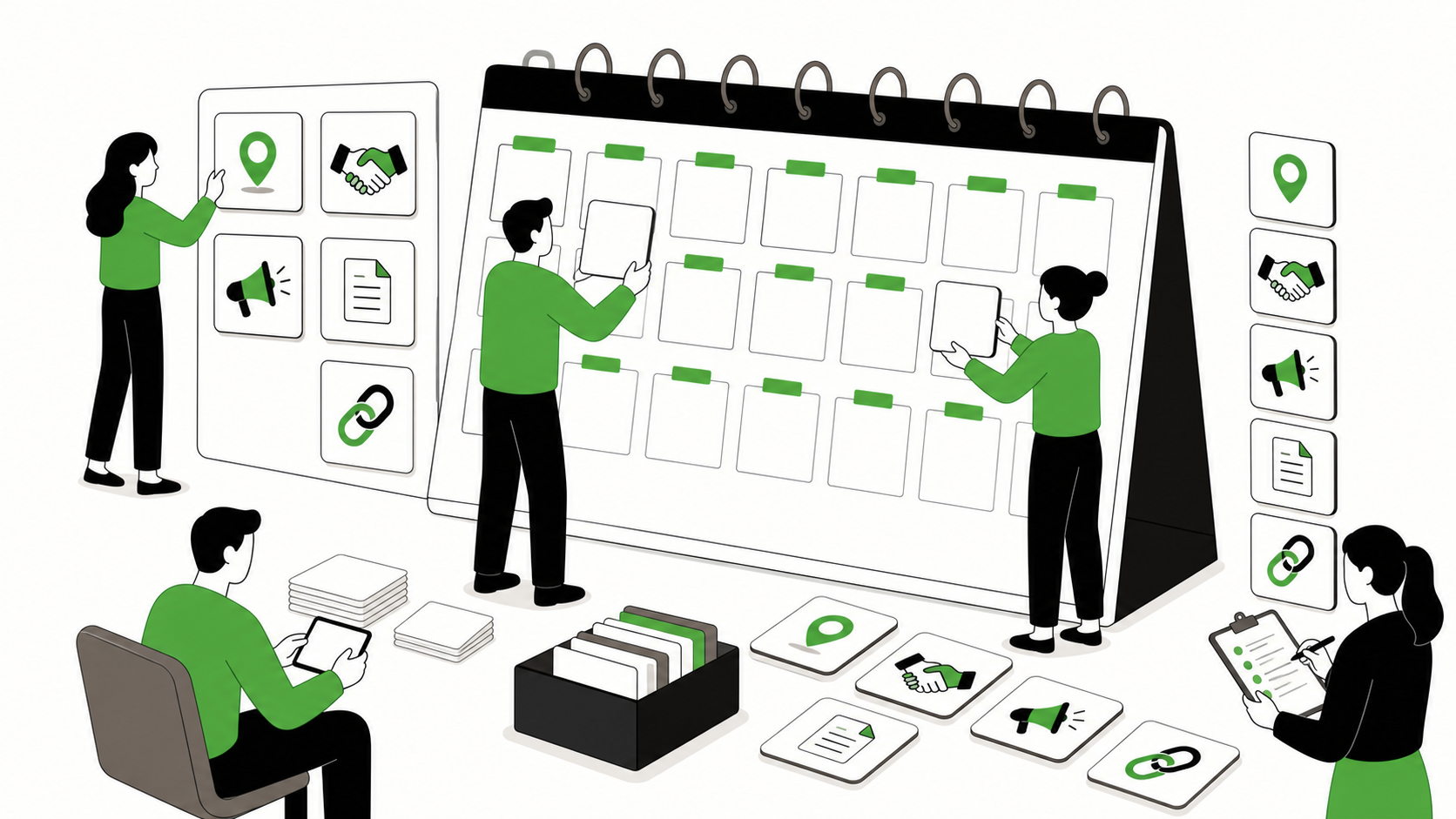
A Practical 30-Day Backlink Plan
Small businesses do not need to solve backlinks all at once. A focused 30-day plan can build momentum without turning into a spam campaign.
Week 1: Audit Your Existing Footprint
Search for your business name, owner names, product names, service names, and location combinations. Look for places where your business is mentioned but not linked. Check whether your core listings are accurate.
Use this week to build a simple spreadsheet with columns for source, URL, current status, contact, link opportunity, and priority.
Week 2: Fix Core Listings And Local References
Update your most important local and industry listings first. Prioritize sources that real customers might use: business associations, professional groups, niche directories, local chambers, supplier pages, and major profile sites.
Do not chase every directory. Pick the ones that match your market.
Week 3: Ask For Links That Reflect Real Relationships
Contact partners, vendors, sponsors, associations, and organizations where a link would genuinely help users. Ask for practical updates, not favors.
For example, if you are already listed as a member but the listing has no website link, ask them to add the correct URL. If a supplier has a dealer locator, ask how to be included. If an event page mentions your sponsorship but does not link to your site, ask for the link to be added.
Week 4: Publish One Link-Worthy Resource
Create one asset that deserves to be cited. For a local service business, that might be a neighborhood guide, maintenance checklist, cost explainer, or comparison page. For a professional services firm, it might be a regulatory checklist, FAQ, or industry trend report. For a healthcare organization, it might be a plain-English guide that helps families make better decisions.
Then share it with partners, local publishers, and relevant resource pages. The outreach works better when the content is genuinely useful.
How To Measure Whether Backlinks Are Helping
Backlinks should be measured by business impact, not vanity counts.
Track whether your branded search visibility improves. Watch referral traffic from the pages linking to you. Monitor whether important service pages get indexed and start earning impressions. Look at local pack visibility, organic leads, and assisted conversions. For AEO, test whether AI systems describe your business more accurately and whether your brand appears in answer results for relevant prompts.
You can also use a technical audit to catch issues that make link authority harder to convert into results. A site with good links but weak content, poor internal linking, broken schema, slow pages, or confusing service pages will underperform. Our website audit tool is a useful starting point for finding those gaps before investing more heavily in outreach.
The real question is not “How many backlinks do we have?” It is “Do credible sources make it easier for search engines, AI systems, and buyers to trust us?”
FAQ
Do Small Businesses Still Need Backlinks In 2026?
Yes. Small businesses still need backlinks, but they do not need thousands of low-quality links. They need credible references from relevant local, industry, partner, and media sources that help prove the business is legitimate and trusted.
Are Backlinks Still A Ranking Factor?
Links still matter as part of how search engines discover, understand, and evaluate pages. They are not the only factor, and weak content will not win just because it has links. But strong, relevant backlinks can still support SEO performance.
How Do Backlinks Help AEO?
Backlinks help AEO by giving AI systems more external evidence about your business. They support entity understanding, corroborate claims, create crawl paths, and connect your brand to trusted sources across the web.
Are Brand Mentions Without Links Useful?
Yes, brand mentions without links can still provide context, especially for AEO. But linked mentions are stronger because they create a direct path between the source and your website.
What Types Of Backlinks Should Small Businesses Avoid?
Avoid paid link schemes, private blog networks, automated link blasts, irrelevant guest posts, spam directories, and any link that exists only to manipulate rankings. If the link would not make sense to a real customer, it is probably not worth pursuing.
What Is The Best First Step For A Small Business?
Start by cleaning up your local and industry citations, then look for legitimate links from partners, vendors, associations, sponsorships, local media, and useful resource pages. Build proof before chasing scale.
The Backlink Strategy That Still Works
Backlinks still matter in 2026, but the strategy has matured.
The goal is not to trick Google. The goal is to build a public web of trust around your business. Search engines use that trust to evaluate authority. AI systems use it to understand and corroborate your brand. Buyers use it to decide whether your company feels credible before they call, book, or buy.
For small businesses, that means the best backlink strategy is also a better business strategy: be visible in the right places, publish useful resources, earn real references, and make it easy for both people and machines to understand why your company belongs in the conversation.