Google Information Agents Change Search Strategy
Google's new information agents turn search into ongoing monitoring. Here is what agencies, healthcare marketers, and B2B teams should change now.

Google just made a much bigger change to search than another AI summary at the top of the page. At Google I/O on May 19, the company said its new intelligent AI-powered Search box is the biggest upgrade in more than 25 years and introduced information agents that can monitor the web in the background for a user’s specific criteria. That moves search closer to a persistent monitoring workflow instead of a one-off lookup.
If you run an agency, lead marketing for a healthcare brand, or own demand generation for a B2B company, that shift matters immediately. Your job is no longer just to rank for the query someone types today. Your job is to become the source an AI system keeps finding, trusting, and resurfacing as conditions change.
That sounds subtle. It is not. When search becomes agentic, weak pages do not just lose clicks. They get filtered out of the monitoring layer before a buyer ever visits your site.
Search is turning from retrieval into ongoing monitoring
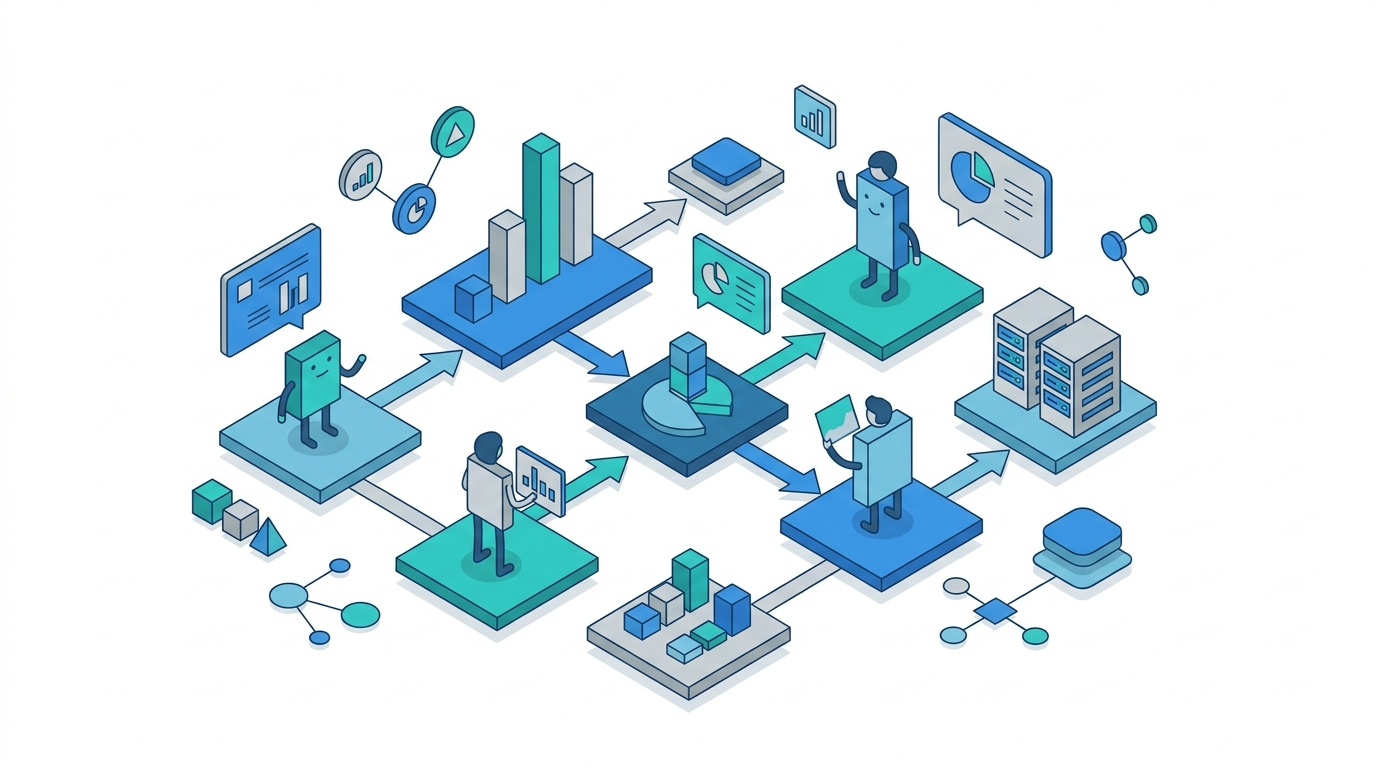
Google’s own framing is unusually direct. The new Search experience folds AI Mode deeper into the default interface, adds follow-up from AI Overviews, and lets users search across text, images, files, videos, and Chrome tabs from the same box. More important, it introduces background agents that can keep scanning blogs, news sites, social posts, shopping data, finance data, and other sources on a user’s behalf.
That means a search session is no longer always a short path from question to click. It can become:
- a long-running watchlist
- a recurring recommendation engine
- a live comparison process
- a trigger for booking, shopping, or contacting a provider
This is the part many marketers are still underestimating. In the old model, a prospect searched, scanned results, clicked a few pages, and decided. In the new model, the platform can keep narrowing the field over time, then alert the user when a brand, product, provider, or offer fits the brief.
That changes what visibility means.
Your page does not just need to look relevant in one SERP. It needs to keep making sense when an AI system revisits the category through sub-queries, source checks, and changing user constraints.
Google’s documentation on AI features and your website helps explain why. AI Overviews and AI Mode can use a “query fan-out” technique, issuing multiple related searches across subtopics and data sources before building a response. In plain terms, your brand may be judged through a chain of supporting questions, not only the headline query you optimized for.
That is also why recent third-party data matters. Ahrefs’ March 2026 analysis of 863,000 keyword SERPs and 4 million AI Overview URLs found that only 37.9% of URLs cited in AI Overviews also appeared in the first 10 result blocks for the same query. A year earlier, the equivalent figure was about 76%. The implication is hard to miss: classic rankings still matter, but they no longer tell you which pages will actually shape the answer.
What breaks first for agencies
The first thing that breaks is the campaign model built around isolated pages and isolated reports.
A lot of agency workflows still assume they can optimize a page, report on rankings, and infer the rest. That was already getting shaky in AI search. Information agents make it weaker because the decision path is more continuous and more opaque.
If a prospect asks Google to monitor “the best behavioral health programs that accept PPO insurance in Southern California” or “B2B CRM platforms with strong healthcare compliance support under a specific budget,” your visibility is affected by more than one landing page. The system may compare reviews, service pages, brand mentions, local signals, structured facts, and fresh updates across weeks, not minutes.
That raises the bar for agency delivery in three ways.
1. Thin pages get exposed faster
If a service page says roughly the same thing as ten competitors, it is weak in an agentic environment. AI systems need distinguishing proof, not generic relevance.
Pages that win now tend to have:
- direct answers near the top
- specific service definitions
- clear audience fit
- evidence that supports the claim
- clean structure that is easy to quote
That is why a modern AEO strategy cannot stop at keyword coverage. It has to make the page legible to systems that summarize, compare, and revisit.
2. Reporting lags the decision
A user may first encounter your brand through an AI recommendation, then come back later through branded search, direct traffic, or a sales conversation. If your reporting only credits the visible last step, you miss the influence layer that shaped the shortlist.
Google’s own documentation says AI Mode and AI Overviews are folded into Search Console’s broader web totals, not reported as a clean standalone surface. So agencies that want to sound credible in 2026 need their own visibility checks, citation reviews, and prompt tracking instead of waiting for platform reporting to become perfect.
3. Content planning gets wider
The old playbook asked, “What keyword should this page rank for?”
The better question now is, “What related checks will an AI system run before it feels safe surfacing us?”
That usually leads to a broader content map:
- core commercial pages
- comparison pages
- FAQs tied to real objections
- proof pages with concrete details
- off-site validation that supports the same narrative
If your team still plans content as isolated blog posts, read our breakdown of what content gets cited by AI. The practical issue is not volume. It is whether the brand becomes easy to verify across the full question path.
Why healthcare marketers should pay special attention
Healthcare is one of the clearest categories where information agents raise the stakes.
Patients and families rarely search with clean, simple intent. They search while stressed, comparing urgency, insurance, location, care type, trust, safety, and fit at the same time. Google is building a search interface that is increasingly designed for exactly that kind of complexity.
Now imagine that process turned into an ongoing monitored task rather than a single query. A family member may ask for updates on specific treatment options, local availability, accepted insurance, or a type of specialty care. If your brand is poorly structured, weakly reviewed, or vague about what it actually offers, an AI system has plenty of reasons to keep skipping you.
This is also why healthcare teams should stop responding to AI anxiety with more filler pages. Trust-sensitive categories do not need more generic content about broad symptoms or top-of-funnel questions. They need a stronger evidence layer.
That means:
- provider and program pages with sharper detail
- stronger expert attribution
- cleaner third-party consistency
- better review and reputation coverage
- content that answers patient-journey questions directly
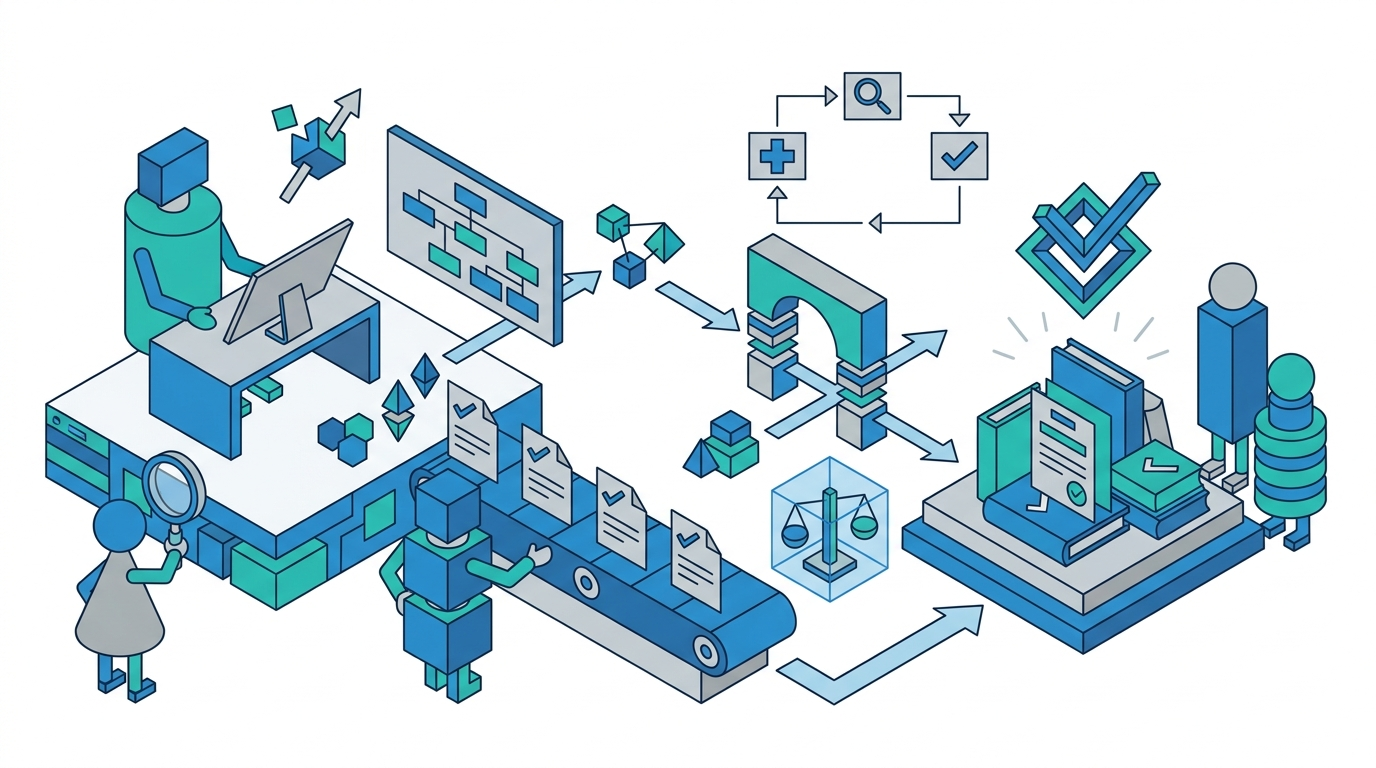
We have already seen how much durable trust signals matter in healthcare. At Emarketed, Seasons in Malibu holds 4,200+ keyword rankings and 814,230 social impressions in a recent month, while cited pages grew from 122 to 190 and AI mentions climbed from 49 to 122. That is not what happens when a brand publishes random filler and hopes for the best. It happens when SEO, AEO, social, paid, and web all reinforce the same trust story.
If you want the trust-layer version of this problem, our recent piece on healthcare AI search review signals is worth reading. The important point is that healthcare visibility is increasingly decided by what an AI system can verify, not just what your site claims.
What B2B and local brands should change now
B2B teams and local-service brands should not dismiss this as a healthcare-only issue.
B2B buying journeys are already slow, comparative, and research-heavy. Information agents fit that behavior almost perfectly. A buyer can define requirements once, then let the platform keep monitoring options, features, pricing signals, or category changes on their behalf. If your product pages, use-case pages, and proof assets are vague, the system has no strong reason to keep including you.
Local-service brands face a related challenge. If a person sets criteria around availability, reviews, service type, distance, or quality thresholds, the businesses that surface repeatedly will be the ones with the clearest machine-readable footprint and the strongest trust signals around it.
So what should marketers actually do this quarter?
Build pages for repeated evaluation, not one-time discovery
Ask whether your key pages still make sense when revisited days later by a system checking fit again. A page that only works as a first click is weaker than a page that works as a reusable evidence source.
Reduce ambiguity in commercial pages
State who the page is for, what problem it solves, what makes the offer distinct, and what proof supports that claim. AI systems are bad at rewarding ambiguity. They are good at routing around it.
Tighten the surrounding trust footprint
Your site is not your whole brand in AI search. Reviews, citations, mentions, profiles, and public explanations all become part of the retrieval environment. That is one reason brand monitoring matters more now than it did even six months ago. A simple brand presence check can give teams a first read on whether they are actually showing up in AI-mediated discovery.
Map the fan-out questions behind your money pages
Do not only optimize for the top commercial query. List the supporting questions an AI system is likely to inspect:
- Is this provider credible?
- Does this solution fit my use case?
- What do other people say about it?
- Is it local, available, or compliant?
- How does it compare to alternatives?
Once you know those questions, your page architecture gets clearer.
The practical Monday-morning plan
This is not a call for a giant replatform or a six-month research phase. The better move is to tighten the pages and signals that matter most to recurring AI evaluation.
Start here:
- Pick 10 high-value commercial queries and rewrite them as monitored tasks or complex prompts.
- Identify the pages, reviews, mentions, and third-party sources an AI system is likely to inspect along that journey.
- Audit whether your core commercial pages answer the fit question directly in the first screen.
- Fix weak proof signals: outdated reviews, vague service descriptions, thin bios, stale listings, and unsupported claims.
- Track whether your brand appears consistently across repeated prompt checks over a few weeks, not just one test.
The agencies that win this next phase of search will not be the ones publishing the most content. They will be the ones building the cleanest evidence system.
Google’s information agents make that clearer than ever. Search is becoming less about a momentary result and more about persistent selection. If your brand cannot survive repeated AI scrutiny, rankings alone will not save it.
If your team wants a sharper view of where that scrutiny is already breaking down, work with us and we can map the answer layer against the pages and trust signals that actually influence demand.
FAQ
What are Google’s information agents?
Google’s information agents are personalized AI agents announced at I/O 2026 that can monitor the web in the background for specific criteria and send synthesized updates when conditions are met. They are Google’s clearest step yet toward turning search into an ongoing agent workflow instead of a one-time lookup.
Why do information agents matter for SEO and AEO?
They matter because visibility is no longer decided only by one direct query and one ranking snapshot. If AI systems keep checking related sources, subtopics, reviews, and proof signals over time, marketers need pages and brand signals that stay useful under repeated evaluation.
Does this mean rankings do not matter anymore?
No. Rankings still matter. But they are no longer a complete proxy for influence. Ahrefs’ latest AI Overview study found that only 37.9% of cited URLs also appeared in the first 10 result blocks for the same query, which shows how often AI systems now pull from a wider source set.
What should healthcare brands do first?
Fix the trust stack before publishing another batch of generic content. In practice that means better provider and program pages, stronger expert attribution, fresher review coverage, tighter third-party consistency, and clearer answers to patient-journey questions.
How should agencies report on this shift?
Agencies should report beyond rank tracking and sessions. That means checking prompt visibility, citation presence, supporting source quality, branded search lift, and whether commercial pages are actually being reused inside AI-driven discovery paths.
Are information agents only relevant to ecommerce?
No. Ecommerce is an obvious use case, but the same behavior applies to healthcare, B2B software, local services, travel, and any category where users compare options over time before acting.