Your Service Pages Are Losing AI Citations. Here's How to Fix Them.
AI search is pulling from a wider set of sources than page-one rankings alone. Here's how to rebuild service pages so ChatGPT, Google AI Overviews, and Perplexity can actually use them.
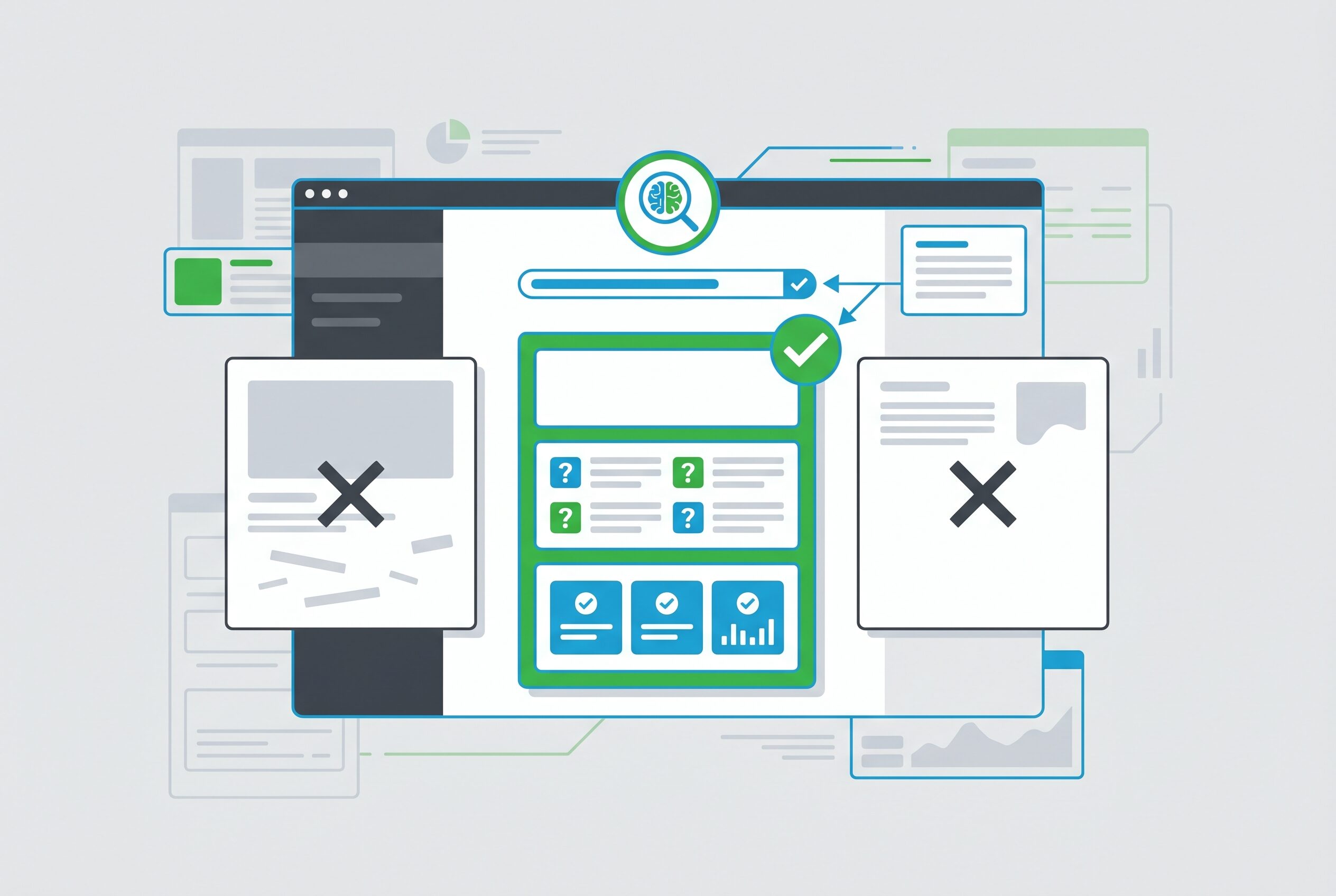
Most service pages still read like brochures. That was already weak SEO. In AI search, it is worse.
When someone asks ChatGPT, Google AI Overviews, or Perplexity who offers a service, what the service includes, how to compare options, or what matters before buying, those systems are not looking for a paragraph about your commitment to excellence. They are looking for a page they can extract a useful answer from.
That is the real reason so many brands feel invisible in AI search even when their rankings look decent. The page that ranks is often not the page the model wants to cite.
Ahrefs’ latest AI Overview study found that only about 38% of cited URLs also rank in Google’s top 10. Google also says AI Overviews and AI Mode may use a query fan-out technique, issuing multiple related searches across subtopics and data sources before selecting supporting pages. In other words, a thin service page can lose even if your domain is strong and your classic rankings are stable.
This is where a lot of AEO work gets pointed at the wrong asset. Teams keep publishing more informational blog posts when the page that should be winning is the core service page.
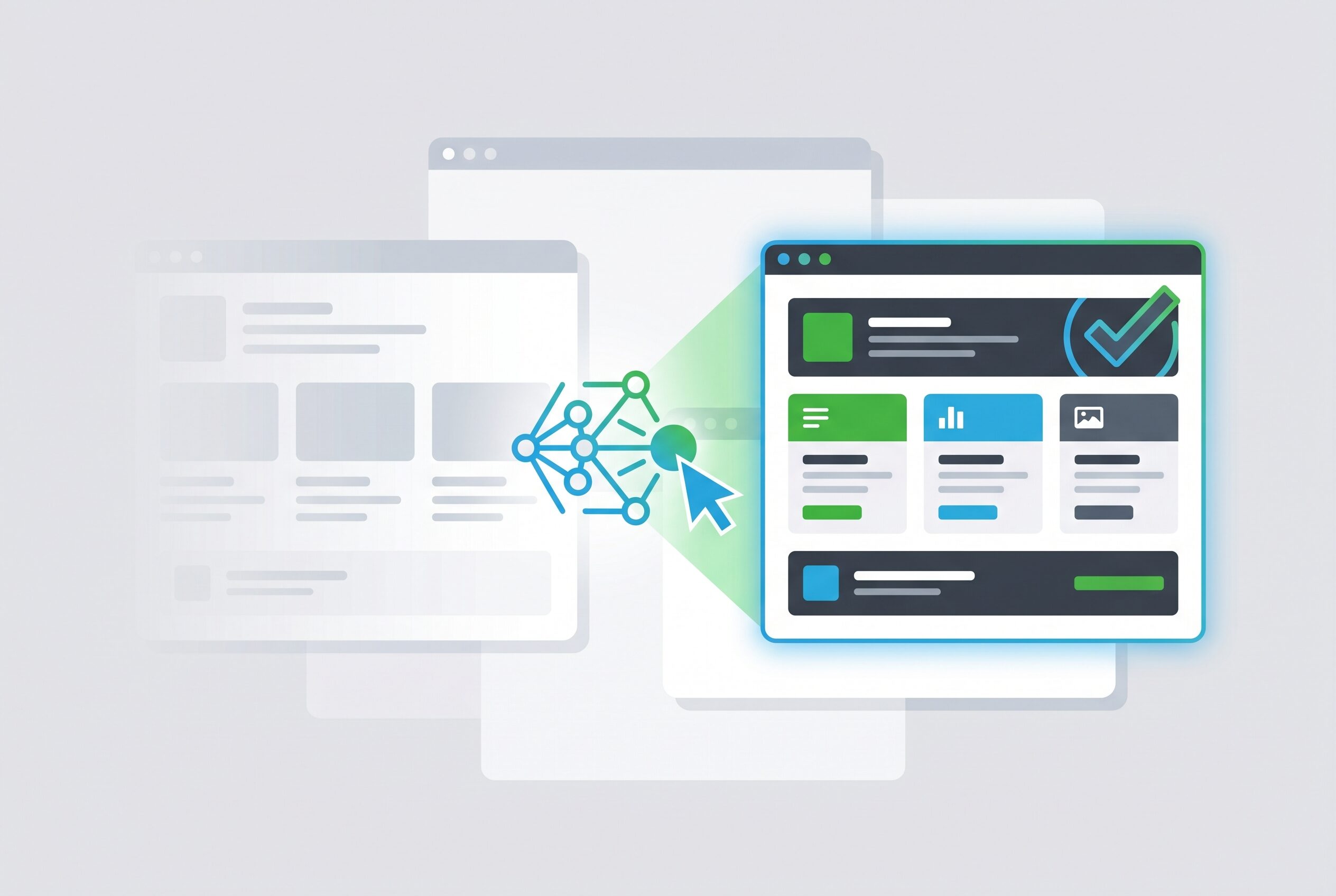
Why service pages matter more in AI search than most teams think
AI systems are increasingly handling mid-funnel and bottom-funnel questions, not just top-of-funnel definitions.
People ask:
- which rehab marketing agency is best for behavioral health brands
- what should an SEO retainer include for a local business
- how do AI search services differ from traditional SEO
- what should I look for before hiring a paid ads agency
Those are commercial questions. A generic article can help, but the best citation candidate is often the page that directly explains the service, the buyer fit, the process, the proof, the differences, and the next step.
Google’s own guidance says AI features surface relevant links to help people explore content and complex comparisons, and that important content should be available in textual form with structured data matching the visible page copy. That matters because many service pages still bury the useful text under sliders, vague claims, icon grids, and generic FAQ filler.
If you want your site to show up for AI-assisted buying decisions, your service pages have to become answer assets, not just sales collateral.
What an AI-citable service page actually looks like
The good news is this is fixable. You do not need a magical AI schema stack or a pile of synthetic content. You need a page that does a better job answering the real buying question.
Strong service pages tend to have six traits.
1. The page says who the service is for in the first screen
Most pages open with a headline like “Results-Driven Digital Marketing Solutions.” That tells neither a buyer nor a model anything useful.
A stronger opening is specific:
- “AEO services for healthcare brands that need to be cited in ChatGPT, Google AI Overviews, and Perplexity”
- “Local SEO for Los Angeles service businesses that depend on calls, maps visibility, and high-intent leads”
- “Drug rehab marketing for treatment centers competing on trust, admissions quality, and compliance”
Specificity reduces interpretation work. It also aligns the page to the fan-out queries that AI systems are likely to test in the background.
2. The page answers the comparison question directly
Search Engine Land recently made the point that brand authority is beating topical authority in AI search. That does not mean the page itself stops mattering. It means the page should make your brand legible as a credible choice.
A service page should clearly answer:
- what this service is
- who it is for
- how it differs from adjacent services
- what outcomes matter
- what the process looks like
- what proof supports the claim
If your AEO service page cannot explain how AEO differs from classic SEO, reporting, and content production, you are making both users and AI systems guess.
3. The proof is concrete, not atmospheric
AI models do not trust mood. They trust specifics.
That can mean:
- a case study snapshot
- a named client example
- a process detail
- a metric with context
- a quote from an operator or subject-matter expert
Google’s guidance on generative AI content is clear on the underlying standard: accuracy, quality, relevance, and added value still matter. If the page is all polished language and no hard center, it gives the model very little to reuse.
For Emarketed, this is where healthcare and local-service pages can win. A page that explains actual intake friction, local competition dynamics, AI citation gaps, or admissions-quality tradeoffs is stronger than one that just promises growth.
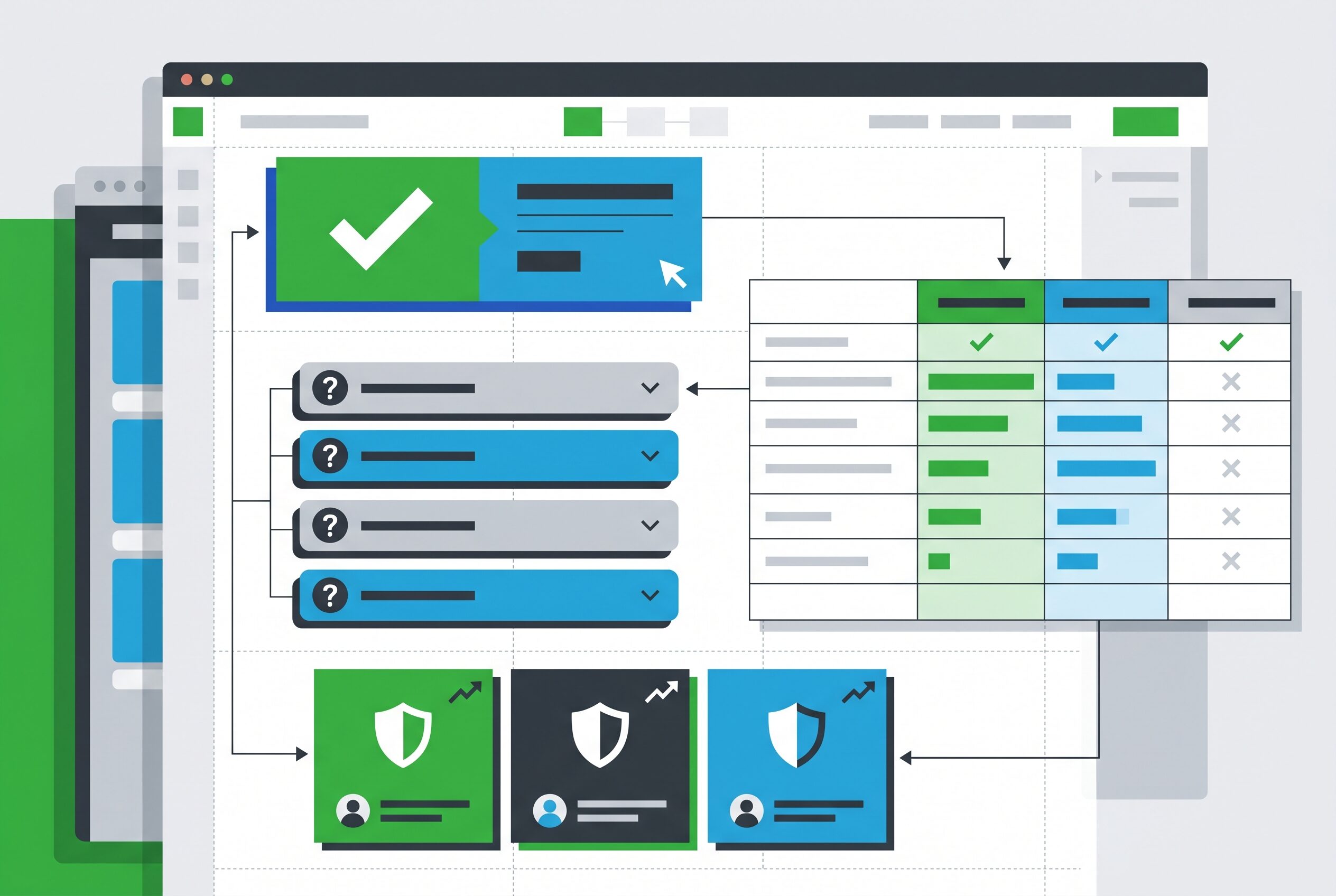
4. The page includes visible Q&A built from real buyer questions
FAQ sections still matter when they are real. They stop helping when they become decorative.
Google’s FAQPage documentation emphasizes that FAQ markup should match visible on-page questions and answers, and that the content needs to be genuinely present on the page. Even when rich results are limited, that structure still helps organize information for retrieval.
The mistake is treating FAQ as a schema trick. The better approach is treating it as a content-format advantage.
On a service page, useful questions include:
- How is this different from traditional SEO?
- How long does this usually take to show movement?
- What do you actually change first?
- Is this best for local businesses, healthcare brands, or B2B teams?
- What happens if we already have content and rankings?
If those questions live only in sales calls, your page is underperforming.
5. The page is written in clean text, not just designed around visuals
Google explicitly recommends making important content available in textual form and supporting it with high-quality images and video. That matters for service pages built in modern site builders where the interesting information is trapped in tabs, carousels, accordions, or image-heavy layouts.
Design still matters. Conversion still matters. But if the explanatory core of the service is not easy to parse in raw text, the page becomes harder to cite consistently.
This is one reason structured explainers, comparisons, and short summary blocks are so valuable. They make the page usable by humans and machines at the same time.
6. The page connects to the rest of your authority layer
A great service page on a weak authority footprint still has limits.
Search Engine Land’s broader point is the right one: authority is what the market says about you, not just what you publish about yourself. That means the service page should be reinforced by:
- supporting articles that answer adjacent questions
- third-party mentions and citations
- consistent business details
- relevant reviews
- internal links from deeper topic pages
For example, an AEO service page is stronger when it is supported by a practical guide like our AI search optimization overview, a working service explanation on /services/aeo, and diagnostic tools like the AI Search Optimizer.
The service-page rewrite checklist for 2026
If you are auditing pages right now, start here.
Rewrite the hero for buyer intent
Replace broad agency language with one sentence that says who the service is for, what it solves, and where it applies.
Add a direct-answer section near the top
After the hero, include a short section that answers the core commercial query in plain English. Think “what this service is and when you need it,” not “why choose us.”
Build one comparison block
Create a section that compares your service against the closest alternative:
- AEO vs SEO
- local SEO vs paid ads
- in-house vs agency
- generalist agency vs niche healthcare specialist
AI systems love pages that help compress decision-making.
Pull real sales-call questions onto the page
Add a visible FAQ built from actual objections, not invented keyword variants. Then mark it up correctly if the page qualifies and the markup matches the page.
Add proof that can be repeated
One grounded stat, named example, or operational detail is more useful than ten adjectives.
Tighten internal links
Link from service pages to the most relevant support assets, and link back from support assets to the service page. If you need help prioritizing supporting content, the Topic Authority Builder is a practical place to start.

Who should care most about this
Every category selling expertise should care, but three groups have the most to gain.
Healthcare marketers
Healthcare buyers and patients ask complex trust-heavy questions before they convert. Thin service pages are especially weak here because AI systems look for clarity, fit, and credibility. If you work in treatment, behavioral health, or provider marketing, this is one of the fastest places to improve practical visibility. Our drug rehab marketing work sits in exactly that overlap of trust, intent, and search complexity.
Local service businesses
Local businesses often assume the Google Business Profile does all the heavy lifting. It does not. Your profile helps, but AI-assisted comparison still leans on your site when users ask nuanced questions about fit, service scope, quality, and differences.
B2B service firms
B2B buyers use AI tools to narrow vendor lists before they ever book a call. If your page cannot explain implementation, buyer fit, and business outcomes clearly, you may be absent from the shortlist before sales ever knows there was a search.
The real shift
The shift is not “blog posts are dead.” It is that many teams have over-invested in blog coverage while under-investing in the pages that should close the loop.
If Google is fanning queries out across subtopics, and if only about 38% of AI Overview citations still come from top-10 ranking URLs, then the work is no longer just about ranking the category term. It is about building pages that can survive a more demanding retrieval layer.
That is why service-page quality is now an AEO issue, not just a conversion-rate issue.
If your best commercial pages still sound like brochure copy, that is probably where the next AI visibility win is hiding.
FAQ
Are service pages more important than blog posts for AI citations?
Often, yes for commercial-intent queries. Blog posts still support discovery and authority, but service pages are often the better source when a user is comparing providers, services, or outcomes.
Do I need special schema to make a service page AI-ready?
Not special schema. You need the fundamentals done properly. Google says the page must be indexed, technically eligible for Search, and written as helpful, reliable content. Structured data should match the visible text on the page.
Why can a page rank well and still not get cited?
Because AI features may use query fan-out and evaluate supporting pages across related searches, not just the original result set. A ranking page that is vague or thin can lose to a clearer page from a different domain.
Should local businesses focus on service pages or Google Business Profile first?
Both matter, but they do different jobs. Business Profile supports local grounding and trust signals. Service pages handle nuanced comparison, buyer fit, and detail. If the profile is solid and the page is weak, the page is usually the next fix.
What is the fastest service-page improvement to make this month?
Rewrite the top of the page so it clearly states who the service is for, what problem it solves, how it differs from alternatives, and add a visible FAQ built from real sales questions.