How to Turn Sales Calls Into Content That AI Can Cite
Buyers now research inside AI assistants before they talk to sales. Here is how to turn recurring sales questions into content that earns citations and trust.
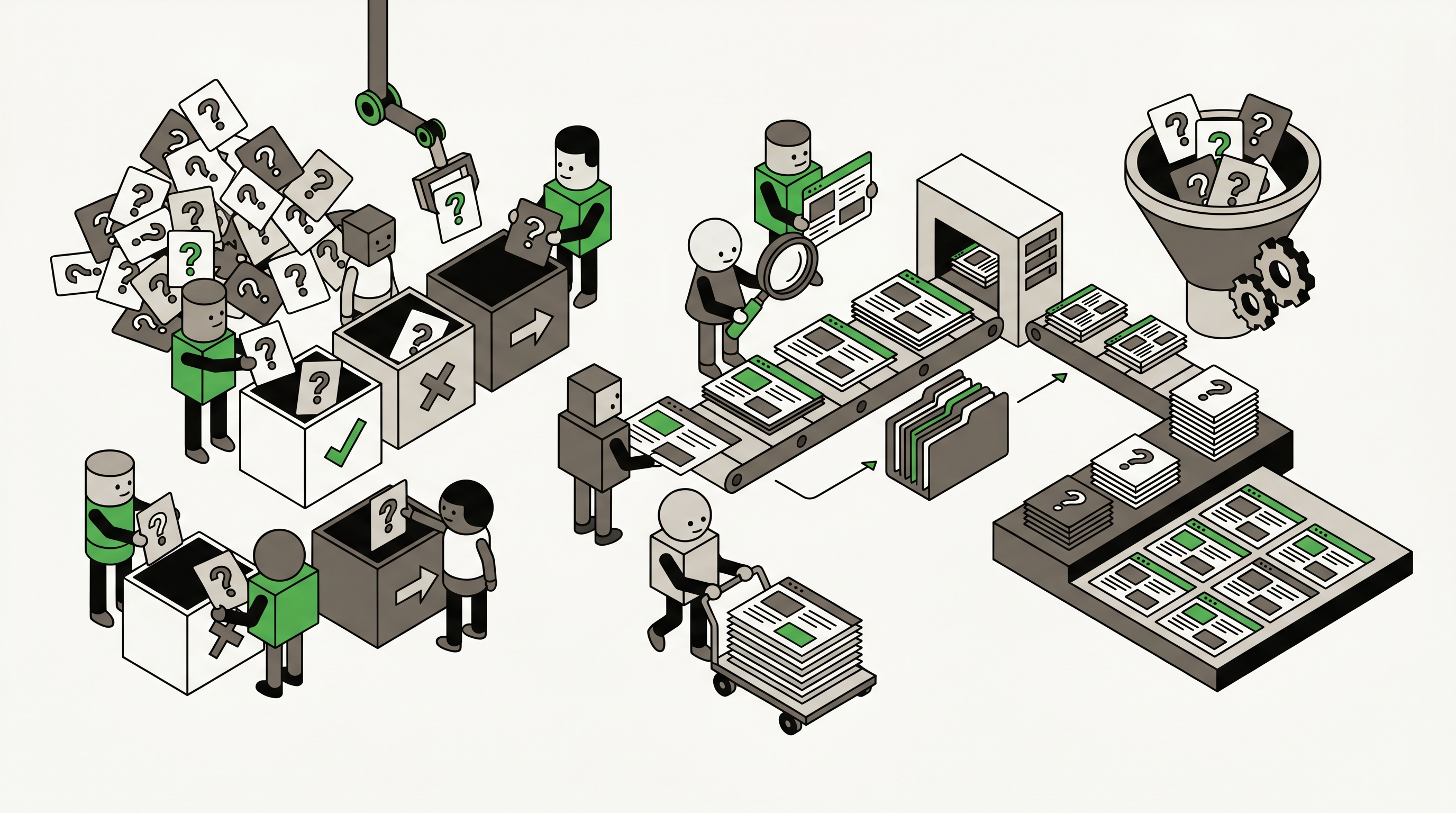
Your sales team is already sitting on some of your best AI-search content ideas.
That matters more now because buyers are doing more of their research before they ever book a demo or fill out a form. In January 2026, Forrester said generative AI searches are now the starting point for B2B buyers, and that the typical decision now includes 13 internal stakeholders and 9 external influencers. This month, OpenAI updated its Ads in ChatGPT: The Basics page to describe ChatGPT as a place where users “explore, compare, and decide within a single conversational experience.” Google is pushing the same behavior: in its May 19, 2026 post on A New Era for AI Search, it said AI Mode has surpassed 1 billion monthly users and that people can move from AI Overviews into conversational follow-ups while links and supporting articles get more relevant.
If that is how research happens, then the questions your reps hear every week should not live only in Gong, call notes, inbox threads, or one account executive’s head. They should exist on your site in forms AI systems can actually reuse: answer pages, comparison pages, implementation explainers, proof pages, and structured FAQ sections.
This is the operating shift: sales calls are no longer just a closing asset. They are a content input.
Why Sales Calls Matter More In AI Search
Most content calendars still start from keyword tools, trend lists, or whatever subject sounds publishable this month. That is backward for high-consideration services and B2B categories.
The questions that matter most commercially are usually not broad awareness questions. They are fit questions, pricing questions, risk questions, timing questions, and implementation questions. Those are the same questions buyers ask AI assistants when they are trying to reduce risk before they talk to a human.
Search Engine Land’s analysis of four AI search experiments got this exactly right: AI search rarely shows up neatly in analytics, but it shapes trust, shortlists, and sales velocity. In that piece, the influence showed up in sales conversations before it showed up in reporting. That should sound familiar to any good sales leader. Buyers often arrive with a half-built point of view, a narrowed shortlist, and fewer basic questions than they used to. AI helped do some of that work upstream.
So when a rep says, “We keep getting asked how implementation works,” that is not just call chatter. It is evidence of a missing page. When an admissions director says, “Families keep asking what the first 24 hours look like,” that is not only a scripting issue. It is a publishable trust asset.
If your website does not answer those questions directly, AI systems will pull from sources that do.
The Best Content Inputs Usually Sound Boring On A Call
This is where teams often miss the opportunity.
The most useful call-derived questions are usually not clever. They are repetitive. They sound obvious. They come up so often that sales teams stop noticing them.
Examples:
- How long does onboarding actually take?
- What kind of client is not a fit?
- Do we need to switch platforms to work with you?
- What does the handoff from strategy to execution look like?
- Why does this cost more than a cheaper alternative?
- What happens in the first 30 days?
Those questions are gold because they sit close to the decision. They also map cleanly to the way AI systems retrieve and summarize. A page titled around one concrete buyer question is easier to cite than a generic “solutions” page packed with slogans.
That is why some of the strongest AI-ready FAQ pages are built from real objection language, not invented keyword variants. The point is not to stuff a page with dozens of shallow answers. The point is to capture the exact wording buyers use when they are deciding whether to trust you.

How To Turn Call Notes Into Pages AI Can Reuse
The process is simpler than most teams make it.
Step 1: Pull The Repeats, Not The One-Offs
Start with the questions that appear again and again across calls, demos, admissions conversations, and proposal follow-ups. Ignore the edge cases at first. You are looking for patterns, not anecdotes.
If you record calls, scan the transcripts for recurring phrases. If you do not, ask the reps and account managers what they explain most often in plain language. A good prompt for internal interviews is: “Which question do you wish buyers had answered before the call started?”
Those repeated questions usually cluster into a few high-value buckets:
- fit
- cost and pricing context
- process and timeline
- proof and outcomes
- risk and objections
- comparisons and alternatives
Step 2: Match Each Question To The Right Content Format
Not every question deserves a blog post.
Some questions belong on a service page. Some need their own answer page. Some should become a comparison page or a trust-focused proof page. Some are best handled in a tightly scoped FAQ section.
Here is a practical format map:
- Fit questions become service-page sections or stand-alone answer pages.
- Process questions become onboarding, implementation, or “what happens next” pages.
- Objection questions become FAQ entries or myth-busting sections.
- Comparison questions become honest versus pages or buyer guides.
- Proof questions become case-study snippets, methodology pages, or credibility blocks.
This is one reason answer-page strategy is working so well for local and service businesses right now. When the page has one job and answers it clearly, it becomes easier for both humans and AI systems to trust. Emarketed’s post on local service answer pages shows the same pattern outside B2B: the fastest win is often not more publishing volume, but better pages for the real questions that drive action.
Step 3: Lead With The Answer, Then Support It
Do not bury the answer under a fluffy intro.
If the question is “How long does onboarding take?” the first paragraph should answer it directly. Then explain what affects the timeline, what the buyer should expect, what can slow things down, and what a good kickoff looks like.
AI systems can work with that structure. Buyers can too.
What usually fails is the brochure version: “We pride ourselves on a seamless onboarding experience tailored to every client’s unique needs.” That sentence answers nothing. It gives an AI model nothing stable to cite and gives a buyer no reason to trust the page.
Step 4: Add Proof Close To The Claim
The quickest way to strengthen call-derived content is to add evidence near the answer.
That can be:
- a real process detail
- a concrete range or example
- a case-study reference
- a screenshot or workflow diagram
- a named constraint or tradeoff
For B2B teams, this is where proof beats polish. At Emarketed, Metrex Valve deployed an AI sales agent and now generates roughly 20 qualified leads per month. That kind of specificity is more useful than a page claiming an AI tool will “improve lead flow.” It gives buyers something to believe and gives AI systems something firmer to summarize.
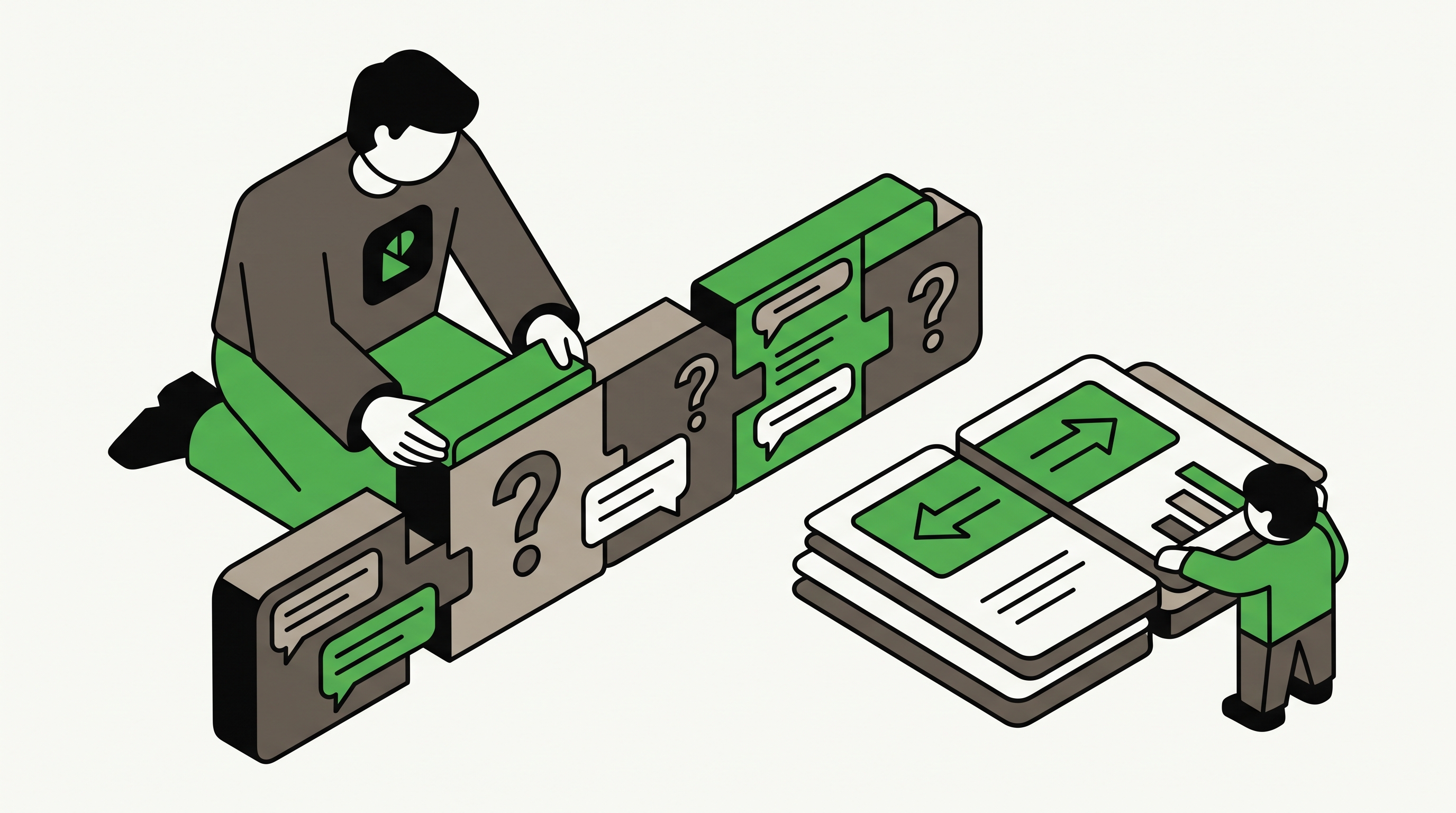
What Sales Teams Should Flag For Marketing Every Week
Most teams do this too casually. They say sales and marketing should align, but there is no operating rhythm behind it.
The better setup is a weekly or biweekly handoff where sales flags five things:
- The top repeated buyer questions from recent calls.
- The objections that slowed or stalled deals.
- The comparison questions buyers asked about competitors or alternatives.
- The claims buyers needed validated before moving forward.
- The phrases buyers used to describe their problem in their own words.
That last point matters a lot. Buyer language is often better than brand language. It is more concrete, less filtered, and closer to what people type or say inside AI tools. When your website mirrors that phrasing, it becomes easier for a model to associate your page with the real decision-stage question.
If your team sells into healthcare, legal, finance, or another high-trust category, this handoff is even more important. Buyers in those categories are often using AI to pressure-test risk before they ever contact you. They want to know what happens, what it costs, what could go wrong, and who this is actually for. Those questions deserve pages strong enough to stand on their own.
The Content Types That Usually Win First
You do not have to turn every call theme into a giant library. Start with the formats closest to revenue.
Implementation Pages
These explain what happens after the contract is signed, what the timeline looks like, what the client is responsible for, and where delays usually come from. They reduce fear and handle one of the most common late-stage questions.
Fit Pages
These answer who the service is best for, who it is not for, and what conditions make success more or less likely. Fit pages work because they signal honesty. That makes them more trustworthy than pages that pretend everyone is an ideal client.
Comparison Pages
These break down tradeoffs buyers are already asking about: agency versus in-house, platform A versus platform B, localized provider versus national firm, manual workflow versus AI-supported workflow. The important part is fairness. Self-serving comparison pages may get a short-term bump, but they age badly.
Proof Pages
These validate claims with real detail: case studies, methodology, credentials, deliverables, samples, process screenshots, or outcome ranges. If buyers keep asking for reassurance, publish it.
FAQ Blocks On Money Pages
This is often the fastest fix. Add FAQ sections built from actual call questions to service pages, pricing-adjacent pages, or conversion pages. If your company is serious about answer engine optimization, these FAQ blocks should be based on recurring real-world objections, not filler.
What Not To Do
There are three common mistakes here.
First, do not turn every sales question into a thin blog post. Some questions deserve page-level treatment on commercial assets, not another article floating in the archive.
Second, do not sanitize the language until it becomes generic. If buyers ask, “Why are you more expensive?” then answer that question cleanly. Do not reframe it as “How premium strategic partnerships create differentiated business outcomes.”
Third, do not stop at publishing. Review the pages with sales after they go live. Ask whether the page actually reduces confusion, shortens explanation time, or improves lead quality. This only works when the feedback loop stays open.
A 30-Day Workflow For Agencies And B2B Teams
If you want a simple rollout plan, use this:
Week 1: Gather The Source Material
Review recent calls, transcripts, sales emails, and proposal feedback. Build a list of repeated questions and group them by intent.
Week 2: Prioritize The Commercial Questions
Choose the 10 questions closest to pipeline movement. Ignore broad awareness topics for now.
Week 3: Publish The First Three Assets
Start with one fit page, one process page, and one FAQ or comparison asset. Keep them specific. Add proof. Link them from existing service pages.
Week 4: Measure Operational Impact
Ask sales whether calls are getting shorter, cleaner, or more advanced. Watch for stronger time on page, deeper pathing, better AI assistant referral traffic, and better lead quality from those assets.
That is a much better use of content resources than publishing another generic trend recap.
FAQ
Why Are Sales Calls A Good Input For AI Search Content?
Because they reveal the real questions buyers ask when they are closest to a decision. Those questions are often the same ones people ask AI assistants before they talk to sales.
What Kind Of Sales Questions Should Become Web Pages?
Start with repeated questions about fit, pricing context, onboarding, timeline, proof, risk, and comparisons. If the same question appears across multiple deals, it is a strong candidate.
Should Every Sales Question Become A Blog Post?
No. Many questions are better turned into service-page sections, answer pages, comparison pages, or FAQ blocks on commercial pages.
How Do I Know If The Content Is Working?
Watch for fewer repetitive explanations on calls, stronger engagement on the new pages, cleaner AI referral traffic patterns, and better-qualified leads.
Does This Only Matter For SaaS And B2B Companies?
No. It also matters for healthcare, local services, legal, financial, and other high-consideration categories where buyers research before they contact a business.
Your Best Content Briefs Are Probably Already In Your Call Recordings
Most teams do not have a content-ideas problem. They have a listening problem.
The questions that keep surfacing in sales calls are already telling you where trust is weak, where clarity is missing, and where AI systems are likely filling the gap before a buyer reaches you. Turn those questions into pages with one clear job, answer them directly, support them with proof, and connect them to the parts of the site closest to conversion.
That is how content gets more useful for humans, more reusable for AI, and more valuable to the sales team on Monday morning.