OpenClaw LA #6 Recap: Agents in the Wild
OpenClaw LA #6 brought together around 65 builders and AI-curious attendees for talks on self-hosted agents, voice interfaces, personal servers, and secure agentic intranets.
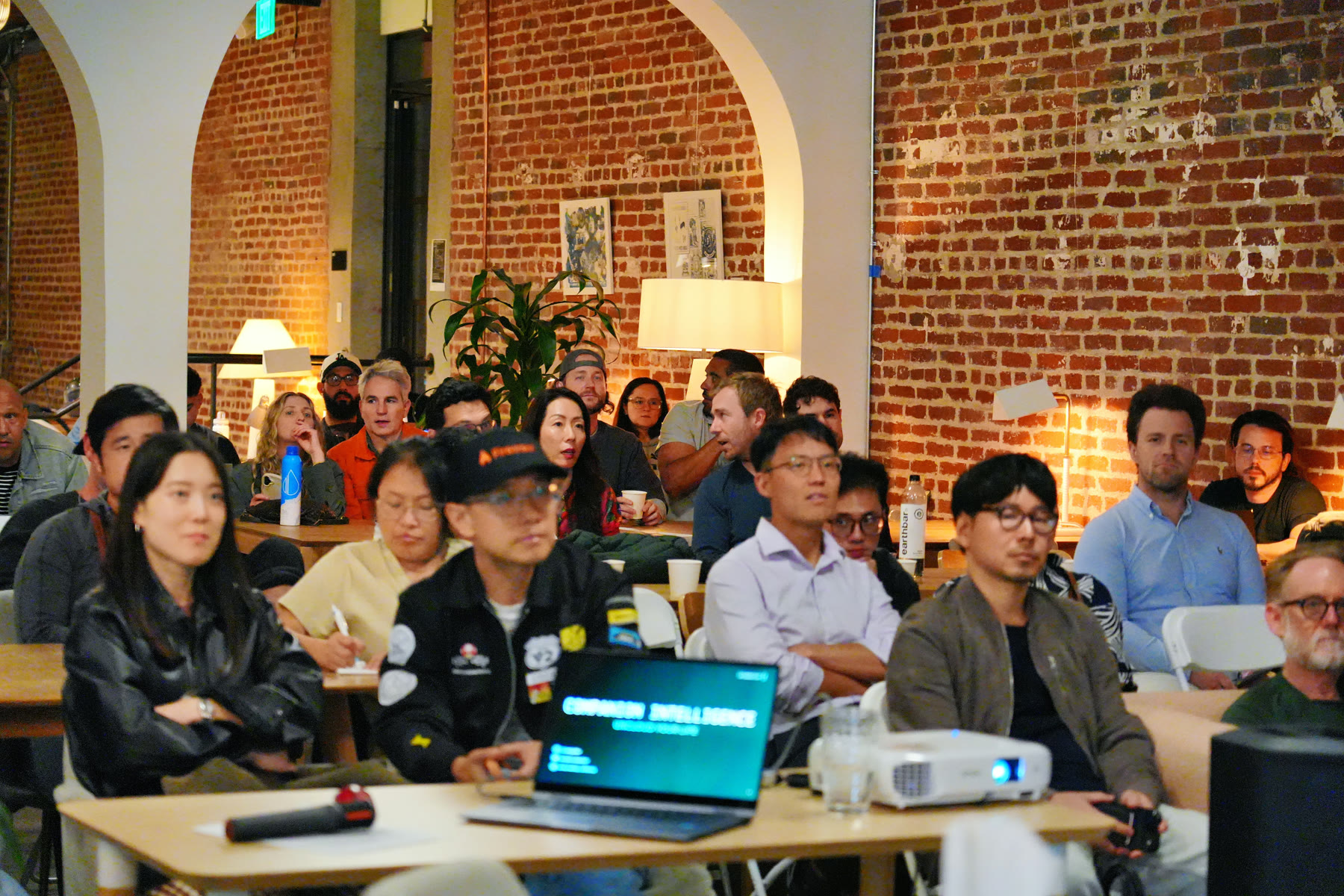
OpenClaw LA #6 was the meetup where the conversation moved past agent demos on a laptop and into the rest of real life.
Around 65 people — a mix of seasoned builders and folks there to learn more about AI — filled Groundfloor in Echo Park on May 27, 2026 for a night about agents in the wild: self-hosted OpenClaw running on consumer hardware, voice-first workflows in the car, personal servers built around local models, and a secure agentic intranet inside a regulated fintech company.
The full event recap is live at OpenClaw LA. This version is the Emarketed takeaway: what the night said about where practical AI agents are headed, and why it matters for companies trying to turn AI from a novelty into operating leverage.
Photos by Steven Seagondollar, @dropshock.digital.
The Theme: Agents Are Leaving the Screen
The strongest through-line of the night was simple: agents are moving out of the IDE.
That may sound obvious if you already live inside OpenClaw, but it is a major shift. A lot of AI agent talk still revolves around coding assistants, terminal workflows, and developer productivity. Those are useful, but they are only the first layer.
At OpenClaw LA #6, the examples were more grounded:
- An agent running on a mini PC under a desk
- An agent accessed from a car through a walkie-talkie interface
- A personal server that chooses local models and installs self-hosted apps
- An enterprise OpenClaw deployment with strict identity isolation and no loose environment variables
That is what makes this community interesting. The most useful agent work is not just about prompting better. It is about putting agents close enough to the work that they can actually do something.
Johnny Roque Opened With the Human Part
Johnny Roque opened the night with a comedy set built for a room full of AI-obsessed builders. It was a smart way to start because the jokes hit the tension everyone in the room understands: AI is changing labor, access, cost, and leverage faster than most organizations can process.
The set worked because it did not treat AI as magic or doom. It treated it as something already embedded in daily life. That was the right warm-up for a night where every talk showed agents escaping the abstract and landing in specific workflows.
Bill Kreutinger Showed What Self-Hosted OpenClaw Can Look Like
Bill Kreutinger gave the first technical talk with Joe Penclaw, his self-hosted OpenClaw setup running on consumer hardware.
His stack includes a GMK K12 mini PC with an externally attached RTX 3090, a ZimaBoard 2 with a Tesla V100, Proxmox, Ubuntu, Docker, and a set of MCP connections into his personal infrastructure. The result is an agent that can work with his notes, files, local services, and web root.
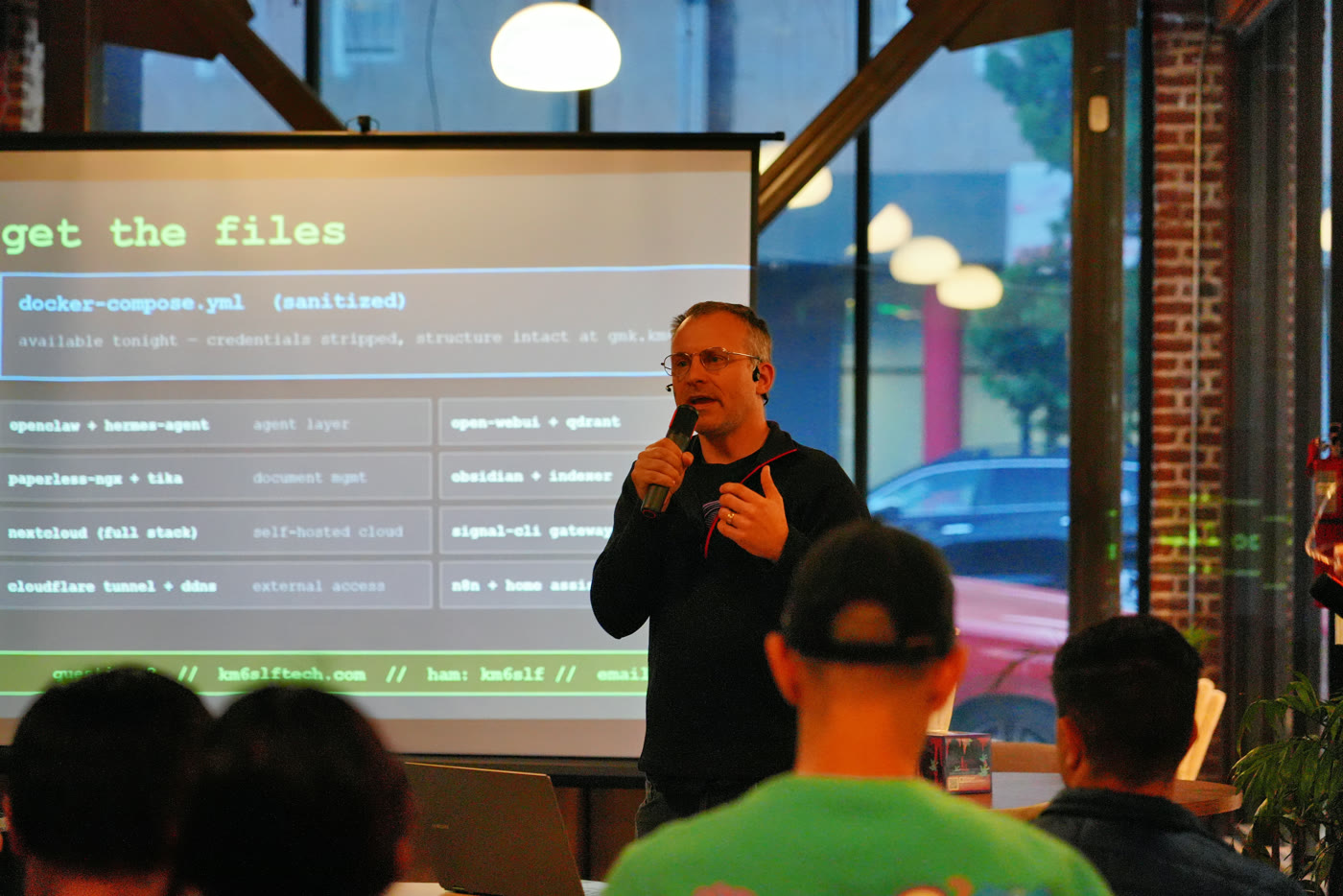
The live demo was the kind of moment that makes a meetup useful. Bill sent a single WhatsApp message to Joe asking it to create a demo page in the web root, include the latest image from his WhatsApp files directory, greet the OpenClaw LA attendees, and style it with a dark blue background and colorful accents. He scanned the QR code, and the site was live.
That is the practical value of agents when they are wired into actual systems. The agent was not just answering a question. It was operating inside a real personal stack.
Bill also shared his setup at gmk.km6slftech.com, including a Docker Compose file and an OpenRouter-based option for people who are not running local GPUs.
David Guttman Put OpenClaw in the Car
David Guttman took the next step: what happens when you want to use agents away from the desk?
He walked through the problem from experience. Remote desktop on a phone was not enough. Aider was not enough. Voice tooling had noise and session-management problems. Discord voice channels did not give him the separation he wanted.
So he built Clawkie Talkie, a car-friendly walkie-talkie interface for OpenClaw.
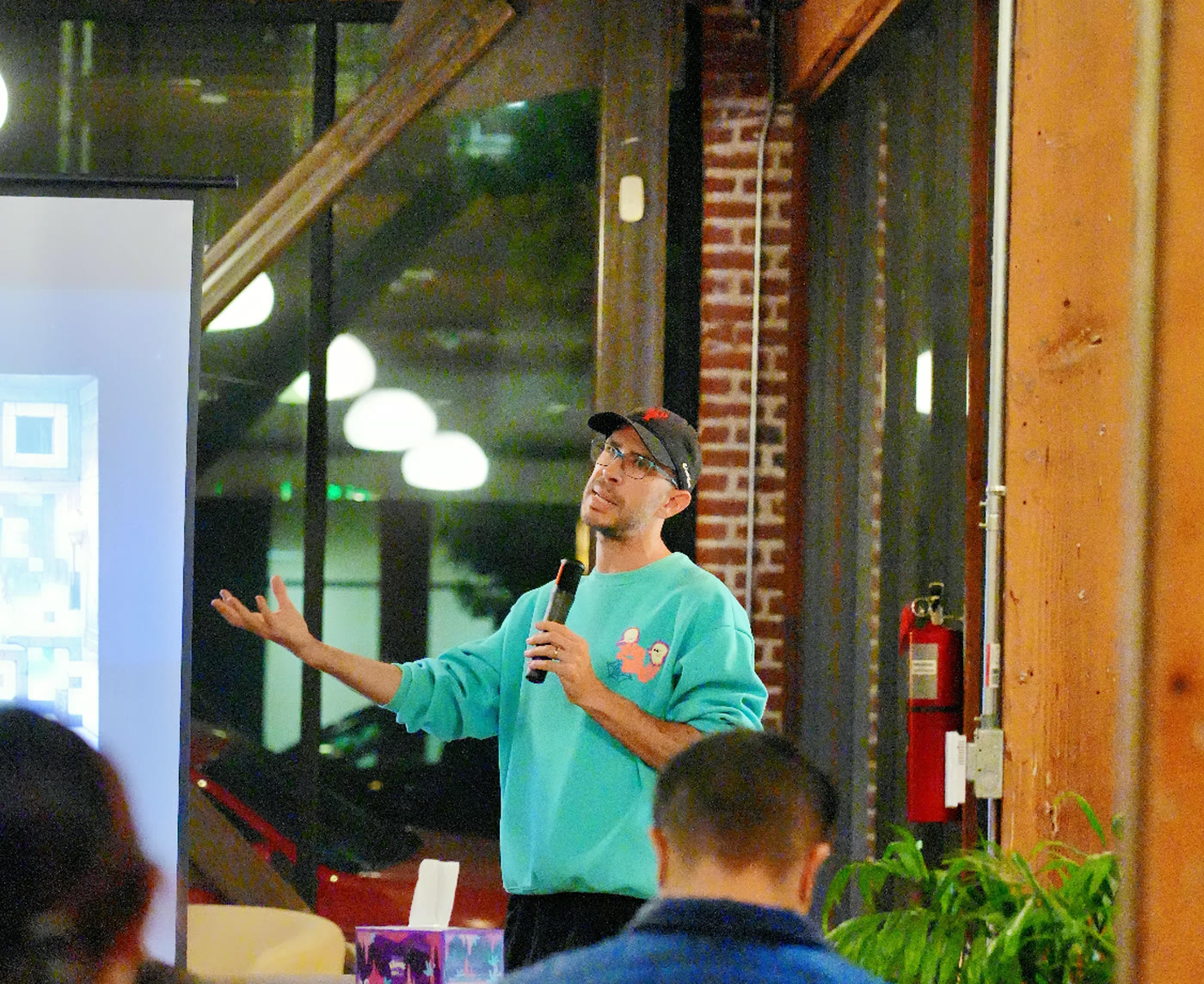
The important part was not only the voice interface. It was the session design. David emphasized that separate thread and session management is not optional when you rely on agents for real work. Without that separation, everything collapses into one long stream of mixed context.
That point matters for businesses too. If an agency, founder, or operations team wants agents to handle research, content, sales tasks, hiring, or reporting, the architecture has to keep work separated. Otherwise the agent becomes another messy inbox.
David also made a point about taste. With AI doing more of the mechanical work, builders should spend the saved time making the experience feel distinct. He added custom audio filters, walkie-talkie crackle, and tuning tools because the interface should feel like something built with care, not generic AI output.
Liam Broza Made the Case for Personal Servers
Liam Broza from Companion Intelligence pushed the local-first theme even further.
His talk centered on Companion Hub, software that turns a Windows, Mac, or Linux machine into a personal server. It scans the hardware, recommends local models, and helps install tools like OpenClaw, Hermes, Nextcloud, Mattermost, Jellyfin, ComfyUI, and more.
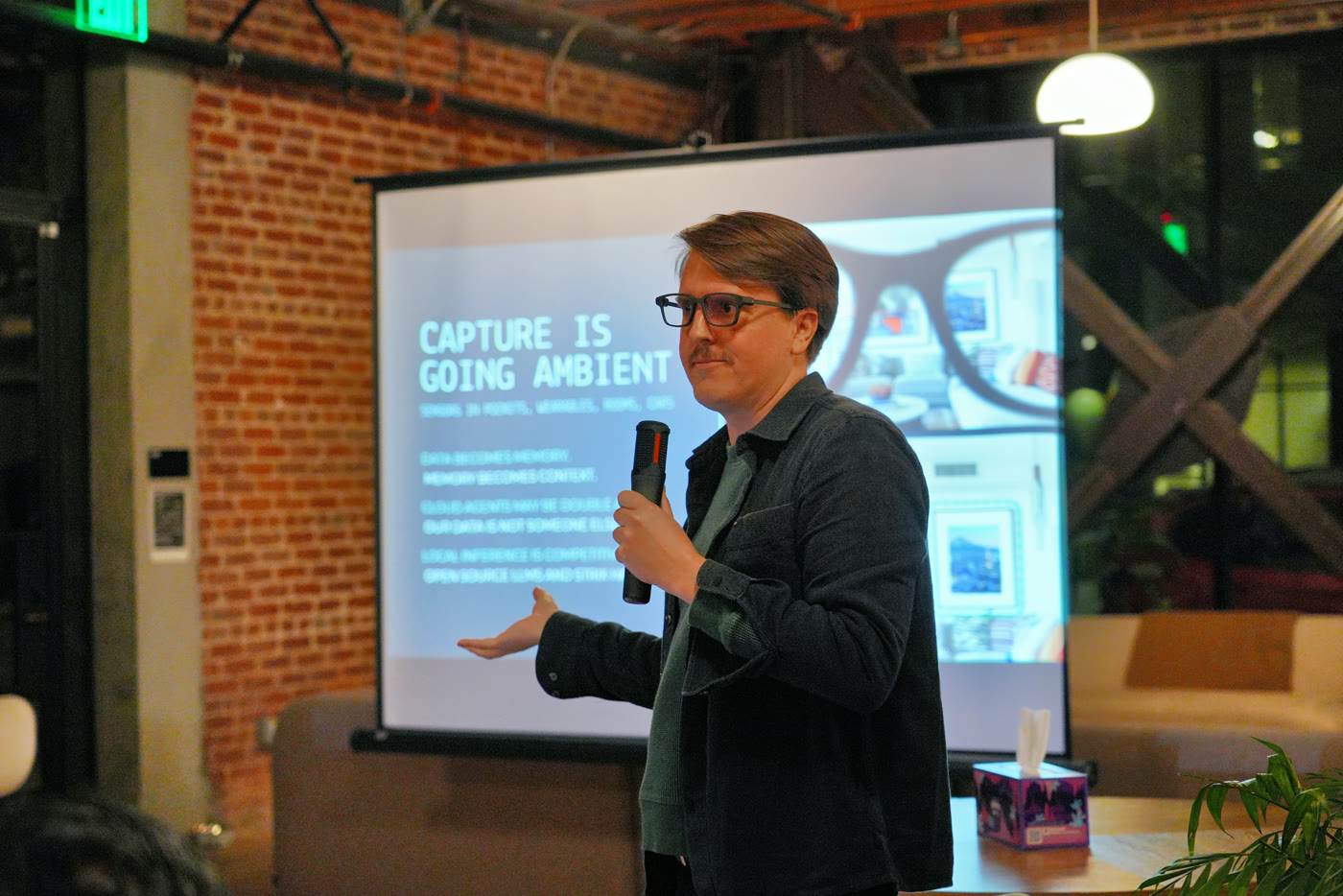
The more interesting detail: Companion Hub is also an MCP server. That means an agent can ask it to spin up services, generate assets, prepare work, and shut things back down when the job is finished.
That is a powerful pattern. Instead of treating your agent as a chat window, you treat it as the operator of your personal or team infrastructure.
Liam also talked about Companion Cores, prebuilt hardware aimed at families and small teams, and Companion Memory, a personal digital twin built from location history, communications, photos, services, and browsing behavior. The larger point was clear: personal AI will need deeper context than a folder of markdown files can provide.
For companies, that raises the same strategic question we keep seeing in AI adoption: who owns the context? If your context lives entirely in someone else’s cloud, your leverage is limited. If the context lives in systems you control, agents become much more useful.
Damian Finol Brought the Enterprise Security Layer
Damian Finol closed with the most enterprise-ready talk of the night. At Felix Pago, a fintech company, he has been building a secure agentic intranet where each employee gets a fully isolated OpenClaw instance.
This was not a toy deployment. It was built around serious constraints: isolated environments, workload identity, Kubernetes pods per employee, and no loose credentials sitting on machines.
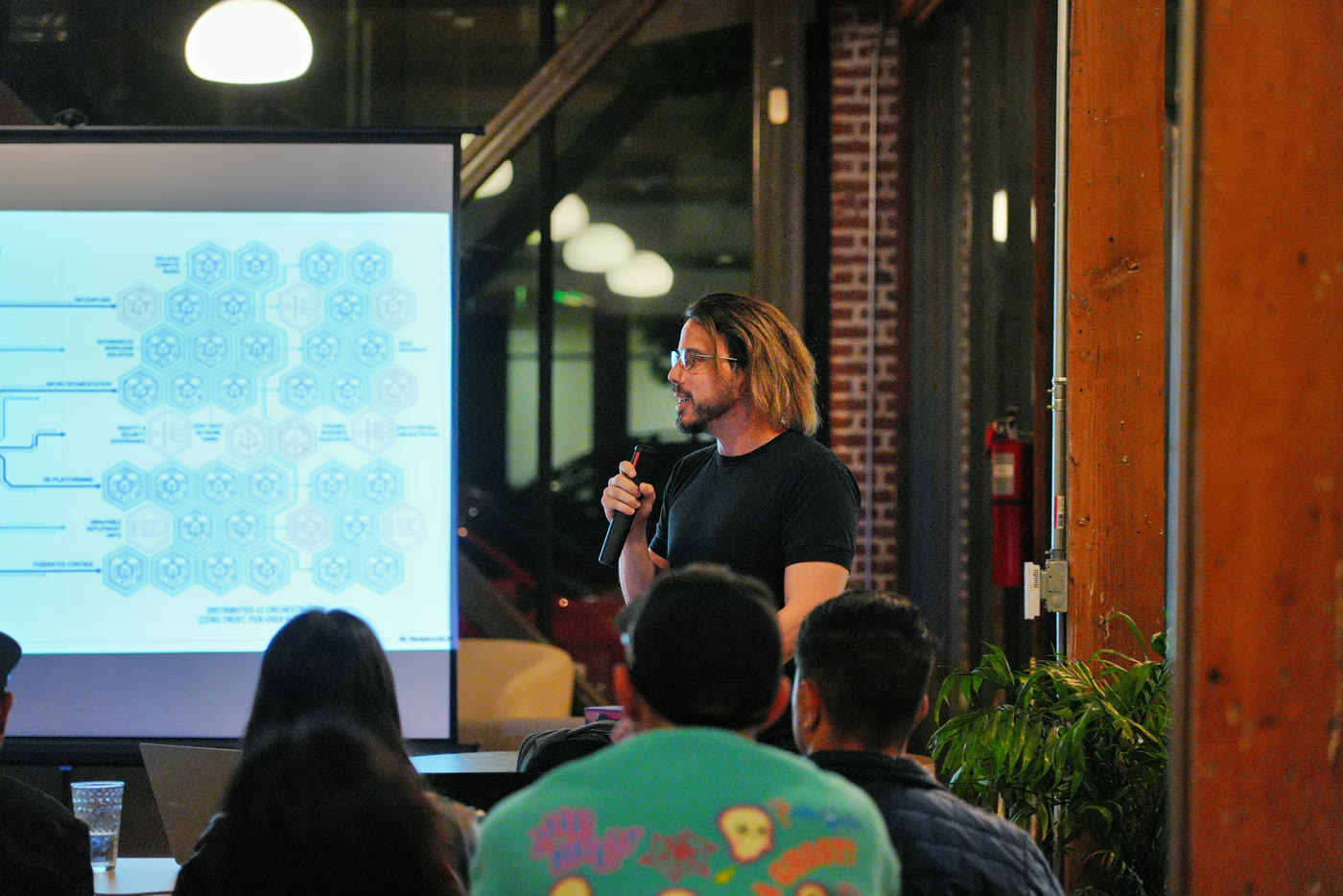
The business result was the part that should get operators’ attention. Customer service agents at Felix Pago used to spend about 30 minutes diagnosing transaction issues. With agents that have controlled read access to service logs and transaction data, that work dropped to under four minutes.
That is the difference between AI as a demo and AI as operations infrastructure.
The lesson for marketing and service businesses is not that everyone needs a Kubernetes-based intranet tomorrow. The lesson is that agent access has to be designed. If an agent can see nothing, it can only talk. If it can see everything without controls, it becomes a risk. The useful middle is permissioned access to the systems where work actually happens.
Why This Matters for Emarketed Clients
For most businesses, the agent question is no longer “Can AI write a blog post?” That is solved enough to be boring.
The better question is: where could an agent remove latency from the business?
For a marketing agency, that might mean research, content production, reporting, lead sourcing, inbox triage, website updates, or proposal prep. For a rehab center, it might mean turning admissions questions into content, monitoring AI visibility, preparing follow-up drafts, or summarizing call themes. For a B2B company, it might mean giving sales and support teams faster access to product, customer, and operational knowledge.
OpenClaw LA #6 made that future feel less theoretical. The builders in the room were not showing polished SaaS demos. They were showing messy, specific, working systems that solved personal and business problems.
That is usually where the real adoption starts.
The Emarketed Takeaway
The biggest lesson from OpenClaw LA #6 is that useful agents need three things:
- Access to the right systems
- Boundaries that keep the work safe
- Interfaces that fit the moment of use
Bill’s agent works because it is connected to his personal stack. David’s works because it fits the car. Liam’s vision works because it treats the local machine as a control point. Damian’s works because it was designed for enterprise constraints from the beginning.
That is the direction we are building toward at Emarketed too. AI agents are not just content tools. They are operators, coordinators, monitors, researchers, and workflow glue. Used well, they reduce the number of times a human has to stop, gather context, open three tabs, and perform a repeatable task from scratch.
The next stage of AI adoption will belong to companies that stop treating agents as chatbots and start treating them as infrastructure.
Read the full event recap at OpenClaw LA, and if you want to compare notes in person, come to the next OpenClaw LA meetup.
Matt Ramage is the founder of Emarketed, a Los Angeles digital marketing agency, and the organizer of OpenClaw LA.