AI in Production LA Recap: Four Builders Who Just Did Things
Recap of the May 2026 AI in Production LA meetup. Four speakers, four very different paths into building with AI — from a personal AI assistant to an App Store kids' app, a recompiled Linux kernel on a $43 fake Game Boy, and an 11-year-old's launched LLM tool.
May 2026 • AI in Production LA Meetup
Last night we packed the room for another AI in Production LA meetup, and it delivered. Four speakers. Four completely different paths into building with AI. One theme that kept surfacing: stop waiting for permission to build the thing you actually want.
Here’s what went down.
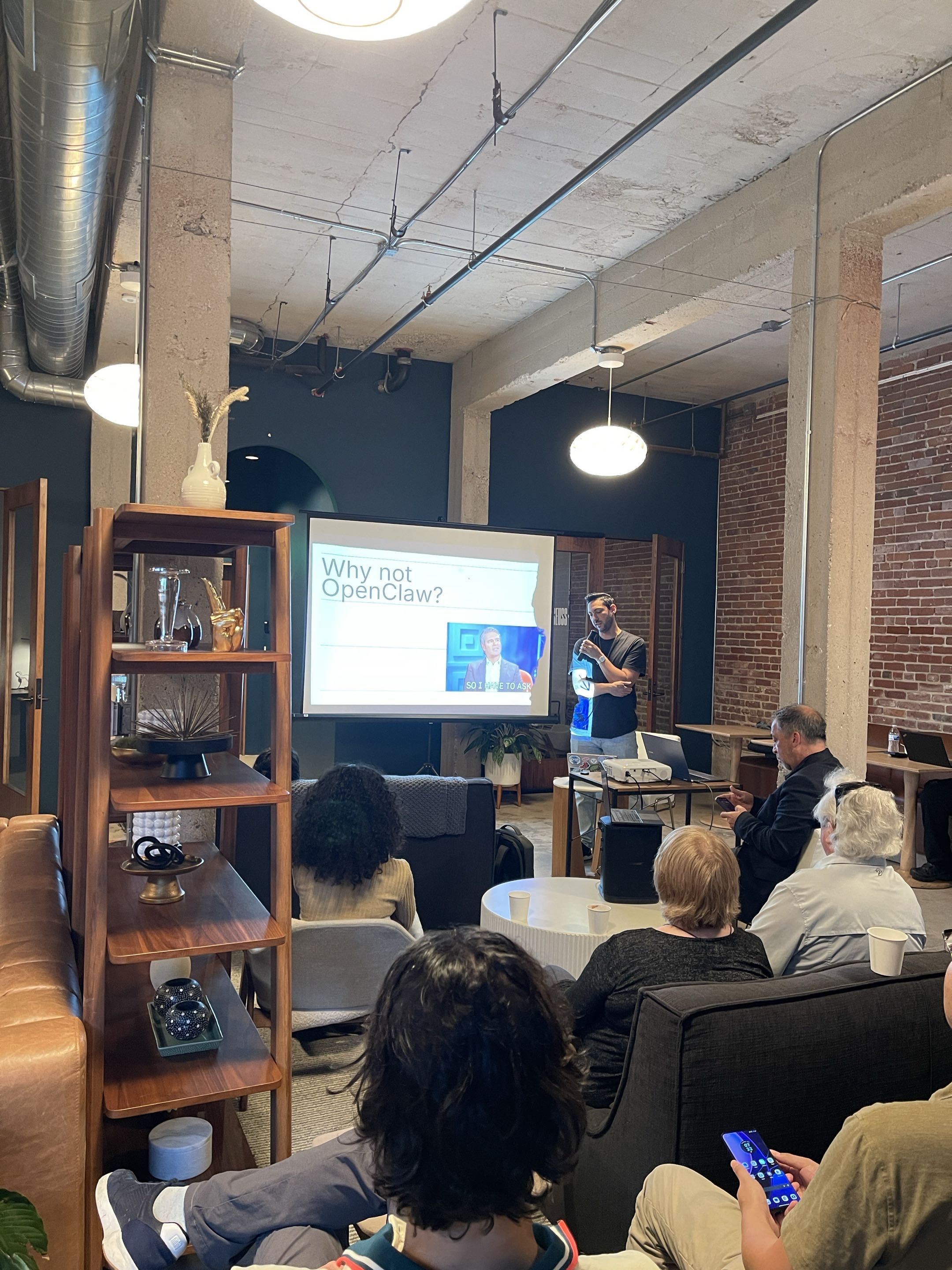
Loren Segal — Building Aviary: When OpenClaw Wasn’t Enough
Loren opened the night with a talk that felt familiar to a lot of people in the room — he started by trying to make OpenClaw work, and ended up building something better.
His project is Aviary (avery.bot), a personal AI agent assistant he built for himself after hitting OpenClaw’s limits one too many times. Signal wasn’t well-supported. The permission model wasn’t granular enough to safely share with friends. And then came the moment Anthropic restricted Claude subscriptions from OpenClaw — which Loren took as his cue.
One of the most technically interesting pieces: Aviary compiles scheduled tasks down to Lua scripts rather than re-prompting the model on every run. That means recurring jobs — check if a site is down, scan for tech meetups, monitor a feed — consume zero tokens once they’re built. It’s an elegant solution to a real inefficiency that anyone who’s used an AI agent for automation has run into.
He also walked through his approach to building with AI more generally: linters and compiler checks (let the tools catch what the model misses), automated test generation, and cross-model code review — run your Claude-generated code through GPT, and vice versa, because models have biases and can’t reliably critique their own work.
His take on AGENTS.md files was refreshingly contrarian: keep them small. Put the real context — architecture docs, domain models, README — in places where agents are already trained to look. “If I want to change something, I change it in the architecture doc. Then I tell it to do something, and it works.”
Aviary is on GitHub. You can find Loren at @averydabot.
Eric Rosner — Ask Little Chicken Show: An Art Director Teaches Himself to Ship
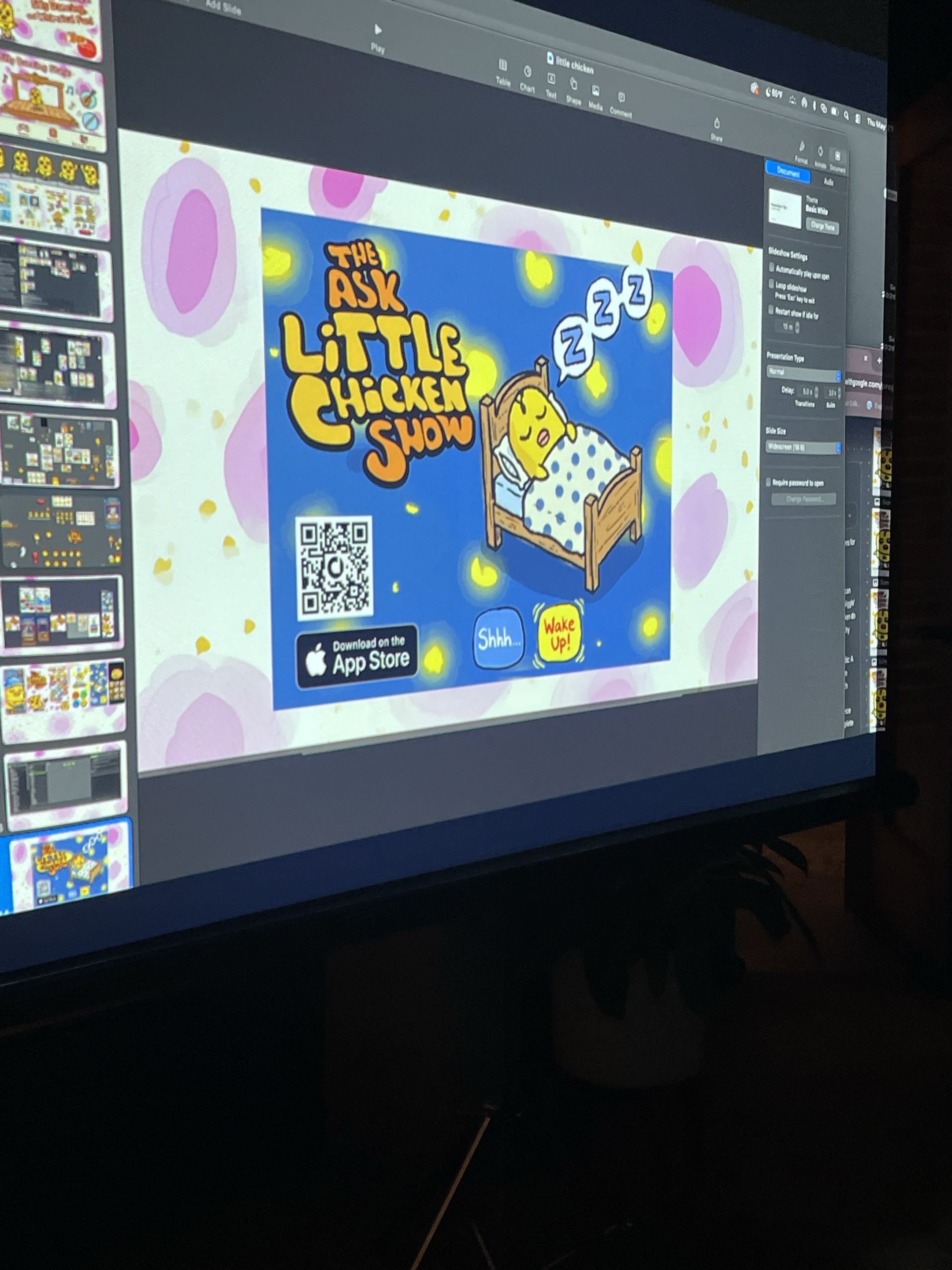
Eric spent years creating characters and content for kids — he’s worked at MTV, Nickelodeon, and on Rick and Morty — but always wanted to build an interactive app around his original characters, Little Chicken and Herman. The problem: he didn’t know how to code, and every attempt over the previous decade went nowhere.
This year, that changed.
Using Xcode with AI-assisted coding (via ChatGPT and Gemini), Google Stitch for generating consistent character assets from his original illustrations, and ElevenLabs for voice generation, Eric shipped Ask Little Chicken Show to the App Store in about a month. The app is a mini hub of kid-friendly content — soundboards, silly games, a dance party, a puppet theater, a “Chicken Talk” voice randomizer, and an interactive Q&A where Little Chicken reads and answers letters from kids.
What made it work: he had the characters. He had the vision. He just needed tools that could translate that into working software. Google Stitch kept the character consistent across dozens of variations. Agentic coding in Xcode let him describe what he wanted and watch it get built. When the App Store threw errors he didn’t understand, he pasted them into the AI and got answers.
The whole thing — characters, menus, animations, sound design, App Store submission — took about a month. Except the puppet theater. That took another month on its own.
Ask Little Chicken Show is free on the App Store now.
Edwin Grace — You Can Just Do Things: Compiling a Custom Linux Kernel for a $43 Fake Game Boy
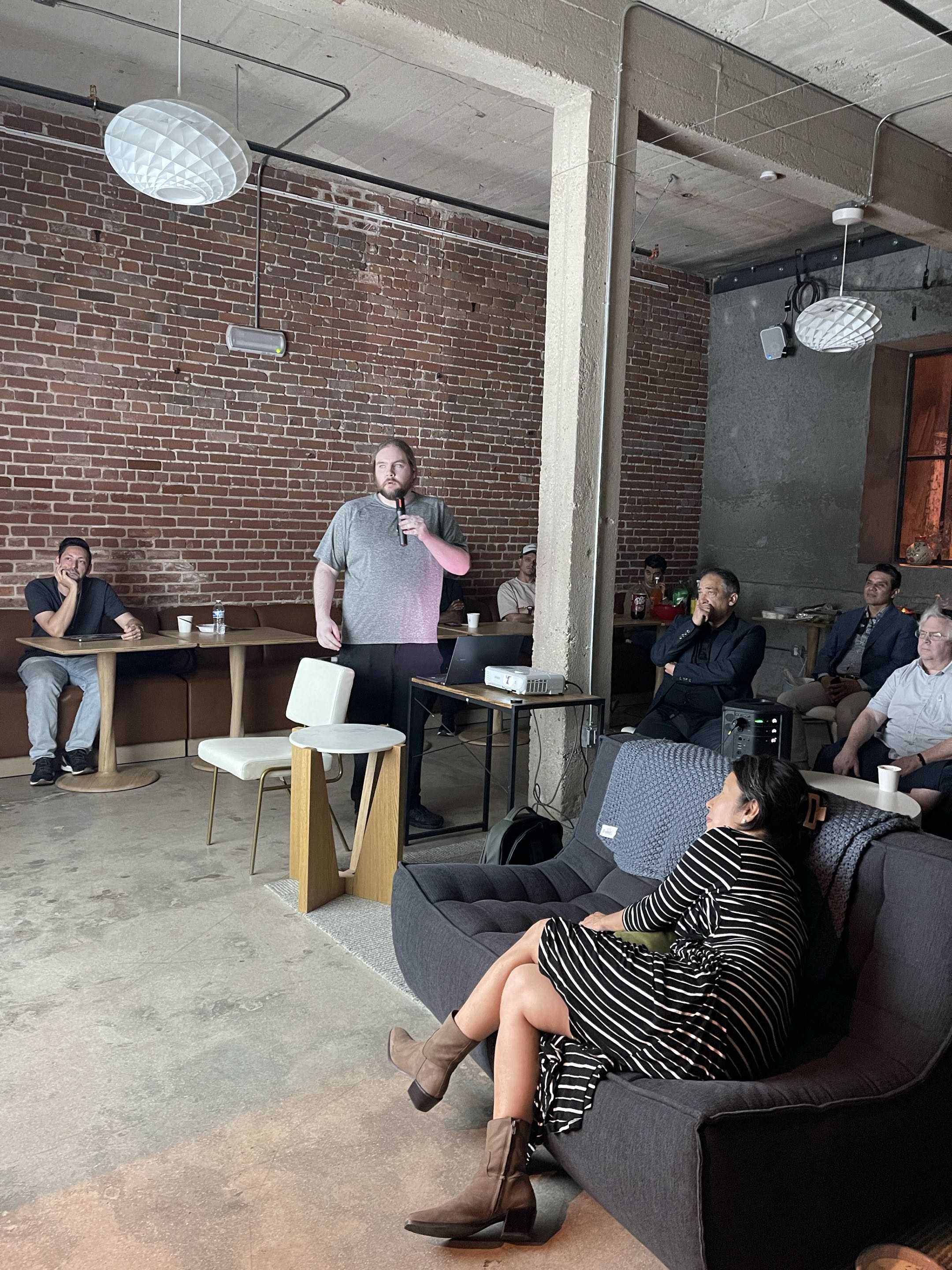
Edwin is a Linux and automation specialist who describes himself as someone who automates annoying computer problems until he stops getting them. His talk was a love letter to cheap hardware, open source software, and the new reality that you can just… do things you couldn’t do before.
The project: a $43 knockoff Game Boy from AliExpress (the R36 Ultra — notable because, unlike most of its siblings, it actually has Wi-Fi). Edwin wanted to run RockNix, a Linux-based OS built for handheld gaming devices — but the RockNix kernel didn’t have drivers for the R36 Ultra’s Wi-Fi chip.
So he recompiled the entire RockNix kernel from scratch.
With Codex. Over multiple days. Across two ThinkPads. Eventually through a Docker container SSH’d into his main desktop to handle the ARM64 cross-compilation that an 8GB laptop definitely couldn’t finish.
The punchline is that it works. Edwin demoed the device live — uploading an image to a live gallery displayed on the handheld, and using a $10 USB microphone connected to the device to send voice messages to a Discord webhook where his AI agent could hear and respond to them. Basically: a walkie-talkie for talking to his AI.
His question to the room: if a $43 device from AliExpress can become this with a few days of AI-assisted kernel hacking, what happens when you apply the same approach to the five-year-old phone sitting in your drawer?
Edwin is available for work — find him at gra.ce-ed.win.
Yichen — ZexirAI: An 11-Year-Old Shipping an LLM Tool
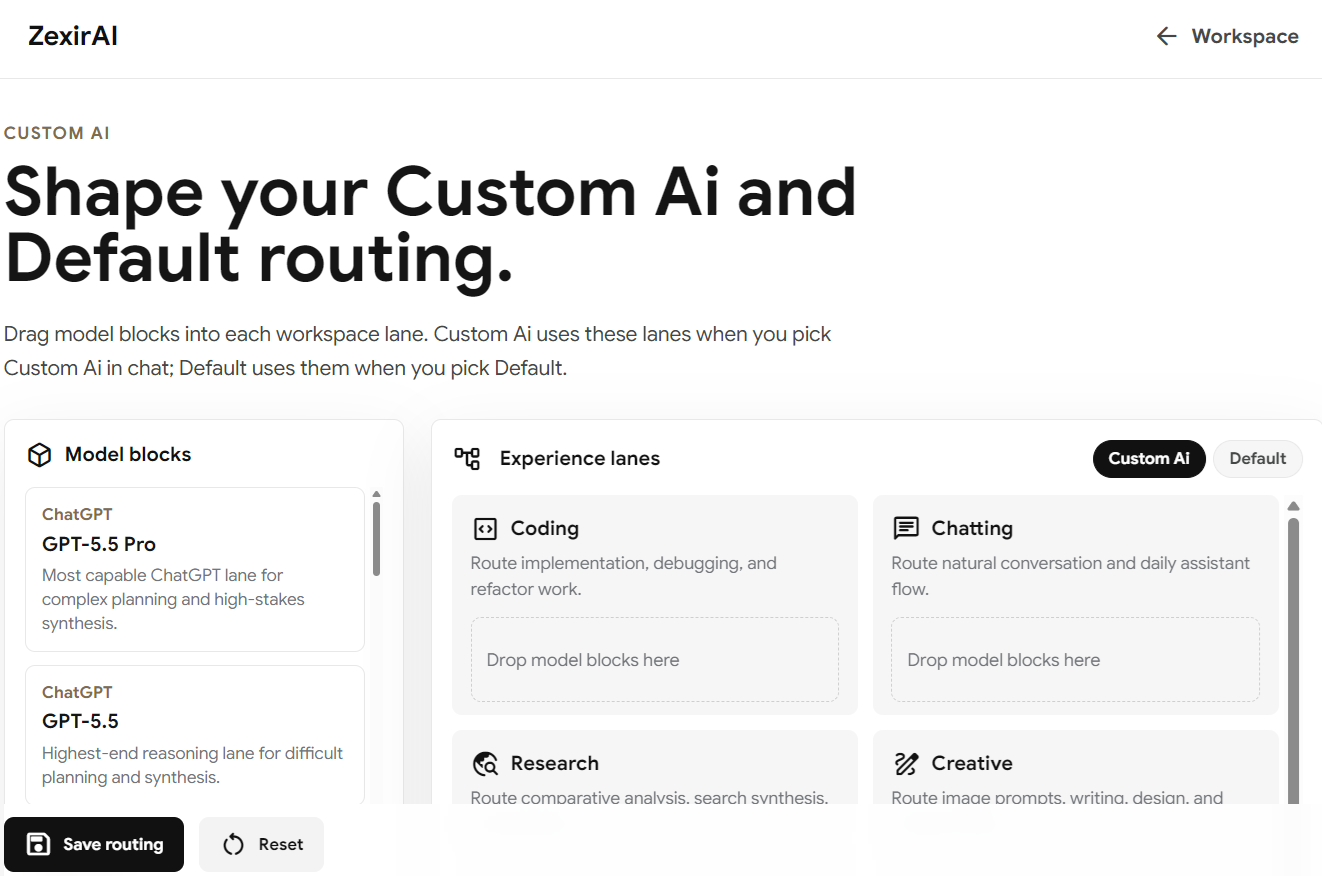
The night ended with our youngest speaker ever — Yichen, 11 years old, who built and launched ZexirAI (zexirai.com), a tool that lets you save a personal profile and use it across multiple AI models.
The idea is straightforward and genuinely useful: instead of re-explaining yourself to every AI every time, you save a profile once and the AI already knows who you are. You can also switch between major models — Claude, GPT, Gemini, and others — from a single interface, which makes comparison easy.
Yichen is still actively building it, but it’s live and available for anyone to try. Watching an 11-year-old demo a real, working product he built and shipped to the public was a good reminder of what this moment actually is.
Thanks to Everyone Who Came Out
This is why we do these meetups. A veteran engineer building around OpenClaw’s limitations. An art director who spent a decade unable to code finally shipping. A Linux enthusiast compiling kernels for dollar-store hardware. An 11-year-old with a live product.
Same tools. Completely different entry points. All of it real.
See you next time.
AI in Production LA meets regularly in Los Angeles. Follow along at aiprod.live for upcoming events.