Google Ads In 2026: Trust Automation, Keep Control
Google Ads automation can drive growth in 2026, but only when tracking, landing pages, and lead-quality feedback are strong enough to guide it profitably.
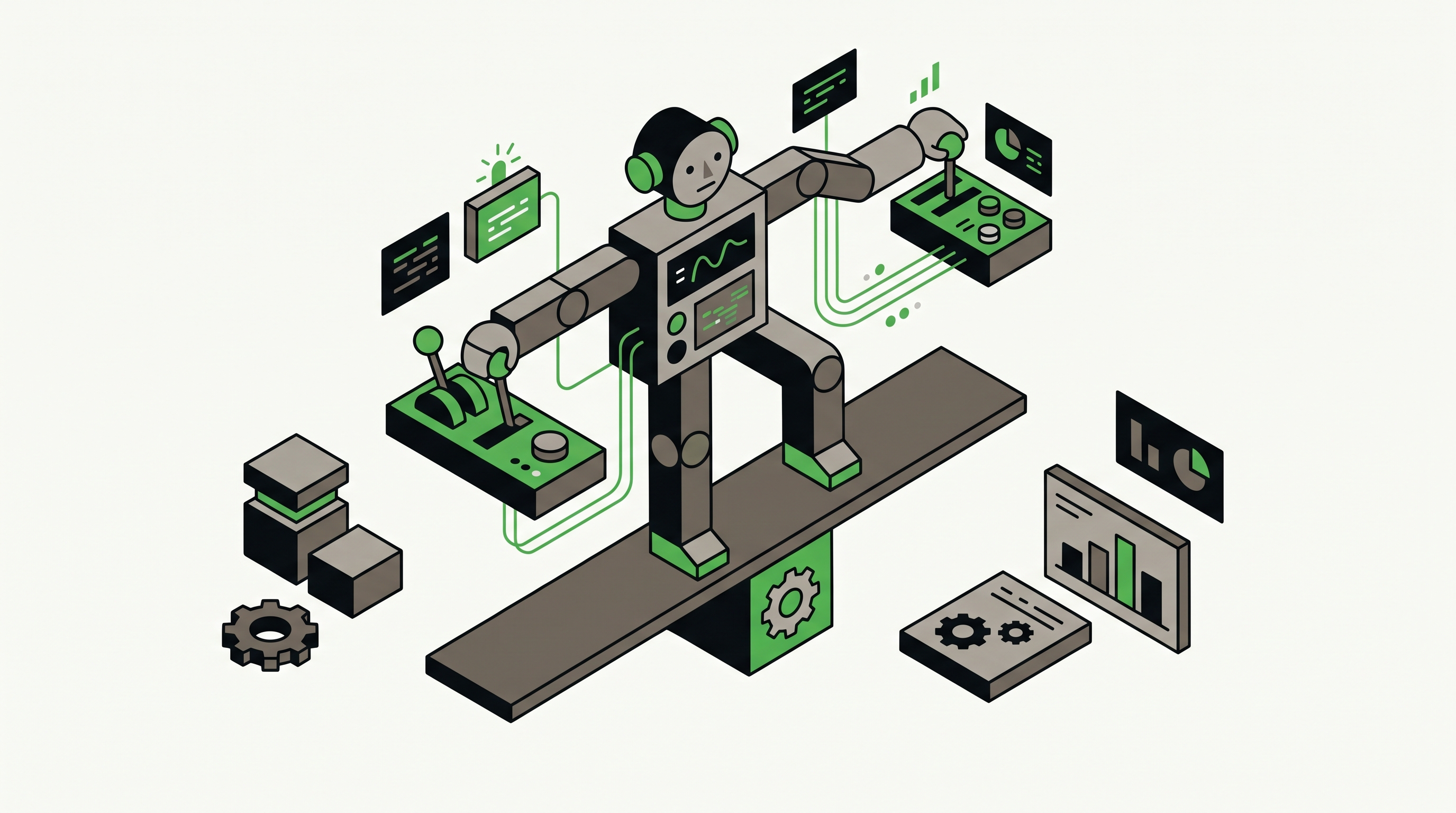
Google Ads automation is useful in 2026. Blind trust is not.
That is the shift most small businesses and mid-market teams still miss. Google is pushing advertisers toward AI Max, Performance Max, Smart Bidding, broader matching, dynamic landing-page selection, and more auto-generated creative. Some of that works well. Some of it quietly expands your account into traffic you did not ask for, landing pages you did not intend to promote, and lead quality you would never approve if you saw it sooner.
Google made the direction even clearer on April 15, 2026, when it announced that Dynamic Search Ads will automatically upgrade to AI Max in September. A few weeks later, at Google Marketing Live, it told advertisers to build their foundation around AI Max for Search, AI Max for Shopping, and Performance Max. This is not a temporary beta phase anymore. It is the operating model Google wants advertisers to accept.
The practical question is not whether automation belongs in your account. The real question is where it has earned trust and where human control still protects your budget, your message, and your sales pipeline.
If you run a small business, manage paid media for a healthcare or B2B brand, or oversee lead generation inside an agency, here is the framework that matters now.
Automation Works Best When Measurement Is Already Clean
Google keeps repeating the same point in its own documentation because it is the part advertisers most often skip. In its guide to high-quality lead generation, Google says you should map the full lead-to-sale journey, pick a conversion goal aligned to business value, and make sure that action has at least 15 conversions in the last 30 days at the account level. It also recommends uploading offline or enhanced lead data regularly, ideally daily.
That is a stronger requirement than many advertisers realize. It means automation is not a shortcut for weak tracking. It is a multiplier for whatever signal you feed it.
Google says advertisers using Enhanced Conversions for Leads average 10% more measured conversions than standard offline import setups. It also says qualified and converted lead goals help Smart Bidding and Performance Max optimize deeper into the funnel, not just toward cheap form fills. In plain English, the system performs better when you teach it what a real opportunity looks like.
That matters because a lot of accounts still optimize toward the wrong event:
- a form submit from someone outside the service area
- a spam call that lasted thirty seconds
- a low-intent quote request from a shopper who will never close
- a micro-conversion that looks active in the interface but means nothing to sales
When those are the primary goals, automation does exactly what it was asked to do. It just does the wrong job faster.
For lead generation campaigns, Google now explicitly supports qualified leads and converted leads as goal types. That is one of the clearest signals in the platform right now. The machine wants downstream truth, not just top-of-funnel activity.
Before you turn on heavier automation, ask three blunt questions:
- Is our primary conversion actually tied to revenue or close rate?
- Can sales tell us which leads are good, not just which leads arrived?
- Are we sending that feedback back into Google Ads on a regular cadence?
If the answer is no, automation has not earned the keys yet.

Smart Bidding Deserves Trust Before AI Max Does
There is a big difference between useful automation and full-account surrender.
For many advertisers, Smart Bidding is still the best first layer to trust because it solves a specific problem: real-time bid adjustment. When your tracking is solid and your campaign has enough signal, automated bidding can react to auction pressure faster than a human. That is real value.
Google’s lead-gen guidance says to use value-based bidding if you can assign different values to different leads, and to use qualified or converted lead goals when lead quality matters more than raw volume. It also says conversion goals from multiple funnel stages should not be mixed casually inside the same bidding setup because that creates noisy optimization.
That is why Smart Bidding usually earns trust earlier than AI Max or Performance Max. It is narrower. It is easier to judge. You can see whether the campaign is finding better leads at a reasonable cost before you add broader query expansion, dynamic copy, or dynamic landing-page routing on top.
When Smart Bidding tends to work:
- the account has stable conversion tracking
- the offer is already proven
- the landing page converts consistently
- the campaign has enough conversion volume to learn
- the business can distinguish lead value, not just lead count
When Smart Bidding often struggles:
- the account is new
- conversion volume is thin
- leads take too long to qualify
- the tracked event is too shallow
- sales feedback lives in a spreadsheet nobody uploads
At Emarketed, this is the line we watch closely. Paid media automation can amplify a good system, but it rarely rescues a messy one. That is also why brands working with our paid ads team usually get measurement and landing-page cleanup before they get pushed into aggressive automation tests.
Broad Match Is Not The Villain, But It Needs Adult Supervision
Broad match still gets blamed for problems that usually start somewhere else. The real issue is not broad match by itself. The issue is broad match combined with weak signals and weak review habits.
Google’s lead-gen documentation recommends broad match with Smart Bidding to capture a wider range of relevant queries. That recommendation makes sense in accounts where the system has enough feedback to separate valuable intent from junk intent.
It becomes much riskier when advertisers assume the algorithm will figure everything out on its own.
That is why search term review still matters even in an automation-heavy account. Google’s search terms insights report groups demand into categories and subcategories, including themes not fully exposed in the standard search terms report. It is one of the better ways to spot where automation is pulling the campaign.
Here is what disciplined broad-match management looks like in 2026:
- review search term themes every week
- add negatives for mismatched services, geographies, and buyer intent
- separate branded, competitor, and non-brand logic where possible
- watch cost per qualified lead, not just cost per lead
- check whether the traffic is producing real pipeline movement
Negative keywords still matter because business clarity still matters. If you are a treatment center serving adults, a B2B manufacturer, or a local service provider with a tight footprint, not every search that looks related is commercially useful. Broad match can help you discover adjacent demand. It can also drift into expensive noise if nobody is steering.
This is also where Google’s AI-led ad future overlaps with the broader AI search ad changes marketers are now dealing with. Search systems are interpreting more intent on your behalf. That makes your exclusions, your conversion goals, and your landing-page logic more important, not less.
AI Max Is Powerful, But It Changes More Than Most Advertisers Expect
Google’s own help center says AI Max is not a new campaign type. It is an optimization layer inside Search campaigns. That sounds modest until you look at what it actually touches.
With AI Max enabled, advertisers can turn on:
- search term matching expansion
- text customization
- final URL expansion
- brand inclusions and exclusions
- URL inclusions and exclusions
Google says Final URL expansion and text customization are enabled by default inside AI Max, and it notes that pinned Responsive Search Ad assets are not respected when a more relevant URL is chosen dynamically. That is not a minor footnote. It means message control changes as soon as the system decides another page on your site better matches the query.
This is where many small businesses lose the plot.
They hear “better matching” and assume the system is simply finding more of the right searchers. In reality, AI Max can change query matching, ad copy behavior, and destination selection at the same time. If your site has weak pages, old promo pages, thin service pages, or pages that answer a question without selling the right offer, the machine may still send traffic there because it reads them as relevant.
Google also says AI Max can use URL exclusions, URL inclusions, and brand controls. That matters because control is still available, but only if you actively use it.
Trust AI Max more when:
- the campaign already has stable conversion data
- your website has strong, current landing pages
- you know which pages actually close leads
- your brand protection rules are clear
- you are ready to review what the system expands into
Take control first when:
- the website has outdated or thin pages
- multiple service lines live on one domain
- compliance or accuracy matters heavily
- you need tight brand messaging
- the sales team is already complaining about junk leads
The April 15, 2026 DSA-to-AI-Max migration announcement makes this even more urgent. September is a forced learning moment for advertisers who relied on older dynamic search structures. Waiting until the migration hits is a bad strategy.

Performance Max Should Follow Landing-Page Discipline, Not Replace It
Performance Max is often pitched as the campaign type that finds new demand everywhere. Sometimes it does. It can also become the easiest place to hide fuzzy targeting, weak creative, and poor lead quality behind blended reporting.
Google’s Performance Max guide for lead generation is more cautious than many sales decks. It says AI is only as good as the inputs it receives, recommends accurate conversion tracking and the right conversion actions, and says advertisers should allow at least 1 to 2 weeks, or up to 6 weeks for complex or low-volume setups, before making major changes. It also recommends deeper-funnel goals such as qualified lead or converted lead where possible.
That matters because a lot of businesses treat Performance Max like a shortcut around hard strategic work. It is not. If your site is unclear, your forms attract spam, or your creative is generic, Performance Max does not remove those weaknesses. It distributes them across more inventory.
Google even notes that advertisers who improve Performance Max ad strength to Excellent see 6% more conversions on average. That is a useful number, but only if you read the underlying message correctly. Better inputs improve results. The campaign type does not create quality on its own.
Performance Max tends to earn more trust when:
- you already know which offer converts
- lead routing and qualification are operationally sound
- creative assets are strong and current
- you can import or score lead quality
- you have enough patience to let the model learn before panicking
Performance Max deserves tighter control when:
- the account is early-stage
- you sell a complex service with multiple buyer paths
- geography matters a lot
- there is a long delay between inquiry and closed business
- the team cannot separate good leads from garbage quickly
This is one reason ecommerce and mature lead-gen brands often get more from automation than smaller local advertisers do. They usually have cleaner product data, clearer conversion signals, and faster feedback loops. That same logic shows up in our paid media work outside Google Ads too. Sector 9 Skateboards grew sales by 165% and increased marketing-attributed revenue by 254% through a paid ads strategy that matched campaign execution to a strong offer and clearer performance signals. Automation helps more when the underlying system already makes sense.
Landing Pages Are Now Part Of Campaign Targeting
This may be the most important operational change in Google Ads right now.
Landing pages are no longer just where the click ends. In AI Max and Performance Max, they are part of how the system interprets relevance and decides where to send traffic.
Google says AI Max Final URL expansion sends users to URLs it considers query relevant and themed to the ad group. Its Performance Max URL expansion guidance says Google may replace your provided final URL with a more relevant landing page from the same domain. That means your site structure now shapes targeting more directly than many advertisers assume.
If your website includes:
- location pages that are too vague
- outdated promos
- thin service summaries
- blog posts that attract research intent but not buying intent
- duplicate or overlapping pages with mixed messaging
you are giving automation messy instructions.
That is why landing-page cleanup is not optional anymore. It is campaign steering.
Review these pages before you trust heavier automation:
- top converting service pages
- pages with strong close rates but low traffic
- pages that get traffic but rarely produce qualified leads
- old pages that should be excluded from dynamic routing
- pages with weak forms, poor speed, or generic copy
If you do not know which of those deserve more spend, you are not ready to let Google choose them for you.
The Best 2026 Setup Is Controlled Automation, Not Manual Purism
Some marketers still react to all of this by trying to go fully manual again. That is not the answer either.
Manual-only Google Ads management is usually too slow for the current platform. Google is clearly designing for AI-assisted execution. Fighting that reality across every setting is not efficient. The better approach is controlled automation.
A practical setup for many small and mid-sized advertisers now looks like this:
- Clean up tracking first.
- Push offline or enhanced lead data back into the account.
- Let Smart Bidding prove itself on stable campaigns.
- Test broad match where lead quality is measurable.
- Use AI Max selectively, with URL and brand controls already in place.
- Scale Performance Max only after the landing pages and conversion goals are trustworthy.
That framework is less exciting than the platform pitch, but it is a better way to protect margin.
Google wants advertisers to build around automation. Fine. Do it with guardrails. That is the difference between using the machine and being managed by it.

FAQ
When Should A Small Business Trust Google Ads Automation?
Trust it more when conversion tracking is accurate, lead quality is measured beyond the form fill, and the campaign already has enough volume to teach the system what success looks like.
Is AI Max Replacing Dynamic Search Ads?
Yes. Google announced on April 15, 2026 that Dynamic Search Ads and other legacy settings will automatically upgrade to AI Max in September 2026. Advertisers should review campaigns before that migration happens.
Should I Use Broad Match In Google Ads In 2026?
Usually yes, but only with strong Smart Bidding, active negative-keyword management, and regular search term review. Broad match without those controls often expands into low-value traffic.
Is Performance Max Good For Lead Generation?
It can be, but only when the account has strong measurement, quality creative, and deeper-funnel conversion signals such as qualified or converted leads. Without those, it often hides weak lead quality behind blended reporting.
What Should I Review Before Turning On AI Max?
Review conversion goals, landing-page quality, outdated URLs, brand controls, negative keywords, and whether your sales team can identify qualified leads quickly enough to feed the account useful data.
What Should Marketers Do Monday Morning?
Audit one active Search campaign. Check the primary conversion, review the last thirty days of search term themes, identify pages you would not want Final URL expansion to choose, and ask sales which leads were actually worth following up on. That one exercise will tell you whether your account is ready for more automation or whether control should come first.