How To Measure Paid Ads In The AI Buyer Journey
AI search now shapes research before the click. Here is how paid media teams should measure branded lift, assisted conversions, calls, and CRM quality in 2026.
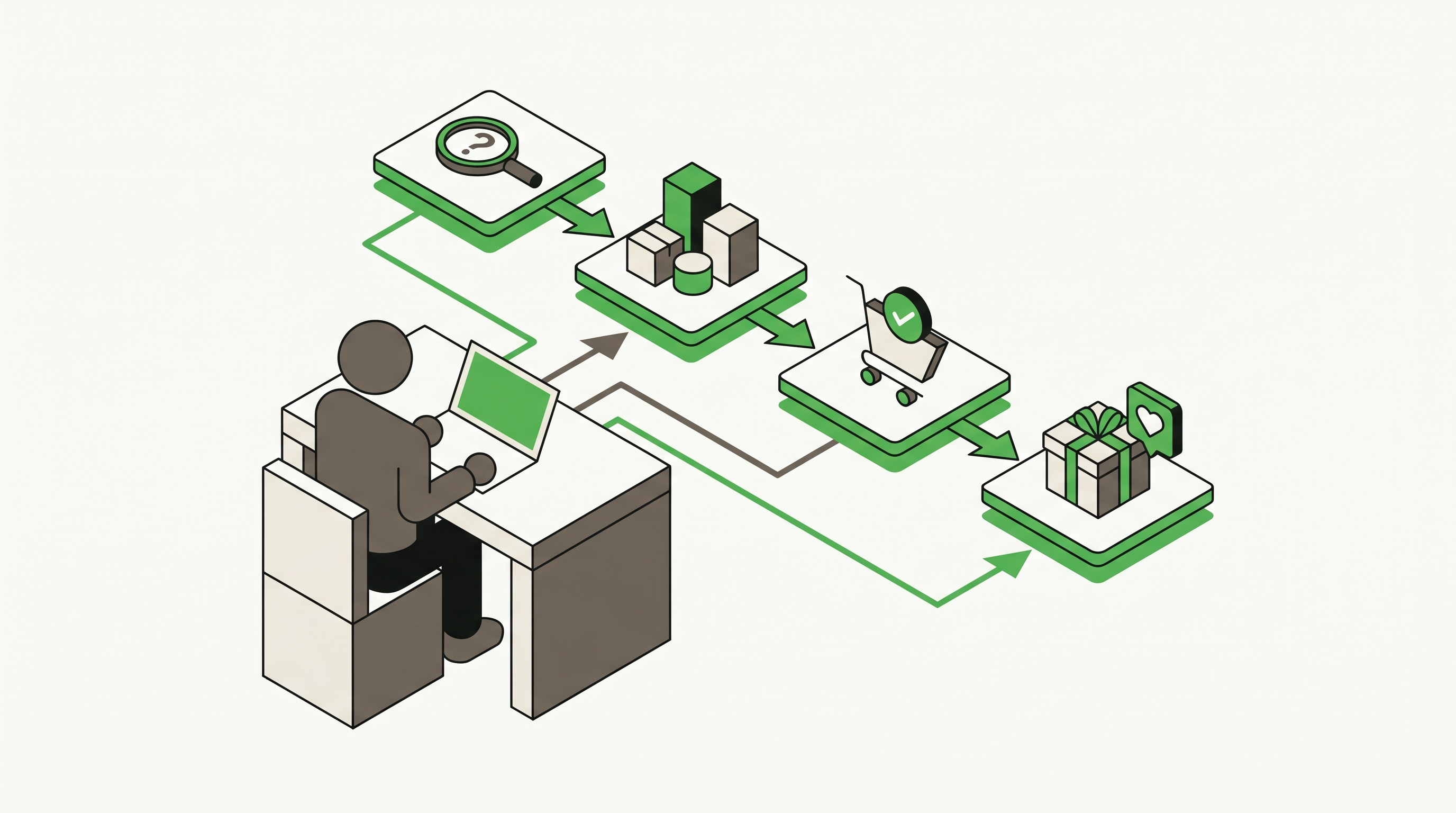
Paid search reporting got harder the moment AI tools started doing part of the sales conversation before the click.
Google now says ads in AI Overviews are matched to its understanding of both the query and the AI Overview content itself, and it also says Google Ads does not currently provide segmented reporting for those placements. At the same time, HubSpot says answer engines are compressing the customer journey, while recent academic research on platform AI assistants found that shoppers often move back and forth between chat and search in the same purchase phase. Put that together and the old reporting model breaks fast: a prospect can ask ChatGPT for options, scan a Google AI Overview, search your brand later, click a paid ad, call from a mobile landing page, and still look like a plain branded conversion in your monthly report.
That does not make paid ads less valuable. It makes last-click reporting less honest.
This is the practical fix. If you manage paid media for agency clients, B2B brands, local service companies, or healthcare organizations, measure the journey in layers: branded search lift, assisted conversions, call tracking, CRM quality, landing page behavior, and prompt-level visibility as a supporting signal. If you only report ROAS and form fills, you are missing the part of the buyer journey AI now influences before your ad ever gets clicked.
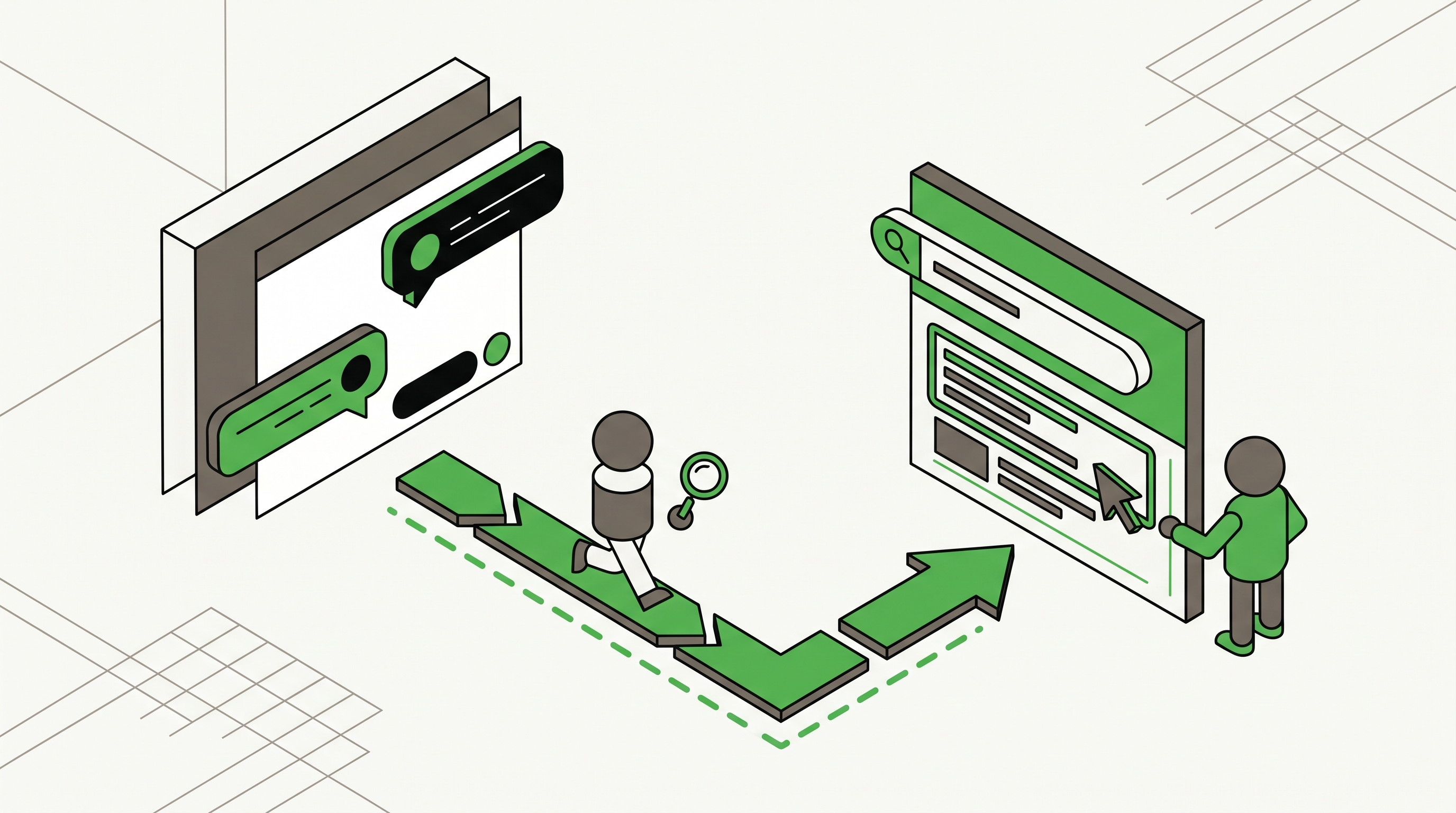
Why Paid Ads Attribution Gets Messier In AI Search
The first problem is surface fragmentation. A buyer no longer has to move in a neat line from search query to ad click to lead form. Google explains that AI Overviews tend to appear on complex, answer-seeking queries and that ads may be matched from Google’s understanding of the full journey context, not just the typed query. That means discovery can start on broad informational intent and still move into a paid conversion later.
The second problem is that reporting does not cleanly reflect that path. Google states in its own help documentation that there is no segmented reporting for ads shown within Search AI Overviews. So the media manager sees impressions, clicks, conversions, and search terms, but not a clean breakout for “this conversion started with AI-mediated research.”
The third problem is buyer behavior itself. HubSpot’s recent AEO coverage says answer engines compress the customer journey, and a March 2026 research paper on shopping with platform AI assistants found that chat and traditional search commonly interleave during the same broad stage of the journey. Buyers are not replacing search with AI in one step. They are mixing the two.
That blend matters because it changes what a paid click means. A click from a branded query in 2026 may represent:
- A person who discovered your category in ChatGPT
- A buyer who saw your brand mentioned in an AI Overview and came back later
- A prospect who compared three vendors in an AI tool, then searched your name directly
- A local lead who asked an AI assistant for provider suggestions, then used Google Ads as the final navigation step
If you treat all of those as ordinary branded conversions, you understate the upstream role AI played. If you ignore the paid click because AI influenced it first, you understate the role paid media played in closing demand. The right answer is not either-or. It is blended measurement.
Stop Asking Paid Search To Tell The Whole Story
A lot of monthly reporting still assumes the ad platform should explain everything on its own. That was already shaky. In the AI era, it is unrealistic.
Google Analytics makes this clearer than many teams realize. In GA4, you can choose whether conversion credit is limited to Google paid channels or reported across paid and organic channels. That setting alone can change how performance looks across the same account. If your client sees one number in Google Ads and a different number in GA4, that is not automatically a tracking failure. It often reflects two systems assigning credit differently.
This is why the monthly client conversation has to shift from “What did paid search close by itself?” to “What role did paid search play in a path that may have started elsewhere?”
That change is especially important for high-consideration services. A rehab center, medical practice, law firm, or B2B manufacturer rarely wins a conversion from one isolated interaction. The buyer researches, compares, validates, and returns. AI tools now absorb more of that early and mid-stage work before the ad click happens.
At Emarketed, Seasons in Malibu has grown from 49 to 122 AI mentions while also maintaining 4,200+ keyword rankings and running paid search as part of a broader full-service program. That is the clearest reminder that modern demand generation does not live inside one channel report. Strong paid performance often rides on authority built elsewhere, then gets captured through the right landing page and offer.
If your client report still treats paid media as a sealed box, it will become less believable every quarter.
The Metrics Paid Media Teams Should Add Now
You do not need a perfect attribution machine to improve reporting. You need a better stack of signals.
Branded Search Lift
Branded search lift is one of the cleanest indirect signals that AI-influenced discovery is working. If prompt visibility, AI citations, or answer-surface mentions rise and branded search clicks or impressions rise after, something upstream is shaping recall.
This does not prove every branded click came from an AI tool. It does give you a more honest picture of demand creation than last-click nonbrand CPA alone. For monthly reporting, compare:
- Branded impressions
- Branded clicks
- Branded conversion rate
- Branded cost per lead
- Branded search share against top competitors where available
When those numbers rise alongside stable landing page quality and close rates, it often means the market is showing up warmer.
Assisted Conversions
Assisted conversions matter more now because AI pushes research earlier in the path. The final paid click may still win the conversion, but assisted patterns reveal whether other channels, visits, or touchpoints are doing meaningful setup work.
This is also where your analytics setup can quietly distort the story. GA4’s attribution settings determine which channels can receive conversion credit. If you never audit those settings, you can end up comparing reports that are logically inconsistent from the start.
For client reporting, show assisted conversion trends for:
- Paid search
- Organic search
- Direct
- Referral
- AI-assistant or LLM referral traffic where identifiable
You are looking for path contribution, not channel ego.
Call Tracking And Call Quality
For local services and healthcare, form fills are only part of the picture. Calls often carry the highest intent.
CallRail says its attribution reporting is now showing what one agency partner described as a collapse of the traditional funnel, with AI-directed callers moving faster and showing higher sales intent than traditional inbound leads. Even if you do not take that as a universal rule, it matches what many service businesses are already feeling: the lead who arrives after AI-assisted research often sounds more decided.
If calls matter to revenue, report more than call volume:
- First-time callers vs repeat callers
- Call duration
- Qualified call rate
- Booked appointment or sales outcome
- Source path when available
- Branded vs nonbranded call drivers
This is where a “good” paid search month can hide in plain sight. Click volume may look flat while call quality improves.
CRM Quality Is The Metric That Keeps You Honest
A lot of attribution arguments disappear once you move farther down the funnel.
If AI-assisted discovery is changing who clicks your ads, the CRM should show it before the ad platform does. That means monthly paid media reporting should include lead quality fields that sales, intake, or front-desk teams can actually maintain.
Useful CRM checks include:
- Qualified lead rate by campaign
- Sales accepted lead rate
- Booked consultation or demo rate
- Close rate
- Revenue per lead
- Time to close
For local and healthcare brands, add intake notes when possible. For B2B, add source questions to sales workflows. A simple field like “How did you first hear about us?” will never be perfect, but it can expose patterns the ad platform cannot.
This is one reason self-reported attribution deserves a place in the stack. When buyers say, “I found you through ChatGPT,” or “I saw your brand come up when I asked for the best providers,” that belongs in the report. It is directional evidence, not gospel, but it is better than pretending the path began at the last branded click.
Landing Pages Now Have To Finish A Conversation AI Already Started
One of the biggest reporting mistakes in paid media is assuming attribution got worse only because platforms got murkier. Sometimes performance gets harder to read because the landing page is out of sync with the new buyer.
AI-informed visitors often arrive with more context and less patience. They may already know the category, the pricing range, the feature set, or the shortlist. If your landing page still spends its first screen explaining the basics, the visitor can bounce even when the click was highly qualified.
That means you should report landing page behavior with more nuance than sessions and bounce rate. For each priority paid landing page, review:
- Scroll depth
- CTA click rate
- Form start rate
- Form completion rate
- Call click rate on mobile
- Return visit rate
- Branded revisit paths
You should also ask whether the page matches the kind of question AI helped answer upstream. A comparison-minded buyer needs proof and differentiation. A local service buyer may need trust signals, insurance information, reviews, or speed-to-contact. A B2B buyer may want use cases, integration notes, and buying-committee reassurance.
When the page fails that test, the reporting problem is partly a messaging problem.
Build A Monthly Reporting View Clients Can Understand
Clients do not need a lecture on attribution theory. They need a report that explains what changed and what to do next.
The cleanest monthly format for this topic is a six-part view:
1. Core Paid Media Outcomes
Lead volume, cost per lead, cost per qualified lead, revenue, ROAS where relevant, and closed-won contribution.
2. Brand Demand Signals
Branded search lift, direct traffic trends, and repeat-visit patterns. These help explain whether AI and broader awareness are feeding later paid conversions.
3. Path Contribution
Assisted conversions, multi-touch path trends, and cross-channel influence in GA4 or your CRM.
4. Call And Form Quality
Qualified rate, appointment rate, close rate, spam rate, and intake quality notes.
5. Landing Page Performance
Top converting pages, weak pages, mobile behavior, and pages that attract branded revisit traffic.
6. AI Visibility As A Supporting Metric
This is where prompt tracking and share-of-model style measurement help without taking over the whole report. If your brand is appearing more often across high-intent prompts, that context can explain why branded search, direct traffic, or assisted paid conversions are moving.
Emarketed has already written in more detail about why AI visibility is now a measurement problem. The important point here is narrower: paid media teams should use AI visibility data to interpret performance, not to replace paid media KPIs.
That distinction matters. A client hires you to drive leads and revenue, not to show screenshots from AI tools with no business context.
Where Share Of Model Fits, And Where It Does Not
Share of model is a useful supporting metric because it shows how often your brand appears across a fixed set of commercial prompts in AI systems. It can be an early signal that visibility is improving before traffic catches up.
It is not enough on its own for paid media reporting.
If you show a client rising prompt visibility but falling lead quality, the story is incomplete. If you show flat prompt visibility but stronger branded search and better close rates, the business may still be improving. Paid reporting has to stay grounded in outcomes.
The better approach is to connect share of model to downstream behavior:
- Did branded search lift after visibility improved?
- Did direct traffic convert at a higher rate?
- Did paid branded campaigns capture warmer traffic?
- Did close rates improve for leads from high-intent landing pages?
That is how you keep AI reporting from turning into theater.
What Paid Media Managers Should Do This Month
The tactical work is not glamorous, but it is clear.
First, audit attribution settings in GA4 and make sure the team understands what Google Ads and GA4 are each crediting. If the numbers differ, explain why before the client asks.
Second, break out branded and nonbranded reporting more clearly. AI-influenced demand often shows up there first.
Third, tighten call tracking and CRM feedback loops. If the client closes business by phone, you cannot afford to report only web forms.
Fourth, review your top paid landing pages as if the visitor has already done the category education. Remove slow intros. Strengthen proof. Surface the next step faster.
Fifth, ask at least one direct source question in forms, intake scripts, or sales calls. Even imperfect self-reported attribution is valuable here.
Sixth, if you run paid media in a category where AI search is already influencing discovery, connect the reporting conversation to the client’s broader visibility strategy, not just the ad account. That is one reason a stronger paid ads strategy now overlaps with SEO, AEO, reputation, and CRO more than most teams admit.
The teams that adapt fastest will not be the ones with the fanciest dashboard. They will be the ones willing to report the real journey.
FAQ
How Should Agencies Measure Paid Ads When AI Influences Discovery First?
Start with core paid outcomes, then add branded search lift, assisted conversions, call quality, CRM quality, and landing page behavior. Use AI visibility as context, not as a replacement for revenue metrics.
Why Does AI Search Make Last-Click Reporting Less Reliable?
Because buyers can research through ChatGPT, AI Overviews, or other answer engines before they ever run the search that gets credited in your ad platform. The paid click still matters, but it is often capturing demand shaped earlier.
What Is The Best Leading Indicator For AI-Influenced Paid Demand?
Branded search lift is one of the best early indicators, especially when it rises alongside stronger branded conversion rates and stable or improving lead quality.
Should Paid Media Teams Track Share Of Model?
Yes, but as a supporting metric. It helps explain whether brand visibility is improving in AI systems, yet it should always be tied back to branded demand, lead quality, and sales outcomes.
What Should Local Service Businesses Add To Their Reports First?
Add call tracking quality metrics, self-reported source questions, and branded vs nonbranded segmentation. Those three changes usually reveal more than another ROAS chart.
How Often Should This Reporting Happen?
Monthly is the right cadence for most clients. Weekly checks can help with branded demand shifts, call quality, and landing page issues, but monthly is usually the best frame for a stable story.
The Best Paid Media Reports Now Explain Influence, Not Just Credit
Paid media did not get weaker because AI search changed the buyer journey. Reporting got less straightforward because the journey now starts in more places and loops through more surfaces before conversion.
The agencies that keep sending clean but incomplete last-click reports will look increasingly out of touch. The ones that win trust will show how demand was created, how paid media captured it, where landing pages helped or hurt, and whether the leads were actually worth something in the CRM.
That is a better standard for 2026, and clients are ready for it.