Google's New AI Search Ads Make AEO More Valuable, Not Less
Google Marketing Live 2026 brought answer-style ads into AI search. Here is why that makes AEO and organic AI visibility more valuable for marketers today.
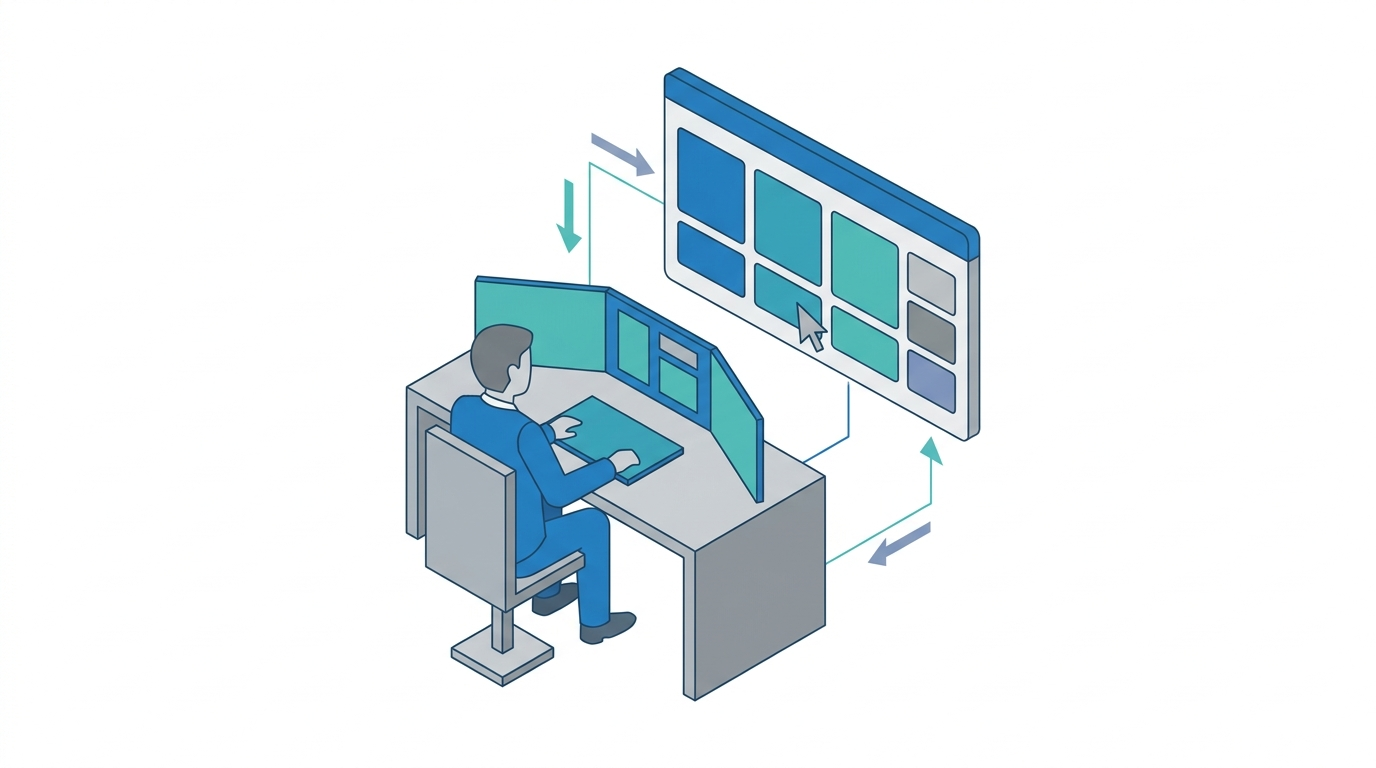
Google just made its AI search monetization strategy much easier to understand.
At Google Marketing Live 2026, the company introduced a new generation of Gemini-powered ad formats for Search and AI Mode, including Conversational Discovery ads, Highlighted Answers, AI-powered Shopping ads, and Business Agent for Leads. Search Engine Land’s event recap described the shift clearly: Google is embedding more contextual, interactive ad experiences directly into AI-assisted search journeys. Marketing Dive’s coverage captured the underlying philosophy with one line from Google ads VP Dan Taylor: “the best ads are just answers.”
That line matters more than the product names.
If ads are being redesigned to behave like answers, then the brands that already look trustworthy, specific, and machine-readable inside AI search have an advantage before the media budget even gets involved. This is why Google’s new AI search ads do not reduce the importance of answer engine optimization. They increase it.
The paid layer is getting smarter. The organic layer is becoming the eligibility layer underneath it.
Google is not just adding ad units, it is redesigning the moment of discovery
Most paid media updates are incremental. A new campaign setting. A new inventory source. A new bidding control.
This is different.
The new AI search ad formats announced this week are built for a search experience where the user is no longer scanning a list of links. They are asking a nuanced question, getting a synthesized response, exploring options, and making decisions inside a conversational interface.
That matters because the ad is no longer interrupting a list of results. It is entering an answer environment.
According to Search Engine Land’s breakdown of the new formats, Conversational Discovery ads are designed to answer a specific question directly inside AI Mode. Highlighted Answers place highly relevant sponsored results within AI-generated recommendation lists. AI-powered Shopping ads add explainers for high-consideration purchases. Business Agent for Leads replaces static form fills with an AI-driven conversation trained on the advertiser’s own website.
This is a very different creative problem than classic search ads.
In older search workflows, the job was often to win the click with the right combination of keyword, headline, and landing page. In AI-assisted search, the job becomes more demanding. Your brand has to make sense inside a conversational answer, defend its relevance in context, and then carry that clarity onto the page or the agent flow that follows.
That is not just ad optimization. That is answer optimization with a paid media layer attached.
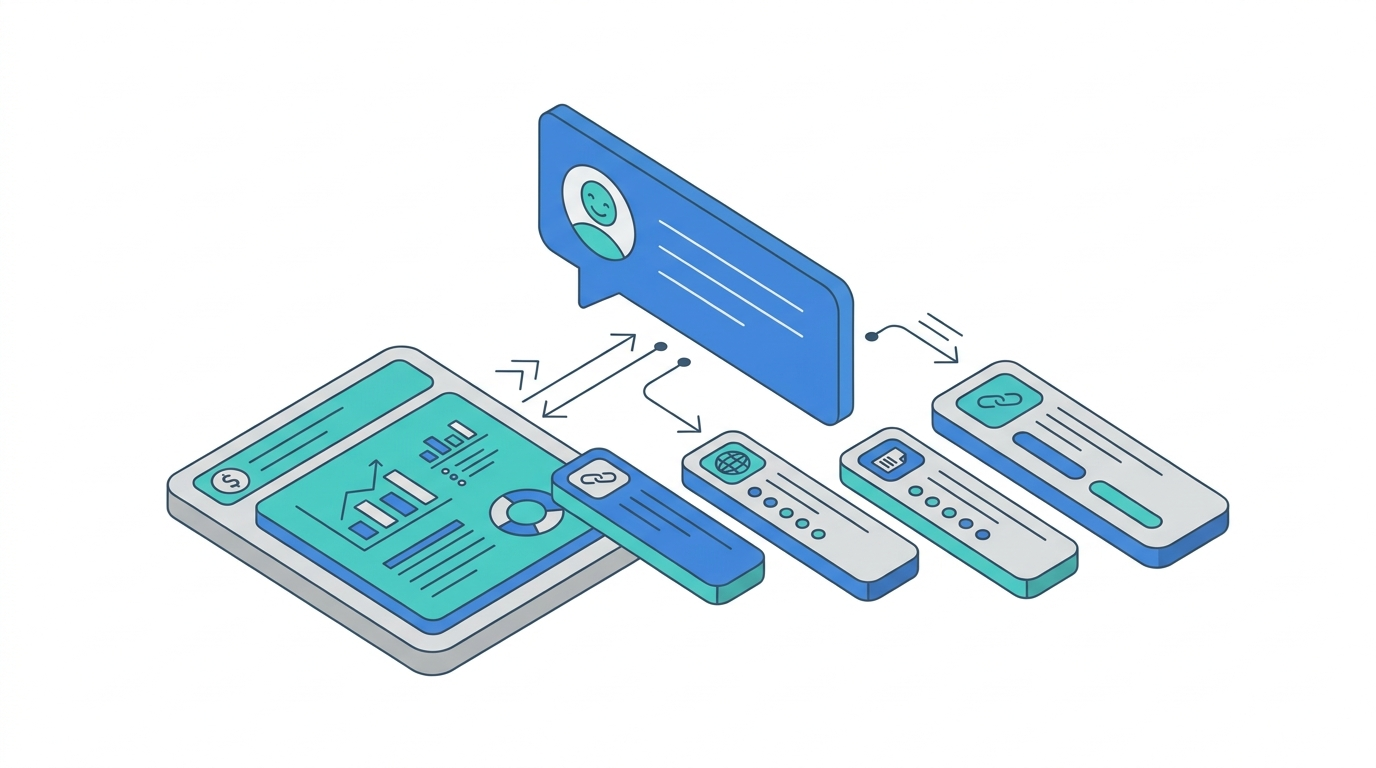
Why this makes organic AI visibility more important
The mistake some marketers will make after Google Marketing Live is assuming that paid placement can solve the AI search problem by itself.
It cannot.
Google’s own documentation on AI features and your website still says AI Overviews and AI Mode surface supporting web links and use query fan-out to identify relevant sources across subtopics and data sources. In plain English, Google is still evaluating the web for evidence while it builds the answer.
That means brand visibility in AI search still depends on the same foundational realities Emarketed has been pushing:
- your content has to be crawlable and indexable
- your pages have to answer real questions clearly
- your brand signals have to be consistent across site, profiles, and structured data
- your proof has to be easy for machines and humans to evaluate
If those inputs are weak, the paid layer gets weaker too.
Think about the new Business Agent for Leads format. If the agent is trained on your site and your site is vague, thin, outdated, or poorly structured, the ad experience becomes vague, thin, outdated, or poorly structured. If your service pages are specific, your FAQs are useful, and your proof points are extractable, the ad gets stronger because the source material is stronger.
The same logic applies to Highlighted Answers. Google may place a sponsored brand in a recommendation flow, but the surrounding environment is still answer-driven. A generic advertiser with weak trust signals will feel less credible than a brand that already appears naturally in AI-assisted research. Paid placement can increase exposure. It cannot manufacture authority from nothing.
This is the same measurement and strategy problem we covered in why most marketing agencies still can’t measure AI visibility. Discovery is moving into AI interfaces faster than most reporting systems can track. Adding ads to that environment does not simplify the picture. It makes the interaction between paid and organic visibility more important.
Paid media is moving closer to AEO, not farther away
For a long time, teams could keep SEO and paid search in separate mental boxes.
SEO earned visibility.
Paid search bought visibility.
AI search is making that split less useful.
When Google inserts sponsored answer-like experiences into AI Mode, the buyer no longer experiences paid and organic as separate channels in the old sense. They experience one guided research flow. A cited source, a recommendation list, a sponsored explanation, an agent conversation, a merchant card, and a landing page may all show up inside the same decision path.
That is why AEO and paid media now reinforce each other operationally:
AEO improves answer eligibility. Strong content structure, schema, internal linking, clear entity signals, and useful service pages increase the odds that your brand can be understood and reused by AI systems.
Paid media improves demand capture. When the buyer is ready to go deeper, a contextual sponsored placement can help close the gap between research and action.
Shared messaging improves conversion. If the language on your service pages, ad experiences, FAQs, and proof sections lines up, the buyer gets a consistent answer from first impression to final click.
Measurement has to span both. If your brand is cited organically in AI Mode and also appears in a sponsored placement, the performance story no longer belongs to one channel owner.
This is one reason Google’s new Ask Advisor system matters. Google is explicitly trying to connect Ads, Analytics, Merchant Center, and Google Marketing Platform into a more unified operating layer. The platform direction is obvious. Search visibility, paid execution, and measurement are being pushed together.
Agencies should follow that direction at the strategy level, not just the tool level.
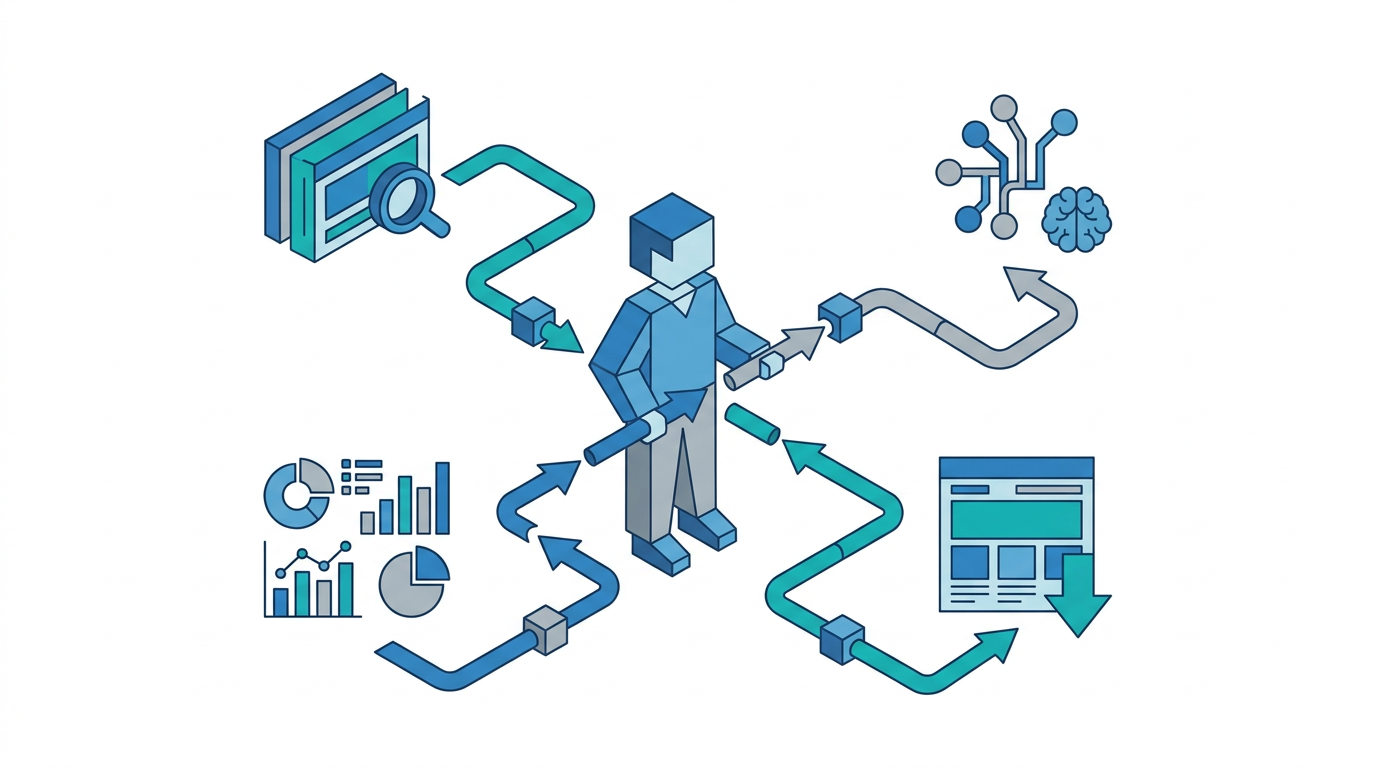
What service businesses and healthcare brands should take from this right now
This shift is not equally urgent for every business.
If you sell low-consideration commodity products, AI answer environments still matter, but the impact may feel more gradual.
If you run a service business, a healthcare brand, a behavioral health facility, or a B2B company with longer evaluation cycles, the impact is immediate.
Those buyers ask layered questions. They compare credibility. They refine the criteria as they go. They often do not move in a straight line from search to form fill.
That is exactly the kind of behavior AI Mode and conversational ad experiences are designed around.
For healthcare and behavioral health especially, this should be a wake-up call. Patients and families are not just searching “rehab near me” anymore. They are asking detailed trust questions, treatment-fit questions, insurance questions, and comparison questions. If Google can now layer answer-style ads and website-trained lead agents into that journey, then your site content becomes part sales material, part knowledge base, and part machine-readable evidence layer.
At Emarketed, we have seen how much durable trust signals matter in healthcare. Seasons in Malibu holds 4,200+ keyword rankings and 814,230 social impressions in a recent month, a full-service result that covers SEO, AEO, paid search, social, and web.
That is also why your Google Business Profile, service pages, clinician bios, review profile, and structured data all matter together. AI systems are not evaluating one page in isolation. They are building a confidence model around your brand.
For B2B and professional services, the same principle applies. A prospect may first encounter your category explanation organically, then later see a sponsored answer placement, then engage with an agent-like lead experience before ever talking to sales. If your messaging changes shape at every step, trust drops.
If you want a simpler way to think about it, use this rule:
AI visibility gets you into the conversation. Paid AI search helps you stay in it at the moment of action.
You want both.
What marketers should change in the next 90 days
The tactical response here is not “spend more on AI search ads.”
The tactical response is to tighten the system that makes those ads effective.
1. Rewrite the pages that would train your lead agent
If Google is turning lead ads into conversational experiences trained on your website, then weak service pages become a media performance problem.
Review your top service and location pages. Make sure they clearly explain who you help, what you do, what makes you different, what outcomes matter, and what the next step should be.
2. Align paid copy with answer-ready site language
Your ad messaging should sound like a sharper version of the truth already present on your site, not a separate brand universe. This is especially important when ad explainers, organic citations, and landing pages may all be evaluated in sequence.
3. Audit AI visibility before treating AI ads as a scaling channel
Run prompt checks across AI Mode, AI Overviews, ChatGPT, and Perplexity. Document where your brand is already showing up, where it is absent, and which pages are likely to support stronger answer inclusion.
4. Treat structured proof like conversion infrastructure
Testimonials, reviews, case-study snippets, clinician credentials, certifications, pricing context, and service details are no longer just nice conversion assets on the page. They are source material for AI-assisted evaluation.
5. Stop separating paid and organic reporting too early
If you only judge AI search ads by direct-click conversion metrics, you will under-read their role in assisted decision-making. If you only judge AEO by traffic, you will under-read its role in making paid placements more believable.
6. Build landing experiences for comparison, not just capture
The user coming from an AI answer environment may still be comparing. Meet that reality. Provide direct comparisons, qualification language, trust signals, and clear next-step options instead of dropping everyone onto a thin lead form.
The reporting stack has to change with the ad stack
One of the quietest but most important announcements at Google Marketing Live was around measurement.
In the main Google Marketing Live recap, Google said it is reimagining Analytics 360 as a command center for modern measurement. That is not random product bundling. It reflects a market where discovery, evaluation, and conversion are happening across overlapping AI-assisted surfaces.
For agencies and in-house teams, this means the reporting stack around AI search should include at least four views:
- Organic AI visibility by prompt cluster and platform
- Paid AI search exposure and engagement
- Landing-page or agent-flow quality after the click
- Downstream business outcomes such as lead quality, branded search lift, and assisted conversions
If you leave out the first view, you miss whether your brand can naturally earn trust in answer environments.
If you leave out the third, you miss whether the website is strong enough to support these new ad experiences.
If you leave out the fourth, you turn a strategic shift into a CTR dashboard.
This is why AI visibility measurement and paid media optimization now belong in the same planning conversation more often.
FAQ
What did Google announce about AI search ads at Google Marketing Live 2026?
Google introduced new Gemini-powered formats for AI Mode and Search, including Conversational Discovery ads, Highlighted Answers, AI-powered Shopping ads, and Business Agent for Leads. The goal is to make ads feel more contextual and useful inside conversational search flows.
Why does this make AEO more important?
Because these ad experiences still depend on strong source material. If your site content, trust signals, and entity data are weak, the AI-assisted ad experience will also be weaker. AEO improves the clarity and authority that paid placements build on.
Are paid AI search ads replacing organic AI visibility?
No. They complement it. Organic AI visibility helps your brand become a credible option during research. Paid AI search placements help capture attention and action later in the same decision path.
What is Business Agent for Leads?
It is Google’s new beta format that lets users chat with an AI agent inside a lead ad instead of filling out a static form. Google says the experience is trained on the advertiser’s website, which makes site quality directly relevant to ad quality.
Which businesses should react fastest?
Service businesses, healthcare brands, behavioral health providers, and B2B companies should react quickly because their buyers often ask layered, trust-heavy questions before converting.
How should agencies adapt?
Agencies should stop treating SEO, AEO, paid search, and measurement as isolated workstreams. The stronger model is a connected system where organic answer visibility, ad messaging, landing-page clarity, and reporting reinforce each other.
The real takeaway is that paid AI search now depends more on content quality
Google’s new ad formats are important, but not for the shallow reason most recap posts will focus on.
The important part is the behavioral shift underneath them. Search is becoming a guided answer environment where ads, citations, comparisons, and agent-like experiences all sit closer together.
That raises the value of strong content, clean entity signals, and answer-ready pages. It does not lower it.
If your brand wants to win in AI search, the play is not choosing between paid and organic. The play is building the kind of web presence that makes both perform better.
If you want help auditing how your current site will hold up in that environment, work with us or start with our AI Search Optimizer.