Google AI Max Just Broke the Paid SEO Divide
Google AI Max for Shopping and Search changes discovery. Paid media, SEO, and landing pages now need one unified strategy.
Google just made the split between paid search and SEO a lot harder to defend.
In the last few days, Google announced new AI Max features for Search advertisers and rolled out AI Max for Shopping campaigns. On the surface, these look like ad product updates. They are bigger than that.
Google is telling marketers that discovery no longer starts with a neat keyword, a static ad, and one preselected landing page. Users ask longer, messier, more conversational questions. Google wants AI to interpret that intent, generate the right message, and choose the page most likely to convert.
That changes the job for paid teams. It also changes the job for SEO teams.
If your search strategy still treats content, landing pages, paid media, and product data as separate systems, AI Max is a warning shot. The brands that win the next phase of search will not be the ones with the biggest keyword lists. They will be the ones whose sites are structured well enough for both organic systems and ad systems to understand what each page is for.
This is the part many teams are missing: Google is not only automating ads. It is training the market to optimize for AI-mediated discovery.
AI Max is really a landing page strategy update
The biggest clue is final URL expansion.
Google says final URL expansion uses AI to identify the best destination for each search, instead of forcing every click to the same page. That sounds like a feature detail. It is actually a direct signal about how Google now evaluates site usefulness.
If an AI system is deciding which page best matches a conversational query, your landing pages cannot be vague. They cannot overlap too heavily. They cannot be filled with generic copy that says the same thing as six other pages on your site.
That creates a new shared problem for SEO and paid search:
- SEO teams need pages with clear topical purpose
- Paid teams need pages that can satisfy broader intent variation
- Content teams need copy that explains products and services in concrete language
- Merchandising and web teams need structured product or service data that AI systems can interpret
Search Engine Land framed this well in its recent coverage of Google AI Max getting new controls, Shopping rollout and travel consolidation. The detail that matters most is not just the new controls. It is that Google keeps expanding reach into conversational queries that traditional keyword strategies miss.
Once that happens, page quality stops being only an SEO issue. It becomes an ad delivery issue too.
Shopping ads are starting to behave more like answer engines
Google’s AI Max for Shopping announcement is even more revealing.
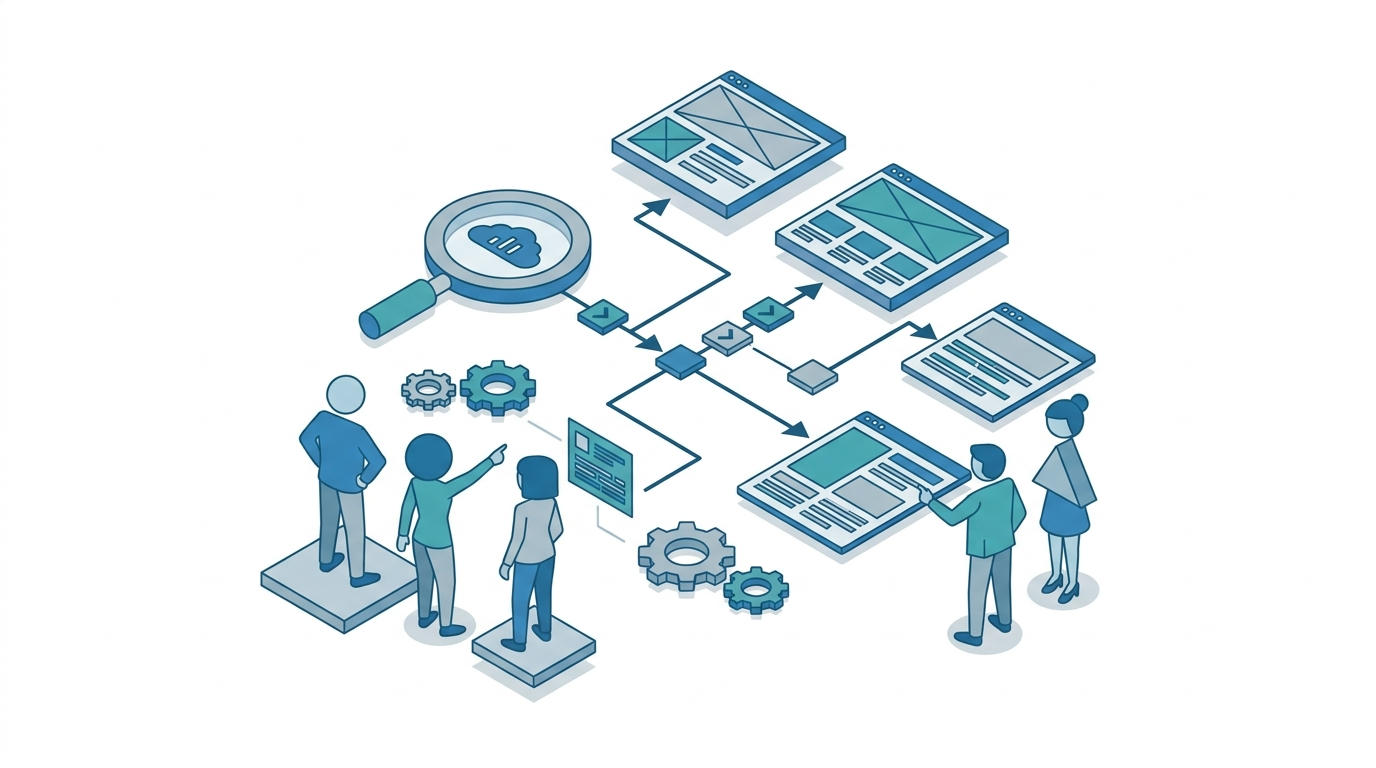
According to Google’s own post, AI Max for Shopping uses Merchant Center feeds to turn product data into dynamic Shopping ads that answer conversational queries. That is a major shift in how product discovery works.
Old Shopping logic was simpler. Match the feed, bid against a query, send traffic to a product or category page.
The new logic is much closer to answer matching:
- the system interprets what the shopper means
- it pulls meaning from product attributes in the feed
- it generates text around shopper intent
- it selects the best format and destination page
That means feed quality, page quality, and copy quality are now deeply connected.
A retailer can no longer assume the paid team handles campaigns while the SEO team handles site content. If the feed is weak, the AI has less context. If the landing page is vague, final URL expansion has fewer strong options. If the product copy is thin, both organic visibility and ad relevance suffer.
Search Engine Journal underscored the same point in its coverage of Google launching AI Max for Shopping and Travel campaigns, noting that Google will use the linked Merchant Center feed to help answer conversational queries.
That is not a minor workflow tweak. That is Google moving product discovery away from rigid keyword matching and toward semantic understanding.
For marketers, the practical takeaway is simple: your catalog, your landing pages, and your ad creative are no longer separate assets. They are inputs into one AI interpretation layer.
Why agencies that keep separate SEO and PPC silos will lose ground
A lot of agencies still run search like this:
- the SEO team owns rankings and content calendars
- the PPC team owns campaigns, queries, and landing page tests
- the dev team updates templates later
- reporting happens in separate dashboards
That structure was already inefficient. AI Max makes it riskier.
If Google is using AI to match intent across longer and more exploratory searches, then the inputs have to align. A disconnected workflow creates conflicting signals:
- SEO publishes pages that are optimized for volume but not conversion
- PPC sends traffic to pages built for conversion but too thin to explain the offering well
- product or service data lives in systems the content team never sees
- brand messaging changes by channel, which confuses both users and machines
The result is mediocre performance across the board.
This is where Emarketed’s own point of view matters. Search is becoming one discovery environment with multiple interfaces, not a set of separate channels. Google’s AI products are accelerating that collapse.
We have already seen the business side of this in client work. Seasons in Malibu holds 4,200+ keyword rankings and 814K+ monthly social impressions. Its AI mentions also rose from 49 to 122, while cited pages climbed from 122 to 190. That is not what happens when every channel operates in isolation. It is what happens when the site, the messaging, and the trust signals reinforce each other.
Healthcare marketers should pay special attention here. If a behavioral health or medical site has weak service architecture, unclear treatment pages, or repetitive location copy, AI-driven matching will not rescue it. It will expose it.
What a unified search strategy looks like now
The fix is not to merge job titles. The fix is to create one shared search system.
Here is what that looks like in practice.
1. Build pages for intent ranges, not single query buckets
A page should still have a primary focus, but it also has to support the kinds of conversational variations an AI system may interpret as closely related.
For a service page, that means covering:
- who the service is for
- what problem it solves
- how the process works
- what makes the offer different
- what objections or edge cases matter
- what action the visitor should take next
That is better for SEO because it improves topical completeness. It is better for paid search because it gives AI systems more confidence when matching broader intent.
2. Treat feed and content quality as one project
For ecommerce and product-led brands, Merchant Center data is no longer just an operations asset.
If AI Max uses product feed attributes to understand intent, then weak feed hygiene creates a visibility problem. Thin titles, missing attributes, inconsistent taxonomy, and vague descriptions reduce the system’s ability to match your offer to nuanced searches.
SEO teams should have input into product naming, attribute completeness, and category clarity. Paid teams should have input into which product differentiators matter most at decision stage. Both should be looking at which landing pages actually answer shopper questions.
3. Rewrite landing pages that depend on exact-match intent
Some landing pages only work when the user already knows exactly what they want. That is becoming a bigger liability.
Conversational discovery sends users with mixed intent, partial information, or comparison language. A page that only repeats a target phrase and pushes a form fill is much less likely to hold up.
Stronger pages do three things well:
- answer the real question fast
- prove credibility with specifics
- make the next step obvious
This applies to paid landing pages, core service pages, and product pages alike.
Measurement has to change too
Teams that keep reporting SEO and paid media separately will miss what AI Max is doing.
The old measurement model focused on channel attribution first. The new one has to ask a broader question: how often is the brand getting surfaced and matched to qualified intent across search interfaces?
That means looking at:
- organic rankings for core topics
- paid query expansion quality
- landing page engagement by intent segment
- AI citations and answer visibility where possible
- conversion quality, not just traffic volume
- which pages keep getting selected as destinations
This is one reason AI visibility reporting is becoming a strategic need, not a nice-to-have. Emarketed has already written about the broader reporting tension in Google AI search reporting problem and AI visibility is now a measurement problem. AI Max adds another layer because it links page architecture directly to ad matching logic.
If your dashboard still tells one story for SEO and another for paid search, you are probably seeing only part of the picture.
The real risk is not automation, it is generic site architecture
A lot of marketers hear announcements like this and focus on automation anxiety.
Will AI write the ads? Will it choose the page? Will manual keyword strategy matter less?
Those questions matter, but they are not the most important ones.
The bigger risk is that many sites were never built for semantic clarity in the first place.
They were built around internal org charts, old campaign structures, or bloated content plans. AI Max will reward the sites that make intent easy to interpret. It will make life harder for sites where every page sounds almost the same.
That is why this is not just a paid media story. It is a site strategy story.
A strong site in this environment has:
- clear page roles
- distinct service or product positioning
- structured data where appropriate
- strong internal linking
- consistent brand language
- proof that supports claims
- destination pages that can satisfy both exploration and conversion
In short, the winners will be easier for humans and machines to understand.
What healthcare, B2B, and local brands should do this month
Not every business runs Shopping campaigns, but the lesson still applies well beyond ecommerce.
If you are in healthcare, B2B, or local services, use this moment to audit where paid and organic strategy are disconnected.
Start with these questions:
- Do our service pages clearly map to real intent differences?
- Would an AI system know which page is best for a comparison query versus a ready-to-buy query?
- Does our site repeat the same value proposition across too many pages?
- Are our paid landing pages too thin to build trust?
- Do our SEO pages answer questions well enough to convert if paid traffic lands there?
For rehab centers and medical practices, this matters even more because trust and specificity are inseparable. A vague treatment page is bad for rankings, bad for paid conversion, and bad for AI interpretation.
For B2B brands, the opportunity is huge. Complex offerings often generate longer, more descriptive searches. If your product or service pages explain use cases, objections, integrations, and outcomes clearly, AI systems have more material to work with.
For local and regional businesses, this is another reason to stop publishing interchangeable location pages and start building pages that reflect real service differences, proof, and expertise.
FAQ: Google AI Max and unified search strategy
What is the main strategic takeaway from Google’s AI Max updates?
Google is expanding search discovery beyond rigid keyword matching. That means paid campaigns, landing pages, product data, and SEO content now influence each other more directly.
Does AI Max replace keyword strategy?
No, but it reduces the value of treating keywords as the entire strategy. Intent modeling, page clarity, and structured content matter more when AI is matching broader conversational searches.
Why does final URL expansion matter for SEO teams?
Because it shows Google is algorithmically choosing the page it believes best matches intent. If your pages overlap too much or say generic things, both paid and organic performance can suffer.
Is this only relevant for ecommerce brands?
No. Ecommerce feels it first because Shopping feeds are a direct input, but service businesses, healthcare brands, and B2B companies face the same issue whenever AI systems interpret intent and route users to pages.
What should agencies change first?
Create shared planning between SEO, PPC, content, and web teams. Start with landing page purpose, page differentiation, and reporting that shows how pages perform across both paid and organic discovery.
What to do Monday morning
Pick three high-value landing pages and one feed or service taxonomy source.
Then review them together, not in separate channel meetings.
Ask whether each page is clear enough for an AI system to match it to the right kind of query, persuasive enough for a human to trust it, and distinct enough from the rest of the site to deserve selection.
If the answer is shaky, the problem is bigger than campaign setup.
Google just made that impossible to ignore.