What Ecommerce Brands Can Learn From Nutcase And Sector 9
Nutcase and Sector 9 show how ecommerce growth comes from stronger offers, better merchandising, and paid media that lifts conversion, not just traffic.
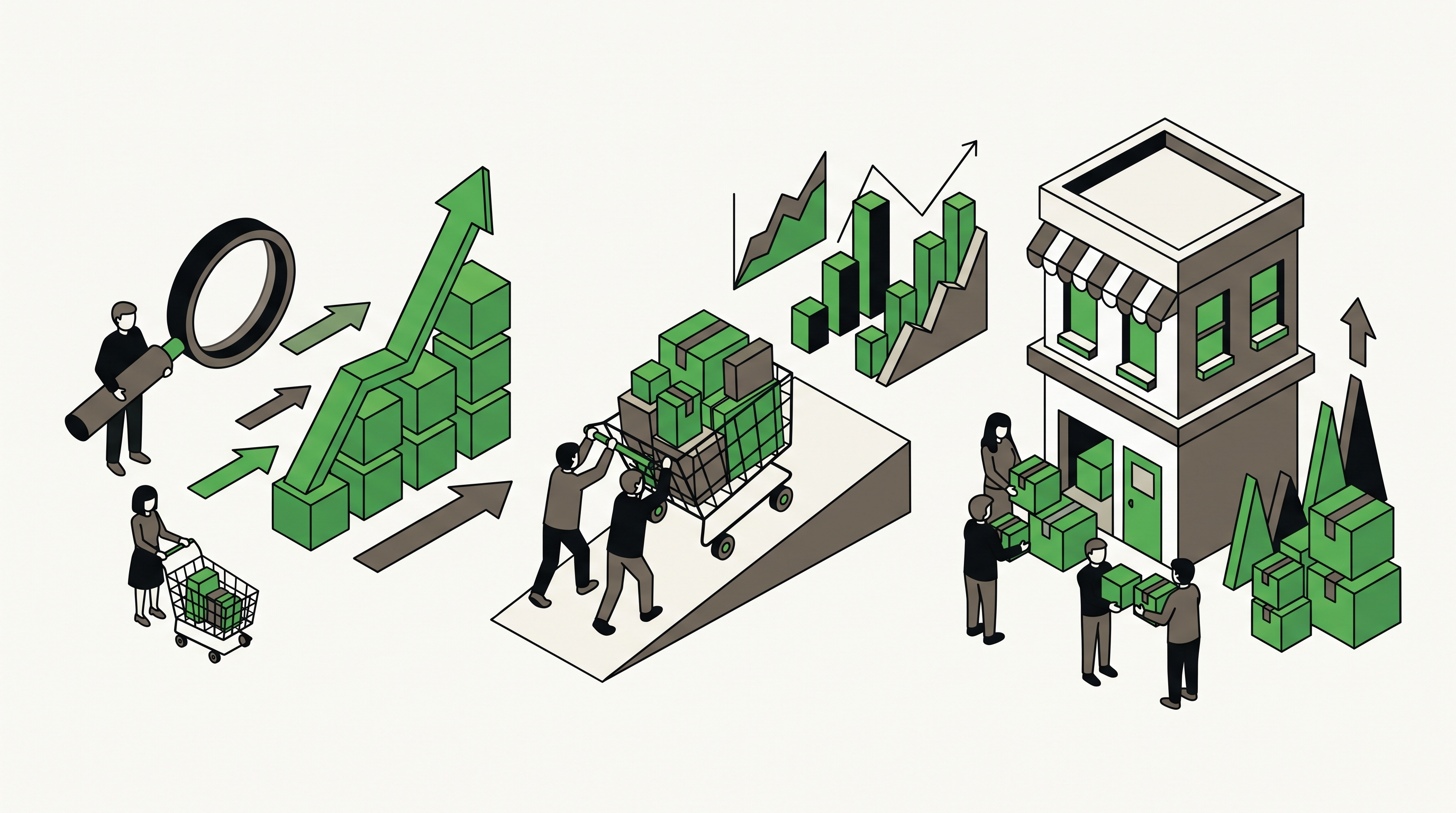
Ecommerce brands do not grow because one ad campaign spikes for a month. They grow when paid media, merchandising, conversion paths, and brand proof start pulling in the same direction.
That is the useful lesson in Emarketed’s work with Nutcase and Sector 9. Shopify’s January 2026 ecommerce trends outlook made the broader shift clear: brands have a higher bar for authentic content and stronger differentiation, not just louder promotion. BigCommerce made the same point from the store side in its May 2026 guide to ecommerce merchandising, which highlights product videos, social proof, site search, and brand voice as practical levers for better conversion.
That matters more now because the market keeps getting bigger while the margin for sloppy execution gets smaller. Shopify’s 2026 global ecommerce statistics roundup says the global ecommerce market is expected to total $6.88 trillion by the end of 2026. More demand does not automatically mean easier growth. It usually means more pressure on efficiency.
The Real Lesson Is System Fit
Too many ecommerce teams still separate growth into neat departments. Paid ads own traffic. Creative owns assets. The site team owns conversion. Email owns retention.
The customer does not experience those silos.
If the ad promise is sharp but the product page is weak, performance leaks. If the product page is strong but the offer is poorly targeted, performance leaks. If both work but the brand feels interchangeable, the lift caps earlier than it should.
That is why the Nutcase and Sector 9 results are worth studying together. They were not random wins from one tactic. They were examples of channel execution lining up with store experience and buyer confidence.
For ecommerce brands trying to tighten that system, this is where services like paid ads management and Shopify development should work as one commercial layer, not two separate projects.
What Sector 9 Got Right
Sector 9 Skateboards grew sales by 165%, increased store traffic by 137%, lifted conversion rate by 42%, and pushed sales attributed to marketing up 254%. Average order value also rose 26%, while revenue climbed from about $275,000 to roughly $950,000.
The important part is not just that traffic went up. Plenty of brands can buy more traffic for a while.
The more useful signal is that conversion rate and average order value rose at the same time. That usually means the campaign and the storefront were working together. Better targeting without a better store tends to inflate sessions faster than revenue. Better store merchandising without strong acquisition can leave growth capped. Sector 9 improved both sides of the equation.
This lines up with BigCommerce’s merchandising guidance. Product presentation, brand voice, testimonials, and clearer paths to purchase all support stronger revenue per visit. When those basics are tight, ad spend has somewhere productive to land.
For marketers, the takeaway is simple: do not judge channel health by ROAS screenshots alone. Look at whether the campaign is helping the store sell better, not just click more.
What Nutcase Got Right
Nutcase Helmets shows an even more aggressive version of the same pattern.
Sales grew 306%. Store traffic rose 44%. Conversion rate jumped 145%. Sales attributed to marketing climbed 774%. Transactions increased 279%, average order value improved 7%, and revenue grew roughly fivefold.
That profile matters because it suggests the growth did not come from brute-force volume alone. Traffic was up, but not nearly as much as conversion efficiency and marketing-attributed sales. In other words, the business got better at turning interest into orders.
That is where many ecommerce teams leave money on the table. They scale spend before fixing the store experience, offer clarity, or trust layer. Nutcase’s results point the other way. The stronger gains came from making the traffic more valuable.
Shopify’s 2026 trends report argues that brands need clearer differentiation and more reasons for real customers to advocate for them. Nutcase’s numbers fit that logic. A conversion rate does not jump 145% because media buying alone got lucky. It usually jumps because the message, audience, offer, and storefront all got easier to trust.

What Ecommerce Teams Should Copy Next
The mistake is trying to copy the surface details of a winning brand instead of the operating habits behind the result.
Here are the patterns worth stealing:
- Match traffic quality to page quality. If the campaign brings in the right shopper but the product page is thin, slow, or generic, the gain dies on-site.
- Treat merchandising like conversion infrastructure. BigCommerce calls out product videos, reviews, and site search for good reason. Those are not decorative upgrades. They help buyers move from browsing to conviction.
- Measure business outcomes together. When sales, conversion rate, traffic, and average order value all improve, that is a stronger growth signal than any one metric in isolation.
- Make the brand easier to choose. Shopify’s 2026 trend outlook keeps returning to authenticity and distinctiveness. In practice, that means clearer product value, sharper creative, stronger proof, and less sameness.
This is also why a broader direct-to-consumer marketing program usually beats one-channel optimization. Ecommerce growth compounds when each part of the buying experience reduces hesitation instead of handing it off to the next team.
What To Do Before You Chase More Volume
If an ecommerce brand is flat right now, the first question should not be, “How do we get more traffic?”
The better question is, “Where does buying confidence fall apart?”
Start with the pages and campaigns already closest to revenue. Review product-page proof, landing-page clarity, checkout friction, creative fit, merchandising depth, and how well the offer matches the audience. Then check whether traffic gains are lifting conversion rate and order value, not just sessions.
Nutcase and Sector 9 are useful reminders that ecommerce growth is rarely about discovering one magic channel. It is about building a cleaner commercial system than competitors have.
That is the standard worth chasing now. The brands that win the next stretch of ecommerce growth will not just spend more. They will convert trust into revenue more efficiently than everyone else in the category.