Programmatic DOOH Just Went Global: Why Small Businesses Should Care About Digital Billboards in 2026
JCDecaux's global programmatic DOOH platform democratizes outdoor advertising for SMBs. Learn how small businesses can now access digital billboards starting at $500/month, compete with big brands, and target audiences with precision previously reserved for enterprise advertisers.
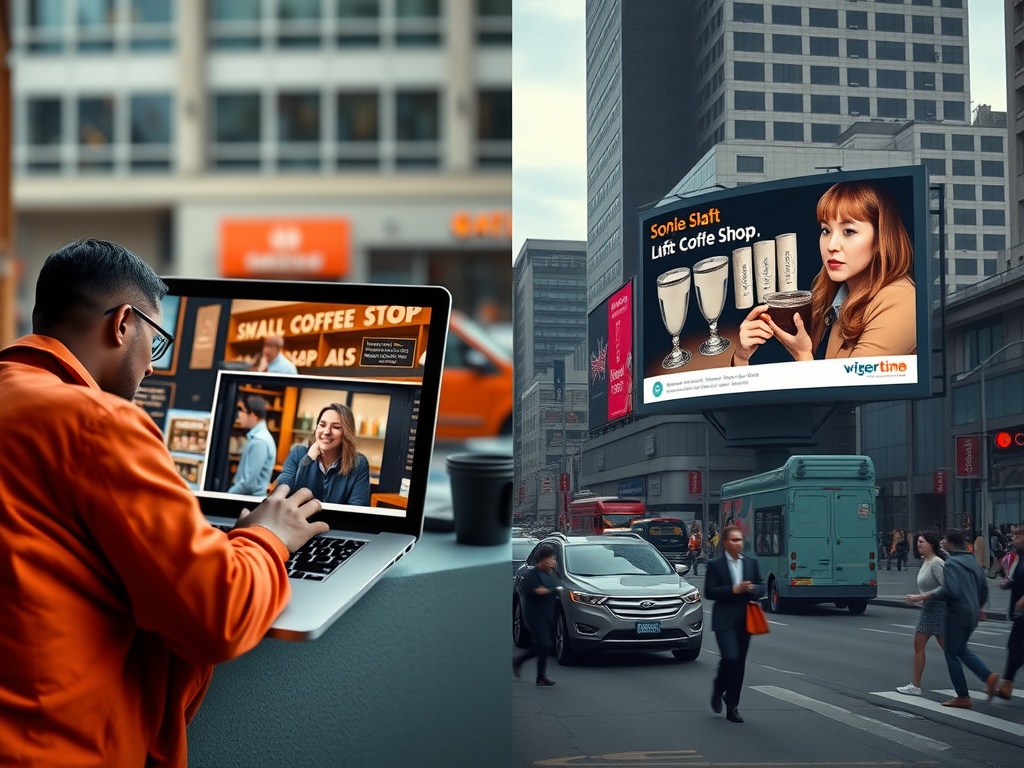
Small business owners, I have news that might change how you think about outdoor advertising forever. This morning, JCDecaux announced something that sounds technical but could be revolutionary for your marketing: the world’s first truly global programmatic digital out-of-home advertising platform.
3 Key Takeaways
-
Programmatic DOOH has reduced the minimum investment for outdoor advertising from $25,000 to $500 per month, making digital billboards and transit screens accessible to small businesses for the first time in advertising history.
-
Dynamic capabilities like weather triggers, time-based targeting, and instant creative changes give small businesses advantages that even large brands couldn’t access five years ago, allowing SMBs to be more agile and responsive than their bigger competitors.
-
The businesses that experiment with programmatic DOOH now, while the technology is still emerging and competitors are unaware, will capture premium locations and learning advantages that become increasingly expensive to obtain as adoption grows.
Before you click away thinking this is just another enterprise tool with enterprise pricing, stick with me. This shift represents the biggest democratization of outdoor advertising since the invention of the billboard itself.
What Programmatic DOOH Actually Means for Your Business
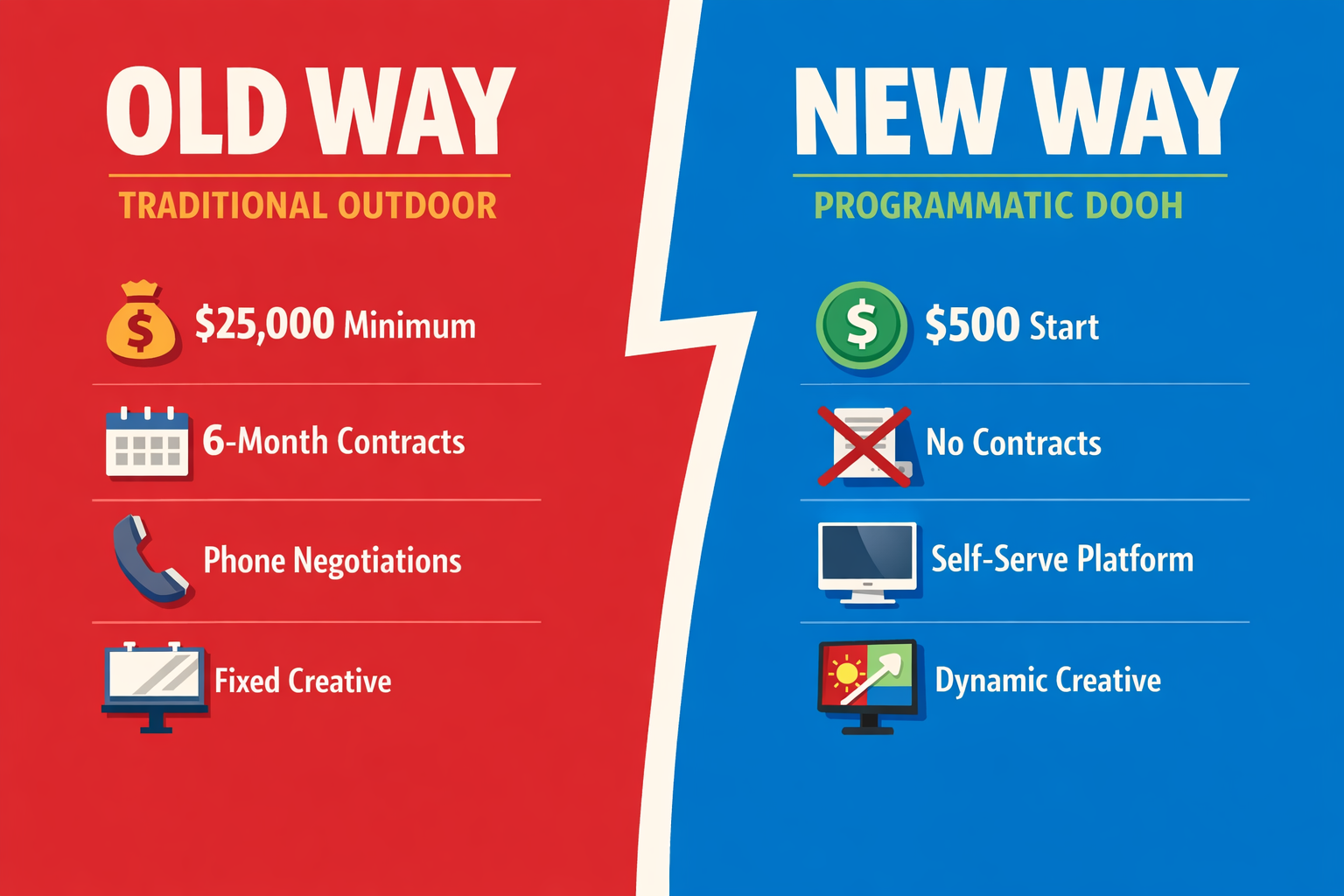
Let me break this down without the industry speak. Digital out-of-home advertising (DOOH) refers to those digital billboards, screens in subway stations, and displays at bus stops you see everywhere. Until recently, buying these ads required calling sales reps, negotiating contracts, and committing to massive minimum spends that started at $25,000 or more per campaign.
Programmatic DOOH changes all that. Think of it like Google Ads, but for physical screens in the real world. You set your budget, choose your locations, upload your creative, and launch. No phone calls. No contracts. No massive commitments.
“The barrier to entry for outdoor advertising just dropped from $25,000 to $500.” That’s not marketing hype. That’s the actual difference between traditional outdoor buying and what’s available today.
The Numbers That Should Get Your Attention
Here’s what makes today’s JCDecaux announcement significant for small and medium businesses:
Traditional outdoor advertising typically requires minimum spends between $10,000 and $50,000 per month, depending on the market. Most small businesses couldn’t even get a callback from outdoor advertising companies unless they had a six-figure annual budget.
With programmatic DOOH platforms now connecting globally, you can:
- Start campaigns with budgets as low as $500 per month
- Target specific times of day (lunch hours, commute times)
- Change creative instantly based on weather, events, or inventory
- Pay only for verified impressions, not estimated eyeballs
A coffee shop can now afford to run ads on the digital screen at the nearby transit stop during morning rush hour. A local gym can display different messages on January 2nd versus February 15th without printing new materials. These capabilities were fantasy for small businesses just two years ago.
Why Big Brands Are Nervous (And You Should Be Excited)
Large corporations have enjoyed a monopoly on premium outdoor advertising locations for decades. They could afford the minimum spends, the production costs, and the long-term contracts. Digital billboards in Times Square, Sunset Strip, or Piccadilly Circus? Those were for Coca-Cola and Nike, not your neighborhood restaurant.
Programmatic DOOH flips this dynamic completely. When advertising inventory becomes accessible through automated platforms, location quality stops being about who you know or how much you can commit upfront. It becomes about who has the best message for that specific audience at that specific moment.
I’ve been helping SMBs compete digitally for years through Emarketed, and this reminds me of what happened when Facebook Ads launched. Suddenly, small businesses could target audiences with the same precision as Fortune 500 companies. The playing field didn’t just level; it tilted toward whoever understood their customers best.
How Real SMBs Are Already Using Programmatic DOOH
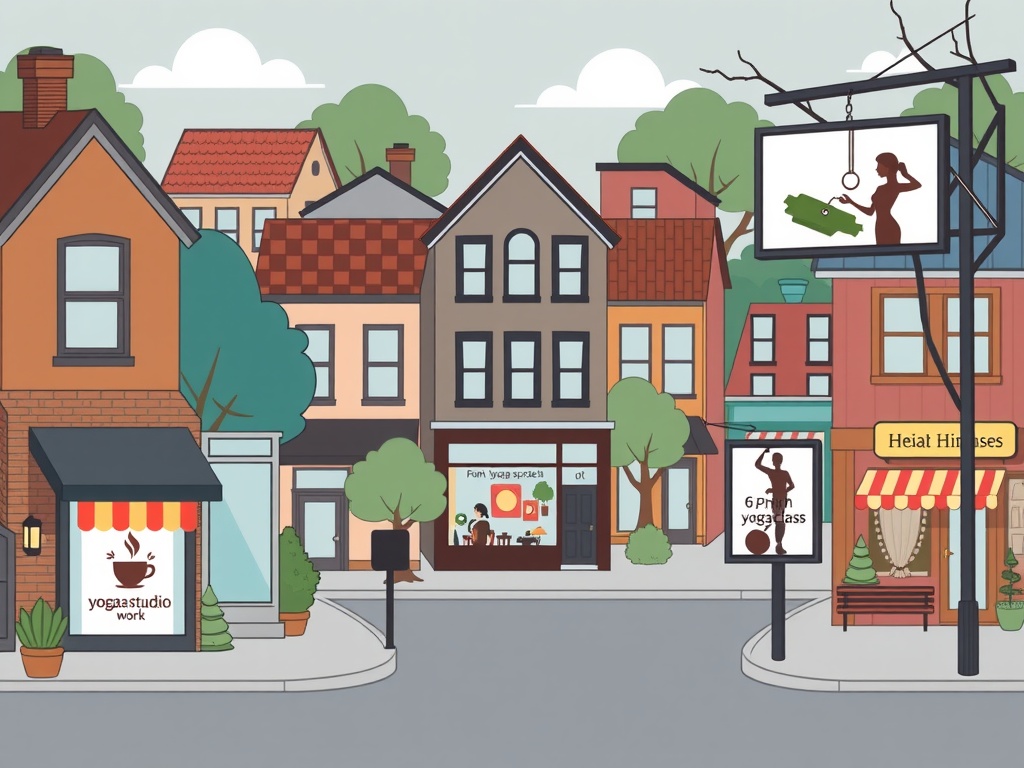
Let me share some examples that aren’t theoretical:
A boutique real estate agency in Denver started running programmatic DOOH ads targeting specific neighborhoods during open house weekends. Their budget? $1,200 per month. They’re seeing foot traffic increase by 40% at their showings.
A chain of three yoga studios in Austin uses weather-triggered campaigns. When the temperature drops below 50 degrees, their ads automatically start running on nearby digital screens promoting hot yoga classes. Cost: $800 per month. Result: 25% increase in drop-in rates during cold snaps.
A B2B software startup targets digital screens near convention centers only during industry events. They spend $2,000 per event and generate more qualified leads than they did with $10,000 trade show booths.
These aren’t unicorn cases. They’re what happens when technology makes premium advertising channels accessible to businesses that understand their local markets.
The Technical Stuff That Actually Matters
You don’t need to understand the backend of programmatic advertising, but three technical capabilities make this especially powerful for SMBs:
Dynamic Creative Optimization: Your ads can change automatically based on triggers you set. Happy hour starting? Your restaurant ad updates. Inventory running low? The ad disappears. This happens without you touching anything.
Audience Extension: Programmatic platforms can identify when someone sees your outdoor ad and then retarget them online. See a billboard, get a Facebook ad. This multiplier effect makes every dollar work harder.
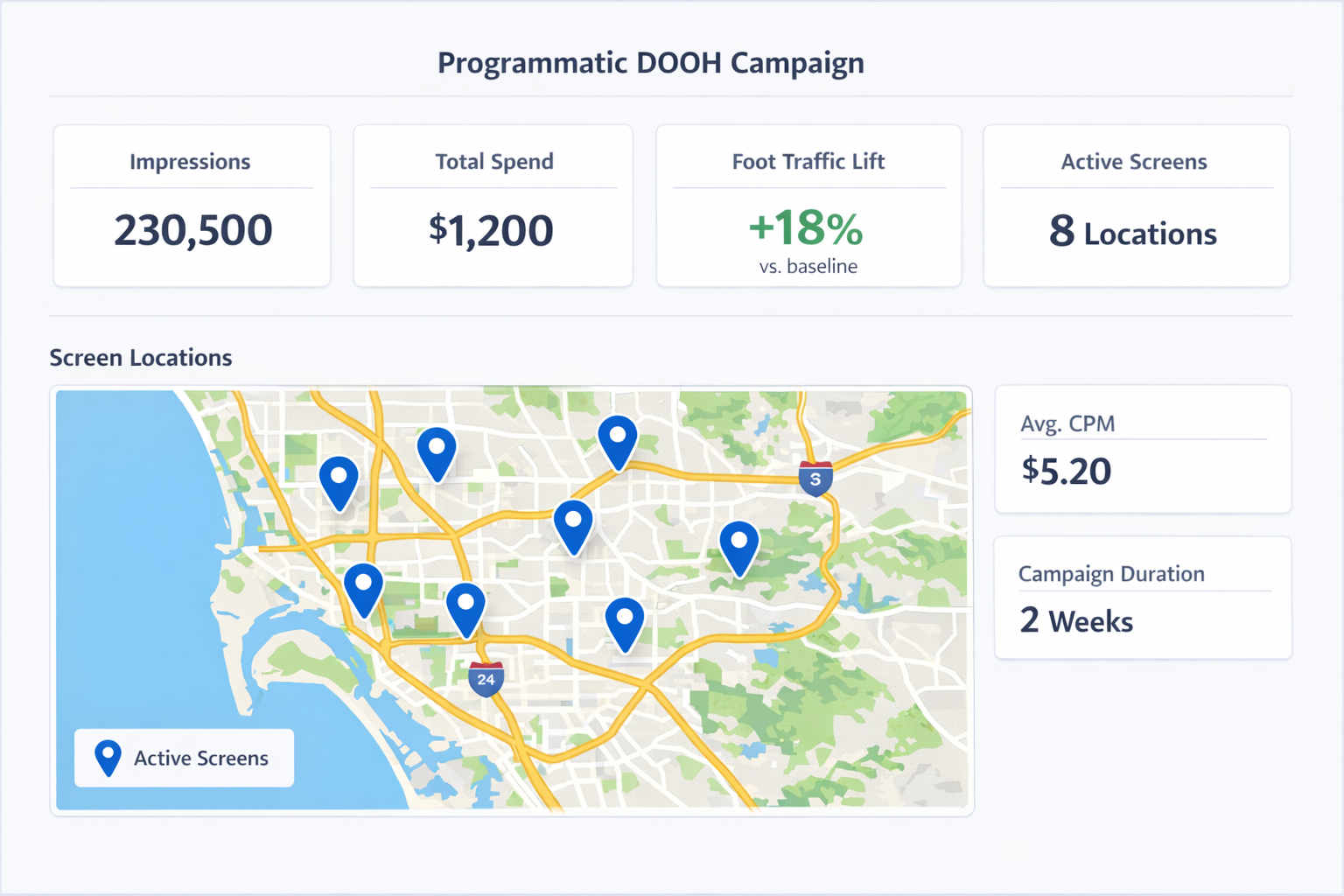
Measurement That Makes Sense: Traditional billboards gave you “estimated impressions” based on traffic patterns from 1987. Programmatic DOOH provides verified impression data, foot traffic attribution, and even brand lift studies. You know exactly what your money bought.
What This Means for Local Competition
Every local market is about to get more competitive, but in a good way. When the yoga studio down the street can afford billboard advertising, you need to think differently about your marketing mix.
The businesses that win won’t be those with the biggest budgets. Winners will be those who understand programmatic capabilities and use them creatively. The plumber who runs ads near home improvement stores on Saturday mornings. The accountant who increases visibility in January through March. The restaurant that adjusts messaging based on local events.
This isn’t about outspending competitors. It’s about out-thinking them.
Getting Started Without Getting Overwhelmed
If you’re interested but unsure where to begin, here’s a practical roadmap:
Start with one location. Pick a single high-value screen near your business or target customers. Run a two-week test with a $500 budget. Measure foot traffic or website visits from that geography.
Use what you already have. Your existing digital ads can work on digital billboards with minor adjustments. Don’t overcomplicate the creative. Clear message, strong visuals, single call-to-action.
Connect online and offline. Use the same campaign messaging across programmatic DOOH and your digital channels. Consistency multiplies impact.
Test triggers and timing. Try weather triggers, time-of-day adjustments, or day-of-week variations. The data will tell you what works for your specific business.
Track religiously. Use unique promo codes, landing pages, or phone numbers for your DOOH campaigns. Attribution isn’t perfect, but it’s good enough to make decisions.
The Bigger Picture for Digital Marketing
This JCDecaux announcement isn’t just about outdoor advertising. It signals a broader trend in marketing technology: the continuous democratization of premium advertising channels.
First, search ads made competing online possible for any business. Then social media advertising leveled the brand-building playing field. Now, programmatic DOOH is doing the same for real-world presence.
At Emarketed, we’ve watched this pattern repeat across channels. The businesses that recognize these shifts early and adapt quickly capture disproportionate value. Those waiting for proof or permission get left behind.
What Happens Next
Over the next 12 months, expect to see:
- More platforms launching self-serve DOOH buying options
- Prices dropping as competition increases between providers
- Integration with existing digital advertising platforms
- New creative formats designed for small business budgets
- Local advertising agencies scrambling to add DOOH expertise
Smart SMB owners should be experimenting now, while the market is still figuring itself out. Early adopters will lock in better rates, preferred locations, and valuable learnings before everyone else catches on.
The Bottom Line
Programmatic DOOH isn’t just another advertising channel. It represents the final piece of the marketing democratization puzzle. Small businesses can now compete for attention in physical spaces the same way they compete online: with creativity, timing, and deep customer understanding rather than pure financial muscle.
The question isn’t whether your business should explore programmatic DOOH. The question is whether you’ll explore it before your competitors do.
The global rollout happening today means these capabilities are coming to your market soon, if they haven’t already. The coffee shop that figures this out first wins the morning commute. The gym that masters it owns January. The B2B company that cracks the code reaches decision-makers where they actually are, not just where they browse online.
Traditional outdoor advertising is dead. Long live programmatic DOOH. And for once, this revolution actually benefits the small players more than the big ones.
Frequently Asked Questions
What is programmatic DOOH?
Programmatic DOOH (Digital Out-of-Home) is automated buying and selling of digital billboard and screen advertising. Instead of negotiating contracts with sales reps, you use a self-serve platform to set your budget, choose locations, upload creative, and launch campaigns instantly, similar to how you’d buy Google or Facebook ads.
How much does programmatic DOOH cost for small businesses?
You can start programmatic DOOH campaigns with budgets as low as $500 per month. This is a dramatic shift from traditional outdoor advertising, which typically required minimum spends of $10,000 to $50,000 per month and long-term contracts.
What types of businesses benefit most from programmatic DOOH?
Local businesses with defined geographic targets see the strongest results. Coffee shops, restaurants, gyms, real estate agencies, retail stores, and service providers like plumbers or accountants can all benefit. B2B companies targeting specific events or locations also see strong ROI.
Can I change my DOOH ads after they launch?
Yes. One of the biggest advantages of programmatic DOOH is dynamic creative optimization. You can update ads instantly based on time of day, weather conditions, inventory levels, or local events without any additional production costs.
How do I measure the effectiveness of DOOH campaigns?
Programmatic DOOH platforms provide verified impression data, foot traffic attribution, and brand lift studies. You can also use unique promo codes, dedicated landing pages, or specific phone numbers to track conversions directly from your outdoor campaigns.
Is programmatic DOOH available in my area?
Programmatic DOOH is expanding rapidly. Major metropolitan areas have extensive digital screen networks, and coverage is growing in smaller markets. Platforms like JCDecaux’s global network now connect screens across multiple countries, making it increasingly accessible regardless of your location.
What creative formats work best for digital billboards?
Keep it simple: clear message, strong visuals, and a single call-to-action. Your existing digital ad creative can often work with minor adjustments. The key is readability at a glance since viewers typically see screens for only a few seconds.
How does programmatic DOOH compare to traditional billboard advertising?
Traditional billboards require fixed contracts, estimated impressions, and static creative. Programmatic DOOH offers flexible budgets, verified impressions, dynamic creative that changes based on triggers, precise time and location targeting, and real-time performance data.