AI Agents Need Website Rules Now
AI agents now browse, click, and fill forms on users' behalf. Marketers need clearer crawl, access, and page-structure rules before this traffic scales.

AI agents are no longer just reading your site. They are starting to click, browse, and complete tasks on a user’s behalf.
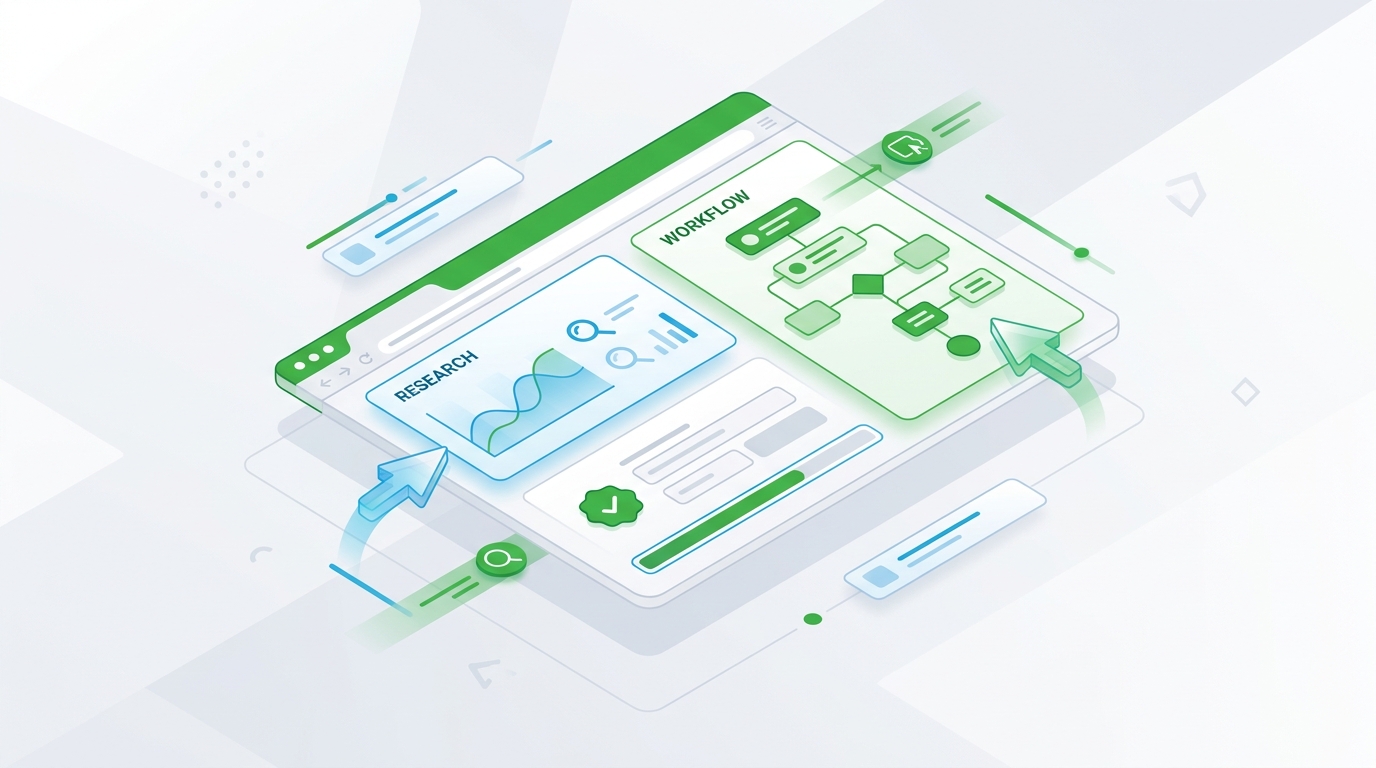
That is the shift marketers should care about this week. On June 23, Cloudflare introduced signed agents, arguing that site owners need a better way to identify agent traffic separately from standard crawlers and bad bots. Five days ago, OpenAI updated its ChatGPT agent documentation to spell out what that looks like in practice: the agent can navigate websites, fill out forms, and interact with pages through a visual browser. If your website strategy still stops at classic SEO and a basic robots.txt, you are behind the behavior that is already showing up.
Agents Are Moving From Curiosity To Workflow
This is not only a developer story anymore.
On June 25, OpenAI said in its How agents are transforming work update that non-developer individual users of Codex grew 137x since August 2025. That matters because it signals where agent usage is going next: out of engineering teams and into normal business workflows.
Once that happens, more buyers will expect agents to research vendors, check availability, compare pricing, and complete basic website actions for them. For marketers, that means the website is becoming part content asset, part machine-readable workflow surface.
robots.txt Is Not Enough
The old question was whether AI systems could crawl your content. The new question is how they should interact with it.
Anthropic’s recent NIST response on agentic security puts it plainly: website owners should be able to tell when an agent is browsing on a user’s behalf and communicate how they want agents to interact with their content. Cloudflare is pushing in the same direction with cryptographic verification for agent traffic. OpenAI is pushing it from the usability side. Its publishers and developers FAQ says better accessibility and ARIA labeling help ChatGPT Agent understand page structure and interact with buttons, menus, and forms more accurately.
That adds up to a bigger operational point. Website owners now need rules for:
- which agents can access which parts of the site
- how important pages are labeled and structured
- which flows are safe for agent interaction
- what should be indexed, surfaced, or blocked
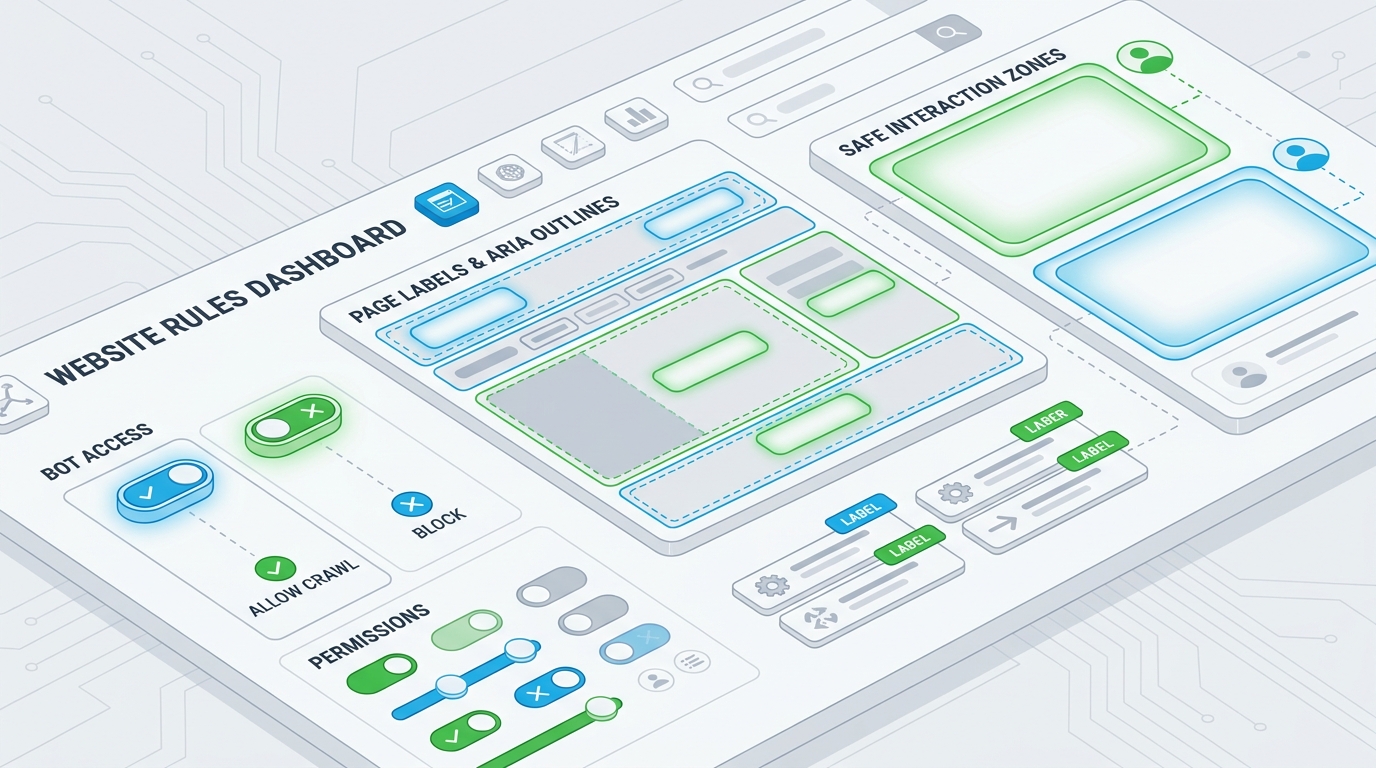
This is quickly becoming a website development issue, not only an SEO issue.
What To Fix This Week
Start with the pages and systems closest to revenue.
First, review crawl and bot settings. Make sure useful AI traffic is not getting blocked accidentally by CDN, firewall, or challenge rules. Our earlier post on why your IT team might be blocking AI revenue is still the right gut check here.
Second, tighten page structure. If an agent has to interpret vague buttons, unlabeled form fields, or messy navigation, you are creating friction before a human ever sees the page. OpenAI’s guidance around ARIA tags is a practical reminder that accessible structure now helps both people and agents.
Third, decide where you want agent interaction and where you do not. A quote request flow, appointment form, pricing page, or product comparison page may deserve explicit attention before traffic scales.
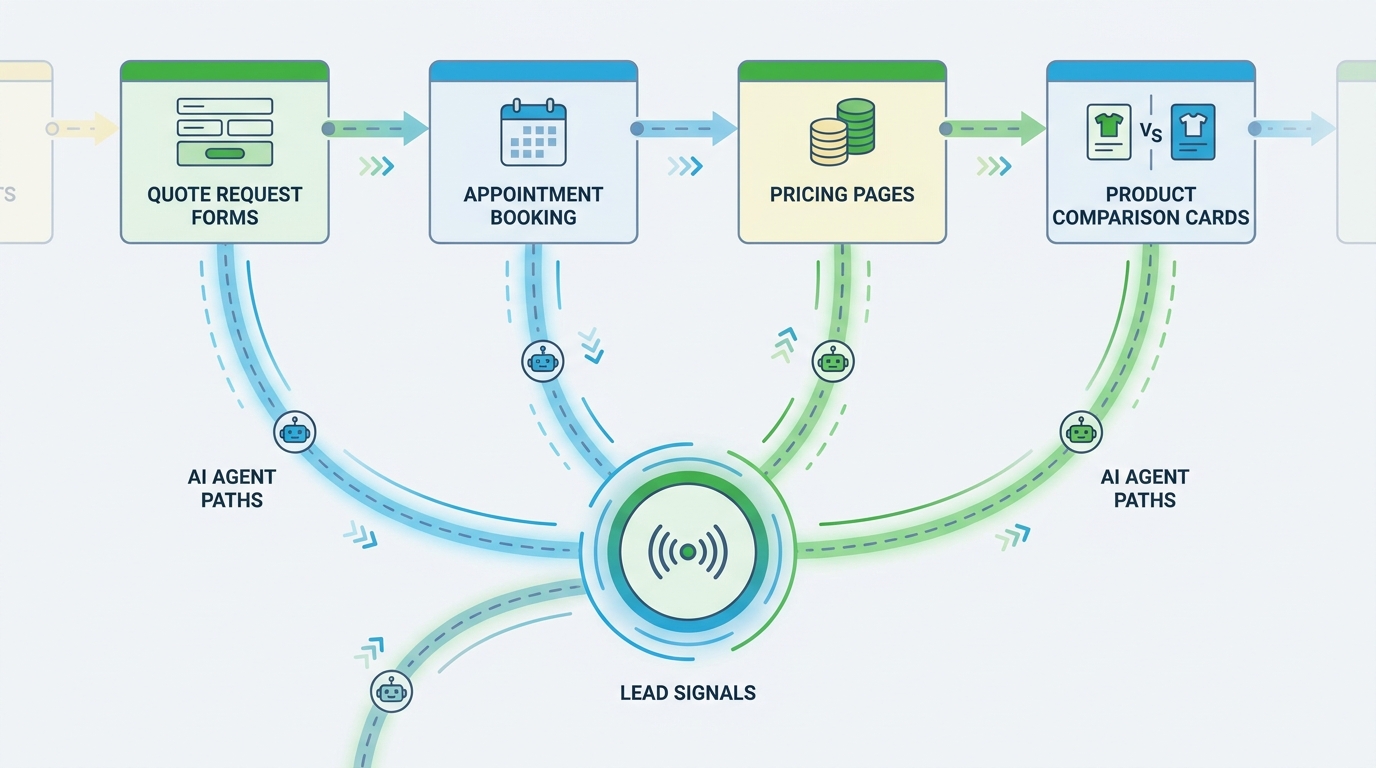
The bigger takeaway is simple: website strategy now needs an agent layer. The brands that adjust early will make their sites easier to interpret, safer to interact with, and easier to recommend. The ones that wait will keep treating agent traffic like a future problem after it has already become a workflow problem.