AI Search Makes Brand Sameness More Expensive
AI search makes generic marketing easier to ignore. Here is why sharper brand POV, stronger proof, and trust signals matter more for growth in 2026.
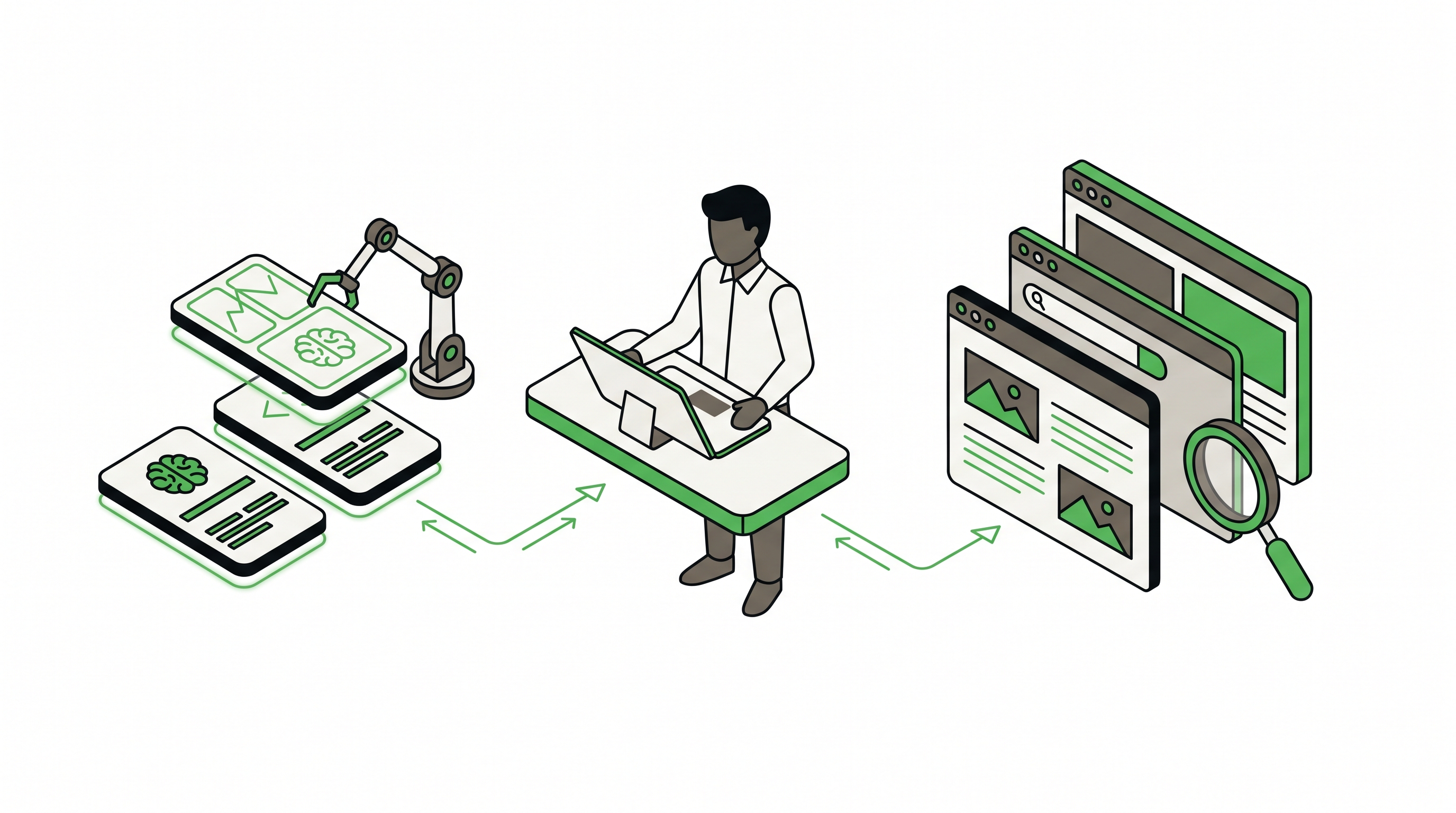
AI search is making average marketing easier to replace.
That is the part many teams still miss. AI does not remove the need for brand clarity. It removes the value of vague, interchangeable content faster than search ever did. When a buyer asks ChatGPT, Perplexity, or Google AI Mode for a recommendation, the system compresses generic claims into a blended answer. If your positioning sounds like everyone else, you become source material, not the brand that gets remembered.
The recent data is pointing in the same direction. HubSpot’s 2026 State of Marketing Report says 80% of marketers now use AI for content creation, 75% use it for media production, and 61% believe marketing is seeing its biggest disruption in 20 years because of AI. In the same report, HubSpot says brand point of view is the new growth engine because AI is flooding the market with content. That is the tension. Production is easier. Distinction is harder.
AI Makes Content Volume Cheap
The old advantage of publishing more than the next team is getting weaker.
Harvard Business Review wrote on June 12 that generative AI is changing B2B buying by shifting discovery, evaluation, and recommendation into AI-mediated environments companies do not own or fully understand. That matters well beyond enterprise software. The same pattern is showing up in local services, healthcare, and ecommerce. Buyers are doing more of the comparison work before they ever touch your site.

When that happens, generic content loses leverage. The AI can summarize it, flatten it, and move on.
That does not mean content stops mattering. It means the standard changes. The pages most likely to survive AI compression are the ones with a clear claim, a real point of view, and enough specifics to be quoted, paraphrased, or cited without sounding like filler. That is exactly why our breakdown of what content gets cited by AI and what gets ignored matters right now. Volume still helps with coverage, but sameness kills recall.
Distinct Brands Are Getting A Bigger Relative Edge
This is not just an editorial opinion. It is showing up in market research too.
On June 23, Havas released its new Science of Desire research, based on 87,500+ respondents, 2,400+ brands, and 1,000 AI-powered interviews. Havas found that brands building desire are 2.4x more likely to deliver sustained growth and up to 4x more likely to be cited by AI. Just as important, it found that 84% of brands sit in a middle ground of indifference.
That middle ground is where a lot of agency and in-house content now lives. It is technically fine, mostly accurate, and completely forgettable.

If AI search becomes a recommendation layer, indifference gets more expensive. A model will not carry your brand forward just because your site has decent headings and enough words. It will carry forward the sources that feel easiest to trust, easiest to explain, and easiest to distinguish from the pack.
That is also why brand-building and AEO are starting to overlap. A stronger AEO strategy is not only about structure, schema, and prompt coverage. It is also about whether your expertise has enough shape that an answer engine can describe it cleanly instead of blending it into category mush.
Trust Still Wins The Last Mile
Current coverage from Cannes makes the same point from a different angle. In Axios’ June 24 event recap, marketers argued that AI cannot replace the consumer relationship and trust brands have built over time. That matters because AI may influence discovery, but it does not finish the trust check by itself.
For most brands, the practical sequence now looks like this:
- AI helps the buyer shortlist options.
- The buyer looks for proof that the recommendation is credible.
- Your site, reviews, case studies, and off-site mentions either confirm the story or weaken it.
At Emarketed, we see the same pattern in client results. LA Roofing Materials grew from near-zero organic presence to 2,000+ keyword rankings and a 258% increase in AI mentions through consistent SEO and AEO execution over time. That did not come from publishing generic AI-era filler. It came from building a site and search footprint strong enough to be trusted repeatedly.

In other words, AI is not making brand less important. It is making weak brands easier to average out.
What To Fix Monday Morning
Start with your ten highest-value pages, not your next content calendar.
Read them side by side with three competitors and ask four blunt questions:
- Does this page take a clear position, or could any decent competitor have written it?
- Does it offer specific proof, or just polished claims?
- Would an AI system have enough context to explain why this brand is different?
- If a skeptical buyer landed here after an AI recommendation, would the page reduce doubt or create more of it?
If the answers are weak, the fix is not another burst of content volume. Tighten the point of view. Add proof. Strengthen case studies. Sharpen the first screenful. Make sure the broader web reinforces the same story.
The brands that win in AI search will not be the ones publishing the most words. They will be the ones that are easiest to trust and hardest to confuse with everyone else.