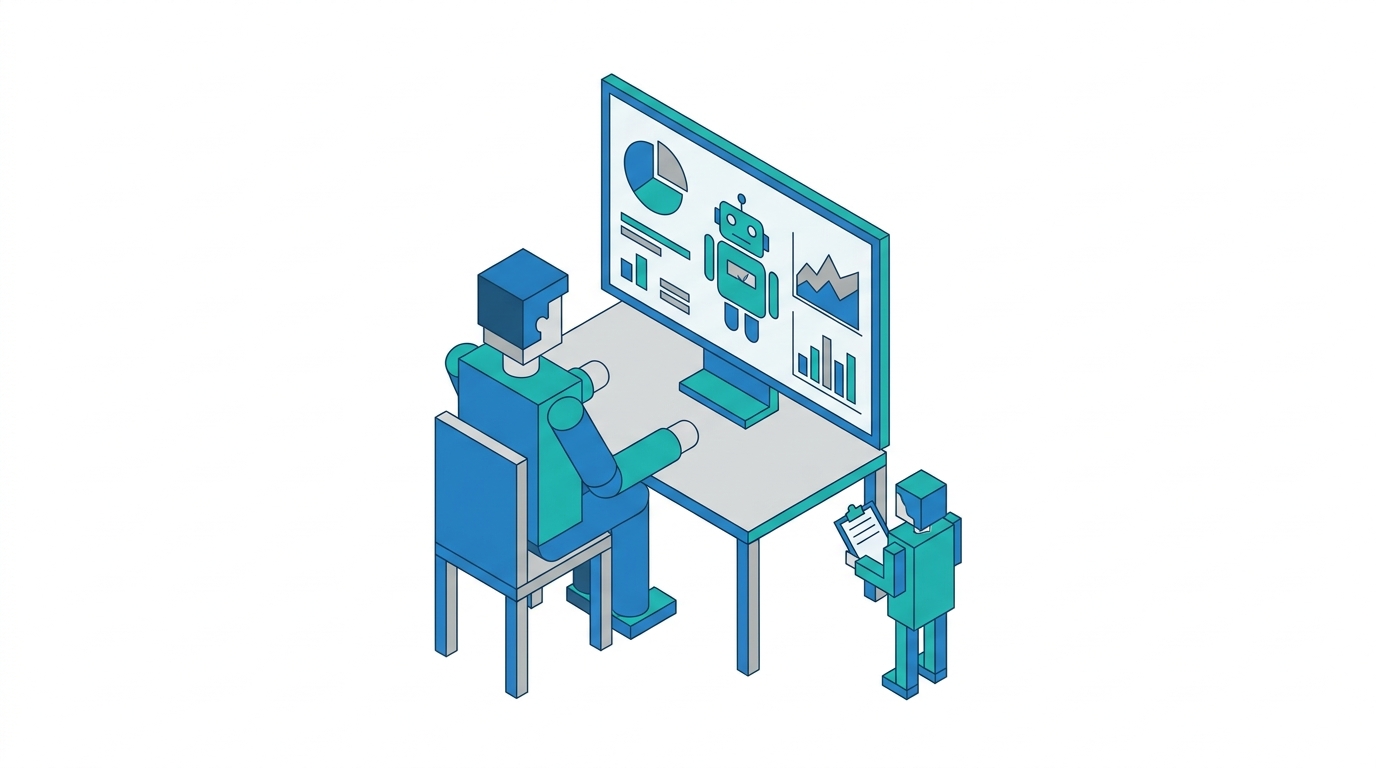
Google just made a bigger search marketing decision than most teams realize.
According to MediaPost, Google is replacing Dynamic Search Ads with AI Max for Search, and the transition also affects automatically created assets and campaign-level broad match. That is not a routine product rename. It is Google telling advertisers that search campaigns built around manual coverage and legacy automation are being folded into a system designed for intent prediction, real-time query expansion, and AI-generated relevance.
If you manage paid search, SEO, or landing pages, this matters right now.
This move does not just change campaign settings inside Google Ads. It changes how search demand gets matched, how much control advertisers keep, how landing pages get interpreted, and how performance gets explained to clients and executives. It also lands at the same time Google is pushing AI deeper into the browsing experience. As 9to5Google reported, AI Mode is now getting deeper Chrome integration, keeping the AI layer active while users browse pages and ask follow-up questions. That is the same direction everywhere: less linear search, more AI-assisted discovery.
The practical takeaway is simple. Marketers need to treat AI Max as part ad product migration, part search behavior shift, and part measurement problem.
What Google actually announced
The clearest summary came from MediaPost’s coverage of the rollout. Google said campaigns using Dynamic Search Ads, automatically created assets, and campaign-level broad match are moving into AI Max. Phase one begins now with upgrade tools, and phase two begins in September, when remaining eligible legacy campaigns will be automatically upgraded. After that, advertisers will no longer be able to create new DSA campaigns in Google Ads, Google Ads Editor, or the Ads API.
That matters because DSA has been a dependable bridge product for years. It helped advertisers capture long-tail queries by using site content to generate targeting and ad coverage that keyword lists often missed. It was imperfect, but it gave teams a useful middle ground between manual keyword management and full black-box automation.
AI Max is a different philosophy. Google says it uses the advertiser’s landing pages, keywords, and creative assets together with broader intent signals to find additional relevant queries and personalize messaging in the moment. MediaPost cited Google data claiming campaigns using the full suite of AI Max features drove an average of 7% more conversions or conversion value at similar CPA or ROAS.
Maybe that uplift holds for many accounts. Maybe it does not. Either way, the strategic meaning is bigger than the benchmark. Google is shifting from matching what you target to inferring what you meant.
Why this is a bigger deal than a DSA sunset
A lot of marketers will look at this and say, fine, Google retired an older format and wrapped it into a newer one. That is technically true. It is also too small a read.
DSA was built for a search model where coverage gaps were the main problem. AI Max is built for a search model where intent interpretation is the main problem.
Those are not the same thing.
In the old model, the challenge was mostly operational: did your keyword list miss a useful query, and could Google crawl the right page to fill in the gap? In the new model, the challenge is interpretive: can Google’s systems understand the commercial intent, the right landing page, the right message, and the right moment to enter the auction when queries are longer, messier, and more conversational?
That shift mirrors what is happening in organic search and AI search more broadly. Search behavior is getting less tidy. People type longer prompts, layer context, switch devices, upload images, and continue a task across multiple screens. Google is adapting the ad layer to that reality.
This is exactly why AEO and paid search are starting to overlap more than many teams admit. The systems now depend on machine-readable clarity. If your site structure is weak, your messaging is vague, or your pages do not make commercial intent obvious, the AI layer has less to work with.
What marketers are getting wrong about AI Max
The biggest mistake is treating AI Max like a setting change instead of a strategic migration.
Here are the four bad assumptions I expect to cause the most pain over the next quarter.
1. “Google will handle the relevance for us”
It will handle more of it. That is not the same as handling it well.
AI Max pulls from your website content, keywords, and creative assets. If those inputs are sloppy, outdated, or overly generic, the system can scale the wrong message faster. Automation amplifies quality. It does not replace it.
That matters even more for multi-location brands, healthcare organizations, and complex B2B companies where service nuance matters. A page that vaguely says “we help businesses grow” is not useful input for an AI-driven matching system.
2. “We can ignore landing page clarity because the model is smarter now”
That is backward.
Smarter systems reward clearer inputs. They do not remove the need for clarity. If anything, they make structure, specificity, and content hygiene more important because the model is constantly deciding which page, asset, and intent path best fits the query.
Teams that have been lazy about service-page architecture are going to feel this first.
3. “Reporting will mostly stay the same”
I do not think that is a safe assumption.
As targeting and message matching become more dynamic, post-click reporting gets harder to explain in simple old categories. That is already true across AI search. The Next Web reported that Semrush launched a brand visibility framework around AI discovery because old SEO metrics are no longer enough. The article cites research showing AI Overviews now trigger on 48% of tracked queries and that organic click-through rates have dropped 61% on queries where those overviews appear.
Paid search is headed toward the same measurement tension. You will still have CPA, ROAS, and conversion totals. What gets fuzzier is the path that produced them, the exact query logic behind them, and how much of the lift came from broader intent matching rather than advertiser-selected coverage.
4. “This is mainly a paid media issue”
It is not.
SEO teams, content teams, web teams, and paid search teams all have skin in this. AI Max depends on the quality of the destination experience and the semantic clarity of the site. If your site cannot clearly signal what each page is about, who it serves, and what action it supports, ad automation gets weaker.
The real risk, less control without a better process
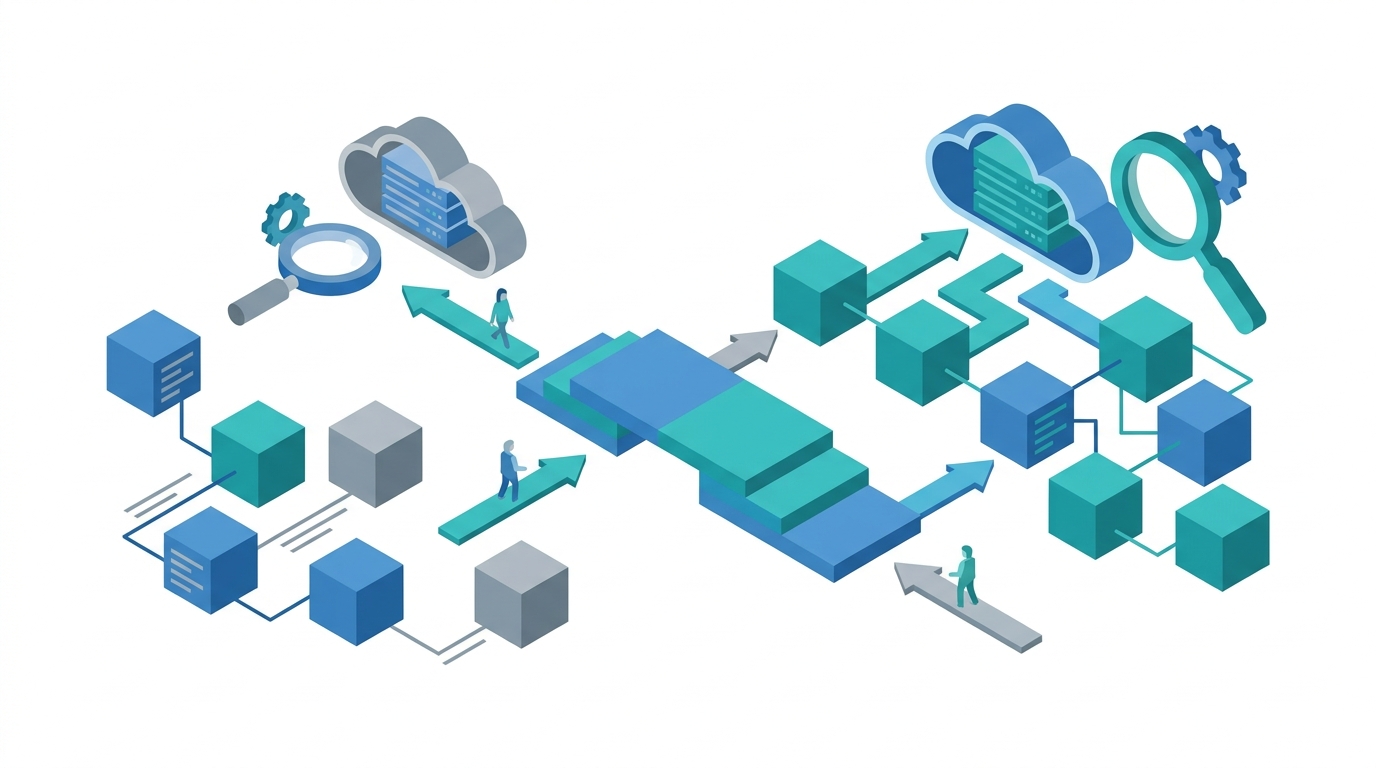
The core tension here is familiar. Google promises more reach and more relevance through automation. In exchange, marketers give up some direct control.
Sometimes that trade is worth it. Sometimes it hides waste until the reporting lag catches up.
DSA already asked marketers to trust Google’s reading of site content. AI Max asks for more trust because it expands the system’s job from coverage to interpretation. It is not only matching page content to missed queries. It is trying to infer which combinations of assets, pages, and messages are right for demand that may not look like your exact keyword plan.
That means marketers need a better operating process, not just a willingness to click the upgrade banner.
If you do not set tighter rules for page quality, exclusions, asset review, and reporting interpretation, AI Max can become one more place where performance drifts while everyone assumes the machine knows best.
What to audit before your campaigns migrate
This is the part I would prioritize this week.
Audit your landing pages for machine readability
Ask a blunt question of every major paid landing page: could a machine instantly understand what this page offers, who it is for, and what intent it serves?
If the answer is no, fix the page before the migration becomes mandatory.
Strong pages for AI Max usually have:
- a precise H1 tied to one commercial intent
- subheads that clarify service, audience, or problem
- body copy that names the offer directly instead of hiding behind branding language
- obvious conversion actions
- internal consistency between page title, heading, copy, and CTA
This overlaps with the same content discipline required for answer engine optimization services. Pages that are easier for AI systems to interpret are often better at supporting both organic visibility and automated paid matching.
Review weak or overly broad asset copy
AI Max works with your existing ads and creative inputs. That means mediocre copy becomes a bigger liability.
Cut anything that is vague, over-generalized, or disconnected from actual buyer language. If you would not want a salesperson using that sentence in a discovery call, it probably does not belong in your ad assets.
Tighten URL and content alignment
Make sure the pages Google can use are the pages you actually want representing the campaign. Legacy sites often have old service pages, thin location pages, duplicate topic pages, or blog posts that mention the right terms but are poor commercial destinations.
If the system can read the wrong pages, it can learn the wrong lessons.
Separate testing from blind trust
Do not migrate everything mentally into a single bucket called “AI upgrade.”
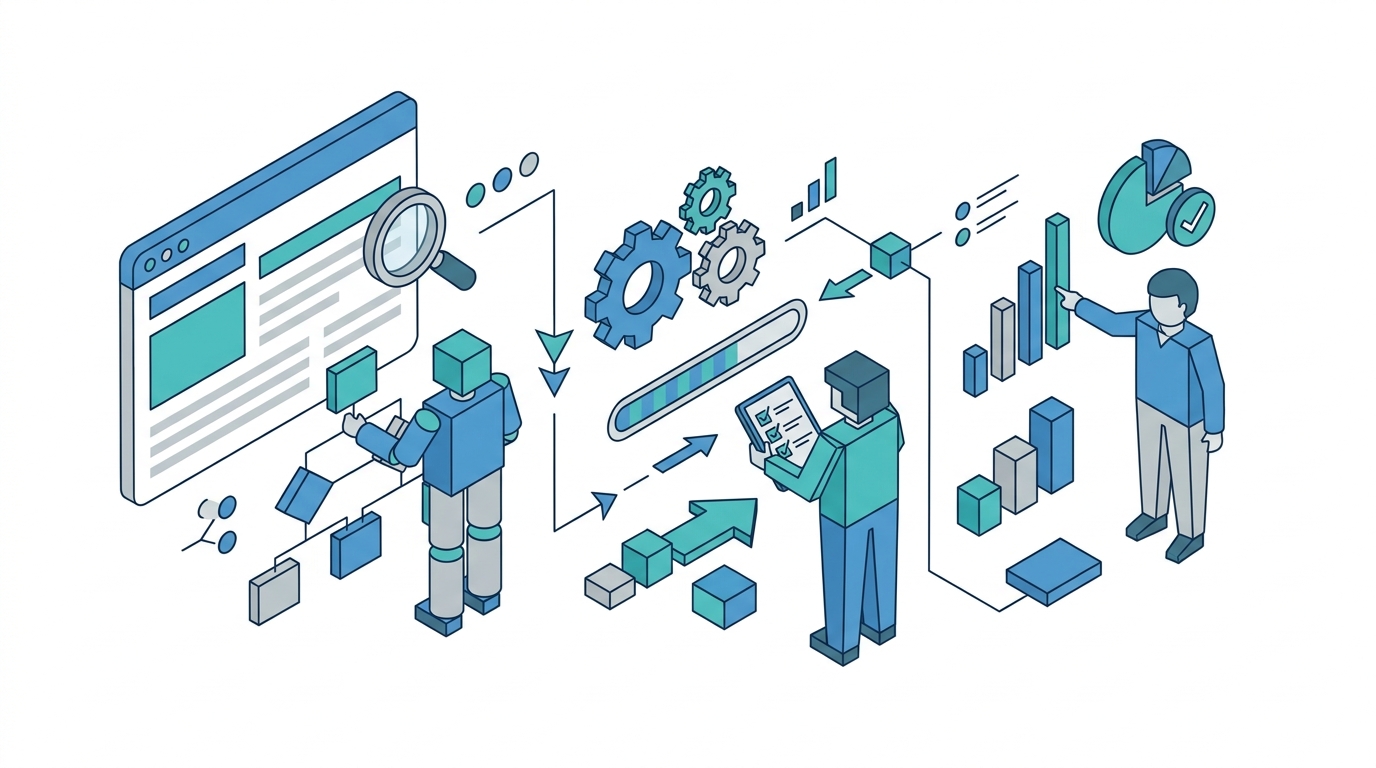
Track legacy baselines now. Save screenshots. Export query and asset data where you still can. Document pre-migration CPA, ROAS, conversion rate, assisted conversions, and landing page mix. If performance changes later, you will need something better than memory.
Why this matters for agency reporting and client communication
This is where a lot of teams are going to get exposed.
Clients do not care that Google renamed a product. They care whether costs rise, lead quality holds, and your explanation makes sense.
That is harder when the platform itself is becoming more probabilistic.
OpenAI’s ad rollout is a useful parallel. Digiday reported that OpenAI has now turned on cost-per-click ads inside ChatGPT, with early bids reportedly between $3 and $5 per click. MediaPost also reported that OpenAI is preparing conversion tracking for some advertisers because the platform needs to close the measurement loop if it wants serious performance budgets.
That is the same story, just in a different interface. Every AI-driven ad surface eventually runs into the same question: how do you prove the machine’s relevance decisions actually created business value?
Google has a much bigger head start than OpenAI on search ads, of course. But AI Max pushes more campaign logic into a system most clients cannot see directly. Agencies that keep reporting like it is still 2023 are going to sound outdated fast.
The better move is to explain the shift clearly:
- the platform is moving toward intent inference, not just keyword matching
- landing page quality now affects paid performance more directly
- measurement still matters, but teams need broader before-and-after context
- visibility across search is becoming less about one channel and more about how machine systems interpret the brand
That framing is more honest, and honestly, more useful.
What this means for healthcare, B2B, and local brands
This change will not hit every advertiser the same way.
Healthcare marketers
Healthcare accounts often have strict compliance needs and high-stakes service language. That makes loose automation riskier. If your rehab, treatment, or medical pages are too generic, AI Max may struggle to match intent cleanly. If they are specific and trustworthy, the system has better material to work with.
We have seen this broader pattern in AEO already. Seasons in Malibu holds 4,200+ keyword rankings, 814K+ monthly social impressions, and averages 5 patient admits per month driven directly through Emarketed’s marketing, a full-service result that covers SEO, AEO, paid search, social, and web. That kind of performance is built on clear service architecture and durable authority, not just campaign tweaks.
B2B marketers
B2B sites often have another problem: they are full of abstract messaging. When every page sounds like strategy consulting vapor, machine interpretation gets weaker. AI Max may reward companies that say the obvious thing clearly.
If you make industrial valves, accounting software, managed IT, or logistics systems, say that plainly and early. The machine cannot infer precision from polished nonsense.
Local and regional brands
Local advertisers who relied on DSA to mop up long-tail searches should watch page-to-query alignment closely. If your site has weak location page structure or inconsistent service language, AI Max can expand reach in ways that look active but do not convert.
This is the season to fix local landing pages, not just campaign settings.
The smart play for the next 90 days
If I were advising a marketing team today, I would keep it simple.
First, assume migration is happening whether you feel ready or not.
Second, treat website clarity as paid media infrastructure, not just an SEO concern.
Third, build a reporting layer that compares pre- and post-migration performance with more nuance than a single efficiency metric.
Fourth, retrain internal teams around intent, page quality, and machine readability. That sounds abstract, but it is practical. Better headings, stronger service pages, cleaner asset sets, and tighter exclusions are still controllable advantages.
Finally, stop pretending AI search changes only affect organic teams. Paid search is being pulled into the same machine-mediated discovery environment. The labels are different, but the operational demand is similar: make your brand easier for the system to understand.
FAQ
Is Google fully shutting down Dynamic Search Ads?
Google is replacing DSA with AI Max for Search in phases. Based on Google’s rollout details reported by MediaPost, eligible campaigns will move over, and advertisers will no longer be able to create new DSA campaigns after the transition.
What is the main difference between DSA and AI Max?
DSA mainly helped cover missed queries using site content. AI Max goes further by combining landing pages, keywords, creative assets, and broader intent signals to infer relevant matches and messaging.
Will AI Max improve performance automatically?
Not automatically. Better automation can improve results, but only if the inputs are strong. Weak landing pages, vague messaging, or messy site architecture can limit or distort what the system does.
Does this affect SEO teams too?
Yes. AI Max relies on the same site clarity that helps organic visibility. Better structure, clearer page intent, and stronger content architecture support both AI-driven paid matching and AI-era organic discovery.
Should marketers trust Google’s 7% conversion lift claim?
Treat it as directional, not universal. Platform averages are useful context, but account structure, vertical, landing pages, and conversion tracking quality all affect whether that benchmark shows up in real campaigns.
What should agencies tell clients about this change?
Tell them the truth: Google is moving search campaigns toward more AI-driven intent matching, which can create opportunity and reduce transparency at the same time. The response is not panic. It is better inputs, cleaner testing, and better reporting.
What to do Monday morning
Pull a list of every campaign that still relies on DSA, automatically created assets, or legacy broad-match behavior. Then look past the settings and review the pages those campaigns depend on.
That is the part too many teams will skip.
Google has already made its bet. Search is becoming less manual, less keyword-bound, and more interpretive. The marketers who win this shift will not be the ones who trust the machine the most. They will be the ones who give it the clearest, strongest inputs and keep a close eye on what happens after the click.