What to Look for When Choosing an [Answer Engine Optimization](/resources/geo-guide/) Partner
Learn the essential criteria, red flags, and evaluation framework for selecting the right AEO partner to help your business succeed in AI-powered search.
 Partner](/uploads/choosinganaeopartner.png)
What to Look for When Choosing an Answer Engine Optimization Partner
The digital marketing landscape has fundamentally transformed. As AI-powered search engines like ChatGPT, Google AI Overviews, Perplexity, and Claude reshape how consumers discover information, businesses face a critical decision: adapt or become invisible.
Answer Engine Optimization (AEO) represents this new frontier -ensuring your business appears as a trusted source when AI engines answer questions in your industry. But here’s the challenge: AEO is still emerging, and the market is flooded with agencies claiming expertise they don’t possess.
Choosing the wrong partner can waste months of time and tens of thousands of dollars while your competitors establish authority in AI search results. Choosing the right partner can position your business as the definitive answer in your industry for years to come.
This guide will walk you through exactly what to look for, what questions to ask, and what red flags to avoid when selecting an AEO partner.
Understanding What You Actually Need
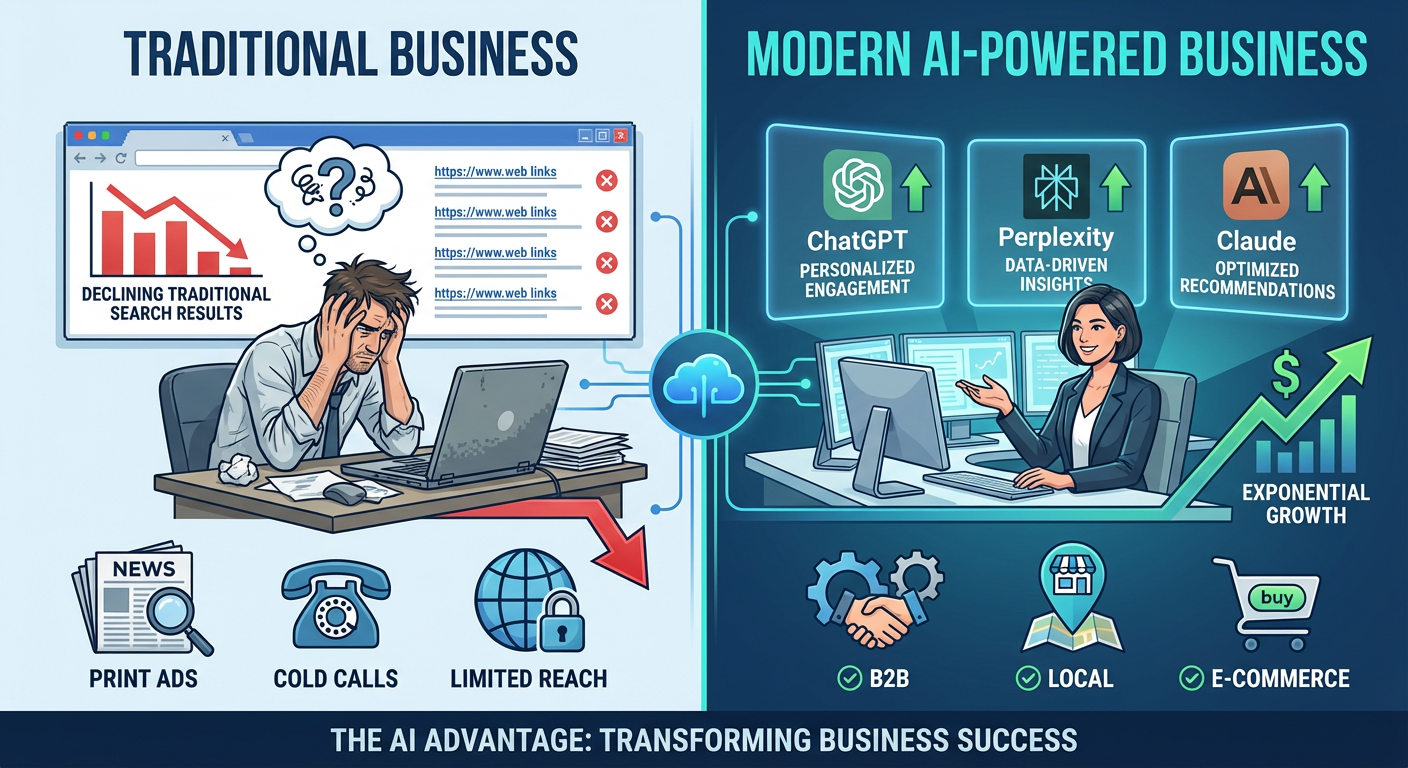
Before evaluating agencies, clarify your specific AEO needs. Not every business requires the same level of optimization.
When AEO Should Be a Priority
High-Intent Service Businesses
If potential customers research extensively before buying -think legal services, healthcare, financial planning, or B2B marketing solutions -AEO is critical. These buyers ask detailed questions to AI engines during their research phase.
Competitive Local Markets
In cities like aeo optimization Los Angeles, where dozens of businesses compete for the same customers, being cited by AI as a top option creates a significant competitive advantage.
Thought Leadership Brands
If your business model depends on being recognized as an industry authority -consultants, agencies, education providers -AEO helps establish that credibility at scale.
E-commerce with Complex Products
When customers need guidance choosing between product options, AI engines increasingly provide recommendations. Optimizing for AI search ensures your products get mentioned.
Your Current Digital Foundation Matters
AEO builds on strong SEO fundamentals. If your website has technical issues, poor content, or weak backlink profiles, you might need foundational work before advanced AEO strategies.
A good partner will be honest about this. A poor partner will sell you AEO services without addressing the underlying issues -wasting your budget.
The 8 Essential Criteria for Evaluating AEO Partners
1. Demonstrated AEO Results (Not Just SEO Success)
This is non-negotiable. Your potential partner must show concrete evidence of achieving visibility in AI-generated responses.
What to ask for:
- Screenshots of client brands appearing in ChatGPT, Perplexity, or Google AI Overview responses
- Before/after examples showing improved AI citation rates
- Case studies documenting the specific strategies used and results achieved
Red flag: Agencies that pivot the conversation back to traditional SEO rankings when you ask about AI search results. They likely lack real AEO experience.
Why it matters: Traditional search and AI search require different optimization approaches. Success in one doesn’t guarantee success in the other.
2. Deep Technical Expertise in Structured Data

AI engines rely heavily on structured data to understand and categorize content. Your partner needs advanced technical capabilities.
Core competencies to verify:
- JSON-LD schema implementation across multiple schema types
- Entity markup and knowledge graph optimization
- FAQ, How-To, and conversational schema formats
- Understanding of how different AI engines parse structured data differently
Test their knowledge:
Ask, “Which schema types do you typically recommend for improving AI visibility, and why?” Listen for specifics about Organization, Person, LocalBusiness, Product, FAQ, and HowTo schemas.
Vague answers about “implementing schema” without specific types or strategic reasoning suggest surface-level understanding.
3. Content Strategy Aligned with AI Understanding
AI engines don’t just match keywords -they understand context, concepts, and relationships. Your partner’s content strategy should reflect this reality.
Look for:
- Emphasis on topic authority and entity-based content rather than keyword density
- Strategies for creating “answer-optimized” content using information gain principles
- Understanding of how to structure content for direct citation
- Experience with conversational search optimization
Evaluation test:
Ask how they approach content creation differently for AEO versus traditional SEO. Strong answers will discuss information density, direct answers, BLUF (Bottom Line Up Front) methodology, and citation-worthy formatting.
4. Multi-Platform AI Optimization Capabilities
Different AI platforms behave differently. ChatGPT pulls from different knowledge sources than Google AI Overviews or Perplexity. A sophisticated partner optimizes across multiple platforms.
Key platforms they should address:
- ChatGPT and GPT-based applications (including SearchGPT)
- Google AI Overviews (formerly SGE)
- Perplexity AI
- Claude and Anthropic-based search integrations
- Bing Chat (Copilot)
- Voice assistants (Alexa, Siri, Google Assistant)
Why diversity matters: Your customers use multiple AI tools. Optimizing for only one platform means missing significant visibility opportunities. A partner focused exclusively on Google may neglect the 40%+ of AI search happening on ChatGPT and other platforms.
5. Authority Building and Digital PR Capabilities
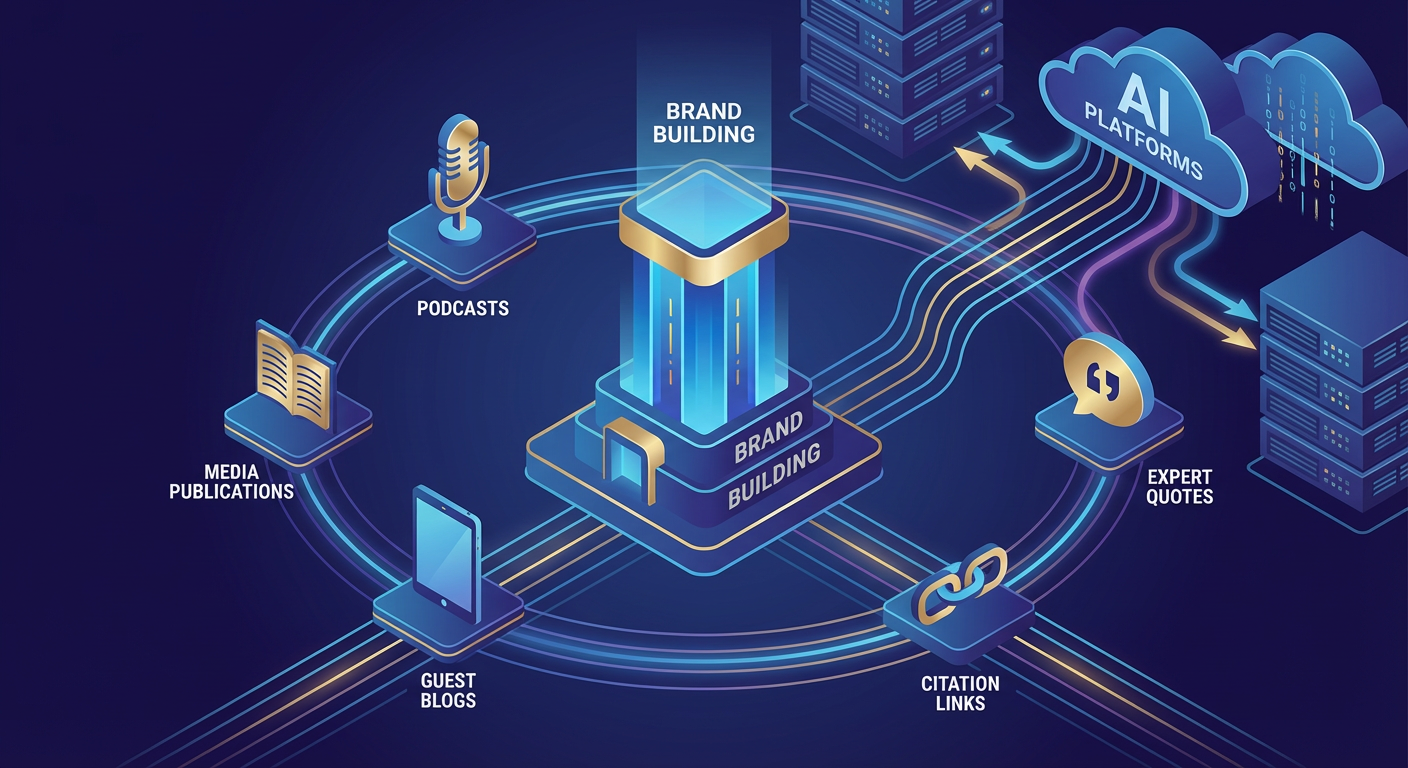
AI engines prioritize established, trusted sources. Building that trust requires more than on-page optimization.
Essential capabilities:
- Digital PR strategy and media relationship building
- High-authority citation acquisition from reputable industry sources
- Brand mention monitoring and management
- Entity recognition improvement across the web
- Strategic co-marketing and partnership development
Ask about their approach:
“How do you build the kind of authority that makes AI engines trust and cite our brand?” Strong answers will discuss E-E-A-T signals, entity building, strategic content distribution, and earned media.
Weak answers focus only on backlinks or technical factors -missing the brand authority component.
6. Transparent Measurement and Reporting
AEO measurement is still evolving, but quality partners have developed meaningful metrics.
Look for tracking of:
- Brand mention frequency in AI-generated responses across platforms
- Share of voice compared to competitors in AI citations
- Information gain score measuring unique value provided
- Citation quality evaluating the context and prominence of mentions
- Sentiment analysis of how your brand is described
- Brand search uplift indicating increased consideration
Red flag: Partners who can’t explain how they measure AEO success or who rely solely on traditional SEO metrics. Traffic is becoming a less reliable indicator as zero-click AI answers increase.
7. Industry-Specific Experience or Deep Research Capability
AI optimization strategies vary significantly by industry. Healthcare content faces different challenges than e-commerce products or professional services.
Ideal scenarios:
- Direct experience in your industry with documented AEO results
- Strong research capabilities to quickly understand your competitive landscape
- Existing relationships with industry-specific citation sources
Questions to ask:
- “Have you worked with businesses in our industry? What were the unique challenges?”
- “What industry-specific optimization opportunities do you see for our business?”
- “Which industry publications or sources would be priority targets for our brand?”
If they lack direct industry experience, evaluate whether they demonstrate sufficient depth of understanding about your space to develop effective strategies.
8. Clear Communication and Education Focus
AEO is complex and evolving. Your partner should educate your team, not hide behind jargon or “proprietary black boxes.”
Positive signs:
- Willingness to explain their methodology in detail
- Regular educational content demonstrating thought leadership
- Transparent reporting that helps your team understand what’s working
- Collaborative approach that involves your team in strategy discussions
Red flags:
- Overly vague explanations about “proprietary AI algorithms”
- Resistance to explaining their specific tactics
- Reports full of metrics without context or strategic insights
- Lack of educational resources or content demonstrating their expertise
Critical Questions to Ask Potential Partners
Come to initial consultations prepared with these questions:
About Their AEO Methodology
“How do you define AEO, and how does your approach differ from traditional SEO?”
Listen for: Specific discussion of entity optimization, conversational search, structured data, and multi-platform AI visibility. Weak answers simply rebrand SEO tactics.
“Can you walk me through a recent AEO success story?”
Listen for: Specific strategies implemented, challenges overcome, measurable results in AI visibility, and timeline to results. Vague generalizations suggest limited real experience.
“Which AI platforms do you optimize for, and why those specifically?”
Listen for: Understanding of different platform characteristics and strategic rationale for prioritization based on your industry and audience.
About Technical Capabilities
“What structured data schemas do you typically implement, and how do you decide which ones to prioritize?”
Listen for: Specific schema types (FAQ, HowTo, Organization, LocalBusiness, Product, etc.) and strategic thinking about which provide the most value for different business types.
“How do you track whether our content is being cited by AI engines?”
Listen for: Specific tools and methodologies. This is still an emerging field, but quality partners should have developed tracking approaches even if imperfect.
“What’s your technical SEO audit process before implementing AEO strategies?”
Listen for: Recognition that AEO builds on solid foundations. Partners who skip this step are setting you up for expensive failures.
About Strategy and Timeline
“What’s a realistic timeline for seeing results with AEO?”
Listen for: Honest answers about the 3-6 month minimum typically required for meaningful AI visibility improvements. Promises of immediate results are unrealistic.
“How do you approach authority building for a brand that’s not yet well-established?”
Listen for: Multi-faceted strategies including content, digital PR, strategic partnerships, and entity development. Single-tactic answers suggest limited sophistication.
“What happens if we’re not satisfied with progress at the 6-month mark?”
Listen for: Clear performance expectations and consequences. Quality partners stand behind their work.
About Partnership and Collaboration
“What level of involvement do you need from our internal team?”
Listen for: Realistic expectations about content collaboration, access to subject matter experts, and review cycles. Both “we’ll handle everything” and “we need 20 hours per week from your team” can be red flags.
“How do you stay current with AI search algorithm changes?”
Listen for: Specific research methods, industry involvement, and testing approaches. The field evolves rapidly; partners must be committed to continuous learning.
“Can you provide references from current clients?”
Listen for: Willingness to connect you with satisfied clients. Hesitation suggests potential issues with client satisfaction.
Red Flags That Should End the Conversation
Some warning signs are serious enough to disqualify a potential partner immediately.
🚩 Guaranteed Placement in AI Results
Any promise of “guaranteed #1 ranking in ChatGPT” or “guaranteed citations in Google AI Overviews” is fundamentally dishonest. AI algorithms are complex, opaque, and constantly evolving. No agency can guarantee specific placements.
What’s reasonable: Guarantees about the work performed (implementing specific schema, creating optimized content, securing certain media placements) rather than about AI algorithm outcomes.
🚩 One-Size-Fits-All Packages
AEO strategies must be customized based on your industry, competition, current digital presence, and business goals. Agencies offering identical packages to all clients lack sophistication.
What’s reasonable: Templated processes for audits or implementation, but customized strategies and priorities based on your specific situation.
🚩 Dismissive of Traditional SEO
Ironically, effective AEO requires strong SEO fundamentals. Partners who claim “SEO is dead” or unnecessary are setting you up for failure.
What’s reasonable: Emphasis on how AEO extends and evolves SEO strategies, not replaces them entirely.
🚩 Inability to Show Concrete Examples
If an agency can’t demonstrate actual AEO results after being in the market, they’re learning on your dime.
What’s reasonable: Even newer AEO programs should show some success -whether through their own brand visibility in AI search, early client results, or documented testing outcomes.
🚩 No Discussion of Content Quality
Agencies focused exclusively on technical optimization while ignoring content quality miss a critical AEO component. AI engines prioritize genuinely valuable, comprehensive, well-sourced information.
What’s reasonable: Balance between technical optimization and high-quality, authoritative content creation.
🚩 Lack of Measurement Clarity
Partners who can’t articulate how they’ll measure success or track progress are flying blind.
What’s reasonable: Even if measurement approaches are still evolving, quality partners should have clear thinking about KPIs, tracking methodologies, and reporting cadence.
🚩 Pressure to Sign Immediately
“Special pricing if you sign today” and similar pressure tactics suggest desperation or aggressive sales cultures rather than confidence in value delivered.
What’s reasonable: Time-limited pricing for legitimate reasons (team availability, scheduled rate increases) communicated professionally without pressure.
Evaluating Pricing and Contract Terms
AEO pricing varies significantly based on scope, competition, and your current digital foundation. Understanding what’s reasonable helps you evaluate proposals.
Typical Investment Ranges
Small businesses with limited competition: $2,500-$5,000/month for foundational AEO strategies including technical optimization, content development, and basic authority building.
Mid-sized businesses in competitive markets: $5,000-$15,000/month for comprehensive AEO programs including multi-platform optimization, aggressive authority building, and sophisticated content strategies.
Enterprise or highly competitive spaces: $15,000-$50,000+/month for advanced AEO strategies, custom development, extensive digital PR, and dedicated team resources.
One-time audits and strategy: $3,000-$10,000 for comprehensive AEO audits and strategic roadmaps if you plan to execute internally.
Contract Terms to Evaluate
Minimum commitment period:
3-6 month minimums are reasonable -AEO takes time to show results. Be wary of agencies requiring 12+ month contracts before demonstrating initial success.
Performance clauses:
Look for clear performance expectations and consequences. Quality agencies are willing to put terms around results.
Ownership of work:
Ensure your business owns all content created, schema implementations, and other deliverables. Some agencies retain ownership, limiting your ability to change partners.
Cancellation terms:
Understand what happens if you need to cancel. Reasonable notice requirements (30-60 days) are fine. Aggressive penalties or no ability to cancel are red flags.
What Should Be Included
A comprehensive AEO proposal should detail:
- Specific deliverables each month (content pieces, schema implementations, PR outreach quantity, etc.)
- Timeline for different optimization phases
- Roles and responsibilities (what they handle vs. what you provide)
- Communication cadence and reporting schedule
- Tools and platforms included
- Performance expectations and measurement approach
Red flag: Vague proposals with general descriptions but no specific deliverables or timelines.
Making Your Final Decision
After evaluating multiple potential partners, synthesize your research:
Create a Scorecard
Rate each potential partner on the essential criteria:
- Demonstrated AEO results (0-5 points)
- Technical expertise depth (0-5 points)
- Content strategy sophistication (0-5 points)
- Multi-platform capabilities (0-5 points)
- Authority building approach (0-5 points)
- Measurement clarity (0-5 points)
- Industry knowledge (0-5 points)
- Communication and education focus (0-5 points)
Threshold: Partners scoring below 30/40 likely lack the sophistication needed for effective AEO.
Trust Your Instincts About Partnership Fit
You’ll work closely with this partner for months. Beyond credentials and capabilities, evaluate:
- Do they listen well and ask thoughtful questions about your business?
- Do their communication styles match your preferences?
- Do they seem genuinely interested in your success versus just making a sale?
- Would you feel comfortable bringing them strategic questions and challenges?
Technical expertise matters enormously, but partnership chemistry determines whether the relationship will be productive long-term.
Start with Defined Pilots When Possible
If you’re choosing between two strong finalists, consider:
- Starting with a discovery/audit phase with both, then committing to the stronger performer
- Negotiating a 3-month pilot focused on specific measurable outcomes before committing to longer terms
- Requesting specific proof-of-concept deliverables before full engagement
Quality partners confident in their capabilities will often accommodate reasonable pilot arrangements.
What Success Looks Like
Set clear expectations for your AEO partnership from the beginning.
Timeline for Results
Months 1-2: Foundation
Technical audits, schema implementation, initial content optimization, strategy development. You likely won’t see major AI visibility improvements yet -this is infrastructure building.
Months 3-4: Early Signals
Initial brand mentions in AI-generated responses, improved entity recognition, growing citation frequency. Results are emerging but still inconsistent.
Months 5-6: Measurable Progress
Regular citations across multiple AI platforms, improved share of voice versus competitors, increased brand search volume indicating growing awareness.
Months 7-12: Compounding Returns Established authority driving consistent citations, virtuous cycle of visibility leading to more mentions leading to stronger entity recognition. This is when AEO investments truly pay off.
Partnership Evolution
Strong AEO partnerships evolve over time:
- Initial phase: Heavy implementation focus -technical setup, content creation, authority building
- Optimization phase: Refinement based on performance data, doubling down on what works
- Scale phase: Expanding to additional topics, products, or markets where you’ve proven the model
- Maintenance phase: Sustaining authority while efficiency improves
Your partner should help you understand which phase you’re in and what to expect next.
Taking the Next Step
Choosing an AEO partner is one of the most important marketing decisions your business will make in 2026. AI-powered search is fundamentally reshaping how customers discover businesses -and early movers in AEO establish advantages that compound over years.
Start your evaluation by:
- Clarifying your goals: What specific outcomes would make this investment successful? More qualified leads? Reduced customer acquisition cost? Faster sales cycles? Brand awareness in your industry?
- Documenting your current state: Where does your brand currently appear (or not appear) in AI search results? What questions are potential customers asking that AI engines are answering -and are you part of those answers?
- Reaching out to 3-5 potential partners: Use the questions and evaluation criteria in this guide. Quality conversations will reveal capability differences quickly.
- Requesting detailed proposals: Give shortlisted partners enough context to develop specific recommendations, not generic packages.
- Checking references: Speak with their current clients. Ask about communication quality, results delivered, and how challenges were handled.
Ready to Find Your AEO Partner?
At Emarketed, we’ve been pioneering Answer Engine Optimization strategies since the emergence of AI-powered search. Our Los Angeles-based team combines deep technical expertise with strategic content development and authority building to help businesses establish dominant positions in AI search results.
We don’t just implement tactics -we become your strategic partner in navigating the rapidly evolving AI search landscape.
If you’re ready to ensure your business is the answer when AI engines respond to questions in your industry, let’s start a conversation.
We’ll provide a complimentary AEO visibility assessment showing exactly where your brand currently appears in AI search results, competitive gaps we’d address, and a customized strategy for establishing AI search authority in your market.
The businesses that will dominate the next decade are establishing AI visibility today. Make sure yours is among them.
Related Resources: