Building Topic Authority with AI: Strategies for 2026
Learn how to use AI tools like MarketMuse, Clearscope, and Surfer SEO to build comprehensive topical authority through content clusters and strategic planning.

Search engines have gotten smarter about evaluating expertise. Individual keywords still matter, but what matters more is whether your site demonstrates comprehensive knowledge across an entire subject area.
This shift toward topical authority has changed how content strategy works. Instead of chasing hundreds of disconnected keywords, successful sites now build interconnected content ecosystems that signal deep expertise to both traditional search engines and AI systems.
The good news: AI tools have made this approach more accessible than ever. The challenge: most teams still aren’t using them effectively.
What Topical Authority Actually Means
Topical authority isn’t about publishing more content. It’s about demonstrating to search engines that your site covers a subject comprehensively, with depth that competitors lack.
Search engines evaluate this through semantic relevance, entity connections, and site-wide coverage. They’re looking at how well your content addresses the full scope of questions and subtopics within a subject area, not just whether you’ve mentioned the right keywords.
The practical implication: a site with 20 tightly interconnected articles on a focused topic will typically outperform a site with 200 scattered posts covering everything superficially. Depth beats breadth.
This is where AI tools provide genuine leverage. Manually mapping out the semantic landscape of a topic, identifying gaps in coverage, and ensuring comprehensive treatment across dozens of articles is extraordinarily time-consuming. The right tools compress weeks of research into hours.
The Content Cluster Model
The dominant framework for building topical authority is the content cluster model. You’ve probably seen it referenced everywhere, but execution matters more than awareness.
A content cluster consists of a comprehensive pillar page covering a broad topic, supported by multiple cluster articles that dive deep into specific subtopics. Internal links connect everything, creating a web of related content that signals expertise to search engines.
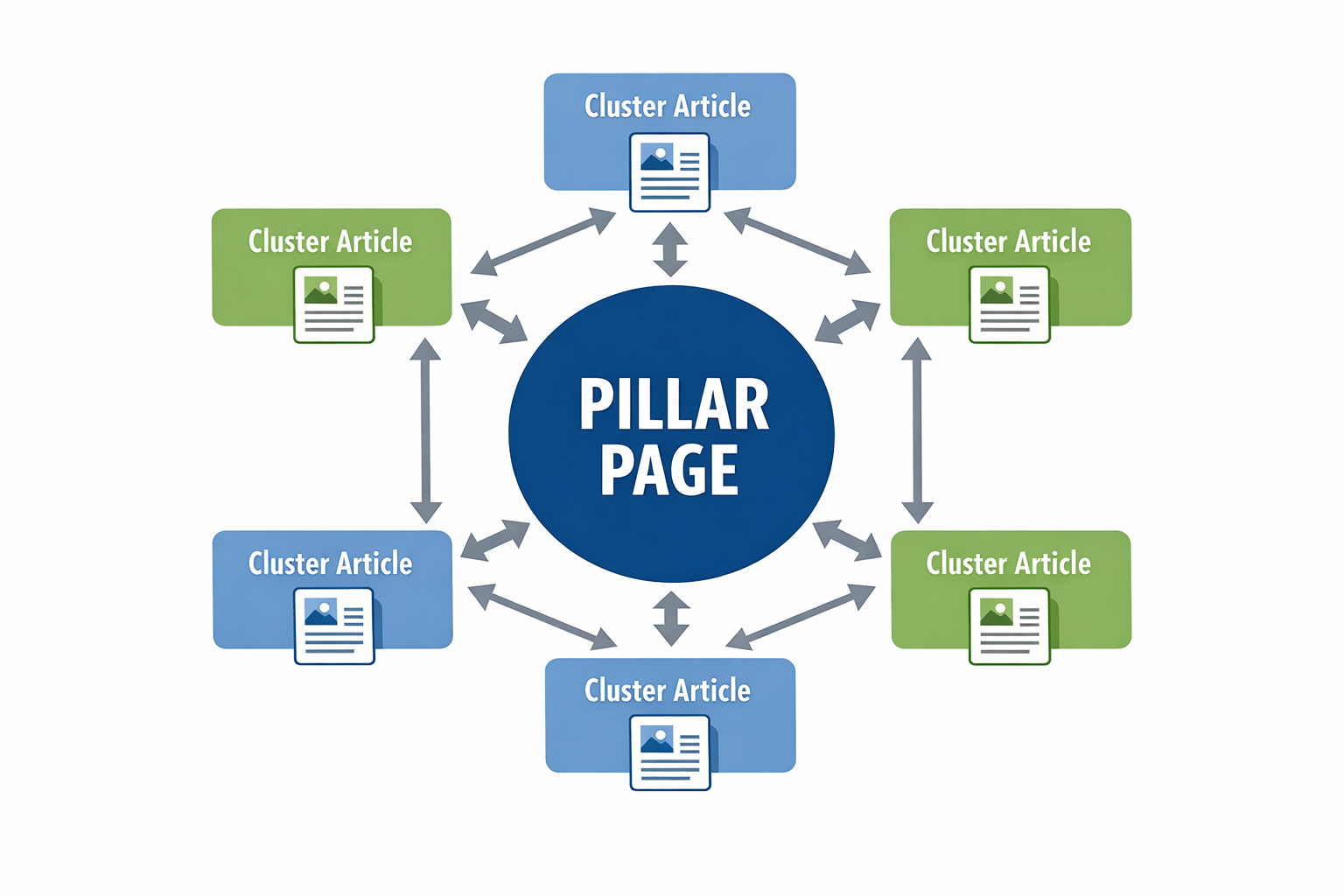
The pillar page might target “content marketing strategy” while cluster articles address specific aspects like editorial calendars, content distribution, repurposing frameworks, and measurement approaches. Each cluster article links back to the pillar and to related cluster content.
What makes this work isn’t the structure itself but the comprehensive coverage. Search engines can identify when a site has thoroughly addressed a topic versus when it’s only scratched the surface. AI tools help you understand what comprehensive coverage actually looks like for any given subject.
Understanding the Tool Landscape
Three platforms dominate the topical authority conversation: MarketMuse, Clearscope, and Surfer SEO. They’re often compared directly, but they serve different purposes in the workflow.
MarketMuse approaches the problem strategically. It analyzes your entire site to understand existing coverage, identifies gaps relative to competitors, and helps plan content that builds authority systematically. The platform uses patented topic modeling that examines thousands of pages to understand what comprehensive coverage looks like for any subject. It tracks your content inventory, provides personalized difficulty scores based on your site’s existing authority, and generates detailed briefs that map out exactly what topics need coverage.
The strength of MarketMuse lies in answering the question: “What should we create next to build authority in this area?” It’s built for strategists making decisions about content roadmaps, not writers optimizing individual articles.
Clearscope takes a tactical approach focused on individual article optimization. It analyzes top-ranking content for a given keyword and provides real-time grading as you write, showing which terms and topics you’ve covered and which you’re missing. The interface is clean and writer-friendly, with seamless Google Docs and WordPress integration.
Clearscope answers a different question: “How do I make this specific article as comprehensive as possible?” It’s excellent for execution but limited for strategic planning.
Surfer SEO sits between these approaches, offering content briefs, SERP analysis, and optimization scoring at a more accessible price point. It provides multi-keyword analysis and internal linking suggestions that help connect cluster content. The trade-off is less sophisticated topic modeling and more data points that may or may not matter.
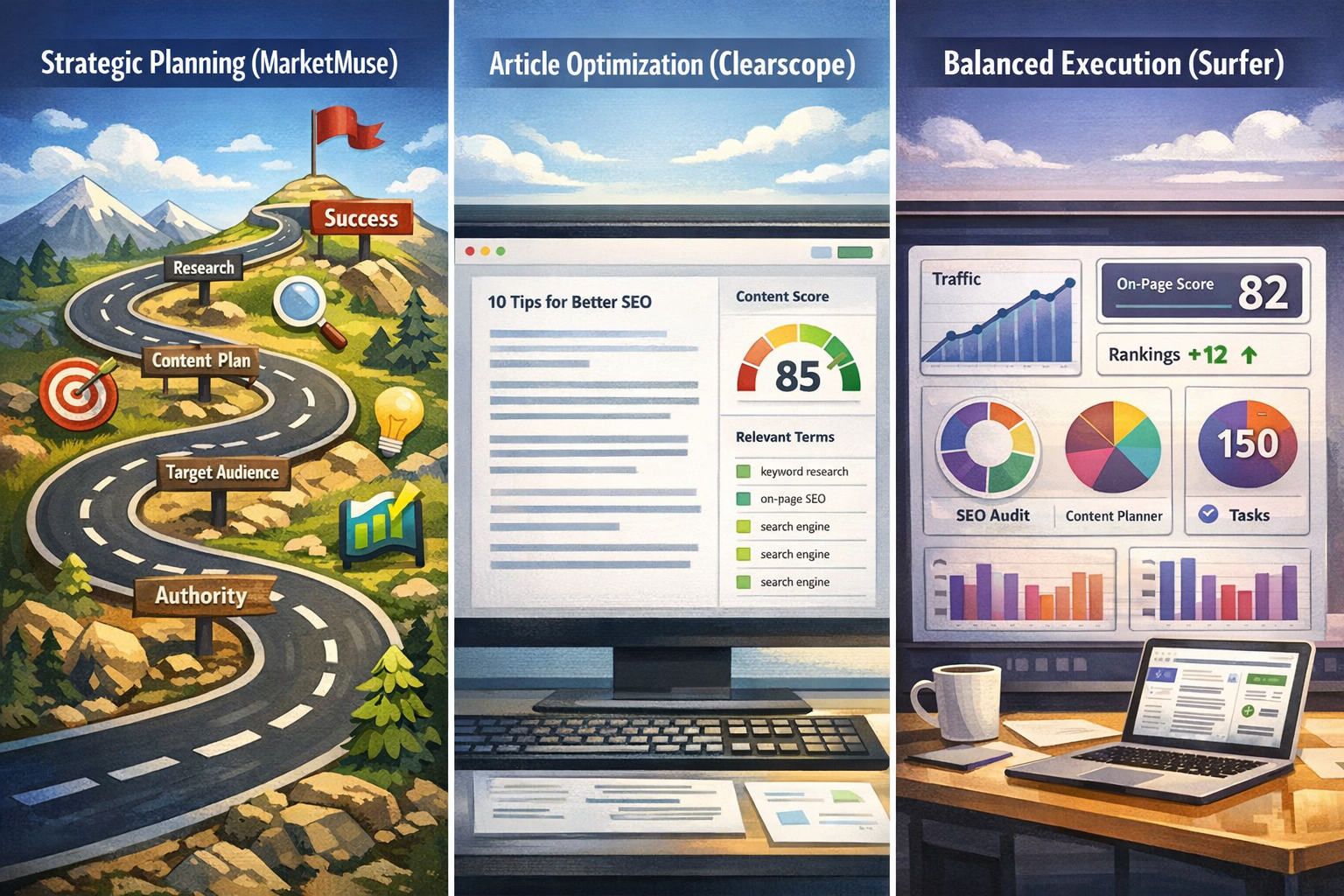
The practical reality is that most serious content operations use multiple tools. MarketMuse for planning what to create, Clearscope or Surfer for optimizing as you write. The Topic Authority Builder can accelerate the research phase, identifying cluster opportunities and competitive gaps before you invest in premium platforms.
Building Clusters with AI: A Practical Workflow
Here’s how the process actually works when you’re using AI tools effectively.
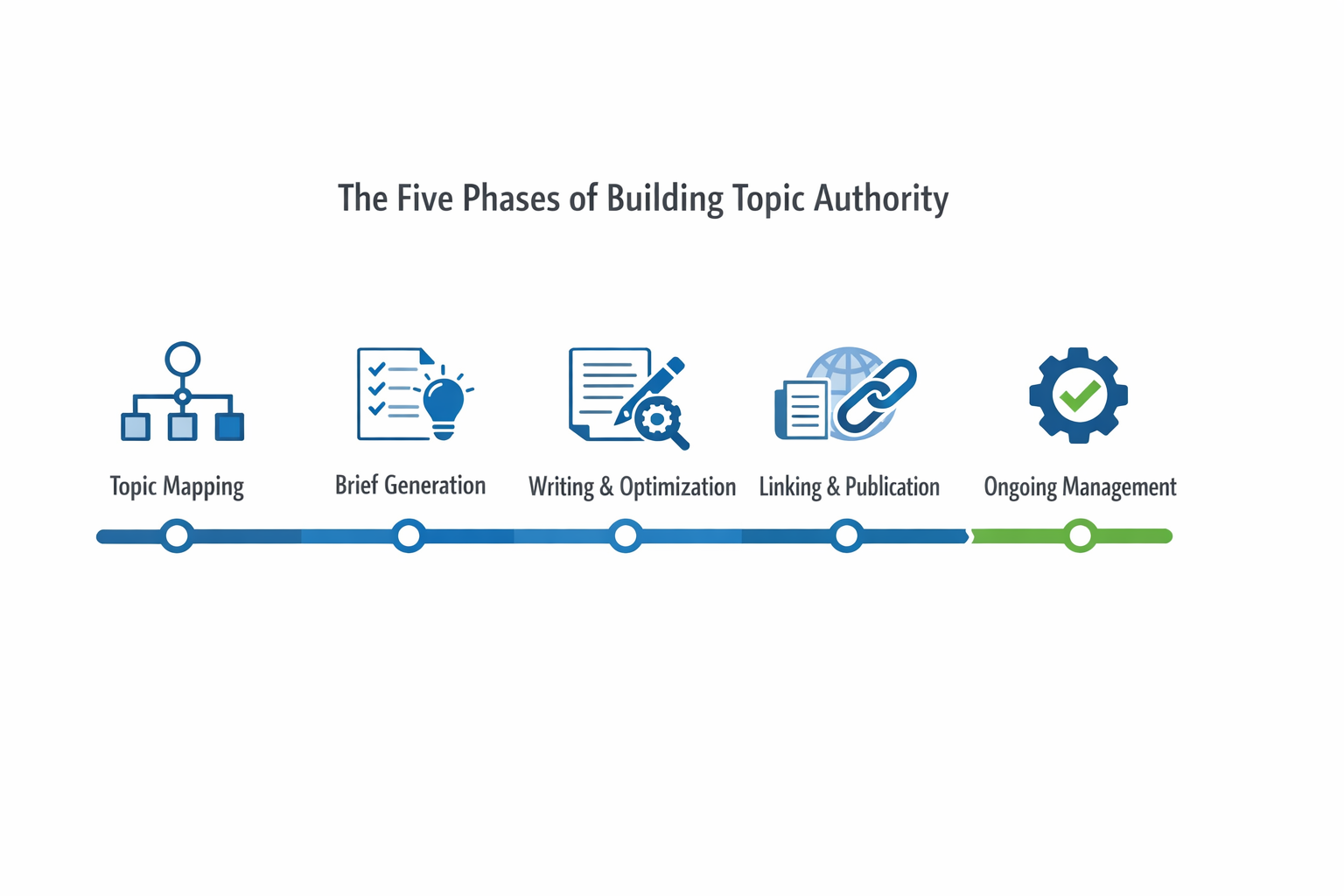
Phase One: Topic Mapping
Start with a broad topic area where you want to establish authority. Use MarketMuse’s Topic Navigator or similar functionality to understand the semantic landscape. The tool will cluster related keywords by intent and topical relationship, showing you not just search volume but how topics connect to each other.
This phase answers critical questions: What subtopics must you cover to be considered comprehensive? Where are competitors weak? Which topics align with your existing authority versus requiring you to build from scratch?
The Keyword Researcher supports this phase by surfacing cluster opportunities and related topics that inform your content map. The goal isn’t just finding keywords but understanding the full scope of what comprehensive coverage requires.
Phase Two: Content Brief Generation
For each piece in your cluster, generate detailed briefs that specify exactly what needs to be covered. MarketMuse briefs include structured outlines with specific subtopics for each section, questions to answer, internal and external linking suggestions, and target word counts based on competitive analysis.
These briefs serve multiple purposes. They guide writers toward comprehensive coverage without requiring them to do extensive research. They provide editors with clear criteria for evaluation. And they ensure consistency across content created by different team members.
Phase Three: Optimization During Writing
As content is created, use Clearscope or Surfer to optimize in real-time. The tools show your content score updating as you write, indicating whether you’ve adequately covered the topics that comprehensive treatment requires.
The key insight here: don’t chase perfect scores by stuffing in every suggested term. Use the tools to identify genuine gaps in coverage, not to hit arbitrary metrics. A piece that thoroughly addresses the main topic will naturally include most relevant terms.
Phase Four: Internal Linking and Publication
Connect your cluster content through strategic internal linking. Surfer and MarketMuse both provide linking suggestions based on topical relevance. Every cluster article should link to the pillar page and to related cluster content.
This linking structure isn’t just for SEO. It creates a better user experience by helping readers explore related topics. Search engines recognize and reward this interconnected coverage.
Phase Five: Inventory Management and Optimization
Topical authority isn’t built once and forgotten. Use inventory tracking to monitor existing content, identify pieces that need updates, and spot cannibalization issues where multiple pages compete for the same topics.
MarketMuse tracks your entire content inventory, providing Content Scores that show how well each page covers its target topic. This ongoing monitoring helps you maintain authority over time.
Content Gap Analysis in Practice
The most valuable application of these tools is identifying what’s missing from your coverage. Content gap analysis compares your site against competitors to reveal topics they cover that you don’t.
The process works at multiple levels. At the site level, you’re looking for entire topic areas where competitors have built authority that you lack. At the page level, you’re examining specific articles to find subtopics and entities that top-ranking content includes but your coverage misses.

MarketMuse’s SERP X-Ray and Clearscope’s competitor analysis both serve this purpose. They show you not just what keywords competitors rank for, but how comprehensively they cover topics. The heatmap visualization in MarketMuse is particularly useful, instantly revealing gaps in competitive content that represent opportunities.
The Website Audit tool complements this analysis by ensuring technical issues don’t undermine your content authority efforts. There’s no point building comprehensive topic coverage if crawlability problems prevent search engines from properly indexing your content.
How Long Does Building Authority Take?
Realistic expectations matter. Building genuine topical authority isn’t a quick win. Most sites see initial ranking improvements within three to six months of consistent cluster development, with more substantial results emerging over twelve to eighteen months.
The timeline depends on several factors: your site’s existing authority, competition in your space, publishing velocity, and content quality. AI tools accelerate the process by reducing research time and improving content comprehensiveness, but they don’t eliminate the need for patience.
A reasonable target for a single cluster is ten to thirty articles, depending on the breadth of the topic. Start with the pillar page, then publish cluster content at a sustainable pace. Quality matters more than speed.
What the Tools Can’t Do
AI content planning tools have genuine limitations worth acknowledging.
They excel at analysis and optimization but struggle with genuine creative insight. The tools can tell you what topics to cover based on competitive analysis, but they can’t generate the original perspectives, case studies, and expert insights that make content valuable.
They can overwhelm with data. Surfer in particular provides many data points, some of which have minimal impact on rankings. Following every suggestion without editorial judgment leads to content that feels robotic and over-optimized.
They require human oversight for quality. The briefs and suggestions these tools generate are starting points, not finished products. Content teams still need writers who understand the subject matter and editors who ensure quality standards.
They don’t account for brand voice. Tools optimize for search engine comprehension, not audience connection. The final content needs human refinement to sound like your brand rather than a generic competitor.
Small Sites Versus Large Sites
The approach to building topical authority differs based on site size and resources.
Large sites benefit most from MarketMuse’s inventory analysis and strategic planning capabilities. When you’re managing hundreds or thousands of pages, understanding existing coverage and identifying the highest-impact opportunities becomes essential. The personalized difficulty scores help prioritize topics where you have the best chance of success.
Smaller sites should focus narrowly. Rather than trying to compete broadly, pick one or two tightly defined topic areas and build comprehensive clusters there. A small site can absolutely outrank larger competitors within a focused niche by demonstrating deeper expertise.
For smaller teams, the combination of the Keyword Researcher for initial planning, Surfer for optimization, and manual analysis may provide sufficient capability without enterprise tool costs. As traffic and revenue grow, investing in more sophisticated platforms becomes justified.
The AI Search Dimension
There’s an additional consideration in 2026 that wasn’t relevant a few years ago: AI search visibility. ChatGPT, Perplexity, and similar AI systems increasingly answer questions directly, often citing sources.
Content with strong topical authority tends to perform well in these contexts. AI systems prefer comprehensive, authoritative sources when generating answers. The same cluster strategy that builds traditional search authority also positions your content for AI citations.
The AI Search Optimizer helps ensure your site is properly configured for AI discovery, while the LLMs.txt Generator creates structured files that help AI systems understand your content. These aren’t replacements for topical authority but complementary optimizations.
Putting It Together
Building topical authority with AI tools follows a logical progression:
Research your topic landscape to understand what comprehensive coverage requires. Use tools like MarketMuse or the Topic Authority Builder to map the semantic territory.
Plan your cluster structure with a pillar page and supporting articles that address each major subtopic. Generate detailed briefs that specify exactly what each piece should cover.
Create content using briefs as guides, optimizing in real-time with Clearscope or Surfer to ensure comprehensive treatment. Don’t chase perfect scores at the expense of readability.
Connect everything through strategic internal linking. Each piece should reinforce the others, creating a web of related content that signals expertise.
Monitor and maintain your authority over time. Update existing content, fill gaps, and consolidate overlapping pages.
The teams executing this well aren’t using AI tools to replace human judgment. They’re using them to amplify human expertise, handling the research and analysis burden so strategists and writers can focus on creating genuinely valuable content.
That combination of AI efficiency and human insight is what builds lasting authority.
References
-
Clearscope vs Frase.io vs MarketMuse vs Surfer SEO 2026 Review. Growth Marketing Pro.
-
Compare Clearscope vs MarketMuse in January 2026. SoftwareSuggest.
-
MarketMuse vs Surfer. MarketMuse Blog.
-
MarketMuse vs Clearscope: Which is Right for You in 2026? eesel AI.
-
10 Best SEO Content Optimization Tools in 2026. OneLittleWeb.
-
Best Surfer SEO Alternatives in 2026 (Cheaper Tools). The Rank Masters.
-
Top SEO Tools for 2026: 50+ Best Tools Ranked & Reviewed. ALM Corp.
-
15 Best AI SEO Tools to Supercharge Your Rankings in 2026. Veza Digital.
-
10 MarketMuse Alternatives in 2026 Free and Paid. MADX Digital.
-
Best AI SEO Tools 2026 - Top 10 Ranked & Compared. Harbor SEO.