Google AI Overviews Are Getting More Accurate. That May Be Worse for Marketers.
Google AI Overviews are getting more accurate, but weaker source grounding creates a bigger visibility and trust problem for marketers in 2026.

Google AI Overviews are getting better at producing correct answers. That sounds like good news until you look at the sourcing.
According to Search Engine Land’s coverage of a New York Times and Oumi analysis, Google’s AI Overviews improved from 85% factual accuracy in October to 91% in February after the move to Gemini 3. But the same analysis found something more troubling: the share of correct answers with weak source grounding rose from 37% to 56%.
That is the tension marketers should care about.
If Google gives a mostly correct answer but cites pages that do not clearly support it, brands face a new problem. You can lose clicks, lose attribution, and still have no clear path to earning trust inside the answer itself. A more polished AI summary does not automatically create a fairer search environment. In some ways, it makes the visibility gap harder to spot.
For agencies, healthcare marketers, and in-house teams, this changes the job. The goal is no longer just to publish content that ranks. The goal is to publish content that can be correctly interpreted, confidently annotated, and safely cited when Google builds an answer from multiple sources.
This is where a lot of 2026 SEO advice is still behind.

Accuracy is improving, but trust is getting messier
On the surface, 91% accuracy sounds reassuring. It suggests Google’s AI answer layer is maturing. That is probably true in a narrow technical sense.
But search is not graded like a classroom quiz. Search changes behavior at scale. If Google handles more than 5 trillion searches per year, a 9% miss rate still creates an enormous volume of bad answers. More importantly for marketers, even the correct answers can create problems when the citations underneath them are weak, incomplete, or mismatched.
That is what the grounding issue points to.
A grounded answer is one where the cited source clearly supports the claim being made. An ungrounded answer may still sound right, but the evidence trail is shaky. The user sees confidence. The marketer sees a citation system that may reward the wrong page, flatten nuance, or skip the source that actually did the explanatory work.
This matters because AI search is teaching people to trust the summary first and verify later, if they verify at all.
That changes how brands earn visibility. In old-school search, a ranking result at least gave you a direct shot at the click. In AI search, your content may be absorbed into an answer without sending meaningful traffic back. If the answer also misattributes the logic or leans on weak sources, the brand that did the best work may not get the business benefit.
This is one reason the standard SEO conversation feels incomplete right now. It keeps asking whether AI answers are accurate enough. The better question is whether they are accurate enough in a way that preserves source trust, commercial fairness, and brand visibility.
Why this is a bigger problem for marketers than for users
Users care whether the answer is useful. Marketers care about that too, but they also care about what the answer does to discovery.
A more accurate AI Overview can still hurt a publisher or brand if it reduces the need to click while failing to send clear value back to the best source. That is why accuracy alone is not the metric to watch.
The business problem has three layers.
First, AI Overviews compress the path from question to answer. Search Engine Land’s new AI Overviews optimization guide notes that these summaries now appear in as many as 25% of searches. That means a huge share of discovery now happens before a user reaches any website.
Second, Google keeps expanding AI behavior across the product. In Google’s own March 2026 AI update recap, the company highlighted broader Search Live expansion and deeper AI Mode capabilities. The direction is obvious. Search is becoming more conversational, more multimodal, and less dependent on the classic list of blue links.
Third, interpretation errors happen before ranking is even visible to the user. In Jason Barnard’s Search Engine Land piece on how AI decides what your content means, the key argument is that annotation quality shapes whether a system correctly understands the page at all. If the machine labels your content poorly, you can lose before the citation layer even has a chance to choose you.
That is the part many teams still miss.
The next phase of SEO is not just about rankings, snippets, and CTR. It is about machine interpretation quality. If a page is indexed but misread, then every downstream surface gets worse: retrieval, citation, summarization, and conversion.
The real shift is from content production to content interpretability
Most brands still think they need more AI content. What they usually need is more interpretable content.
Those are not the same thing.
Interpretable content is written and structured so a machine can identify what the page is about, which entity it represents, what claims it makes, and what evidence supports those claims. It reduces ambiguity. It answers one thing clearly before moving to the next. It uses headings that reflect real questions. It keeps facts close to sources. It avoids muddy page intent.
That sounds simple, but many sites are built in the opposite direction.
They publish broad pages trying to rank for six intents at once. They bury definitions under long intros. They mix service copy, thought leadership, and sales language on the same URL. They rely on brand familiarity to fill in gaps that AI systems do not fill in well.
That approach was already weak for modern SEO. For AI search, it is worse.
If Google is synthesizing an answer from semantically labeled chunks, then every chunk needs to make sense on its own. The system is not reading your page like a loyal customer. It is pulling fragments into a high-speed selection process.
That is why direct answers, factual clarity, and visible evidence matter so much more now.
In practical terms, marketers should be asking questions like these:
- Does this page answer one core intent cleanly?
- Can a single paragraph be extracted without losing meaning?
- Are the facts on the page tied to named sources?
- Is the author, organization, or expert clearly identifiable?
- Would a model know what claim belongs to which entity?
These are interpretation questions, not just writing questions.

What agencies should do differently right now
If I were auditing a client site this week, I would make five changes before worrying about publishing volume.
1. Rewrite priority pages for extractability
Start with the pages tied to revenue: service pages, location pages, top educational assets, high-intent blog posts, and comparison content.
Lead with the answer. Keep each section focused on one sub-question. Make sure a paragraph can stand on its own if Google lifts it into a summary. This does not mean writing robotic copy. It means removing ambiguity.
Pages that read smoothly for humans and parse cleanly for machines are now the baseline.
2. Put evidence closer to claims
If you mention a stat, cite the source right there. If you describe a process, show the proof. If you say your agency improved AI visibility, back it with a real result.
This is where real case evidence matters. Seasons in Malibu holds 4,200+ keyword rankings and 814K+ monthly social impressions, a full-service result that covers SEO, AEO, paid search, social, and web. Their AI mentions also grew from 49 to 122. That kind of evidence is stronger than another generic paragraph about how AEO is important.
Specific proof gives both users and machines something firmer to work with.
3. Clean up entity confusion
A surprising amount of AI visibility loss comes from basic ambiguity.
If your authorship is unclear, your organization details are inconsistent, your page intent drifts, or your service descriptions vary across the site, you create interpretive friction. That friction makes annotation worse. Worse annotation makes citation less reliable.
For local and regional brands, this includes the basics: organization schema, consistent naming, clean About pages, coherent service taxonomy, and clear connections between expertise and the person or business publishing the content.
4. Track citations, not just rankings
Ranking reports are still useful, but they are not enough.
You need a repeatable set of prompts and queries that matter to pipeline, then you need to track whether your brand is cited in Google AI Overviews, ChatGPT, Perplexity, and Gemini. If you are serious about this shift, use a tool built for the job, like Emarketed’s AI Search Optimizer, to identify where your pages show up, where they do not, and which competitors are taking your place.
One tools link is enough. The point is not to over-link. The point is to build a reporting layer that reflects how buyers actually discover brands now.
5. Treat FAQs and support content as visibility infrastructure
Many brands still treat FAQ content like filler. That is a mistake.
In AI search, FAQs often become the most extractable, citable, and commercially useful layer of the site. They answer narrow questions with less ambiguity than long-form landing pages do. They also create clearer passage-level retrieval opportunities.
If your FAQ content is thin, repetitive, or obviously written for search bots, fix it. Strong FAQ architecture helps both traditional SEO and AI citation performance.
Why healthcare and high-trust industries should care first
This issue is especially important in healthcare, behavioral health, legal, finance, and other high-trust categories.
When a brand sells a low-risk commodity, a slightly messy AI citation environment is annoying. When a brand operates in a high-stakes category, it can become a trust problem.
A health-related answer that is mostly correct but weakly sourced still shapes perception. A legal answer that summarizes the right principle but cites a thin or mismatched page still changes who gets considered credible. In these categories, brand visibility is tightly linked to confidence.
That is why structured expertise matters so much.
Google’s AI systems are not just retrieving content. They are making editorial-seeming decisions about what deserves to support an answer. If your content does not communicate authority clearly, you leave that decision to looser signals and noisier sources.
Emarketed has already written about the visibility gap in healthcare AI search because it is real and growing. This newest grounding problem adds another reason to take it seriously. In high-trust verticals, getting cited is not enough. You need to be cited in a way that actually reinforces your expertise.
That requires cleaner page structure, stronger evidence, and better source alignment than many brands currently have.
The mistake most marketers will make next
Most teams will respond to this moment by publishing more content faster.
That is the wrong reflex.
The brands that win this phase of AI search will not necessarily publish the most. They will publish the clearest. They will make their expertise easier to classify, easier to retrieve, and easier to cite without distortion.
That sounds less glamorous than an AI content sprint, but it is closer to how these systems actually work.
If Google’s answer layer is getting smoother while its grounding layer stays messy, then sloppy publishing becomes even more dangerous. A weak page may still get partially absorbed into the answer ecosystem. It just may not do so in a way that helps your brand.
That is why content quality in 2026 has to mean more than originality or readability. It has to include interpretability.
A page should be good enough for a human to trust and clear enough for a machine to quote correctly.
That is the new bar.
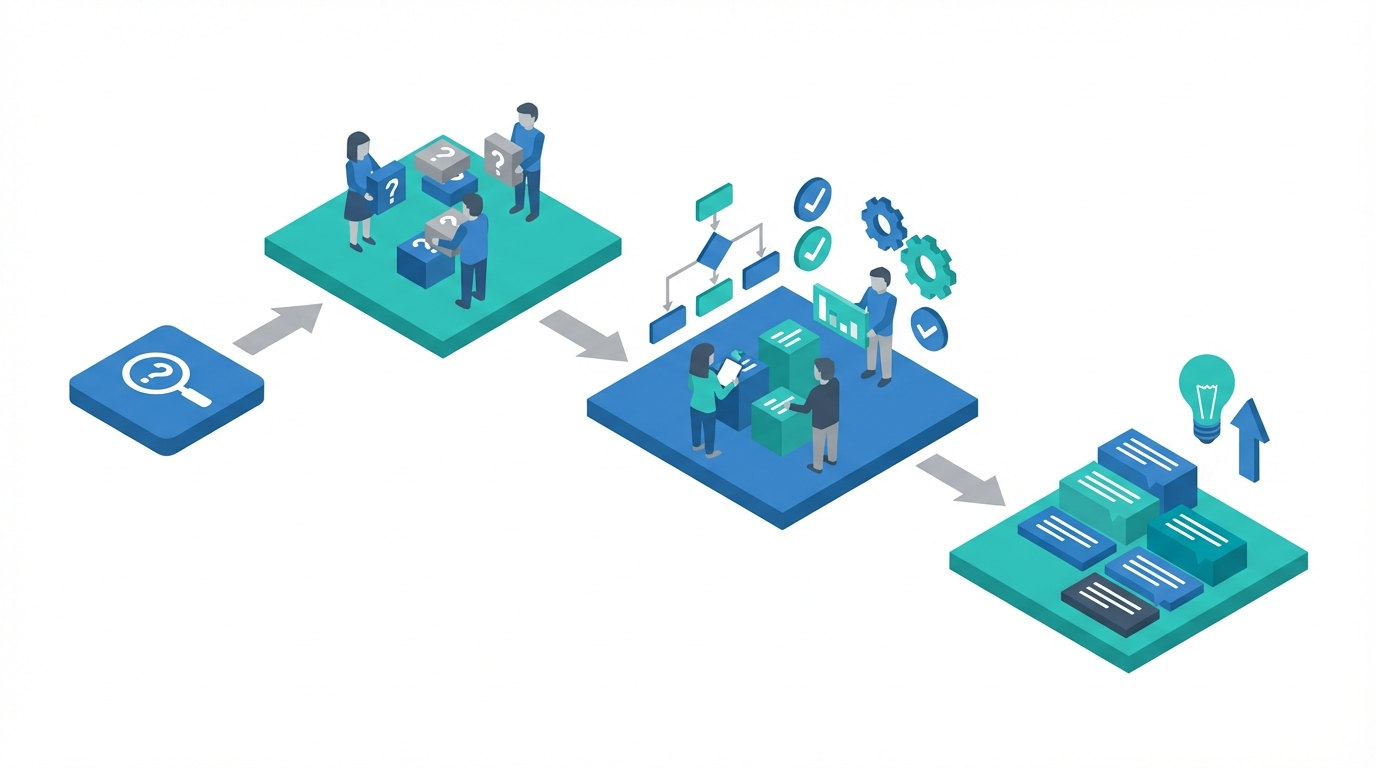
What to do this week
If you want a useful next step, do not start with a sitewide rewrite.
Start with ten queries that matter to revenue.
Search them in Google. Trigger the AI Overview where possible. Look at which brands and pages get cited. Then inspect your own related pages with one question in mind: if Google pulled a paragraph from this page, would that paragraph be clear, well-supported, and unmistakably associated with our expertise?
If the answer is no, that is the work.
Rewrite the first screen of your priority pages. Tighten your headings. Add sources where claims feel loose. Make authorship and entity context obvious. Expand FAQs where intent is fragmented. Then track whether citations improve.
That is not as flashy as promising to hack AI search. It is better.
Because the fight in 2026 is not just for rankings. It is for being understood correctly before the answer is written.
FAQ
Are Google AI Overviews becoming more accurate?
Yes. Based on the analysis covered by Search Engine Land, AI Overviews improved from 85% to 91% accuracy between October and February. The issue is that source grounding got worse even as answer accuracy improved.
What does ungrounded mean in AI search?
Ungrounded means the answer may be correct, but the cited source does not clearly support the claim. That makes verification harder and weakens trust in the citation layer.
Why does grounding matter for marketers?
Because marketers need more than a correct answer. They need visibility, attribution, and trust. If Google summarizes correctly but cites weak or mismatched sources, the best content may not get the business benefit.
How can I improve my chances of being cited correctly?
Focus on clear page intent, direct answers, strong heading structure, visible sources, expert attribution, and consistent entity signals across the site.
Is this just an SEO issue?
No. It affects SEO, content strategy, brand trust, analytics, and conversion paths. Any team that depends on search discovery should care.
What should agencies measure now?
Track citation presence across AI surfaces, source-page selection, engagement on cited pages, and changes in high-intent query coverage, not just rankings and clicks.