Zero-Click Search Is Everywhere Now: How to Get Found When Nobody Clicks
Zero-click search has expanded beyond Google to ChatGPT, Perplexity, Gemini, and Meta AI. Here is your zero-click search strategy for 2026 and how to stay visible when users never visit your site.
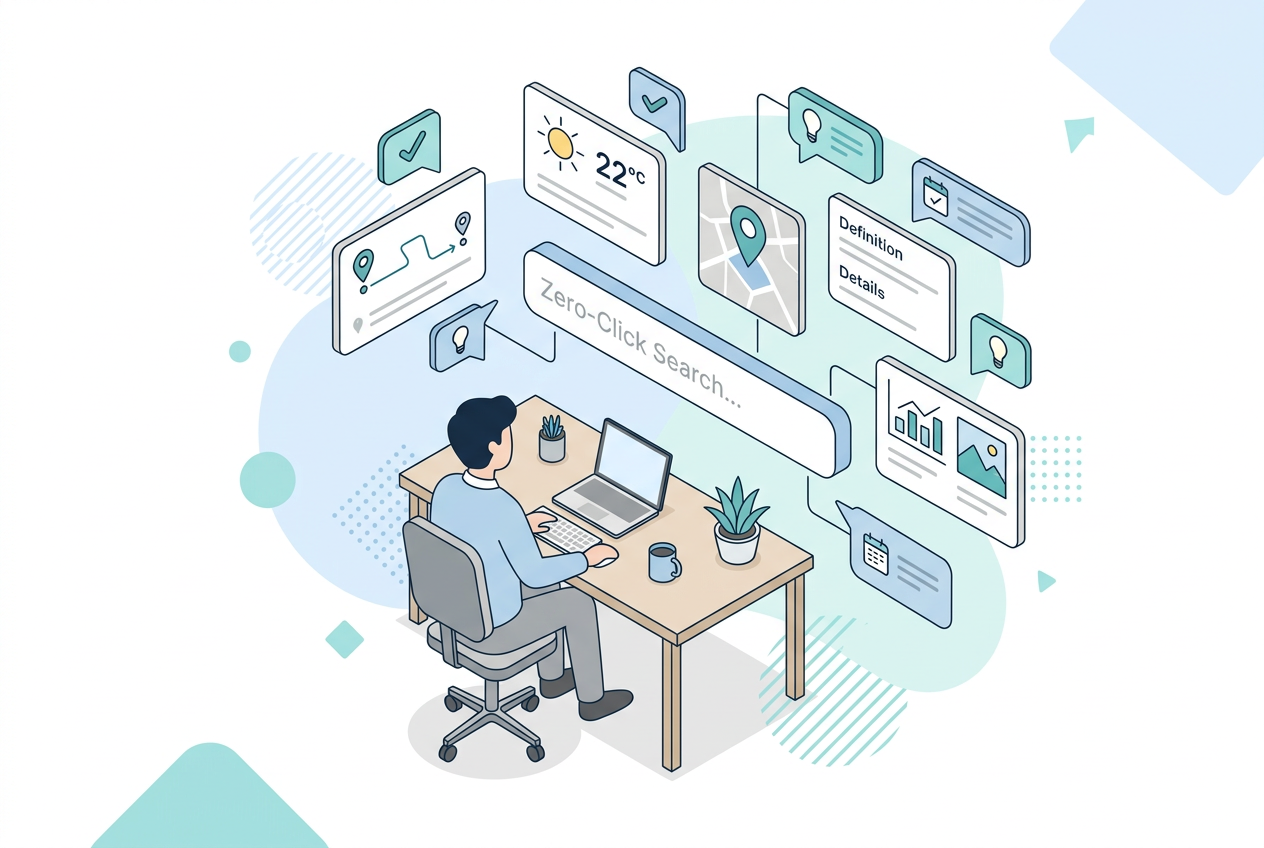
Search has fundamentally changed. Users type a question into Google, ChatGPT, Perplexity, Gemini, or Meta AI and they get a complete answer right there on the screen. No clicking required. No visiting your website. No reading your blog. This is zero-click search, and in 2026 it is not a niche problem for SEO nerds to argue about. It is the dominant reality across every major search surface. The question is no longer whether zero-click search affects your business. The question is what your zero-click search strategy for 2026 looks like.
Zero-Click Search Has Left Google Behind
Most marketers still think of zero-click search as a Google-only issue: featured snippets stealing traffic, knowledge panels absorbing brand queries. That was the 2022 version of this problem. Today, the zero-click landscape is dramatically wider.
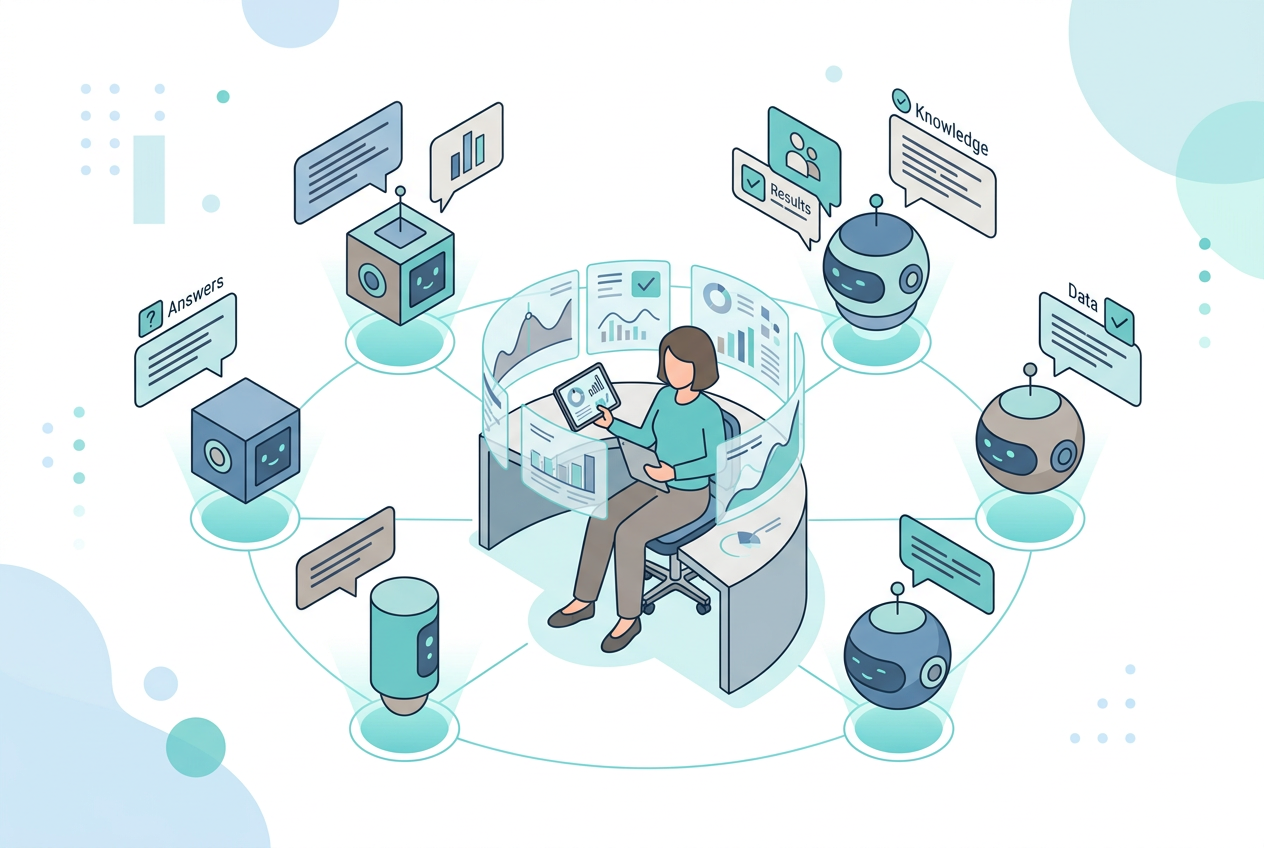
ChatGPT now handles hundreds of millions of searches per month, synthesizing answers from its training data and live web browsing without surfacing a traditional results page. Perplexity built its entire product around answering questions directly, citing sources in small footnotes that most users never click. Google’s AI Overviews now appear on over 50% of searches, absorbing the top of the page before any organic results appear. Bing AI, Gemini, and Meta AI do the same across their respective surfaces.
The result: a user can ask “what is the best SEO agency for small businesses” across six different platforms and never visit a single website. Your traffic numbers shrink while the demand for what you offer stays the same or grows. Visibility and traffic have been decoupled. That is the defining marketing challenge of 2026.
Why Traditional SEO Is Not Enough Anymore
SEO taught us to chase rankings because rankings drove clicks and clicks drove revenue. That logic still holds in some corners of search, but it is increasingly unreliable as the primary model. Ranking number one in Google does not protect you when an AI Overview fills the entire top of the page. Ranking number one in Perplexity does not exist in the traditional sense because Perplexity does not show ten blue links.
The platforms that now capture most search intent are designed to eliminate the click. They are optimized for user satisfaction, not for publisher traffic. This is not a bug that will be patched. It is a core design choice by every major AI company in the market.
Traditional SEO remains important, but it needs a layer on top of it: Answer Engine Optimization, or AEO. Our complete AEO guide covers the full framework, but the core idea is this: rather than optimizing to rank, you optimize to be cited. Rather than writing to get clicks, you write to become the source an AI system quotes when answering a question in your category.
The brands that win in zero-click search are the ones whose content is so clear, so authoritative, and so well-structured that AI systems pull from it naturally when constructing answers.
Your Zero-Click Search Strategy for 2026
A strong zero-click search strategy for 2026 has four components working together.
1. Structure your content for direct answers. Every page on your site should answer a specific question in the first two to three sentences. Use plain, declarative language. Lead with the answer, then support it with detail. AI systems are designed to extract concise, quotable answers, so make yours easy to find.
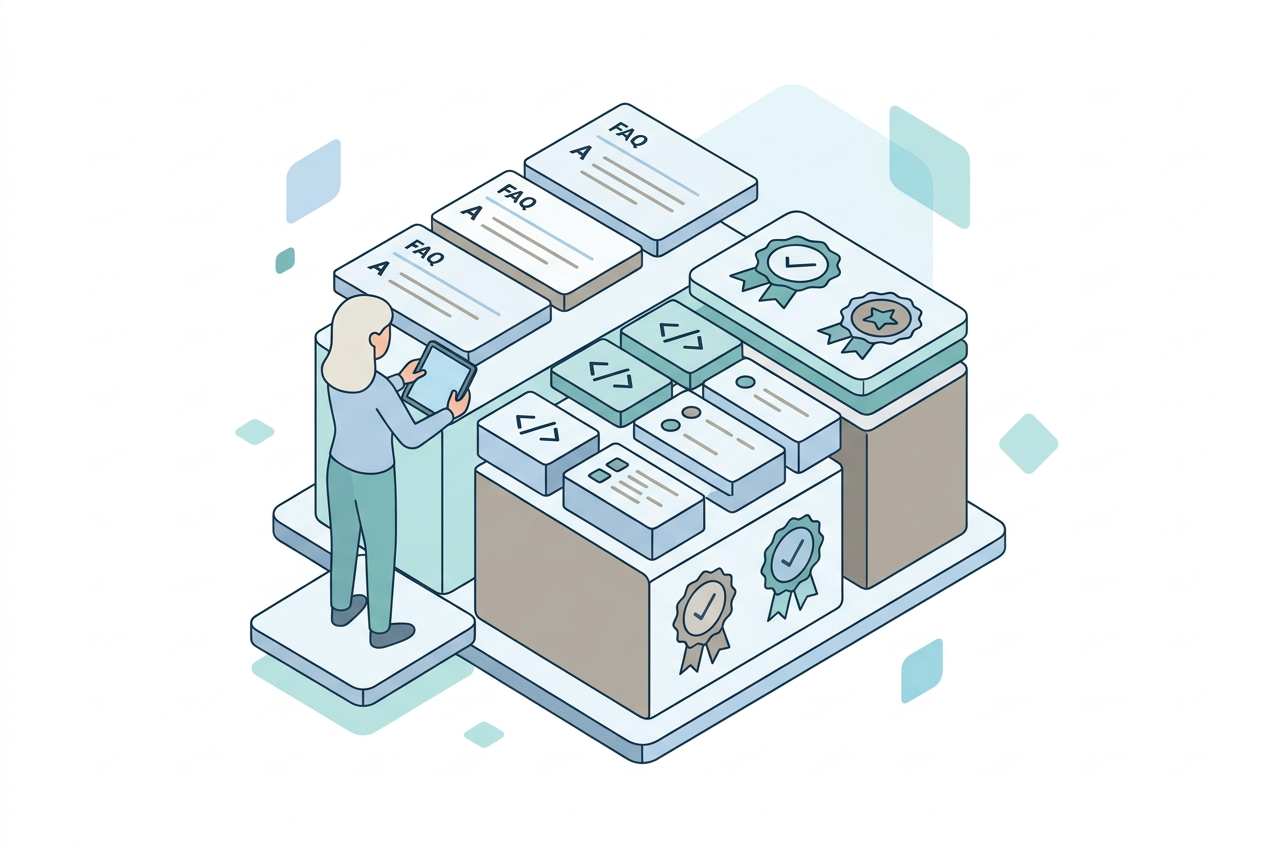
2. Use FAQ and schema markup consistently. FAQ schema, HowTo schema, and Article schema signal to crawlers and AI systems that your content is structured and answer-ready. This is basic technical hygiene that many sites still skip. It matters more now than it ever has.
3. Build topical authority, not just keyword coverage. AI systems trust sources that cover a topic comprehensively and consistently. Thin content spread across hundreds of topics loses to deep, well-researched content on a focused set of topics. Pick your lanes and own them. Our SEO services team can help you map the topical clusters that matter most for your business.
4. Measure citation visibility, not just traffic. Your analytics dashboard will show declining traffic as zero-click search grows. That number is increasingly misleading. Start tracking brand mention frequency across AI platforms, citation appearances in Perplexity, and how often your content appears in AI Overviews. These are the new visibility metrics that actually reflect your reach.
The Brands That Will Win Are Already Adapting
Zero-click search does not mean your content stops mattering. It means the standard for what earns attention has risen. Users who see your brand cited in a ChatGPT answer, a Perplexity summary, or a Gemini AI Overview are still building awareness and trust. Some will search for you directly. Some will convert later. The funnel is longer and less linear, but it is not broken.
The brands that will lose ground in 2026 are the ones still treating search as a traffic game and waiting for click-through rates to recover. They will not. The brands that win are the ones investing now in content quality, topical authority, schema implementation, and AEO alongside traditional SEO.
Zero-click search is not something that is happening to search. It is what search has become. Your strategy needs to reflect that.
Get Your Free AEO Audit
Not sure how visible your brand is across AI search platforms? We will audit your current content, identify gaps in your AEO coverage, and show you exactly where you are being cited, where you are being missed, and what to fix first.
Book your free AEO audit or consultation and see where your zero-click search strategy stands today.