Agentic AI in Marketing: The Next Evolution Beyond Chatbots
Agentic AI represents the next leap in marketing technology. Learn what agentic AI is, how it differs from chatbots, and why it matters for your business in 2026.
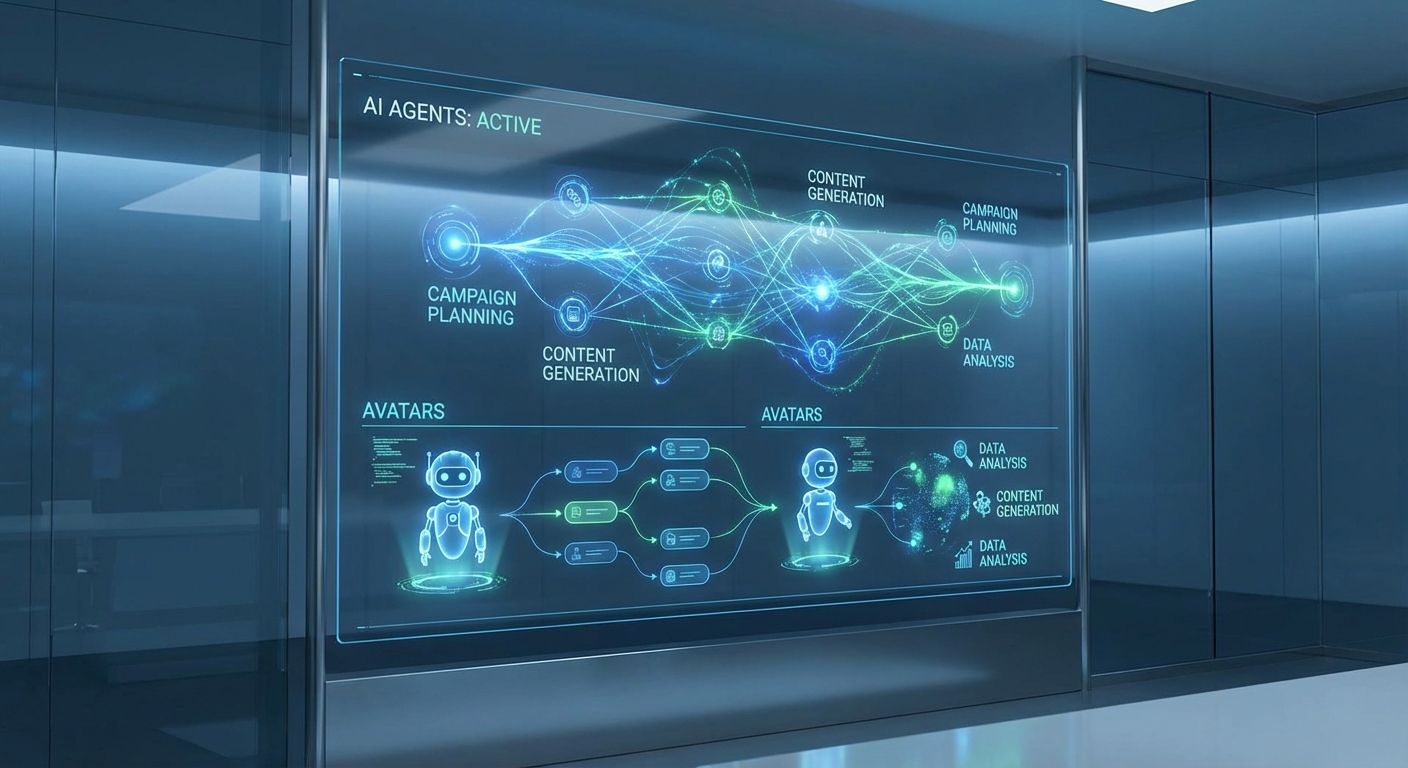
Key Takeaways
- Agentic AI systems can autonomously plan, reason, and take action toward complex goals with minimal human intervention
- Unlike chatbots that simply respond to prompts, agentic AI can execute entire workflows on your behalf
- Marketing teams can shift from data gathering to strategic thinking as AI handles routine tasks
- Understanding agentic AI is essential for staying competitive in 2026 and beyond
Beyond Chatbots: What Is Agentic AI
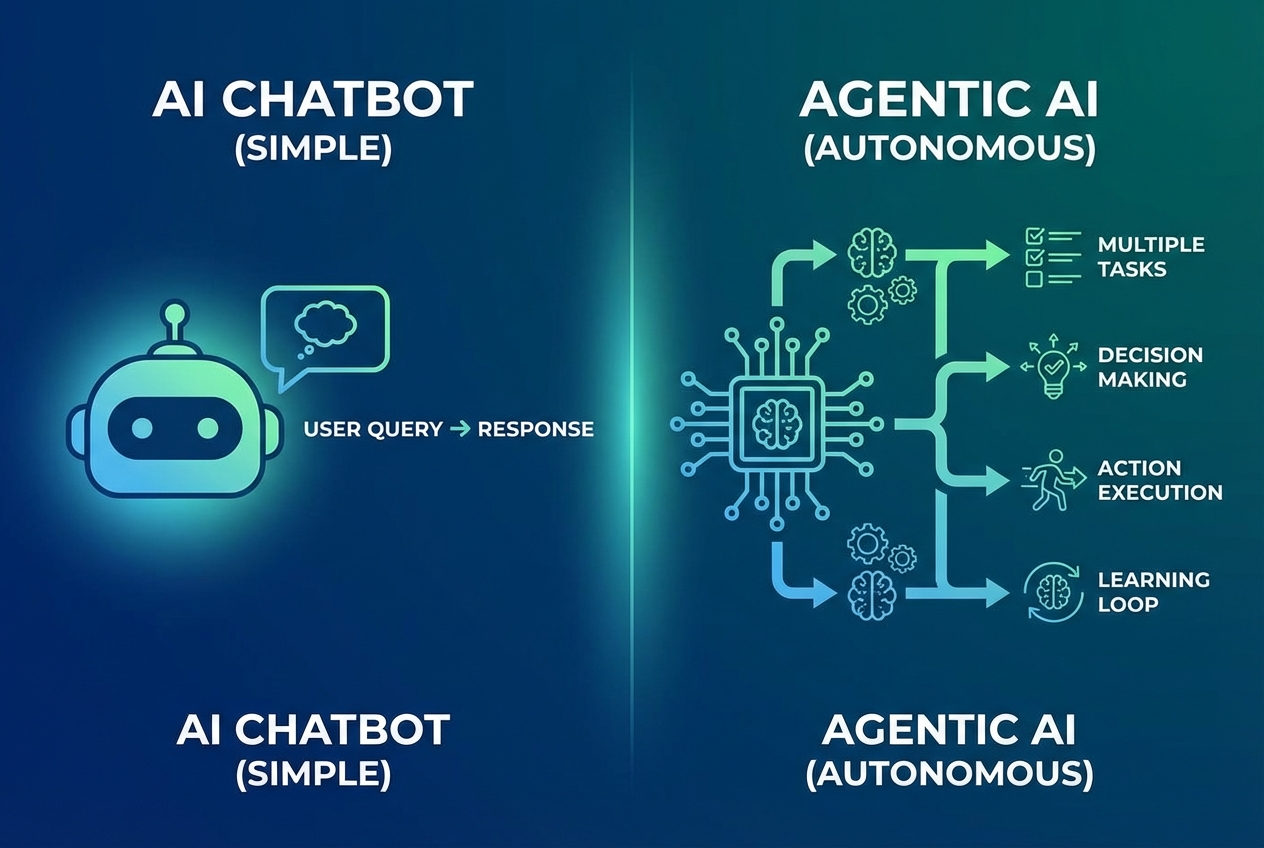
If you have used ChatGPT or Claude, you have experienced conversational AI. You type a prompt, the AI responds. It is useful, but it is reactive. You must guide every step.
Agentic AI represents a fundamental shift. These systems do not just respond. They plan, reason, and take action autonomously to achieve complex goals. Think of the difference between a calculator and a spreadsheet that automatically builds financial models. Both process information, but one requires constant input while the other delivers outcomes.
In marketing, this distinction matters enormously.
How Agentic AI Differs From Traditional AI
The core difference lies in autonomy and purpose. Traditional AI tools, including chatbots, operate within boundaries you define for each interaction. You provide context, ask questions, and receive answers. The AI does not remember past tasks or initiate new actions.
Agentic AI systems maintain context across longer timeframes. They break down complex objectives into steps, execute those steps, evaluate results, and adjust approach as needed. They can monitor competitors continuously, synthesize findings, and flag anomalies without being asked repeatedly.
Consider a practical example. A traditional AI might help you write email subject lines when prompted. An agentic AI system could monitor your open rates, test variations automatically, learn which approaches work best for your audience, and continuously optimize your subject lines without requiring your input for every iteration.
Why Agentic AI Matters for Marketing in 2026
The marketing landscape has grown impossibly complex. Teams are expected to monitor more channels, analyze more data, and respond more quickly than ever before. Human capacity has not kept pace with these demands.
Agentic AI fills this gap by handling the operational complexity that used to consume junior team members. Rather than spending hours on manual research, competitive monitoring, or repetitive optimization tasks, marketing teams can focus on strategy and creativity.
The shift is already happening. Adobe research from early 2026 found that organizations leveraging agentic AI are moving teams from data gatherers to strategists. The AI handles the heavy lifting of information collection and initial analysis. Humans provide the strategic direction and creative insight that only they can deliver.
Practical Applications of Agentic AI in Marketing
Where can agentic AI deliver immediate value for your business? Several applications stand out as particularly impactful.
Competitive Intelligence is one of the most valuable use cases. Agentic systems can continuously monitor competitor websites, pricing, content, and marketing messages. Rather than occasional manual audits, you receive ongoing intelligence about market shifts and competitive moves. This represents a significant advancement over traditional automation in marketing.
Content Optimization becomes continuous rather than periodic. Agentic AI can test headlines, images, and calls to action across your content, learning from performance data and adjusting automatically. This level of optimization used to require dedicated tools and significant manual effort. For more on using AI to enhance your content strategy, see our guide to AI-powered content prompt generation.
Customer Response Automation evolves beyond simple chatbots. Agentic systems can handle complex support inquiries, personalize responses based on customer history, and escalate appropriately when human intervention is needed. The result is faster response times and higher customer satisfaction. This builds on the foundation of AI chatbots for small businesses while adding autonomous decision-making capabilities.
Campaign Management benefits from AI that can adjust bidding, targeting, and creative based on real-time performance data. Rather than setting parameters and checking in periodically, agentic AI manages campaigns dynamically to maximize results.

Getting Started With Agentic AI
Implementing agentic AI does not require rebuilding your entire marketing stack. Start with one high-impact area where automation can deliver immediate value.
Identify repetitive tasks that consume significant team time but do not require creative or strategic thinking. These are ideal candidates for agentic automation. Common starting points include competitive monitoring, content performance analysis, and routine customer communications. Our list of free AI marketing tools can help you get started with AI-powered marketing.
Invest time in defining clear objectives and success metrics. Agentic AI excels when it has unambiguous goals and measurable outcomes. Vague directives lead to unpredictable results.
Establish appropriate guardrails. Agentic systems are powerful, but they need boundaries. Define what decisions the AI can make autonomously and what requires human approval. This ensures you capture efficiency gains while maintaining appropriate oversight.
The Future Is Agentic
We are entering a new phase of AI capability in marketing. The conversational AI revolution of the past two years was just the beginning. Agentic AI represents the next leap, transforming AI from a helpful tool into an active team member.

Businesses that understand this shift and adapt their processes accordingly will have a significant advantage. Those that wait risk falling behind as competitors leverage autonomous systems to move faster, optimize more aggressively, and deliver better customer experiences.
The question is no longer whether agentic AI will change marketing. It is how quickly you will embrace the change. As AI systems become more autonomous, the way customers find and trust businesses is shifting. Understanding these changes is essential for staying visible in an AI-dominated search landscape.
Frequently Asked Questions
Is agentic AI the same as automation?
No. Traditional automation follows pre-programmed rules and repeat the same process identically each time. Agentic AI can reason, adapt, and make decisions based on context and outcomes. It learns and improves rather than simply executing.
Do I need technical expertise to use agentic AI?
You do not need to be a technical expert, but you do need to understand how to define clear objectives and interpret AI outputs. Many agentic AI tools are designed for marketing professionals rather than engineers.
Will agentic AI replace marketing jobs?
Agentic AI will replace specific tasks, particularly data gathering and routine optimization. However, it creates opportunity for marketers to focus on strategy, creativity, and human relationship building. The most successful marketers will learn to collaborate effectively with agentic systems.
How soon should I implement agentic AI?
If you are not already experimenting with agentic AI, the time to start is now. Early adopters are building expertise and processes that will be difficult for latecomers to replicate. Start small, learn quickly, and expand as you gain confidence.