Generic Ecommerce Campaigns Are Getting More Expensive
Ecommerce CAC is rising, shoppers ignore generic messages, and weak segmentation wastes spend. Here is why sharper targeting matters more for growth in 2026.
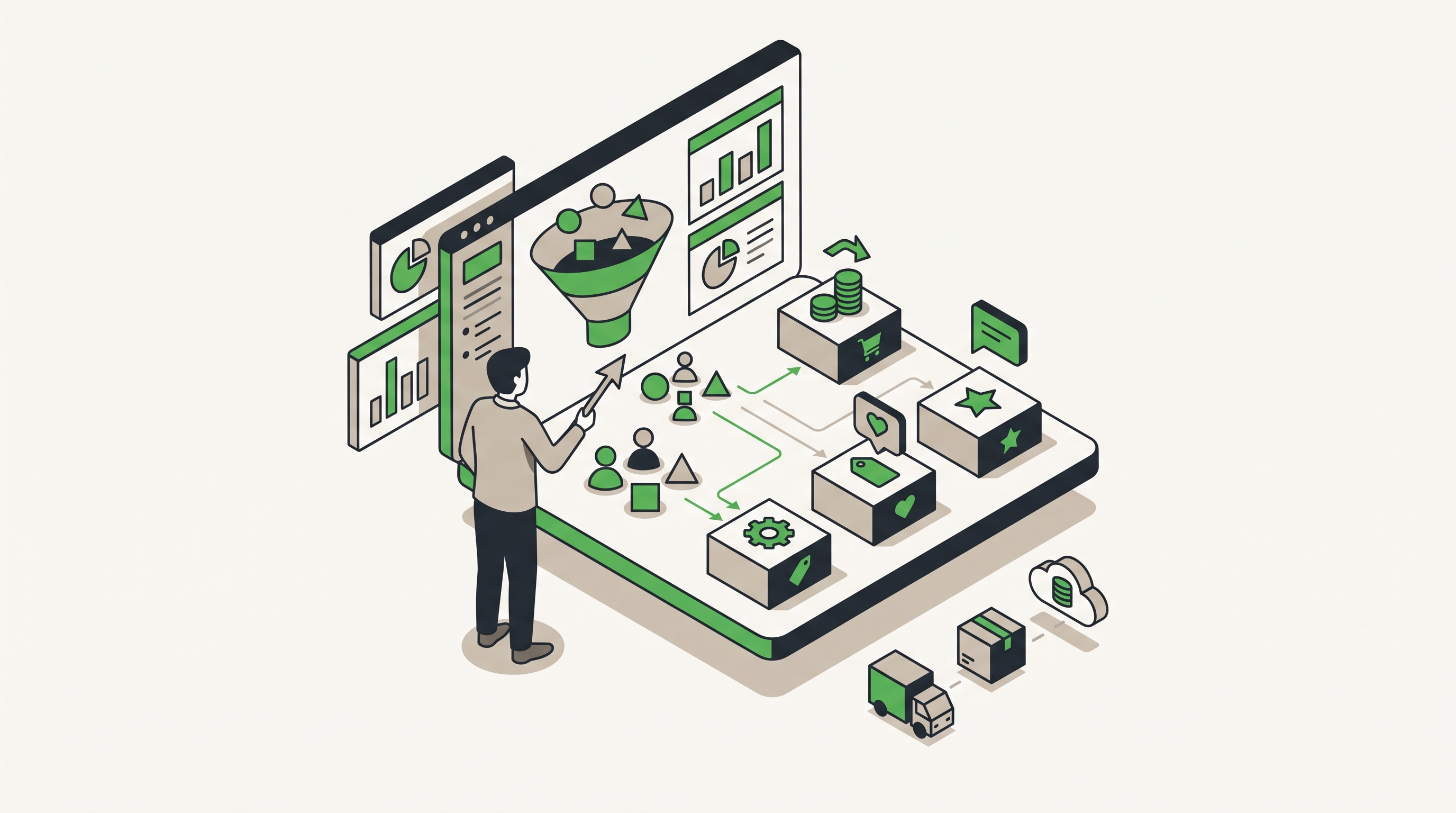
Generic ecommerce campaigns are getting more expensive, and this month’s retail data keeps pointing to the same problem: too many brands are still sending broad messages into a market that is getting less patient and more fragmented.
Shopify’s recent ecommerce reporting guide cites Triple Whale data showing paid media customer acquisition cost is up 8.64% in 2026 versus 2024. That is the first part of the squeeze. The second part is what shoppers do when the message feels interchangeable.
In Shopify’s ecommerce customer segmentation guide, published on August 19, 2026, the company cites Attentive data showing 64% of customers think brand messages are too generic, and 81% ignore them. If you are paying more to reach people who are increasingly willing to tune you out, the old “send one campaign to everyone” habit gets expensive fast.
More Spend Does Not Fix Relevance
A lot of ecommerce teams still respond to slower growth by pushing harder on acquisition. More prospecting. More retargeting. More promos. More frequency.
That works for a while, right up until it does not.
When a store treats all shoppers like one audience, the campaign starts flattening its own economics. New visitors get the same offer as repeat customers. High-intent shoppers get the same creative as casual browsers. Product categories with very different buying behavior all get shoved into one message. The ad account might still spend efficiently enough to look alive, but the customer experience gets dull.
That is why stronger direct-to-consumer marketing is usually less about doing more and more about sorting demand more intelligently.
Segmentation Is Not The Same As Creepy Personalization
There is a useful warning inside the same trend.
Shopify’s ecommerce UX guide, published on August 21, 2026, says 64% of shoppers want marketing to feel more personalized. But it also cites Gartner survey data showing 53% of customers had negative experiences with personalization, and those customers were 44% less likely to purchase again.
That matters because some brands hear “personalization” and immediately start overcomplicating the playbook. They chase gimmicks instead of relevance.
Better segmentation is simpler than that. It usually starts with a few practical splits:
- first-time visitors versus returning customers
- category-specific shoppers versus general browsers
- discount-motivated buyers versus full-price loyalists
- recent purchasers versus lapsed customers
You do not need a giant automation maze to make better decisions. You need cleaner audience logic, better product grouping, and offers that match the customer’s actual stage.
The Real Cost Shows Up After The Click
Weak segmentation is not only a media problem. It is a store problem.
Shopify’s ecommerce PPC guide, also published on August 19, 2026, cites Salsify research showing 56% of shoppers consult at least four channels before making a big-ticket purchase, while 52% use two or three channels even for everyday essentials. That means your ad is rarely introducing a blank-slate buyer. It is reaching someone who already has context, comparisons, and expectations.
If that shopper clicks into a generic category page, a broad homepage hero, or a flat promo that ignores what brought them there, the campaign loses force. The click was not the finish line. It was the handoff.
That is why ecommerce brands often get more from tightening landing paths, merchandising, and product-page logic than from simply stretching budget. It is also why Shopify development work matters commercially, not just technically. Site structure decides whether the traffic you paid for actually feels understood.
The Better Question For Q4 Planning
Heading into fall, the wrong question is, “How much more budget should we put into paid social or Shopping?”
The better question is, “Where are we still being too generic?”
Look at your current campaigns and ask:
- Are returning customers getting a different message from first-time visitors?
- Are high-margin categories getting their own landing experience?
- Are your best audiences seeing distinct creative, or the same broad promo as everyone else?
- Are you measuring repeat purchase and retention alongside acquisition cost?
If the answer to those questions is mostly no, the fix is not another blanket campaign. It is sharper segmentation and a store experience that follows through on it.
Paid acquisition is getting less forgiving. The brands that keep growing will not just be louder. They will be more relevant.