The Impact of AI on Marketing Decision-Making: Strategies for Success
See how marketing leaders use AI to sharpen budget allocation, forecasting, paid media, and pipeline decisions without sacrificing human judgment.
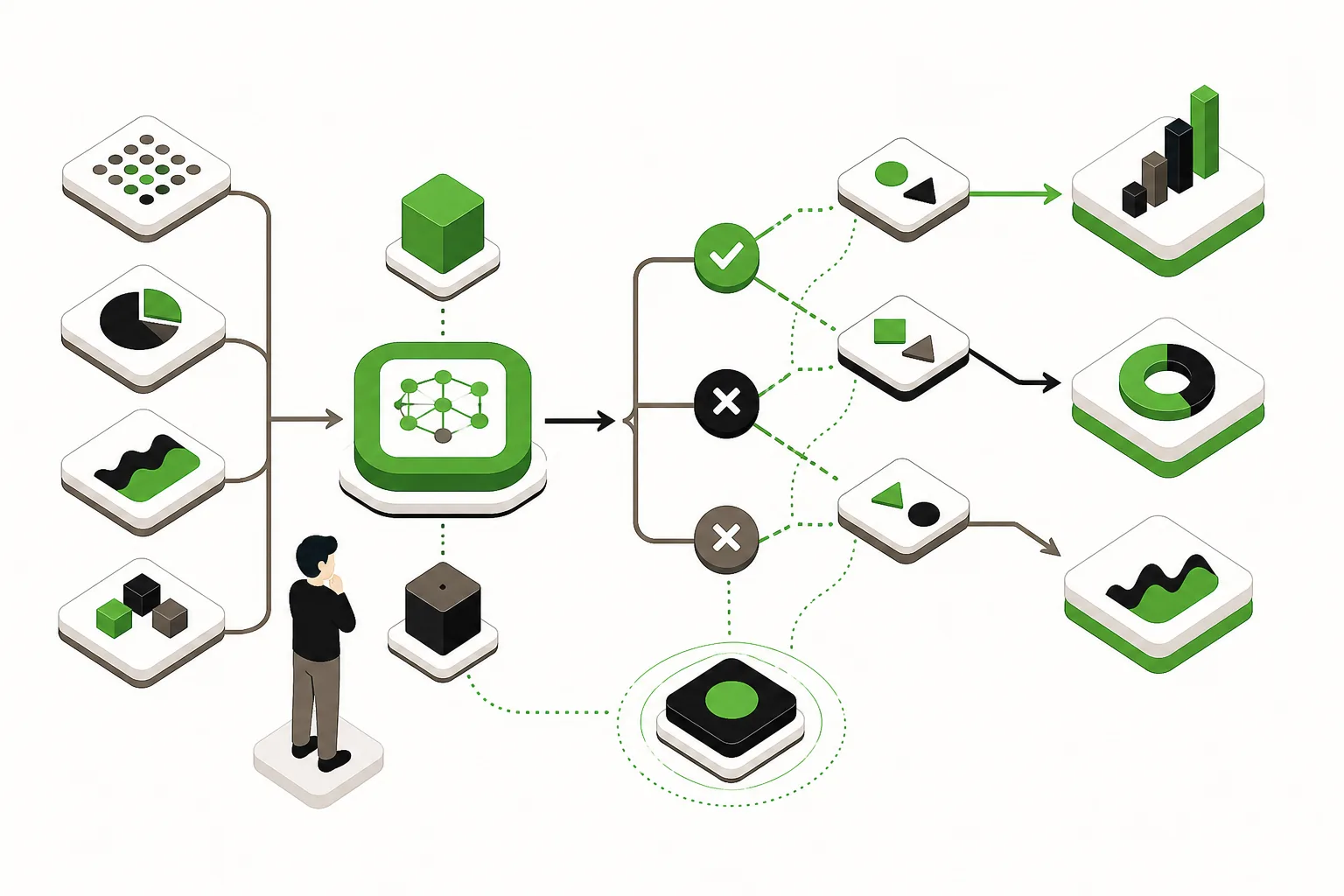
Marketing teams rarely fail from a shortage of dashboards. Most stall because weekly budget calls, audience shifts, and creative kills happen days after spend has already leaked. Strong operators are closing that gap by using artificial intelligence to compress analysis time, spot pattern changes earlier, and cut guesswork out of routine calls.
That shift raises a practical question for agency owners, in-house leads, healthcare groups, and B2B brands: how will ai impact marketing in a way that lifts qualified pipeline instead of adding another login? Teams that treat models as structured decision support see cleaner unit economics. Teams that treat them as an autopilot shortcut usually scale noise.
Where AI Improves Marketing Decisions First
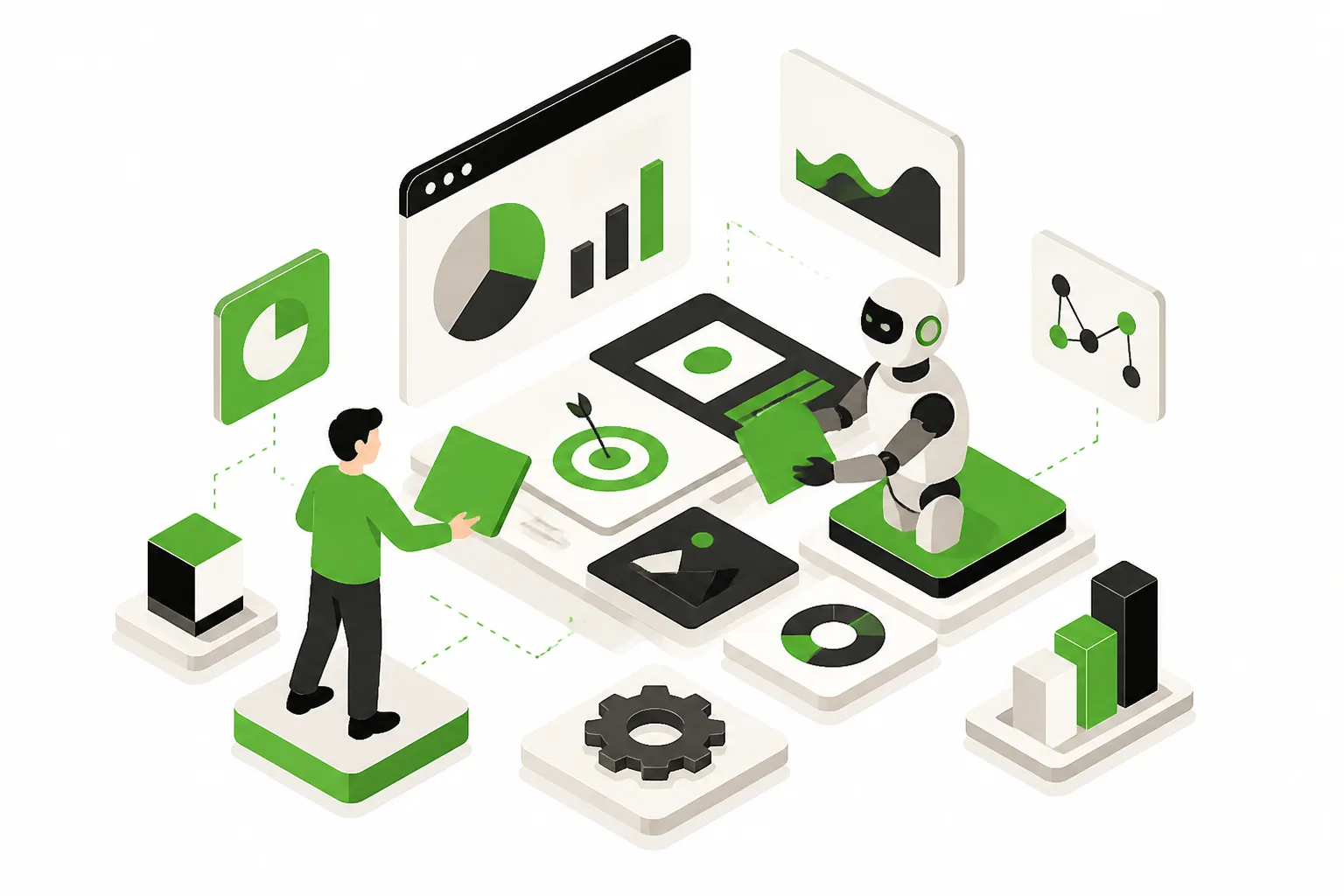
Most organizations do not need software to invent a brand strategy from scratch.
What moves revenue fastest is sharpening the calls a marketing lead already makes every Monday morning: which ad sets deserve incremental budget, which inbound segments actually close in the CRM, and which landing page angles are fatiguing before cost per acquisition spikes. Tightening those weekly loops compounds far faster than chasing moonshot automation.
Large, messy data volume is where machine pattern-matching earns its keep. Paid search queries, Meta creative variants, call-tracking transcripts, site engagement, and sales-stage progression can be evaluated side by side in minutes rather than waiting for an analyst to stitch spreadsheets together at month-end.
Faster Pattern Recognition Across Channels
Subtle performance decay almost always shows up in micro-signals before top-line CPA breaks. A paid search campaign might hold steady on click-through rate and form fills while call duration and qualified booking rates quietly drop by thirty percent over ten days.
Automated anomaly detection catches that split early by cross-referencing ad engagement, landing page scroll behavior, and CRM disposition codes in real time. Instead of discovering wasted spend during a monthly business review, a media buyer gets alerted while there is still budget left in the quarter to reallocate.
More Reliable Spend And Pipeline Forecasting
Budget forecasting has always blended historical math with operator instinct.
Statistical models strengthen the math side by weighing historical conversion lag, seasonal demand curves, auction competition, and sales cycle velocity at the same time. When leadership asks what an extra twenty thousand dollars in paid search or local service ads is likely to return next month, marketing can present probability ranges grounded in past cohort behavior rather than flat linear projections.
Lead Scoring And Sales Handoff Triage
Speed to lead matters, yet routing every form fill to senior reps wastes sales capacity. Scoring models trained on closed-won deals, intake call outcomes, firmographics, and high-intent page sequences help teams separate urgent buyers from early researchers within seconds of submission.
Healthcare admissions teams and B2B sales desks benefit immediately from that clarity. High-intent inquiries get immediate human outreach, while early-stage prospects enter educational nurture tracks matched to the exact problem they researched.
What AI Should Not Decide On Its Own
Automation has clear boundaries.
Brand positioning, category differentiation, compliance-sensitive claims, and major budget reallocations still require accountable human judgment. Nowhere is that clearer than in behavioral health, medical practices, legal services, and high-trust B2B advisory firms, where a technically high-converting hook can violate clinical ethics, regulatory rules, or buyer trust in a single afternoon.
Models excel at finding statistical correlations inside historical datasets. Context, reputation risk, margin sensitivity, and unspoken market shifts live outside those tables, which means treating raw model recommendations as gospel makes leadership weaker rather than smarter.
- Use machine intelligence for anomaly detection, cohort analysis, query clustering, and test prioritization.
- Keep human authority over final budget shifts, positioning angles, clinical or legal accuracy, and brand voice.
- Assign one named owner to every automated workflow so no metric drifts unmonitored.
Strategies That Make AI Useful Instead Of Distracting
High-performing marketing departments rarely win by stacking ten overlapping subscriptions. Disciplined teams win by plugging one model workflow into an operating rhythm that already has clear inputs, thresholds, and accountability.
Start With One Repeatable Decision Category
Rolling out new tooling across paid media, SEO, email, and creative production in the same week guarantees sloppy execution. Pick one bottleneck where faster or cleaner calls will show up directly in qualified leads or cost per acquisition within thirty days, such as search term pruning, creative fatigue tracking, or content prioritization.
Campaign planning is often the cleanest starting line. Grounding every prompt and analysis inside a structured campaign brief forces outputs to stay anchored to audience economics, offer rules, target margins, and conversion definitions rather than drifting into generic activity.
Feed Models Real Commercial Context
Vague inputs guarantee generic advice.
Before asking a system to evaluate campaign options or score content topics, supply the exact commercial guardrails a senior strategist would demand: gross margin by service line, average sales cycle length, disqualifying lead traits, geographic service radii, and common sales objections pulled from real calls. Richer operational context immediately filters out vanity recommendations that look good on traffic charts while producing zero closed revenue.
Build Closed-Loop Review Habits
Every model-assisted recommendation needs a scheduled post-mortem against actual downstream outcomes. Comparing suggested bid shifts, audience exclusions, or content angles against SQL rate, show rate, and closed revenue exposes where the model is sharp and where its assumptions need recalibration.
How AI Changes Channel-Level Decision-Making
Channel mechanics dictate how decision support should be configured. Paid auctions, organic search, lifecycle email, and conversion rate optimization each run on different feedback speeds, data density, and creative constraints.
Paid Media And Auction Management
Paid search and paid social teams see the fastest payback when machine assistance focuses on audience waste, creative fatigue, and query-level intent mismatches. Rather than handing full budget control to black-box platform defaults that happily buy cheap branded clicks, smart buyers pair platform bidding with independent margin and lead-quality guardrails. For a deeper operational breakdown, Emarketed’s paid media optimization guide walks through setting those controls step by step.
Organic Search And Content Prioritization
Search strategists gain serious speed by clustering thousands of Search Console queries, spotting cannibalization across URLs, and mapping commercial intent gaps against competitor pages. Drafting authoritative, differentiated articles that earn buyer trust still requires subject-matter experience, real client examples, and sharp human editing.
Software can map the territory in ten minutes. Earned credibility still comes from practitioners who know the work firsthand.
Email, SMS, And Lifecycle Retention
Lifecycle marketers get strong lift from predictive send-time modeling, churn-risk scoring, and behavioral segment triggers based on product or content engagement. Emotional nuance in sensitive follow-ups, renewal conversations, or healthcare family outreach still belongs in human hands where empathy and restraint matter more than click velocity.
Landing Pages And Conversion Rate Testing
Conversion specialists can synthesize session recordings, form drop-off fields, call-center questions, and review-site language to rank test hypotheses by likely revenue impact. Instead of debating button colors in committee meetings, teams launch tighter experiments around proof placement, pricing clarity, and intake friction.
A Practical Thirty-Day Rollout Framework
Turning decision support into a durable habit takes structure, not a six-month committee.
During week one, audit where your team spends hours compiling recurring reports or debating budget shifts without clean attribution between ad platforms and CRM revenue. Pick one single workflow with clear baseline numbers, document how calls are made today, and define the exact metric that proves improvement.
Weeks two and three belong to side-by-side shadow testing. Let your strategist or media lead run the model-assisted analysis alongside your normal weekly review, logging where the system catches wasted spend, surfaces high-intent segments earlier, or misses real-world context that a human operator knows immediately.
By week four, formalize the prompt context, data exports, and human sign-off rules into a one-page SOP before touching a second channel. Teams that earn one clean operational win first build real internal buy-in without breaking live campaigns.
The Risks Marketers Need To Manage
Three failure modes show up repeatedly across agencies and in-house teams. First, operators trust fluent summaries without auditing whether the underlying tracking pixels, UTM parameters, or CRM stages are actually clean. Second, automated bidding and content workflows optimize toward cheap top-of-funnel volume while sales teams drown in unqualified inquiries. Third, leadership buys disconnected point tools that fracture data across five dashboards.
Homogenization is an equally real commercial threat.
When five competitors in the same city or vertical feed identical prompts into the same foundational models, their ads, landing pages, and articles converge into interchangeable noise. Distinct market positioning, proprietary data, and sharp operator point of view become more valuable, not less, when baseline production gets cheap.
One operating principle prevents most expensive mistakes: use software to sharpen human clarity, never to excuse lazy oversight.
FAQ
Does AI Make Marketing Decisions More Accurate?
Yes, provided the underlying tracking and CRM outcomes are accurate and the objective is tightly defined. Garbage conversion data or vague traffic goals will simply produce confident recommendations pointed in the wrong direction.
Will AI Replace Senior Marketing Managers?
No. Routine data pulls and first-pass pattern spotting shrink, which shifts a manager’s week toward commercial judgment, creative direction, cross-channel trade-offs, and revenue accountability.
What Is The Best First Use Case For A Growing Team?
Choose a high-frequency decision loop tied directly to measurable pipeline, such as weekly paid search waste audits, CRM lead-quality scoring, or Search Console striking-distance prioritization. Fast feedback loops make it obvious within weeks whether decision quality improved.
How Do Small Budgets Benefit When Data Volume Is Limited?
Smaller accounts may lack the conversion volume for complex predictive modeling, yet they still gain major leverage from qualitative synthesis. Analyzing fifty sales call transcripts, competitor positioning gaps, and search query intent helps lean teams focus limited dollars on their highest-margin offers.
How Should Leadership Measure Whether AI Is Actually Helping?
Judge the rollout on downstream economics rather than hours saved or content volume produced. Track cost per qualified opportunity, lead-to-close rate, budget waste reduction, and revenue velocity ninety days before and after adoption.
What Smart Teams Do Next
Better marketing performance comes from disciplined decision systems, not tool hoarding. Audit where your team still relies on lagging spreadsheets, gut-only budget splits, or disconnected CRM reporting, then lock in one weekly workflow to upgrade this month. If you want an experienced partner to pressure-test your attribution, search visibility, and channel economics, explore how our team works on Emarketed’s services page.