Local SEO In 2026: What Still Moves Rankings
Local SEO still drives service-business rankings in 2026, but only when your profile, reviews, service pages, and trust signals line up across search and AI.
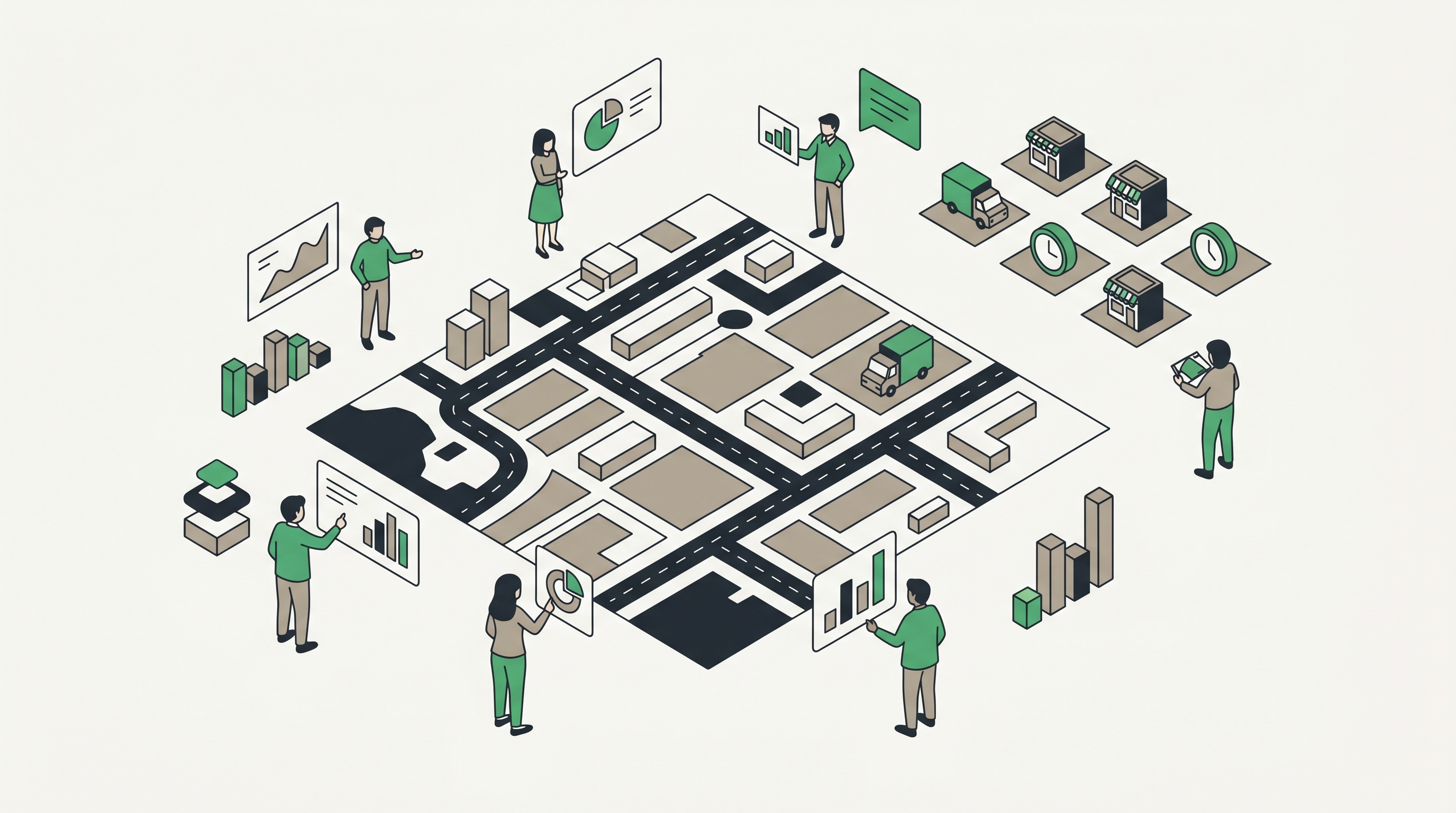
Local SEO still moves rankings for service businesses in 2026. What changed is the margin for sloppiness. If your Google Business Profile is thin, your reviews are stale, your service areas are fuzzy, and your site does not back up what your profile claims, you lose visibility in both traditional local search and AI-driven recommendations.
That is the practical shift. AI did not replace local SEO. It raised the standard for it.
Google still says local results are mainly shaped by relevance, distance, and prominence in Search and Maps, and it specifically ties prominence to signals like links and reviews. At the same time, Google has spent May 2026 pushing AI search features that surface more original content and trusted sources. For local service businesses, that means the old playbook still matters, but weak execution gets exposed faster.
If you run a law firm, med spa, roofing company, treatment center, HVAC brand, or any other service business that depends on calls and qualified leads, here is what still moves local rankings in 2026 and what deserves your attention first.
Google Business Profile Quality Still Sets The Floor
The first local SEO truth that survived every AI panic cycle is simple: your Google Business Profile still does a huge amount of the ranking work.
Google’s own local ranking guidance is still the clearest place to start. It says complete and accurate business information improves your odds of showing up, and it names relevance, distance, and prominence as the core ranking factors. That is not a minor detail. It is Google telling service businesses that local visibility still depends on how clearly your profile explains what you do, where you operate, and how well-known you are.
In practice, that means these fields are not admin work. They are ranking inputs:
- primary category
- secondary categories
- service list
- business description
- hours, including holiday hours
- phone number
- website URL
- appointment or booking links
- photos that actually reflect the business
Category choice matters more than many businesses want to admit. Google’s category documentation says the categories you select affect your local ranking. If your primary category is too broad, or worse, wrong, you force Google to guess. Service businesses usually lose when Google has to guess.
The same applies to services. Google says that when local customers search for a service you offer, that service can be highlighted directly on your profile. If you never filled out those services, you left easy relevance signals on the table.
For teams that have treated GBP as a one-time setup task, this is often the fastest place to recover visibility. A complete, current profile does not guarantee rankings, but an incomplete one drags everything else down.

Reviews Are Still A Ranking Signal And Now An AI Trust Signal Too
Reviews were already important. In 2026, they pull double duty.
Google’s help documentation says more reviews and more positive ratings can help your business’s local ranking. BrightLocal’s Local Consumer Review Survey 2026 shows why this still matters at the buyer level too: 85% of consumers say positive reviews make them more likely to use a business, 77% say negative reviews make them less likely, and 93% have made a purchase after reading reviews.
That is not just reputation management. That is lead flow.
The more interesting change is how reviews now affect AI discovery. BrightLocal reported on March 10, 2026 that 45% of consumers use AI tools for local business recommendations, up sharply from the prior year. In the same report, 42% of consumers said they trust AI tools as much as reviews for local recommendations, and among AI users that trust level was even higher.
This is where local marketers get lazy. They hear “AI search” and assume they need a shiny new content layer. Sometimes they just need more current proof that real customers trust the business.
Review velocity, average rating, response quality, and cross-platform consistency all shape the public trust footprint that humans and machines see. If your last five reviews are old, unanswered, or mention problems you never addressed publicly, that story follows you. If your latest reviews are specific, recent, and tied to real service outcomes, that story helps too.
Reply quality matters more than most templates suggest. BrightLocal found that generic or templated responses put off half of consumers. Businesses that paste the same canned paragraph under every review are signaling that nobody is really paying attention.
A better approach is simple:
- ask for reviews close to the moment of satisfaction
- request detail, not just stars
- respond to positive and negative reviews like a human
- mention the actual service when appropriate
- route operational issues back to the team so the same complaint does not keep appearing
For healthcare and high-trust verticals, reviews carry even more weight because the buyer’s risk is higher. At Emarketed, we have seen how much durable trust signals matter in healthcare. Seasons in Malibu holds 4,200+ keyword rankings and 814,230 social impressions in a recent month, a full-service result that covers SEO, AEO, paid search, social, and web.
Service Area Clarity And Local Landing Pages Still Separate Winners From The Pack
Most service businesses do not lose local rankings because they lack content. They lose because their service footprint is muddy.
Google’s documentation for service-area and hybrid businesses is more specific than many agencies realize. You cannot set your service area as a radius anymore. Google says you should define it by cities, postal codes, or other real areas, stay specific, and keep the overall boundary within about two hours of driving time from your base. It also lets you set up to 20 service areas.
That creates a straightforward rule for 2026 local SEO: your service area settings, your page structure, and your on-site copy should tell the same geographic story.
If your GBP says you serve Pasadena, Glendale, Burbank, and Santa Monica, but your site talks vaguely about serving “all of Southern California,” you are not helping Google or AI systems connect your business to specific local intent.
The businesses that still win here usually do three things well:
They Build City And Service Pages Only Where They Have Real Proof
Thin city-page spam is still a bad bet. Useful local landing pages still work.
The difference is substance. A strong page for “roof repair in Pasadena” explains the actual service, shows photos or proof from the region, includes relevant FAQs, and links to related services. A weak page just swaps city names in boilerplate copy.
They Match The Profile To The Website
Your service list, address setup, phone number, categories, and business description should line up with what the site says. Google has a separate business details guide that recommends claiming your Business Profile, verifying your website in Search Console, and adding structured data so Google can better understand your official presence.
That matters because local SEO is not only about Maps. It is about giving Google one coherent identity layer across the profile, the site, and the broader web.
They Stay Honest About Coverage
A plumber based in Orange County does not help itself by pretending to serve every city in California. A treatment center does not gain trust by publishing location pages for markets it does not actually support. Local visibility improves when relevance is believable.

Structured Data And Internal Links Still Help Search Understand The Business
This is the part many local businesses postpone because it feels technical. It still matters.
Google’s LocalBusiness structured data documentation makes the value pretty plain: structured data helps Google understand business details such as hours, departments, and other key information. It is not a cheat code, and it does not replace content or reviews, but it reduces ambiguity.
For service businesses, the technical layer that still matters most is boring in the best possible way:
- LocalBusiness or relevant subtype markup
- clear NAP and contact details
- crawlable service and location links
- clean titles and headings
- canonical URLs that do not fight each other
- pages that load important information in visible text
Internal links are part of this, not an afterthought. Google’s link best practices specifically say better internal anchor text helps people and Google understand your site more easily, and that every page you care about should have a link from at least one other page on your site.
That matters more for local businesses than many teams realize. If your city pages, service pages, financing page, testimonials, and core contact path are loosely connected, you make it harder for Google to understand which pages reinforce each other. You also make it harder for AI systems to pull a clean answer path from your site.
This is why a good local SEO program in 2026 still includes site architecture work, not just GBP edits. If you want a stronger foundation, our local SEO services are built around exactly that combination of profile accuracy, on-site clarity, and technical cleanup.
Proof On The Website Matters More Because AI Search Compresses Choices
The biggest local SEO misunderstanding in 2026 is that AI has made the website less important. In reality, it made weak websites easier to ignore.
Google’s May 6, 2026 update says AI search features are being tuned to show users more original content and trusted sources. That is a direct clue about where local businesses should focus. If your profile earns visibility but your website has no useful proof, AI systems have less reason to trust or cite you when a searcher asks a more nuanced question.
That is where local SEO now overlaps with answer-engine behavior.
A homeowner might search for “emergency roofer near me” and call straight from the map pack. But the next buyer asks a layered question inside AI Mode or ChatGPT: who serves my area, handles insurance claims, has strong reviews, and explains the process clearly? That answer is more likely to pull from businesses with coherent trust signals across their profile, reviews, and website.
The website proof that still moves the needle tends to be practical:
- before and after examples
- specific service explanations
- financing details
- insurance or credential information
- staff or founder expertise
- FAQs based on real buyer objections
- case studies or testimonial blocks with real detail
This is also why posts about what content gets cited by AI matter for local marketers now. AI systems do not reward vague claims. They reward pages that answer the question with enough specificity to trust.
If you want one sentence to guide the whole local SEO strategy for the rest of 2026, use this: the profile gets you considered, the proof gets you chosen.

What Service Businesses Should Fix First This Month
Most teams do not need a full rebuild to get momentum. They need a tighter local trust system.
Start here:
- Audit your primary and secondary GBP categories.
- Fill out every real service you offer in the profile.
- Update hours, photos, booking links, and business description.
- Compare your service areas to the cities your site actually supports.
- Cut weak location pages and strengthen the ones with real proof.
- Add or validate local structured data on core pages.
- Improve internal links between service pages, city pages, reviews, and contact paths.
- Launch a review process that produces recent, specific feedback.
- Rewrite canned review responses.
- Add clearer proof blocks to high-value service pages.
None of that is flashy. It is also still what works.
FAQ
Does Local SEO Still Matter If AI Search Is Growing?
Yes. AI search is growing, but local recommendations still rely on the same trust layer: accurate business data, strong reviews, clear service coverage, and useful website proof. AI did not replace local SEO. It made good local SEO more valuable.
What Is The Most Important Local Ranking Factor In 2026?
There is no single factor, but Google still frames local rankings around relevance, distance, and prominence. For most service businesses, the practical priority is a strong Google Business Profile supported by reviews, clean service-area signals, and a site that confirms what the profile claims.
Should Service Businesses Build More Location Pages This Year?
Only if those pages are real and useful. Thin city-page spam is still weak. Strong local landing pages include actual service detail, geographic specificity, proof, and internal links to related pages.
Are Reviews More Important For AI Recommendations Than They Used To Be?
Yes. Reviews still influence local rankings, and they now also shape how trustworthy a business looks when consumers use AI tools for recommendations. Recent, detailed, well-managed reviews give both people and machines more confidence.
Do I Need Structured Data For Local SEO?
You can rank without perfect markup, but structured data still helps Google understand your business details more clearly. For service businesses, it is part of the foundation, not a replacement for profile quality, reviews, or content.
What Should A Local Service Business Do Monday Morning?
Open your Google Business Profile, your top three service pages, and your latest reviews side by side. If those three assets do not tell the same story about what you do, where you serve, and why people trust you, that is the first fix.