AI Search Needs One Shared Workflow, Not Three Teams
AI search is now mainstream, but most marketing teams still run SEO, content, and AI visibility separately. Here is the workflow that actually closes the gap.

AI search does not have a content problem first. It has a workflow problem first.
The evidence from this week is hard to ignore. On June 17, 2026, Pew Research Center reported that 42% of U.S. adults use chatbots to search for information and 60% say they read AI summaries at the top of search results. One day later, on June 18, 2026, Search Engine Land reported on Adobe Brand Visibility, a new platform built on nearly 300 million real-world AI search prompts. That is not fringe behavior and it is not speculative software. It is a mainstream discovery channel with an emerging measurement layer.
The problem is that most teams still handle it like a side project. SEO owns rankings. Content owns publishing. Brand owns messaging. PR owns mentions. Sales owns objections. Then somebody runs a few prompts in ChatGPT, drops screenshots into Slack, and calls it AI search strategy.
That setup breaks fast.
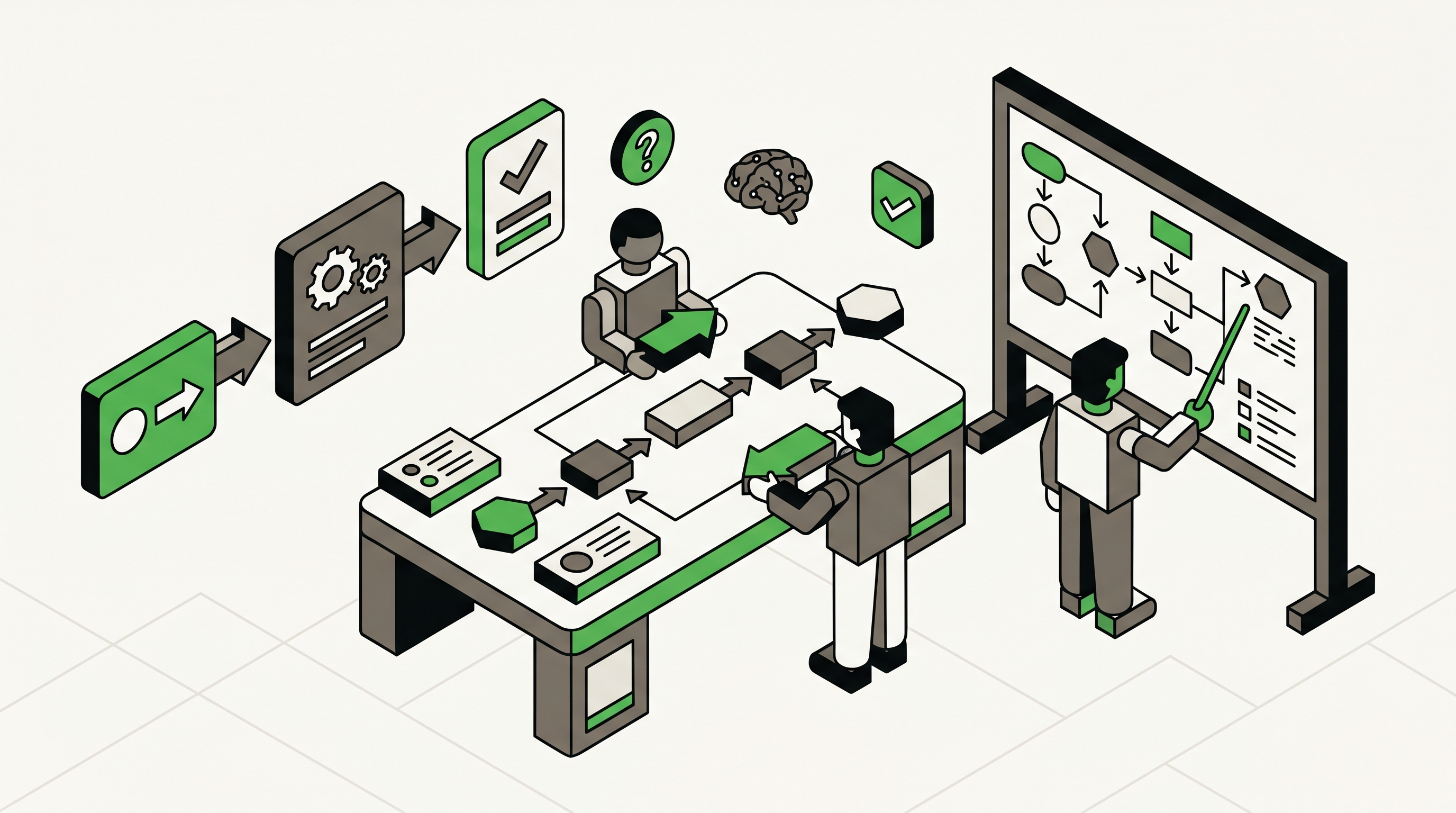
If buyers are already seeing AI summaries before they click, then AI visibility cannot live inside three different departmental silos. It needs one shared workflow, one prompt set, one review cadence, and one owner who can move work across teams.
The Market Has Already Moved Past Experimental Mode
Marketers still talk about AI search as if it is early. The user behavior says otherwise.
Pew’s June 17, 2026 report found that about a quarter of U.S. adults now use chatbots daily. It also found that Americans are not just playing with these tools. They are using them for information searching at scale, and most are seeing AI summaries inside regular search results. That means the discovery journey is already being shaped before many brands ever get the click.
At the same time, the tooling around AI visibility is getting more operational. Adobe’s June 18 launch matters because it frames AI search in prompt coverage, win-loss analysis, and revenue connection, not just screenshots. When a large platform productizes that workflow, the market is telling you the job is recurring, measurable, and budget-worthy.
That changes the question agencies and in-house teams should ask.
The question is no longer “Should we care about AI search yet?”
The question is “Who owns the work when AI search touches rankings, content structure, reviews, PR, service pages, and conversion paths at the same time?”
That is where most teams still do not have a good answer.
The Real Gap Is Coordination, Not Awareness
The clearest number in the current research did not come from a hot take. It came from Semrush’s recent operational gap study on AI search and SEO.
The study says 85% of marketers believe AI has changed their search strategy. It also says 77% now describe AI search as an extension of SEO rather than a separate channel. On the surface, that sounds encouraging.
Then the execution data lands.
Only 22% of marketers say their SEO and AI search efforts are fully integrated across strategy, execution, and reporting. Even among marketers who already see AI search as an extension of SEO, just 28% say they use one shared workflow across both.
That is the actual bottleneck.
Most teams have accepted the strategic shift. Very few have changed how work gets done. They still separate query research from sales questions, content briefs from AI prompt monitoring, technical SEO from brand consistency, and citation tracking from conversion analysis.
That fragmentation creates predictable problems:
- SEO teams optimize for page-level rankings without seeing which prompts buyers are actually asking.
- Content teams publish new articles without fixing the revenue pages AI systems are more likely to summarize.
- Brand teams polish messaging that never gets translated into machine-readable proof.
- Sales teams hear the same objections every week, but those objections never make it back into the site architecture.
This is one reason what content gets cited by AI and what gets ignored has become a more useful question than “how many posts did we publish this month?”
Volume is easy. Shared execution is hard. Shared execution is also what moves the needle.
What One Shared Workflow Actually Looks Like
One shared workflow does not mean one department does everything. It means the work runs on one system instead of four disconnected ones.
For most agencies and in-house teams, that system should include six pieces:
- One prompt map. Build a living set of high-value prompts based on real buyer behavior: comparison queries, cost questions, fit questions, category questions, objections, and branded lookups.
- One page priority list. Tie those prompts to the pages most likely to win or lose revenue: service pages, location pages, proof pages, comparison pages, and FAQs.
- One evidence standard. Every important page should answer the main claim clearly, show proof nearby, and align with the way your brand is described across the rest of the web.
- One review loop. SEO, content, brand, and whoever owns sales or customer insights should review prompt coverage and page gaps together on a fixed cadence.
- One reporting layer. Track AI presence, citation quality, page engagement, assisted conversions, and downstream branded demand in the same conversation.
- One accountable owner. Someone has to run the cadence, assign fixes, and close the loop.
That last part matters more than people want to admit.
When AI search belongs to everyone, it usually belongs to no one. A shared workflow still needs a driver. In many organizations, that owner sits in SEO or organic strategy because the work touches prompts, page structure, internal linking, and visibility measurement. But the owner has to be able to pull in content, brand, PR, paid, and sales context quickly.
Without that, AI search turns into an orphan channel.
Why Content Alone Will Not Close The Gap
A lot of teams still respond to AI search by commissioning more articles.
That is usually the wrong first move.
On June 17, 2026, Search Engine Land argued that the old ultimate guide format is losing ground in AI search. The pages more likely to hold up are clearer, tighter, easier to parse, and easier to cite. Around the same time, HubSpot’s 2026 generative AI research found that 61% of marketers believe expressing a brand point of view is critical when working with AI. The same research found that 71% say AI helps them create more content, while 53% struggle to make that content stand out and 52% believe AI has made content less effective overall.
That combination should end the “just publish more” reflex.
If AI makes average content easier to produce, then differentiation has to come from somewhere else. Usually it comes from operational knowledge that marketing teams do not fully capture:
- what prospects ask before they buy
- what customer success hears after onboarding
- what sales has to explain repeatedly
- what proof legal or compliance will actually allow
- what reviews, case studies, or third-party mentions reinforce the same claim
That is why a shared workflow beats a content-only workflow. It pulls source material from the real business, not just the content calendar.
At Emarketed, we have seen the payoff of consistent execution. LA Roofing Materials grew from near-zero organic presence to over 2,000 keyword rankings and a 258% surge in AI mentions. That kind of result does not come from treating visibility as a blog-only function. It comes from sustained alignment between SEO, AEO, page quality, and trust-building assets.
This is also why digital PR matters more in AI search. If the wider web does not reinforce your claims, AI systems have less reason to trust your pages, even when the on-page copy is solid.
Start With The Pages That Carry Buying Intent
The fastest fix is not a new content cluster. It is a better operating rhythm around the pages closest to revenue.
For most brands, that means auditing:
- service pages
- comparison pages
- proof pages
- pricing or process pages
- location pages
- FAQ sections tied to real objections
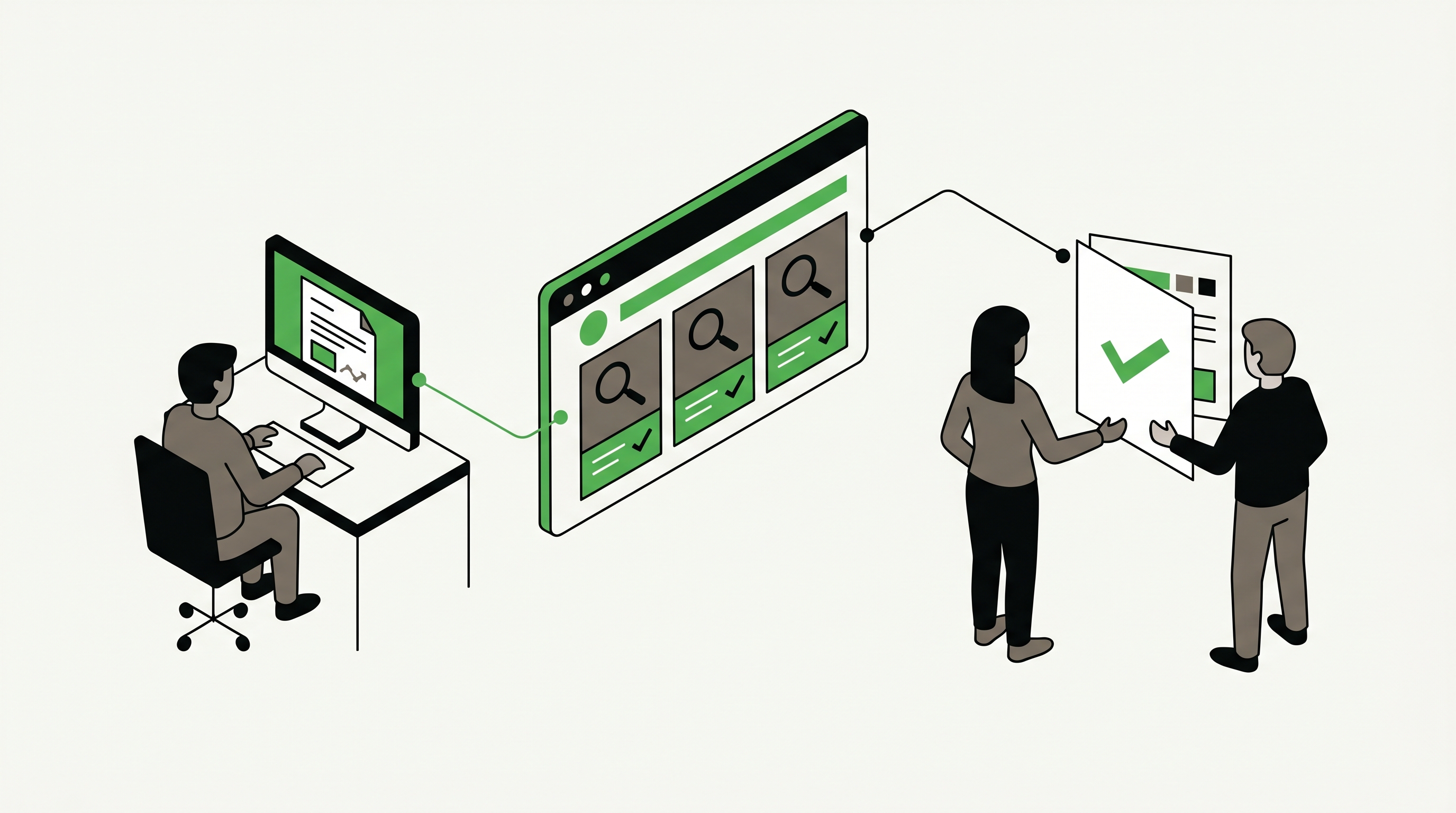
Those pages do three jobs at once. They help you rank, they help AI systems summarize you, and they help skeptical visitors confirm whether the summary was accurate.
That is why answer engine optimization services should not be sold as citation tracking alone. The real work is connecting prompt behavior to page architecture and business outcomes.
If a page is vague, unsupported, or interchangeable with five competitors, it will struggle no matter how many supporting blog posts sit behind it. If a page is direct, evidence-backed, and reinforced by the rest of your digital footprint, it has a better chance of being cited and a much better chance of converting the visitor who arrives already pre-sold, half-sold, or skeptical.
AI search is making those differences more visible.
What To Do Monday Morning
Do not start with software. Start with a room, a prompt set, and ten pages that matter.
Pull in the people who own SEO, content, brand, and sales insight. Spend 45 minutes reviewing twenty real prompts a buyer could ask before contacting you. Then map those prompts to the pages that should support the answer.
For each page, ask five blunt questions:
- Does the page answer the main claim near the top?
- Does it show proof close to the claim?
- Does it match how the rest of the web describes us?
- Does it address the objections buyers ask in calls?
- Would a cautious prospect trust this page more after seeing an AI summary, or less?
That exercise usually surfaces the real backlog fast.
You may find missing proof pages. You may find weak service pages. You may find reviews and citations that contradict the website. You may find that the sales team has already written half your next FAQ section in call notes nobody in marketing sees.
Good. That is the work.
The teams that win in AI search over the next year will not be the ones publishing the most. They will be the ones running the cleanest shared workflow between prompts, pages, proof, and reporting.

FAQ
Why Does AI Search Need A Shared Workflow?
Because AI visibility is shaped by more than rankings. It depends on page structure, proof, reviews, brand consistency, third-party mentions, and how well your site answers real buyer questions. No single team usually owns all of that.
Who Should Own AI Search Inside A Marketing Team?
One person or function should own the cadence and accountability, usually inside SEO or organic strategy. But the workflow should pull input from content, brand, PR, sales, and conversion teams.
Is AI Search A Separate Channel From SEO?
Not completely, but it is not identical either. The underlying site quality, technical structure, and authority signals still matter. The difference is that AI search also depends on prompt coverage, citation patterns, and how systems summarize your brand before the click.
What Pages Should Be Fixed First?
Start with the pages closest to revenue: service pages, proof pages, comparison pages, location pages, process pages, and FAQs built from real objections. Those assets influence both citation potential and conversion quality.
Why Is Publishing More Content Not Enough?
Because AI has made average content cheap. More output without stronger proof, clearer answers, and tighter message alignment usually creates noise, not durable visibility.
What Is The Best First Metric To Review?
Start with prompt coverage on high-intent queries, then connect that to page quality and downstream behavior such as branded search, assisted conversions, and lead quality. Mentions alone are not enough.