Your Internal Search Is Now An AI Landing Page
ChatGPT now sends 28.8% of its referral traffic to internal search pages. Treat site search like an AI landing page, not a neglected utility or afterthought.

Most teams still treat internal site search like a housekeeping feature.
That is outdated.
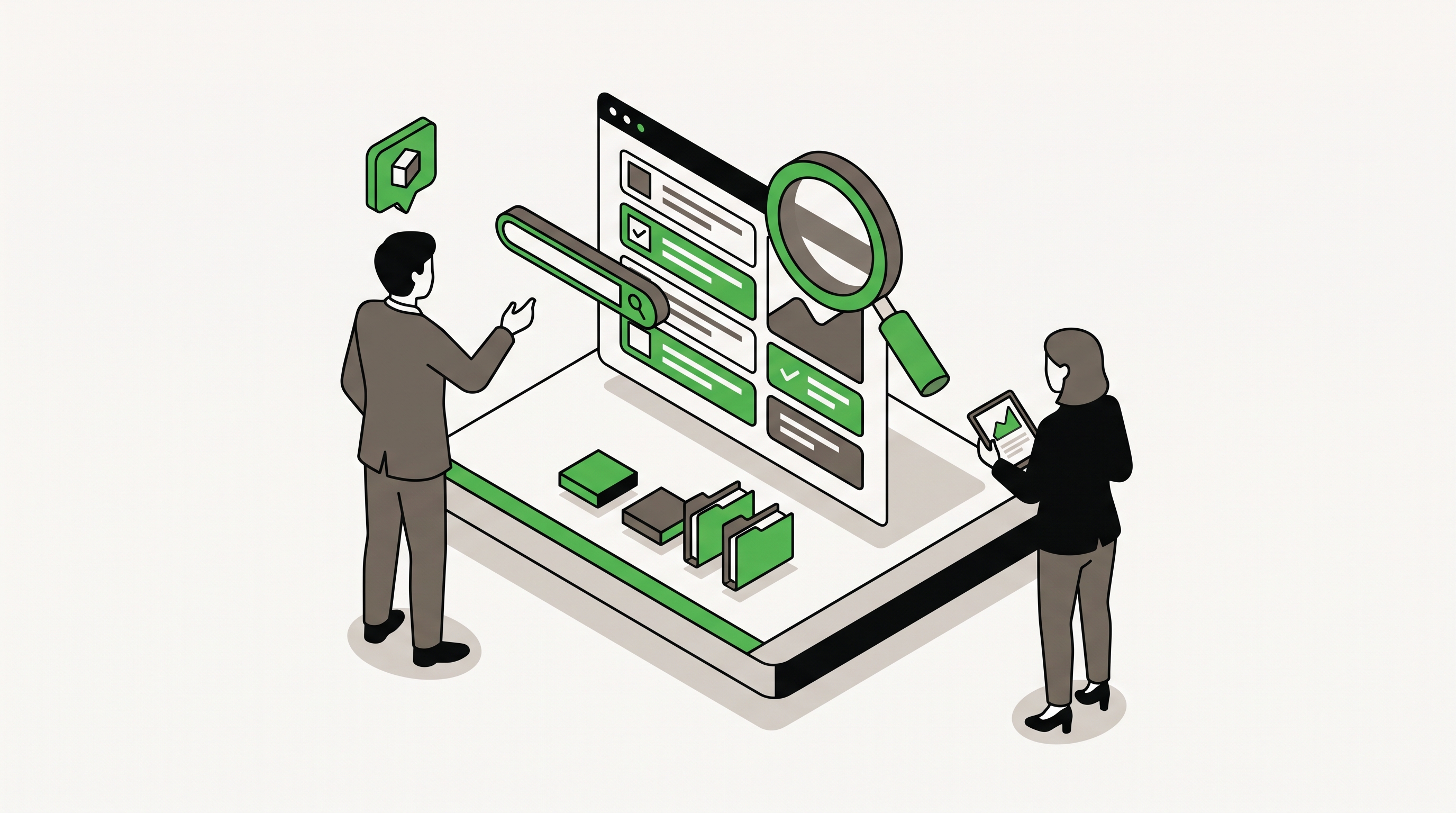
In its new 2026 State of AI Discovery Report, Previsible found that ChatGPT sends 28.8% of its traffic to internal search pages. Across industries, roughly a quarter of AI-referred visits land on internal search instead of a final destination page. The model trusts the domain, but it does not always trust itself to pick the exact URL.
That changes the job of your search bar.
If AI already picked your brand, your internal search experience is now part of the conversion path. Treat it like a real landing page or keep wasting high-intent visits you already earned.
Why This Matters More Than It Sounds
The old search model was simple. Google sent a user to a page. That page either did its job or it did not.
AI discovery is messier.
Previsible’s report shows ChatGPT and Gemini often route users to search infrastructure and topical hubs when page-level certainty is weak. In health, the pattern gets even more trust-driven. Previsible found health traffic often lands on About pages first, with users checking the source before they commit to the content.
That fits what we see in high-consideration industries. Buyers do not just want an answer. They want confirmation that the source deserves belief.
For healthcare brands, that trust layer is especially clear. At Emarketed, Seasons in Malibu holds 4,200+ keyword rankings and 814,230 social impressions in a recent month. That kind of authority does not help much if a user lands on a weak on-site search experience and hits a dead end instead of the page that answers the real question.
What A Broken AI Landing Path Looks Like
Here is the common failure pattern:
- ChatGPT names your brand.
- The click lands on
/search?q=insuranceor another search results URL. - Your search tool returns thin results, mixed relevance, or no useful filters.
- The visitor leaves, even though the AI already did the hard work of choosing you.
That is not a traffic problem. It is a handoff problem.
Many companies are still spending on content and AEO services while ignoring the part of the site where AI visitors actually arrive. If one out of four AI visits lands on internal search, that page deserves the same scrutiny as your pricing page, service page, or contact flow.
The Tactical Checklist
1. Audit Where AI Traffic Lands
Do not assume AI visits are reaching your best pages.
Previsible’s core finding is not just that ChatGPT dominates referral share. It is that referral behavior is uneven by page type and industry. Pull your AI-referred landing pages and isolate any URL patterns tied to internal search, search parameters, topical hubs, and About pages.
If AI is landing people on pages your team barely reviews, start there.
2. Make Search Results Useful For Decision Questions
A search page built for casual browsing is not enough.
If someone arrives on a search results page after asking an AI system about cost, insurance, treatment types, services, pricing, comparisons, or local availability, the next click should be obvious. Prioritize:
- Strong page titles and excerpts
- Clear categorization by service or intent
- Useful filters, not decorative ones
- Prominent high-intent pages near the top
- No empty-result dead ends for common decision queries
The AI already supplied intent. Your job is to remove friction.
3. Track Internal Search Properly In GA4
Most teams do not even have clean visibility here.
Google’s GA4 enhanced measurement documentation shows that view_search_results fires when a user is presented with a results page that includes common query parameters like q, s, search, query, or keyword. It also captures the search_term dimension.
That means you can stop treating internal search as invisible behavior. You can measure:
- Which search terms AI visitors use next
- Which results pages lead to engagement
- Which terms produce exits
- Which paths move visitors toward forms or calls
If your site search runs on parameters outside those defaults, configure GA4 to catch them.
4. Rewrite Search Result Snippets Like Mini Landing Pages
This is where lazy CMS output hurts.
When a user lands on internal search, every result title and snippet acts like ad copy. Generic titles, vague summaries, and duplicate descriptions kill momentum fast. Tighten the content that appears in results so a buyer can tell, in seconds, which page solves their question.
This is especially important for service businesses and healthcare brands, where visitors are often comparing fit, trust, and next steps before they ever talk to sales or admissions.
5. Connect Search UX To Revenue Pages
Internal search should help people move deeper, not wander.
For many brands, the right answer is not another blog post. It is a service page, a proof page, a pricing page, a provider page, or a conversion-focused FAQ. If your search layer cannot reliably surface those assets, your website development work is leaving revenue on the table.
This is also why we keep pushing clients to separate visibility from conversion mechanics. Earning an AI mention is one win. Converting the visit is another.
The Strategic Shift
The big takeaway is not that internal search suddenly became glamorous.
It is that AI systems are exposing neglected site layers. The model may know your brand is relevant while still being uncertain about the best page. When that happens, your internal search experience becomes the bridge between recommendation and action.
That is a different problem than rankings. It is a content architecture, UX, and measurement problem.
We made a related point in our breakdown of AI referral traffic conversion value: AI traffic can be smaller in volume but stronger in intent. That makes every avoidable dead end more expensive.
The smart move this week is simple: review your AI landing pages, treat internal search like a conversion surface, and fix the handoff before you spend another month arguing about visibility metrics alone.