AI Shopping Is A Recommendation Layer First
AI shopping is shifting discovery and comparison upstream. Marketers who want visibility in 2026 need clearer product data, proof, and trust signals now.

AI shopping is becoming a recommendation layer before it becomes a checkout layer, and that changes what marketers should optimize first.
That shift is easier to see now than it was even a quarter ago. On March 24, OpenAI said more people are starting their shopping in ChatGPT to explore, compare, and figure out what to buy. In the same update, it said it was expanding product discovery and letting merchants keep their own checkout experiences instead of forcing a single in-ChatGPT flow. Last week, Pinterest said brands are now competing not just for attention, but for recommendation, relevance and action. Then on June 24, Axios reported from Cannes that brand trust and first-party relationships still give marketers an advantage as AI becomes a shopping gateway.
Put those together and the takeaway is clear. AI interfaces are moving deeper into product discovery and comparison, but the real battle is still being won before payment. The brands that get shortlisted, explained clearly, and trusted early are the ones most likely to win the sale later.
For agencies, ecommerce teams, and high-consideration service brands, this is the practical point: if your offer is hard for an AI assistant to compare, verify, or defend, you can lose the customer before your site ever gets a serious look.
The Market Is Moving Upstream Faster Than Most Teams Realize
OpenAI’s latest commerce move matters because it clarifies where the near-term value sits. In its merchant FAQ, the company says it is moving away from a standalone Instant Checkout experience and prioritizing better shopping discovery and merchant-owned checkout experiences. It also says product feeds help merchants control how their products appear, ensuring more accurate and current information.
That is not a minor product tweak. It is a strategic signal.
The first phase of AI shopping is not about replacing every ecommerce cart or pushing every transaction into a chatbot window. It is about compressing research, comparison, and shortlisting into one interface. OpenAI’s own product post says shoppers can compare options side by side, filter against constraints, and reach decisions faster, while merchants get higher-intent shoppers who are closer to buying.
McKinsey is seeing the same pattern from a different angle. Its March 2 analysis says AI-mediated discovery and evaluation are scaling quickly, even as full autonomy remains limited. The firm describes AI as becoming the primary interface for discovery, comparison, and recommendation, where preferences form and winners emerge. Its January follow-up goes further, warning that if your catalog, policies, and value proposition are not machine-readable, agents and shoppers may not find you at all.
This is why so many teams misread the moment. They see AI shopping and jump straight to transaction questions:
- Will assistants own checkout?
- Will paid placement take over?
- Will websites lose the conversion?
Those questions matter, but they are not the first bottleneck. The first bottleneck is whether your business becomes one of the few options an AI system can confidently explain.
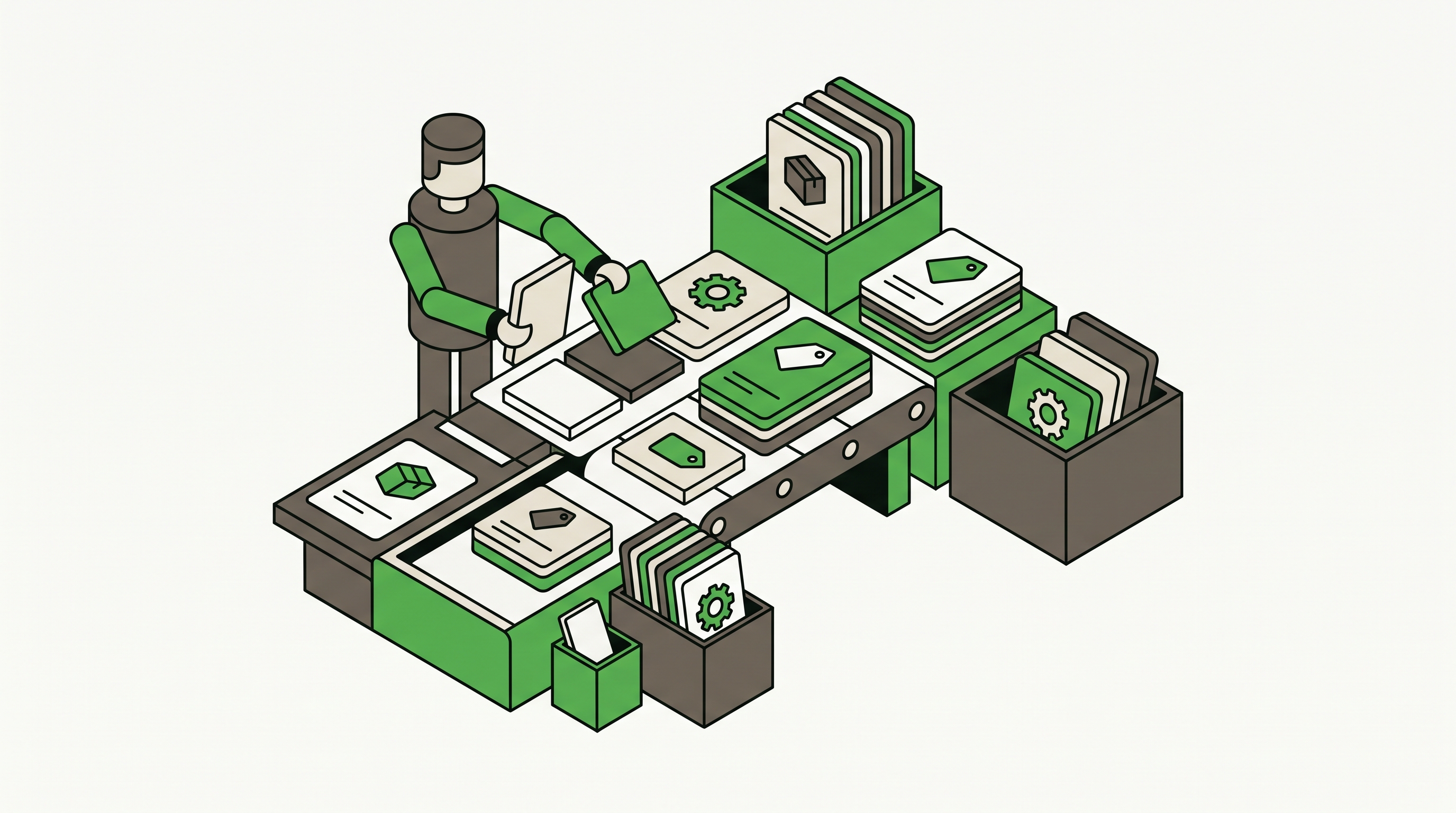
Recommendation Beats Reach When AI Does The Comparison
Classic ecommerce and search strategy trained marketers to chase reach first. Rank more pages. Buy more clicks. Expand more audiences. Push more volume into the top of the funnel.
AI shopping changes the economics of that model because the comparison step moves upstream.
When a shopper asks ChatGPT for the best standing desk under a certain budget, or uses Pinterest’s new business tools to move from inspiration to a short list, the system is doing some of the filtering work that used to happen across ten tabs. The customer does not need fifty options. They need three or four that survive comparison.
That is why recommendation is the real scarce asset now.
McKinsey says the strategic question is shifting from “How do we convert customers?” to “How do we remain visible and persuasive when the first customer in the funnel is not a human, but an AI agent?” The answer is not more generic content. It is more evaluable content.
That means your product or service information has to do five jobs well:
- Explain what the offer is in plain language
- Surface tradeoffs quickly
- Provide proof that the claim is real
- Reduce ambiguity around price, fit, and availability
- Match the language buyers use when they compare options
This is also where AEO strategy stops sounding like a future-facing buzzword and starts looking like operations. Recommendation systems need structured answers, trustworthy signals, and clean destination pages. If you still treat those as optional enhancements, the recommendation layer will stay closed to you.
Trust Is Still The Friction Point
AI can speed up product discovery, but it has not solved trust.
IAB found that only 46% of consumers fully trust AI shopping recommendations, while 89% still double-check the information before buying. eMarketer added another important number: 95% of shoppers who used AI during their purchase journey still took additional online steps to confirm the decision.
That matters because it reveals what happens after the recommendation.
People are using AI to narrow the field. They are not handing over judgment blindly. They still look for proof, consistency, and signals that a recommendation holds up outside the chat window.
At Cannes this week, marketing leaders made the same point in plain business language. Axios reported that executives from brands like DoorDash and Ulta argued that trust, customer understanding, and first-party data remain advantages AI has not replaced. That is not a sentimental brand argument. It is a distribution argument. If buyers verify recommendations elsewhere, then your reviews, category authority, policies, shipping clarity, return information, and page consistency all become part of the closing process.
In other words, AI may introduce the brand, but the web still validates it.
That is why the strongest AI shopping strategy is rarely “be everywhere.” It is “be consistently believable wherever the buyer checks next.”
What This Means For Non-Ecommerce Brands
It would be easy to treat this as a retail-only trend. That would be a mistake.
The recommendation layer logic applies to service businesses, healthcare brands, and B2B companies too. High-consideration buyers already use AI to compare vendors, clarify jargon, check fit, and narrow their options before talking to sales.
McKinsey makes this explicit in its B2B section. Agents can synthesize technical details, compare suppliers against requirements, and assemble procurement-ready options long before a human buyer fills out a form. Different category, same upstream shift.
That is why we keep telling clients that AI visibility is not just about traffic. It is about whether your company shows up as a defensible answer in the moments where options are being cut.
At Emarketed, we have seen this dynamic play out outside ecommerce. LA Roofing Materials grew from near-zero organic presence to more than 2,000 keyword rankings and a 258% increase in AI mentions. That did not happen because the company published fluff. It happened because the market could increasingly find, understand, and trust the business across search and AI surfaces.
If you want a deeper look at how this works for service brands, our breakdown of how B2B brands become the default AI recommendation is the right next read.

The New Optimization Stack For AI Shopping
If recommendation is the bottleneck, the work changes.
Most brands do not need an AI commerce moonshot first. They need a cleaner optimization stack.
Product Data Has To Be Current
OpenAI’s merchant documentation is blunt about this. Product feeds give merchants greater control over how products appear in ChatGPT and help ensure accuracy. That means titles, pricing, categories, availability, and attributes are no longer background admin work. They are discoverability assets.
If your feed is messy, stale, or thin, the assistant has less to work with. Poor inputs create weak comparisons.
Landing Pages Have To Resolve Doubt Fast
Once the click happens, the page has to confirm what the AI suggested. If the assistant described the product as affordable, customizable, fast-shipping, or built for a specific use case, the page should support that claim immediately.
Mismatch kills confidence. So does vagueness.
Proof Signals Have To Be Easy To Find
The fastest way to lose a verified shopper is to hide the proof. Reviews, warranty details, specifications, shipping terms, certifications, return policies, and customer evidence should not be buried three scrolls down or scattered across multiple tabs.
Comparison Language Has To Match Buyer Intent
Many teams still write for brand voice first and buyer comparison second. AI systems do the opposite. They look for attributes, constraints, and differentiators that can survive a comparison prompt. Your content should reflect that.
Measurement Has To Move Beyond Last Click
Adobe’s Q2 2026 AI traffic report found that AI-driven retail traffic rose 393% year over year in Q1, and AI-referred visitors converted 42% better than non-AI traffic in March 2026. That means a smaller pool of AI traffic can still carry outsized value.
If your team still judges the channel only by raw session volume, you can miss the fact that AI is sending more decision-ready visitors.
What Agencies Should Be Selling Right Now
This shift opens a service gap, and smart agencies should name it clearly.
Clients do not just need “AI optimization.” They need recommendation readiness.
That work usually includes:
- product and service feed cleanup
- comparison-page strategy
- FAQ and objection content that answers real buyer constraints
- trust signal auditing
- landing-page rewrites that align with AI-generated summaries
- reporting that separates AI-assisted value from generic traffic
For local businesses and service companies, the deliverables may look different from ecommerce, but the logic stays the same. The job is to help the market compare you accurately.
That is also why brand mentions and AI visibility matter more now. If recommendation systems are pulling from a broader web of evidence, then third-party references, reviews, citations, and entity consistency influence who makes the shortlist.
Agencies that keep pitching AI as a content-volume play are already behind. The revenue opportunity is in making brands easier to evaluate, easier to trust, and harder to exclude.
What To Do This Quarter
The right first move is not building a speculative AI checkout experience.
The right first move is auditing the assets that help an AI system recommend you with confidence.
Start here:
- Review your top product, service, or category pages for missing proof, vague claims, and unclear differentiation.
- Check whether your structured product or service data is current enough to support clean comparisons.
- Rewrite FAQs and comparison sections around real buyer constraints, not SEO filler.
- Track AI-assisted traffic quality, not just AI-assisted traffic volume.
- Identify where shoppers or buyers verify your claims after an AI recommendation, then strengthen those pages first.
The teams that win this phase will not be the ones waiting for full autonomous checkout. They will be the ones who understand that AI shopping already changed the shortlist.

FAQ
Is AI Shopping Replacing Ecommerce Websites?
No. The near-term shift is upstream, not total replacement. AI assistants are compressing discovery and comparison, but OpenAI is currently prioritizing merchant-owned checkout experiences rather than forcing every purchase inside ChatGPT.
What Matters More In AI Shopping Right Now, Checkout Or Discovery?
Discovery matters more right now. The biggest change is that AI systems are shaping the shortlist before the click, which means visibility, clarity, and trust signals are more urgent than experimental checkout flows.
Do Service Businesses Need To Care About AI Shopping Trends?
Yes. The same recommendation logic now shapes B2B, healthcare, and local service buying journeys. Buyers use AI to compare vendors, understand fit, and filter options long before they speak to sales.
Why Are Trust Signals So Important If AI Already Recommends The Brand?
Because shoppers still verify. IAB found that only 46% fully trust AI shopping recommendations, and 89% still double-check the information before buying. Your site and third-party proof still close the credibility gap.
What Should Marketers Audit First?
Start with the pages and data sources most likely to be used in comparison: product feeds, category pages, service pages, FAQs, reviews, return or policy content, and any page that supports a claim an AI system might summarize.
How Should Agencies Package This For Clients?
Package it as recommendation readiness. That framing is clearer than generic AI optimization because it connects the work to the specific stage where AI already influences revenue.
The Next Practical Move
If AI is doing more of the comparison work, your brand has less room to be unclear.
That is the real shift hiding under all the agentic commerce headlines. The website still matters. The product page still matters. The brand still matters. But now they matter partly because a machine has to interpret them before a buyer does.
Monday morning, do not ask whether AI will own checkout. Ask whether your best offers are easy for an assistant to compare, easy for a buyer to verify, and strong enough to survive the shortlist.