Conversion Rate Optimization Tips That Actually Move Revenue
Discover practical conversion rate optimization tips that boost revenue by focusing on key conversion moments, improving messaging, and enhancing user experience.
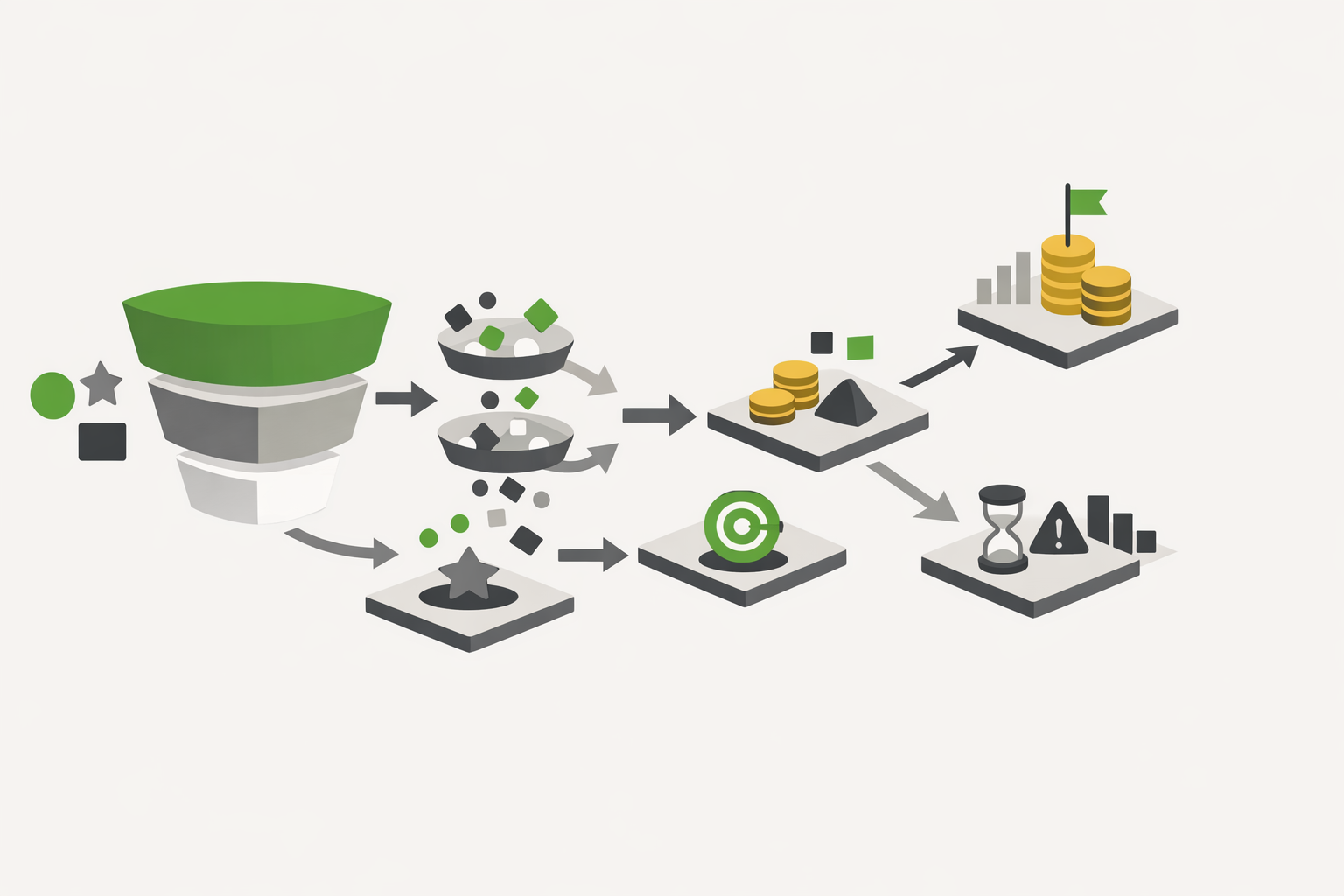
Revenue usually does not stall because a business needs more traffic. It stalls because too much of the traffic already arriving fails to take the next step. That is why smart marketers treat conversion work as a revenue discipline, not a design clean-up project.
The best CRO programs focus on moments that affect pipeline, sales, booked calls, qualified leads, repeat purchases, and patient inquiries. They do not obsess over button color debates while ignoring weak messaging, slow pages, or forms that ask for too much. If you want practical conversion rate optimization tips that create measurable business impact, start where friction is highest and intent is strongest.
This is especially true for agency owners, healthcare providers, B2B firms, and local businesses. In those markets, a small lift in conversion rate often produces outsized returns because lead values are high and buying cycles are expensive. A 15 percent lift on a service page or landing page can matter more than a 50 percent increase in low-intent traffic.
Start With Revenue, Not Surface-Level Metrics

Plenty of teams claim they care about performance, then optimize for click-through rate, time on page, or scroll depth without asking whether those actions lead to revenue. Those metrics can be useful, but only if they support a real business outcome.
Before changing a page, define the conversion that matters. For an addiction treatment center, that may be a verified admissions call. For a B2B software company, it may be a demo request from a qualified account. For a local service business, it may be a phone call or booked estimate. Good conversion rate optimization starts by tying page performance to what sales teams and owners actually care about.
A simple framework helps:
- Primary conversion: The action most directly tied to revenue
- Secondary conversion: A softer action such as email signup or resource download
- Quality filter: Lead score, sales qualification, insurance verification, or deal stage
- Lagging outcome: Closed revenue, booked appointments, retained clients, or average order value
If your reporting stops at form fills, you are missing the point. Some forms create more leads and less money. That is not a win.
Clarify The Offer Before You Touch The Layout
Most underperforming pages do not have a design problem first. They have a clarity problem. Visitors land, scan for five seconds, and still cannot answer basic questions: What is this, who is it for, why should I trust it, and what happens next?
That is why the strongest conversion rate optimization tips usually begin with message hierarchy. Your headline should state the offer clearly. Your subhead should explain the value. Your supporting copy should reduce doubt, not add fluff.
What Clear Landing Pages Usually Get Right
- Specific headline: Says what you do and for whom
- Immediate relevance: Matches the ad, email, search query, or referral source
- Visible next step: Makes the CTA obvious without requiring a hunt
- Scannable proof: Reviews, stats, credentials, or client logos near the decision point
- Focused page structure: One main goal, not six competing actions
A B2B page that says “Transform Your Growth” tells the visitor nothing. A page that says “Book Qualified Sales Calls With SEO And Paid Media Built For Multi-Location Service Brands” gives the reader a reason to keep going.
Strengthen Trust Signals Where Doubt Is Highest
People do not convert because they are interested. They convert because they are interested and convinced. Trust is often the missing piece.
This matters even more in healthcare, professional services, and regional businesses where the perceived risk is high. A patient choosing a provider, or a company choosing an agency, wants evidence that the business is credible, responsive, and safe to engage.
Trust Signals That Tend To Lift Revenue
- Specific testimonials: Better than generic praise, especially when tied to outcomes
- Review volume and recency: Fresh reviews reduce hesitation
- Accreditations and certifications: Important for healthcare and regulated sectors
- Case studies: Show process and results, not just claims
- Transparent contact details: Phone, address, team info, and real business presence
- Security and privacy language: Essential near forms and checkout steps
Trust signals work best when placed near friction points. Putting every review at the bottom of the page is less effective than placing proof near the form, pricing section, or CTA. If someone is deciding whether to call, “Rated 4.9 stars across 180 reviews” next to the phone number can outperform a testimonial carousel halfway down the page.
Page Speed Is A Conversion Issue, Not Just An SEO Issue
Slow pages waste paid media spend, lower lead volume, and erode trust before users even see your offer. Google has repeatedly tied site experience to user satisfaction, and independent research has shown that delays hurt conversion performance across industries. For example, Google’s Core Web Vitals guidance makes the same point clear: speed affects business outcomes, not just rankings.
If your page loads slowly on mobile, every other CRO tactic gets weaker. Messaging cannot save a page that feels broken.
High-Impact Speed Fixes
- Compress oversized images and serve modern formats
- Reduce third-party scripts, especially chat widgets and tracking bloat
- Clean up unused code and heavy page builders
- Prioritize above-the-fold content loading
- Improve hosting and caching configuration
This is one reason CRO often overlaps with development. Teams that need implementation help usually benefit from support on both website development and technical performance, not just copy tweaks.
Cut Form Friction Aggressively
Long forms do not always reduce lead quality. Bad forms do. There is a difference.
Many businesses ask for information they do not need at the first conversion step. That creates abandonment, especially on mobile. If the goal is to start a sales conversation, ask only what is necessary to route and qualify the lead.
Ways To Improve Form Completion Without Lowering Lead Quality
- Remove non-essential fields: Every extra field is a chance to quit.
- Use smart field order: Start easy, save sensitive questions for later.
- Add clear labels: Do not rely on placeholder text alone.
- Explain what happens next: Response time and follow-up expectations matter.
- Make mobile input easy: Large tap targets, correct keyboard types, minimal typing.
- Test multi-step forms carefully: They can help, but only if each step feels low effort.
If you want to improve conversion rate on lead generation pages, forms are one of the fastest places to find gains. In many audits, the biggest lift comes from reducing friction, clarifying the offer, and setting expectations after submission.
Design CTAs For Decision-Making, Not Decoration
Calls to action fail when they are vague, visually weak, or disconnected from user intent. “Submit” is lazy. “Learn More” is often too soft. A strong CTA names the next step and matches the visitor’s stage of awareness.
For high-intent service pages, direct CTAs usually perform better: “Book A Strategy Call,” “Verify Insurance,” “Request A Quote,” or “Get A Free Audit.” For earlier-stage traffic, softer CTAs can work if they support progression, such as downloading a guide or viewing pricing details.
CTA Improvements That Usually Matter
- Specific action language: Tell users exactly what they get
- Visual contrast: The CTA should stand out without looking cheap
- Proximity to proof: Place CTAs near testimonials, outcomes, or trust badges
- Reduced choice overload: Limit competing buttons in high-intent sections
- Repeated placement: Give users multiple chances to act as they scroll
Good CTA design is part copy, part UX, part psychology. It should feel obvious, not loud.
Align SEO Intent And CRO Intent
One of the more expensive mistakes in digital marketing is treating traffic generation and conversion work as separate systems. They are connected. If the keyword intent, ad promise, and landing page message do not match, conversion suffers.
That is why businesses investing in SEO should also review the pages receiving that traffic. A page ranking for “drug rehab near me” needs local trust, immediate contact options, insurance messaging, and urgency-aware UX. A page ranking for “fractional CMO for healthcare” needs authority, process clarity, and stronger qualification cues.
This is where practical cro tips often get overlooked. Traffic quality and page experience have to work together. Ranking better for the wrong intent, or sending the right traffic to a weak page, is still wasted opportunity.
Test What Affects Buying Behavior
Testing matters, but not every test deserves your time. Revenue-focused teams prioritize experiments that can change user confidence, comprehension, or friction. They do not spend six weeks testing rounded buttons versus square buttons unless everything else is already dialed in.
High-Value Testing Priorities
- Headline and subhead combinations
- Offer framing and value proposition
- Form length and field sequence
- CTA language and placement
- Trust signal placement near conversion points
- Mobile layout and sticky action elements
Use A/B testing when traffic volume supports it. If volume is low, combine user recordings, heatmaps, call reviews, and sales feedback to identify likely friction points first. Tools like Hotjar or Microsoft Clarity can help surface behavior patterns, but tools do not replace judgment.
The goal is not to run more tests. The goal is to run fewer, better tests with a stronger hypothesis.
FAQ
What Is The Fastest Way To Find CRO Wins?
Start with high-intent pages that already get traffic, such as service pages, paid landing pages, and top conversion paths. Review message clarity, trust signals, form friction, and mobile speed before making cosmetic changes.
How Long Does Conversion Rate Optimization Take To Show Results?
Some fixes, such as shortening a form or clarifying a headline, can improve results quickly. A broader conversion rate optimization program usually compounds over time as you test, learn, and connect front-end changes to lead quality and revenue.
Should Small Businesses Focus On CRO Or Traffic Growth First?
If a site has meaningful traffic but weak lead performance, CRO should come first. If traffic is extremely low, you may need both at the same time. For many local and B2B companies, improving existing conversion paths is the cheaper growth move.
Do More Leads Always Mean Better CRO?
No. Better CRO should improve qualified leads, sales opportunities, booked appointments, or revenue. If lead volume rises while close rates drop, the page may be attracting the wrong audience or weakening qualification.
What Pages Should Be Optimized First?
Prioritize pages with strong business intent: contact pages, quote request pages, core service pages, high-spend ad destinations, and pages ranking for bottom-funnel searches. Those are usually the fastest path to measurable return.
Build A CRO Process That Sales Teams Actually Trust
The strongest CRO programs are not isolated in marketing. They pull in sales, front-desk teams, admissions staff, and account managers because those people hear objections every day. If prospects keep asking the same questions on calls, your pages should answer them earlier. If low-quality leads keep filling out forms, your qualification flow needs work.
That is the next step: analyze your top revenue-driving pages, identify where clarity, trust, speed, or friction is getting in the way, and fix those issues before chasing more traffic. If your team needs help turning those findings into better-performing pages, Emarketed’s web and SEO teams can implement the changes that move from traffic to revenue.