Google Search Live Goes Global: What Voice and Camera Search Mean for Your Marketing
Google Search Live now reaches 200+ countries with voice and camera AI search. Here's what marketers need to do about multimodal search in 2026.
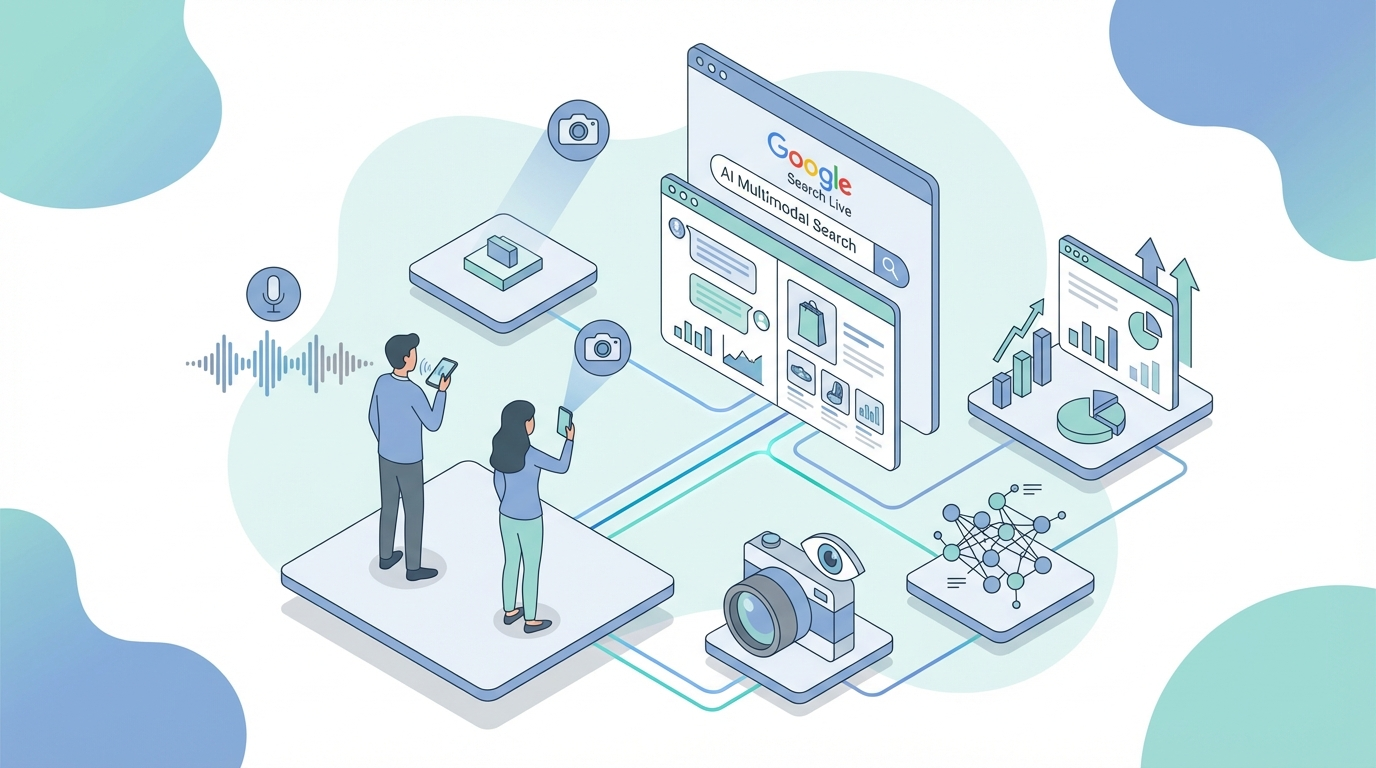
Google just made its biggest move of 2026, and most marketers missed it while watching the March core update unfold.
On March 26, Google expanded Search Live globally to every country where AI Mode is available. That’s 200+ countries and territories where people can now talk to Google, point their phone camera at something, and get real-time AI answers without typing a single word. The feature runs on the new Gemini 3.1 Flash Live model, which is natively multilingual, not a translation layer bolted on top.
This changes the search equation for marketers in a fundamental way. When your audience can hold a conversation with Google using their voice and camera, the strategies that worked for typed queries start breaking down. Here’s what you need to know and what to do about it.
Search Is No Longer a Text Box
For 25 years, search marketing has been built on a simple assumption: people type words into a box, and you optimize for those words. Search Live breaks that assumption wide open.
Users open the Google app, tap the Live icon, and speak their question. Google responds with an audio answer. They ask follow-ups. They point their camera at a product, a piece of equipment, a building, and Google tells them what it sees. The entire interaction happens in a conversational loop that never touches a traditional search results page.
According to a Google guide distributed to marketers in March 2026, queries in AI Mode are now three times longer than traditional searches, with a meaningful share generating follow-up questions within the same session. Voice queries are even longer and more conversational than that.
This isn’t a minor feature addition. It’s a structural change to how people interact with information. And if your content strategy is still built around short-tail keyword targeting, you’re optimizing for a search paradigm that’s shrinking by the month.
How Search Live Actually Works (and Why It Matters for Visibility)
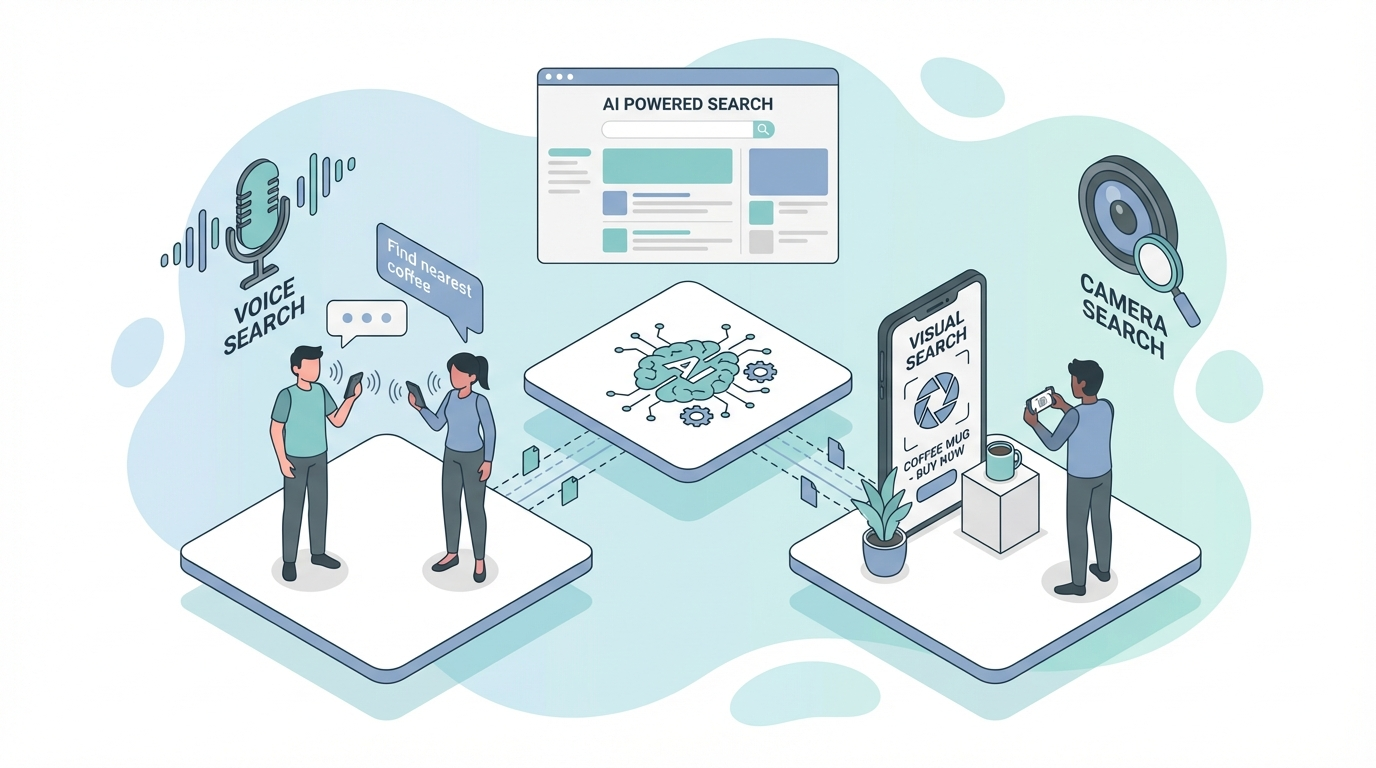
Search Live has three entry points, and each one creates different opportunities and challenges for brands.
Voice conversations: Users speak naturally, ask follow-ups, and get spoken answers. Google surfaces web links alongside audio responses, but the AI’s framing shapes which links get attention. If the AI says “the best option for this is usually X,” the first web link matters less than the recommendation itself.
Camera-based visual search: Users point their phone at a physical object, and Google identifies it, provides context, and suggests next steps. This works for products, signage, equipment, plants, food, buildings, basically anything a camera can capture. For businesses with physical products or locations, this is a new discovery surface you probably aren’t optimizing for.
Google Lens integration: Users already in Lens can tap “Live” to start a real-time conversation about whatever they’re looking at. This bridges the gap between visual identification and deeper research without switching apps.
The common thread across all three: the AI chooses what to say, what to recommend, and what to cite. Your content either informs those answers or it doesn’t exist in this context. There is no page-one ranking to fall back on when the user never sees a results page.
As Forbes noted, the open question for executives is straightforward: “As this new search paradigm takes hold, how will brands, marketers, and developers find ways to surface their products and services through a live, conversational interface?”
The Marketing Math Is Changing
Real Internet Sales analyzed the GEO implications of Search Live’s expansion and identified a critical shift: top-of-funnel traffic becomes less reliable when users get enough guidance without leaving Google.
Brand preference is being shaped earlier in the process because the AI’s framing influences decisions before a user ever visits a website. Words like “best,” “recommended,” “safe,” and “compatible” in AI responses carry more weight than a meta description ever did.
This compounds with what we’re already seeing in AI Overviews and AI Mode. Brands cited in AI Overviews earn 35% more organic clicks than those not cited on the same queries. In a voice-first context, being the cited source is even more valuable because there’s no page of ten blue links to compete with. The AI gives one answer, maybe two, and moves on.
For agencies and in-house teams, this means the question isn’t “how do we rank for this keyword?” anymore. It’s “how do we become the source Google’s AI trusts enough to cite when someone asks this question out loud?”
What Multimodal Search Means for Healthcare Marketers
Healthcare is one of the verticals where Search Live will hit hardest, and where most practices are already invisible in AI search.
Consider the patient journey. Someone notices a symptom, picks up their phone, and says: “Hey Google, what does this rash look like? Should I see a dermatologist?” They might point their camera at it. Google’s AI responds with information, possibly a condition name, and recommends next steps, including local providers.
If your practice isn’t structured to be cited in those AI answers, you don’t exist in that moment. The patient goes wherever Google’s AI points them.
This is amplified by the E-E-A-T tightening in the March 2026 core update, where 73% of top-ranking pages in YMYL verticals now display verifiable author credentials. Health content without demonstrated expertise is losing ground in traditional search and AI search simultaneously.
We’ve seen this play out directly. Seasons in Malibu holds 4,200+ keyword rankings, a result built on comprehensive AEO strategy that positions them as a cited source across both traditional and AI search surfaces.
The takeaway for healthcare marketers: if your provider pages, condition pages, and FAQ content aren’t structured for AI citation, Search Live’s expansion just widened the gap between you and competitors who are already optimized.
Five Things to Do This Week
You don’t need to overhaul your entire strategy overnight. But you do need to start adapting for multimodal search now, before the adoption curve catches up.
1. Audit Your Content for Conversational Queries
Voice queries are full sentences and questions, not keyword fragments. Pull your Google Search Console data and filter for queries that are five words or longer. Those are your conversational query baseline.
Then look at what’s missing. What questions would someone ask out loud about your product, service, or industry? Build content that answers those questions directly in the first paragraph, with depth and evidence below.
2. Optimize Visual Assets for Google Lens
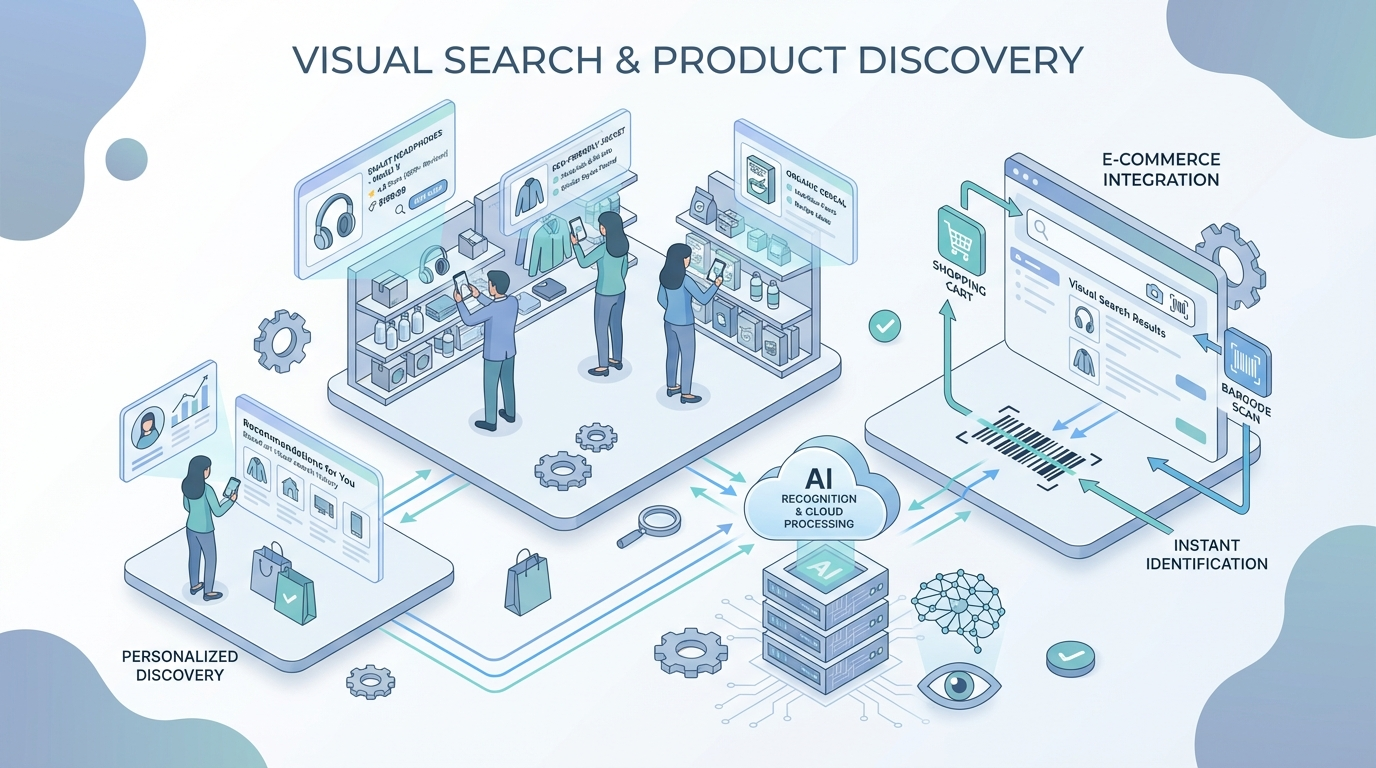
If you sell physical products or have a physical location, your images need to be discoverable through visual search. That means high-quality product photography with descriptive file names, alt text, and structured data (Product schema, LocalBusiness schema) that connects the image to your brand.
Google’s visual recognition works best when it can match an image to structured metadata. If your product photos are named “IMG_4523.jpg” with empty alt attributes, you’re invisible to camera-based search.
3. Structure Content for AI Citation
Effective AI search optimization starts with evaluating how well your content is structured for AI extraction, and the core principle is simple: answer the question clearly, cite your evidence, and demonstrate expertise.
AI models pull from content that uses clear headers, direct answers, specific data points, and credible sourcing. Vague, fluffy content that dances around a topic doesn’t get cited. Content that states a clear position backed by evidence does.
4. Build FAQ Content Around Spoken Queries
Written search queries look different from spoken ones. “best rehab centers LA” becomes “what are the best rehab centers near Los Angeles that accept Blue Cross insurance?” Voice queries are longer, more specific, and often include qualifying details.
Your FAQ sections should reflect how people actually talk, not how they type. Use full-sentence questions, provide direct answers in the first sentence, then support with detail.
5. Monitor Your AI Visibility Across Platforms
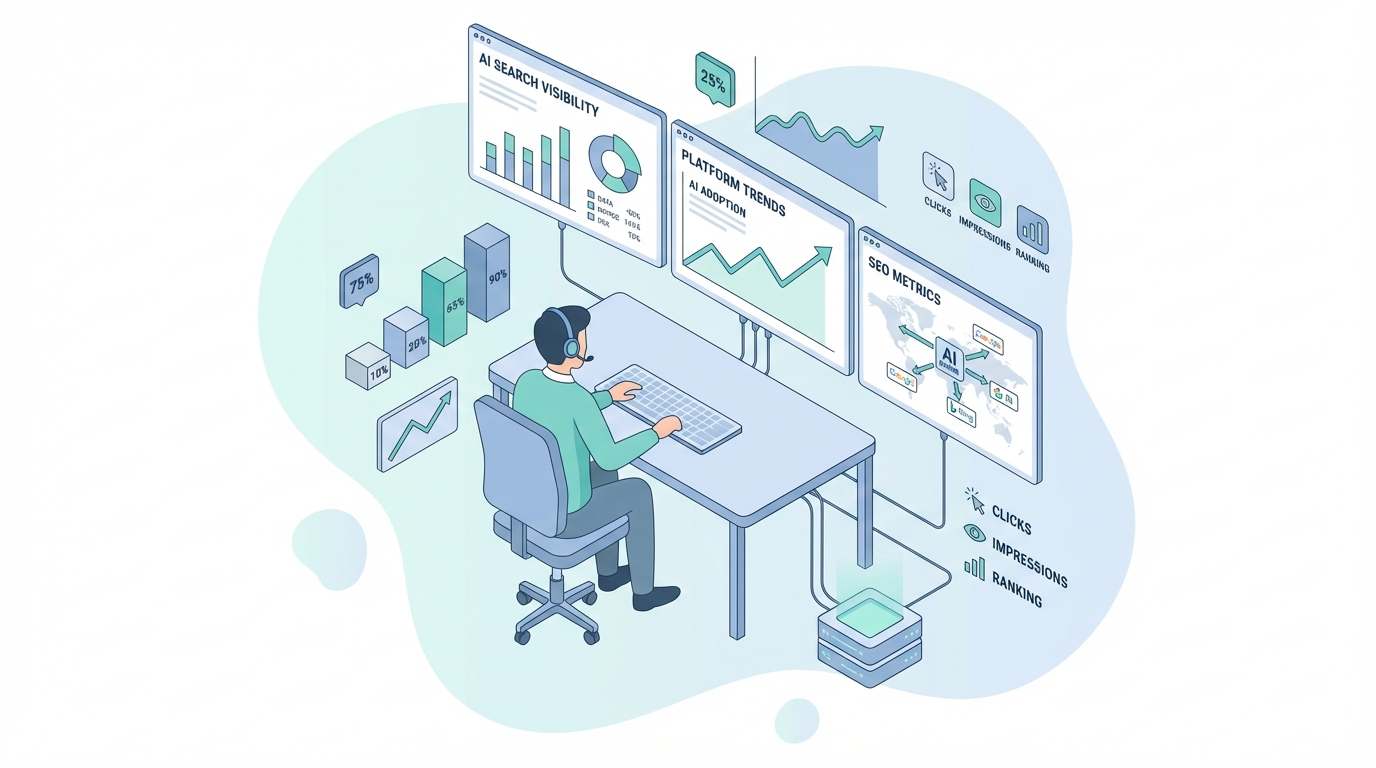
You can’t improve what you don’t measure. Track whether your brand appears in AI Overviews, AI Mode responses, ChatGPT answers, and Perplexity citations for your target queries.
The AEO Monitor gives you a starting point for tracking visibility across AI search surfaces. Run your core queries weekly and document changes, especially during the current core update rollout.
The Core Update Connection
Search Live’s global expansion didn’t happen in a vacuum. It launched on March 26, one day before Google began rolling out the March 2026 core update, the first core update of the year.
The core update is pushing hard on information gain as a ranking signal. Pages that simply rephrase what already ranks are losing ground to content with original data, first-hand experience, and unique perspectives. That same principle applies to AI citation: models prefer sources that add something new to the conversation, not sources that rehash the consensus.
The SEMrush Sensor hit 9.5 out of 10 volatility during the rollout, with over 55% of monitored websites experiencing ranking shifts. The combination of a core update rewarding originality and a multimodal search expansion rewarding AI-citable content creates a clear direction: generic content is losing on every front simultaneously.
If you’re an agency, this is the message to bring to clients right now. The shift isn’t coming. It already happened this week.
What This Means for the Next 12 Months
Search Live is currently available in every market where AI Mode exists, which covers 200+ countries and territories. Google is building on the Gemini 3.1 Flash Live model, which is natively multilingual, so expect the feature to expand to more languages rapidly.
The implications for search marketing are clear. Voice and visual search are no longer niche behaviors, they’re default search modes built into the primary search interface on every Android and iOS device globally. The brands that adapt their content strategy for multimodal AI search will capture demand that typed-query-optimized competitors can’t even see.
Agencies that still frame their value around “getting you to page one” need to redefine what visibility means. Page one is one surface out of many. AI Mode, Search Live, ChatGPT, Perplexity, each one is a search surface where your clients need to be visible. The agency service line for AEO isn’t optional anymore. It’s table stakes.
For healthcare, B2B, and local businesses, the action item is straightforward: get your content structured for AI citation, optimize your visual assets for camera-based discovery, and start measuring visibility across AI search surfaces now. The window for early-mover advantage is closing.
FAQ
What is Google Search Live?
Google Search Live is an AI-powered feature within Google’s AI Mode that lets users search using voice and camera input instead of typing. Users can speak questions, point their phone camera at objects for visual context, and have back-and-forth conversations with Google’s AI. It runs on the Gemini 3.1 Flash Live model and is now available in 200+ countries.
How does Search Live affect SEO?
Search Live shifts discovery away from traditional search results pages. When users get AI-generated voice answers, they may never see a list of website links. This means ranking in position one matters less than being the source Google’s AI cites in its spoken responses. Content needs to be structured for AI extraction, not just keyword matching.
Do I need to optimize differently for voice search vs. typed search?
Yes. Voice queries are typically three to five times longer than typed queries and use natural, conversational language. Instead of “rehab centers LA,” a voice query might be “what are the best addiction treatment centers in Los Angeles that take my insurance?” Your content should answer these longer, more specific questions directly.
How does visual search through Search Live work for businesses?
When users point their phone camera at a product, location, or object, Google identifies it and provides information. For businesses, this means product images, location photos, and physical signage need to be optimized with proper metadata, structured data, and high-quality imagery so Google can match them correctly.
Is Search Live replacing traditional Google Search?
Search Live is an additional search mode, not a replacement. Traditional typed search still exists. But Google is building Search Live into the primary Google app on both Android and iOS, making voice and camera search as accessible as typing. Adoption is expected to grow significantly as users discover the feature is available globally.
How can I track whether my content appears in Search Live responses?
Direct Search Live tracking tools don’t exist yet, but you can monitor AI visibility through proxy metrics: AI Overview appearances in Google Search Console, citation tracking in ChatGPT and Perplexity, and manual testing of voice queries related to your key topics. The AEO Monitor tracks visibility across multiple AI search surfaces.