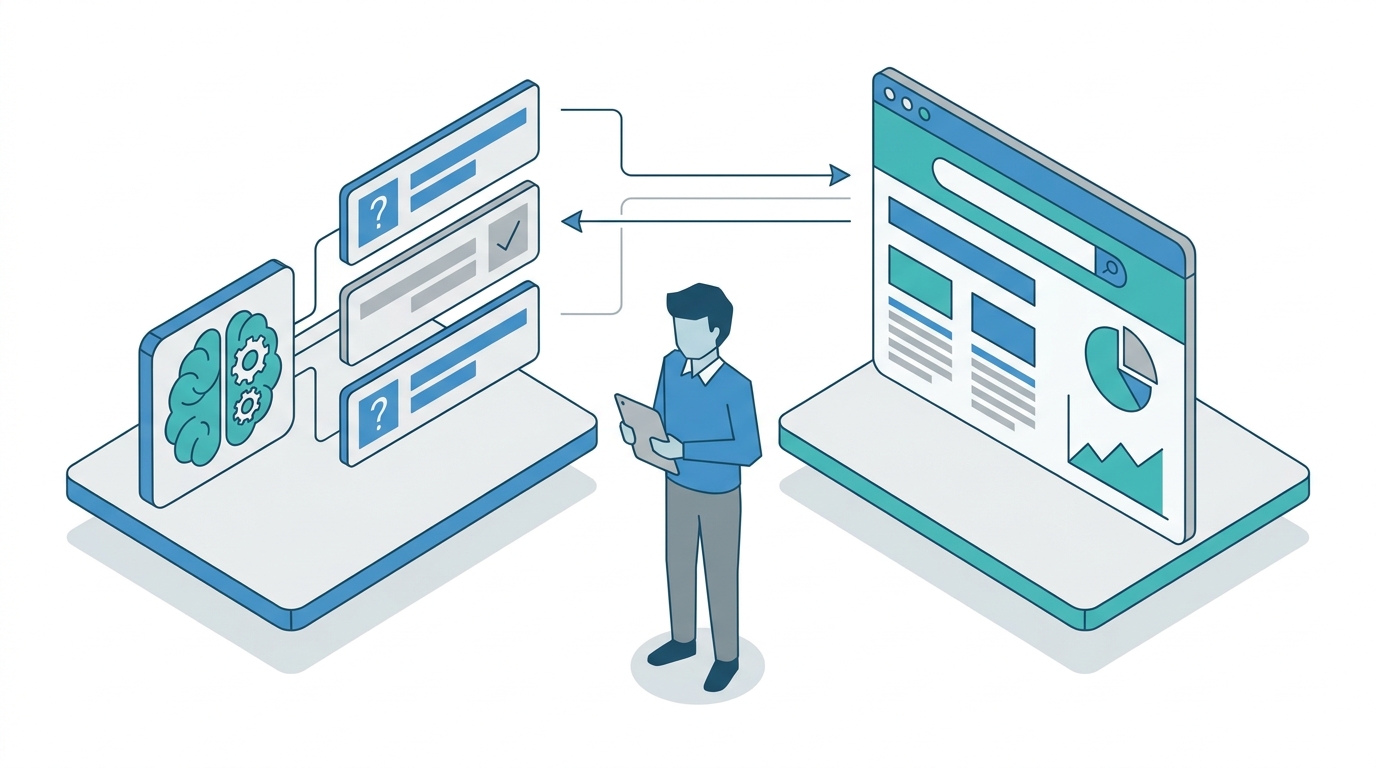
SEO is still necessary. It is no longer sufficient.
That is the clearest signal coming out of this month’s AI search coverage. In one week alone, marketers got three fresh reminders that the old playbook is breaking. MediaPost published a blunt warning from Northwell Health’s CMO that brands need a dual strategy for classic SEO and AI optimization. Search Engine Land highlighted Addy Osmani’s new argument that content now has to work for AI agents, not just human readers. Google then rolled out a new AI Mode in Chrome experience that keeps the AI interface open beside publisher pages instead of sending users cleanly to the website.
Those are not isolated updates. Together, they point to the same reality: search behavior is splitting. People still use Google the old way, but they are also using AI Overviews, AI Mode, ChatGPT, Perplexity, and other answer layers to get a summary before they decide where to click, whether to click, or whether to act at all.
For marketers, that means visibility now has two jobs. First, you still need rankings, site health, crawlability, authority, and pages that convert. Second, you need content that can be extracted, cited, summarized, and trusted inside AI systems that may reduce or reshape the click.
If you only do SEO, you risk losing the answer layer. If you only chase AI citations, you risk weakening the site foundations that still drive discovery and revenue. The winning move in 2026 is a dual strategy.
What changed this week, and why it matters
The strongest evidence did not come from one vendor trying to sell a new acronym. It came from three different directions.
In MediaPost, Northwell Health’s CMO described the current moment as a split challenge. Brands need to protect present-day visibility while also building for the AI-first future. The piece cited Jasper’s State of AI in Marketing 2026 report, which says 91% of marketing teams now use AI, up sharply from the year before. It also referenced McKinsey research showing that more than half of consumers intentionally seek out AI-powered search experiences.
At the same time, Search Engine Land covered Addy Osmani’s push for what he calls agentic engine optimization. His core point is useful even if you ignore the label: AI agents fetch and parse content differently than humans do. They have limited context windows, they prefer fast answers, and they do not have much patience for long intros, bloated pages, or weak structure. If the answer is buried, the system may skip it, truncate it, or pull something less accurate from another source.
Then Google changed the user experience again. As Google explained, AI Mode in Chrome now opens publisher pages side by side with the AI interface. As PPC Land reported, that seemingly small design choice raises bigger questions about screen space, attribution, engagement depth, and what a “visit” even means when the answer layer never fully disappears.
The pattern is hard to miss. Search is no longer a clean handoff from query to website. It is becoming a blended experience where answers, comparisons, citations, tabs, files, and follow-up questions sit in the same interface. That changes how content gets discovered and how brands get evaluated.
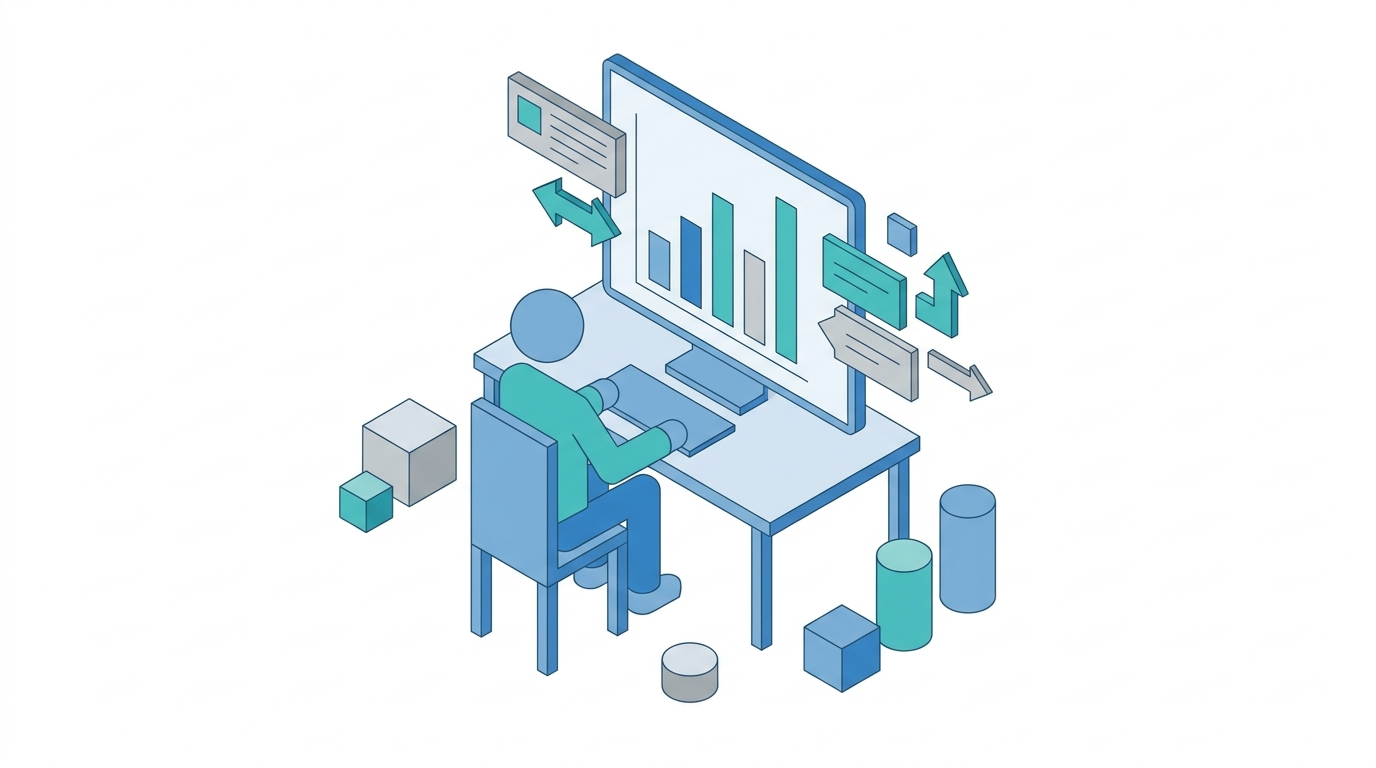
The new search model: defense and offense at the same time
A lot of teams are making this harder than it needs to be by treating SEO and AI visibility as competing priorities. They are not.
Think about the dual strategy in two layers.
Defense means protecting the parts of search performance that still matter every day. That includes technical SEO, indexability, site speed, internal linking, information architecture, authority signals, strong service pages, and conversion-focused landing pages. These are still the assets that help your site get crawled, understood, ranked, and trusted.
Offense means optimizing for the answer layer. That includes making content easier to quote, easier to summarize, easier to attribute, and easier to trust inside AI systems. It also means tracking whether your brand shows up in AI answers for the decision-stage prompts that matter to revenue.
The mistake is assuming one replaces the other.
If you stop investing in SEO because AI search feels more exciting, you weaken the very content base that feeds citations and trust. If you ignore AI search because rankings still look fine, you miss the growing share of discovery that happens before the click.
We see this tension clearly in healthcare and other high-consideration industries. The answer layer often shapes the shortlist before a user ever lands on a site. That is why rankings alone can flatter performance. You may still rank well and still be losing mindshare because the AI summary keeps citing someone else.
Why old-school SEO pages fail inside AI systems
Many pages that perform reasonably well in classic search still perform badly in AI retrieval. Usually the problem is not a lack of expertise. It is presentation.
Here is what tends to go wrong.
The answer is buried too deep
Some pages spend 600 words warming up before they say anything useful. That hurts human readers and it hurts AI extraction even more. Search Engine Land’s summary of Osmani’s recommendations notes that agents often need the answer early, ideally within the first 500 tokens. That does not mean every page should sound robotic. It means the point should arrive fast.
The structure is weak
AI systems respond better to clean headings, compact paragraphs, specific lists, explicit definitions, and pages that separate concepts clearly. When a page mixes five ideas together, the model has to infer too much.
The page is written for branding, not comprehension
This is common on agency sites and service pages. The copy sounds polished but says very little. AI systems are less forgiving than human readers here. If a page cannot clearly answer what you do, who it is for, how it works, and why it matters, it becomes hard to cite.
The supporting web footprint is thin
AI systems compare your site to the rest of the web. Reviews, profiles, citations, press, thought leadership, and consistent entity signals all help reinforce that your site is not making unsupported claims in a vacuum.
This is one reason AEO work often looks broader than on-page SEO. It is not just about your page. It is about whether the web agrees with your page.
What a practical dual strategy looks like
This does not require a full rebuild. Most teams can make meaningful progress by tightening the pages and workflows they already have.
1. Rewrite priority pages so the answer comes first
Your highest-value pages should lead with the clearest possible answer to the page’s main question.
If it is a service page, say what the service is, who it is for, what outcomes it supports, and how your approach is different. If it is a product page, explain the core use case and decision criteria right away. If it is a resource page, summarize the key takeaway before you get into detail.
Marketers keep trying to optimize AI visibility with extra assets while leaving their money pages vague. Start with the pages tied to pipeline.
2. Tighten headings, FAQs, and entity clarity
Every important page should have heading logic that makes sense even if you skim only the H2s and H3s. Add concise FAQ sections where they fit naturally. Clarify named entities, services, locations, categories, and relationships between topics.
This helps humans scan faster. It also gives machines cleaner retrieval points.
3. Cut filler and token waste
One of the most useful ideas in Osmani’s framework is token efficiency. Bloated pages are not just annoying. They raise the odds that systems miss the best part.
That does not mean every page should be short. It means every section should earn its place. Kill the generic intro. Cut repeated claims. Replace vague marketing copy with facts, examples, steps, pricing context, process details, or proof.
4. Expand off-site authority where AI systems look for corroboration
If your brand is trying to win citations in AI search, your website cannot be the only place making the case. Build supporting signals through expert bylines, digital PR, quality directory listings, review management, partner mentions, and references on trusted third-party sites.
For local and regional brands, this matters more than many teams realize. AI systems often triangulate credibility from multiple sources before deciding which brands deserve mention.
5. Track AI visibility separately from organic traffic
Organic sessions alone will not tell you whether your brand is gaining or losing ground in answer engines. You need a list of high-intent prompts, a repeatable citation check, and a reporting view that shows where your brand is present, absent, or displaced by competitors.
For teams that want a quick baseline, Emarketed’s AI search optimizer is one useful starting point. Use it to spot gaps, then turn those gaps into a real content and entity roadmap.
The industries that need this shift first
Every industry is feeling the pressure, but some sectors have less room for delay.
Healthcare and behavioral health
Healthcare is already seeing major trust and discovery changes. The Annenberg Public Policy Center found that 63% of Americans consider AI-generated health information somewhat or very reliable. That is a huge signal. Patients are not waiting for healthcare marketers to catch up before they start using AI answers.
That is why provider groups, treatment centers, and healthcare brands need a content strategy built for both search results and answer extraction. If your brand is absent from AI summaries in a high-stakes category, someone else is shaping the patient journey.
B2B companies with complex buying cycles
B2B buyers increasingly use AI to compare vendors, summarize capabilities, and narrow options before booking a call. If your site hides the specifics that prove fit, the model may never surface you as a credible option.
Local and regional service businesses
Local companies often assume AI search is a national-brand problem. It is not. AI systems answer plenty of location-based and service-based questions, and they often rely on a mix of site content, reviews, local citations, and category clarity to decide which businesses to mention.
We have seen how strong this can become when the foundations are in place. LA Roofing Materials grew from near-zero organic presence to over 2,000 keyword rankings and a 258% surge in AI mentions, a result of consistent SEO and AEO execution over time. That is the compounding effect of doing the basics well and then making the brand easier to cite.
What marketers are still getting wrong
The biggest mistake is chasing gimmicks.
A lot of teams hear that AI search matters and immediately go looking for a secret file, a magic schema type, or some shortcut that will unlock citations overnight. That is usually the wrong instinct.
Google has already made clear that traditional search fundamentals still matter for its AI features. At the same time, fresh reporting shows that AI systems reward content that is cleaner, clearer, and easier to consume. The answer is not a hack. It is better information design.
The second mistake is treating AI visibility as a content-only problem. It is partly a content problem, but it is also a trust problem, a measurement problem, and a distribution problem. You need content worth citing, a web footprint worth trusting, and a way to measure whether any of it is working.
The third mistake is waiting for traffic loss to force the issue. By the time traffic drops enough to get everyone’s attention, the competitive gap in AI citations is often already visible. Smart teams are not waiting for a cliff. They are building visibility where discovery is moving next.
FAQ: SEO and AI search in 2026
Is SEO dead because of AI search?
No. SEO still matters because websites still need to be crawled, understood, ranked, and trusted. What changed is that SEO no longer covers the whole discovery journey by itself.
What is the difference between SEO and AEO?
SEO focuses on improving visibility in traditional search results. AEO, in the practical sense most marketers care about, focuses on making your content easier for answer engines and AI systems to summarize, cite, and trust.
Should we rebuild our whole site for AI agents?
Usually no. Most teams should start by improving their highest-value pages, cleaning up structure, clarifying answers, and strengthening off-site trust signals. That gets results faster than a full rebuild.
Do we need llms.txt or special AI-only pages?
Not as a blanket rule. There is active debate around those tactics. What is more consistently useful is clear structure, direct answers, concise writing, and strong entity signals.
How do we measure success if clicks go down?
Track more than sessions. Monitor brand presence in AI answers, citation frequency, prompt-level visibility, assisted conversions, branded search lift, and lead quality from AI-referred traffic when available.
Which teams should move first?
Healthcare, B2B, and local service brands should move quickly because trust, comparison behavior, and decision support matter heavily in those categories.

What to do Monday morning
Pick ten high-intent queries that matter to revenue. Search them in Google AI Overviews, AI Mode, ChatGPT, and Perplexity. Document who gets cited, which pages show up, what answers are being summarized, and where your brand is missing.
Then audit the pages that should have been cited. Are the answers clear in the first few paragraphs? Are the headings specific? Is the proof credible? Does the broader web reinforce the claims?
That exercise will usually tell you more about your 2026 search problem than another month of dashboard watching.
The brands that win this next phase of search will not be the ones that abandon SEO or the ones that chase every new acronym. They will be the ones that keep their fundamentals strong while making their expertise easy for machines to understand and easy for humans to trust.
That is the job now. Two audiences, one content system, no room for filler.