ChatGPT Ads Just Got Cheaper. Your AEO Strategy Cannot Live in a Separate Deck
ChatGPT ads are moving downmarket in 2026. Here is what that means for AEO, paid media planning, and how agencies should protect AI visibility now.
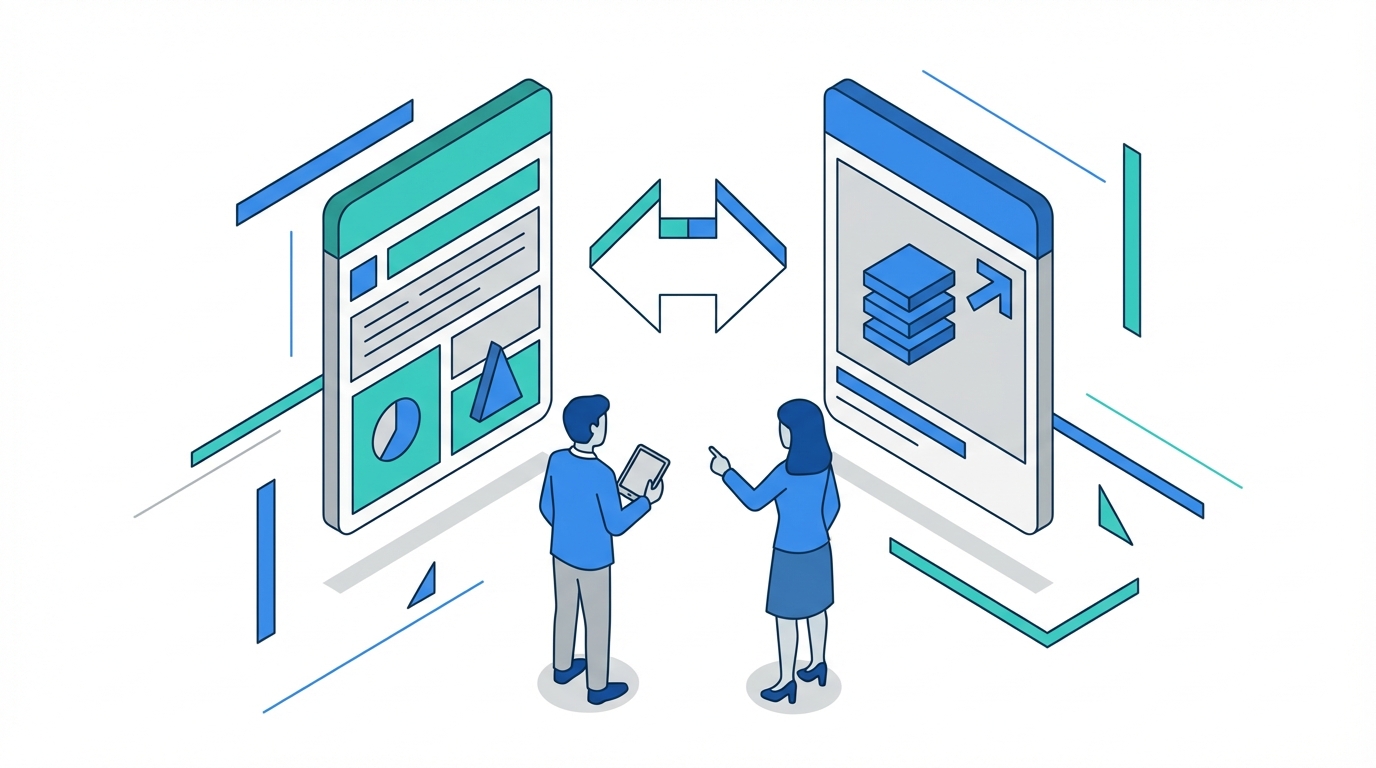
ChatGPT ads just moved from an enterprise experiment to a real planning problem for agencies.
Over the last few weeks, OpenAI’s ad business has gone from interesting industry news to something much more practical. Campaign US reported that ChatGPT’s ad trial generated $100 million in annualized revenue in six weeks, with more than 600 advertisers already on the platform. Then this week, The Keyword reported that OpenAI lowered the minimum spend from roughly $200,000 to $50,000 for parts of the program and launched a limited self-serve ads manager.
That does not mean every mid-market brand should rush into ChatGPT ads tomorrow. It does mean something more important: AEO and paid media now share the same AI surface. If your organic AI visibility plan sits in one deck and your paid media plan sits in another, your reporting is already behind the market.
For agencies, marketing directors, and in-house teams, this is the real shift. AI search is no longer just an organic discovery channel. It is becoming a blended visibility environment, where brands can be cited in the answer, shown below the answer, or missing entirely.
What changed this month, and why it matters
The first phase of ChatGPT ads was easy for most agencies to ignore. A reported $200,000 to $250,000 minimum kept the channel in large-brand territory. It was a headline, not a workflow.
That changed when OpenAI started broadening access. According to Campaign US, the ad trial scaled fast even while serving ads to less than 20% of eligible U.S. Free and Go users daily. At the same time, OpenAI said more than 85% of Free and Go users are eligible to see ads, which suggests the inventory picture is still in its early shape.
Then came the more consequential update. The Keyword’s report on April 13, citing Digiday, said OpenAI cut the minimum spend to $50,000 for some advertisers and rolled out a self-serve ads manager to a limited test group. The same report says the tool resembles Google Ads and allows direct campaign management around impressions and clicks.
That is the moment this stopped being a curiosity.
Once a platform starts looking and acting like ad software marketers already understand, adoption gets easier. Not universal, not instant, but easier. More importantly, conversations inside agencies change fast. The question is no longer “Will ChatGPT eventually have ads?” It is “Which clients need a paid AI search plan, and how does that affect our organic AI work?”
The mistake agencies are about to make
A lot of teams are going to treat this like they treated early paid social rollouts: spin up a test budget, isolate it inside paid media, and wait for attribution to catch up.
That is too narrow.
ChatGPT is not just another ad placement. It is a conversational environment where the organic answer shapes the user’s perception before any sponsored message appears. That changes the order of influence.
In traditional paid search, the ad often creates the first impression. In ChatGPT, the answer usually gets there first. The system frames the category, defines the options, and sets the trust baseline before the user ever sees a paid placement. If your brand is not cited in the organic answer, your ad is working uphill. If your brand is cited and then appears with a sponsored placement, you are reinforcing a decision already in motion.
That is why AEO and paid AI media cannot be planned separately anymore.
The paid team needs to know where the brand is already showing up organically inside AI answers. The organic team needs to know which prompts and categories paid media is testing, because those are high-intent environments worth winning with citations too. If those teams are not sharing query intelligence, they are wasting signal.
Organic citation still does the heavy lifting
There is a reason I would not tell most mid-market clients to shift budget aggressively into ChatGPT ads yet.
The reporting is still thin. The buying model is still settling. The inventory is still limited. And the economics are not built for casual testing. The Keyword says ChatGPT inventory is priced around $60 CPM, which sits well above many standard digital formats.
But organic AI visibility remains wide open relative to paid access.
That matters because the answer itself still carries the most persuasive weight in an AI interface. Paid placement can support consideration. It does not replace being named as a trusted source in the response.
This is where a lot of coverage is getting sloppy. People see ads entering ChatGPT and assume organic AI optimization is about to matter less. I think the opposite is more likely for most brands over the next 12 months.
As more advertisers enter the surface, the brands already earning citations gain an advantage. They are not introducing themselves cold. They are showing up with pre-built authority. Paid media becomes an amplifier, not a substitute.
We see the same logic in client work. Seasons in Malibu holds 4,200+ keyword rankings and 814K+ monthly social impressions, a full-service result that covers SEO, AEO, paid search, social, and web. That matters here because the performance does not come from one channel acting alone. It comes from visibility compounding across surfaces, including the AI answers that absorb clicks before a site visit ever happens.
If your agency is selling ChatGPT visibility without building citation readiness, you are selling a partial fix.
The new planning model: query ownership, not channel ownership
The old agency structure is simple to describe and increasingly wrong for AI search.
SEO owns rankings. Paid owns media. Content owns assets. Analytics owns reporting.
That model breaks when the user’s experience is one synthesized answer with a sponsored unit attached to it.
A better model is query ownership.
Start with the commercial and informational prompts that matter most to the client. Then ask four questions for each one:
- Does the brand appear in the AI answer?
- If it appears, how is it framed?
- If it does not appear, who does?
- Is there a paid opportunity worth testing around that same prompt cluster?
That sounds obvious, but most teams still do not work this way.
Instead, they report clicks on one side and impressions on the other, while the most important event goes unmeasured: whether the brand was present in the answer that shaped the buyer’s understanding.
This is especially dangerous in categories with long consideration cycles, regulated messaging, or trust-heavy decisions. Healthcare, B2B services, local professional services, and high-ticket consumer categories all fit here. In those markets, the answer is often the shortlist.
If your brand does not make the shortlist, your ad is trying to buy back credibility it should have earned upstream.
Why healthcare and other trust-heavy categories should care first
Healthcare marketers should pay especially close attention to this shift.
AI interfaces are becoming part of the research process for treatment, symptoms, providers, facilities, and insurance questions. That means paid visibility is entering a space where trust signals already matter more than raw exposure.
At the same time, platform behavior is diverging. Brandlight’s healthcare insurance analysis found Perplexity showing a 60% brand mention rate across 4,000 healthcare insurance queries, compared with 35% on Google AI Overviews. ChatGPT sat in between at 54%.
That gap is a warning. A brand can look strong in one AI environment and weak in another. So if a healthcare organization starts testing paid AI visibility without understanding its current organic footprint across platforms, it can misread the market badly.
This is one reason AEO work has become so important for healthcare clients. The system is not just evaluating relevance. It is evaluating credibility, consistency, and source quality.
Emarketed has already seen what that looks like in practice. Seasons in Malibu is ranked #1 on Perplexity for core treatment queries and has grown AI mentions from 49 to 122. That is not the result of one clever prompt trick. It is the result of building the kind of content and trust footprint AI systems are willing to cite.
If I were advising a rehab center, behavioral health brand, or medical practice today, I would not start with ChatGPT ad creative. I would start with answer readiness: expert-backed pages, citation-friendly structure, clearer service definitions, stronger off-site authority, and prompt-level visibility tracking.
Paid comes after that foundation, not before it.
What agencies should do in the next 30 days
This is the part that matters Monday morning.
You do not need a fully mature ChatGPT ad program this month. You do need a cleaner operating model around AI visibility.
1. Audit AI answer presence before discussing AI media budgets
Before you recommend any paid AI test, run a prompt audit.
Take the client’s highest-intent commercial queries and test them across ChatGPT, Perplexity, and Google AI surfaces. Document whether the brand appears, whether competitors appear, and which sources get cited. That gives you the real baseline.
If you need a faster process, use a structured workflow or toolset like an AI search optimizer, but keep it to one tools link in the post and keep the focus on the analysis, not the software.
2. Build a shared prompt set between SEO and paid teams
This is the simplest fix and one of the highest leverage ones.
Create a single prompt library for each client category. It should include branded prompts, non-branded discovery prompts, comparison prompts, local intent prompts, and objection-driven prompts. Both the SEO/AEO side and the paid side should work from the same set.
That way, when a paid team sees strong engagement around a prompt cluster, the organic team can build citation-targeted assets around it. When the organic team sees the brand consistently omitted from a prompt cluster, paid can decide whether it is worth testing presence while content catches up.
3. Stop reporting AI performance as traffic-only
Traffic matters, but it is now a lagging signal.
If AI answers resolve more of the user’s decision before the click, then presence inside the answer matters even when referral traffic stays modest. Your reporting stack needs to reflect that.
At minimum, start tracking:
- citation frequency across core prompts
- competitor mention overlap
- source domains most often cited in your category
- branded search lift after AI visibility improvements
- assisted conversion patterns from AI referral traffic
The goal is not to throw away traditional KPIs. It is to stop pretending they tell the whole story.
4. Treat paid AI placements as a learning channel first
For most brands, this is not yet a scale channel. It is a learning channel.
Use early tests to understand message fit, intent patterns, and brand lift around prompt categories. Do not expect a mature Google Ads replacement this quarter. Expect directional data and some expensive lessons.
That is fine, as long as the test is attached to a broader AI visibility strategy.
5. Tighten source quality on pages you want AI systems to trust
This one is still underappreciated.
If AI systems are pulling from pages that are clearly structured, well sourced, specific, and consistent with the broader web, then the quality of those pages affects both your organic visibility and the efficiency of any paid support around them.
Weak pages force paid media to carry too much persuasion. Strong pages make every downstream channel work harder.
The bigger shift is organizational, not tactical
The easiest way to misunderstand this story is to reduce it to one line: ChatGPT ads got cheaper.
That is true, but it is not the real headline.
The real headline is that AI search is forcing marketing teams to reorganize around visibility moments instead of channel silos. The answer, the citation, the sponsored unit, the click, and the branded search follow-up are part of one experience now.
Google is moving the same direction. Search Engine Land argues that AI Mode is already becoming Google’s next ads engine, with monetization, reporting, and control starting to take shape around conversational search. That matters because the market is not choosing between one AI ad platform and another. It is moving toward a broader condition where AI interfaces across platforms become monetized discovery environments.
If your agency waits for the tooling to become perfect before changing the way teams plan, you will be late.
The smart move is to build the operating habit now: shared prompts, shared visibility reporting, shared source analysis, and a clear rule that paid AI experiments never replace citation strategy.
FAQ: ChatGPT ads, AEO, and paid media planning
Are ChatGPT ads relevant for small and mid-sized businesses yet?
For some, yes. For most, not as a major budget line yet. The lowered spend threshold and early self-serve access make the platform more relevant than it was a month ago, but it is still early, premium-priced, and limited. Most SMBs will get more value first from strengthening organic AI visibility.
Does paid placement in ChatGPT improve organic citations?
No evidence suggests it directly improves them. Organic citations and paid placements are separate mechanisms. That said, they influence the same user journey, so they should be planned together even if one does not boost the other algorithmically.
Should AEO and paid media be managed by the same team?
Not necessarily by the same people, but they need shared planning. The better question is whether both teams work from the same prompt set, reporting model, and business goals. If they do not, execution will drift.
What should agencies measure first?
Start with citation presence across high-intent prompts, competitor mention share, and source-domain patterns. Then layer in paid performance, branded search lift, and assisted conversions. If you only measure traffic, you will miss a lot of what AI search is changing.
Is this mainly a B2B issue, or does it affect healthcare and local brands too?
It affects all of them, but the urgency is highest in trust-heavy categories. Healthcare, rehab, legal, financial services, and high-consideration B2B categories all depend on credibility. In those spaces, being cited in the answer can matter more than winning the click.
What should a marketing team do this week?
Run a prompt audit on your top decision-stage queries. Check whether your brand appears in ChatGPT, Perplexity, and Google AI answers. If it does not, fix that before treating paid AI placements as your main path in.
What to do next
Do not panic-buy ChatGPT ads because the barrier dropped.
Do not ignore the change either.
The practical move is to treat this as a planning trigger. Audit where your brand already shows up in AI answers. Identify the prompt clusters that drive real commercial intent. Make SEO, AEO, and paid teams work from the same list. Then decide where paid AI testing makes sense after you understand the organic gap.
The agencies that win this next phase will not be the ones shouting loudest about the newest ad format. They will be the ones that understand a simpler truth: in AI search, visibility is now one system with multiple surfaces.
If your team is still treating those surfaces like separate channels, fix that before your competitors do.