Google Just Made AI Search More Link-Driven
Google’s latest AI search update makes links, citations, and brand trust more important. Here is what agencies and healthcare marketers should do next.
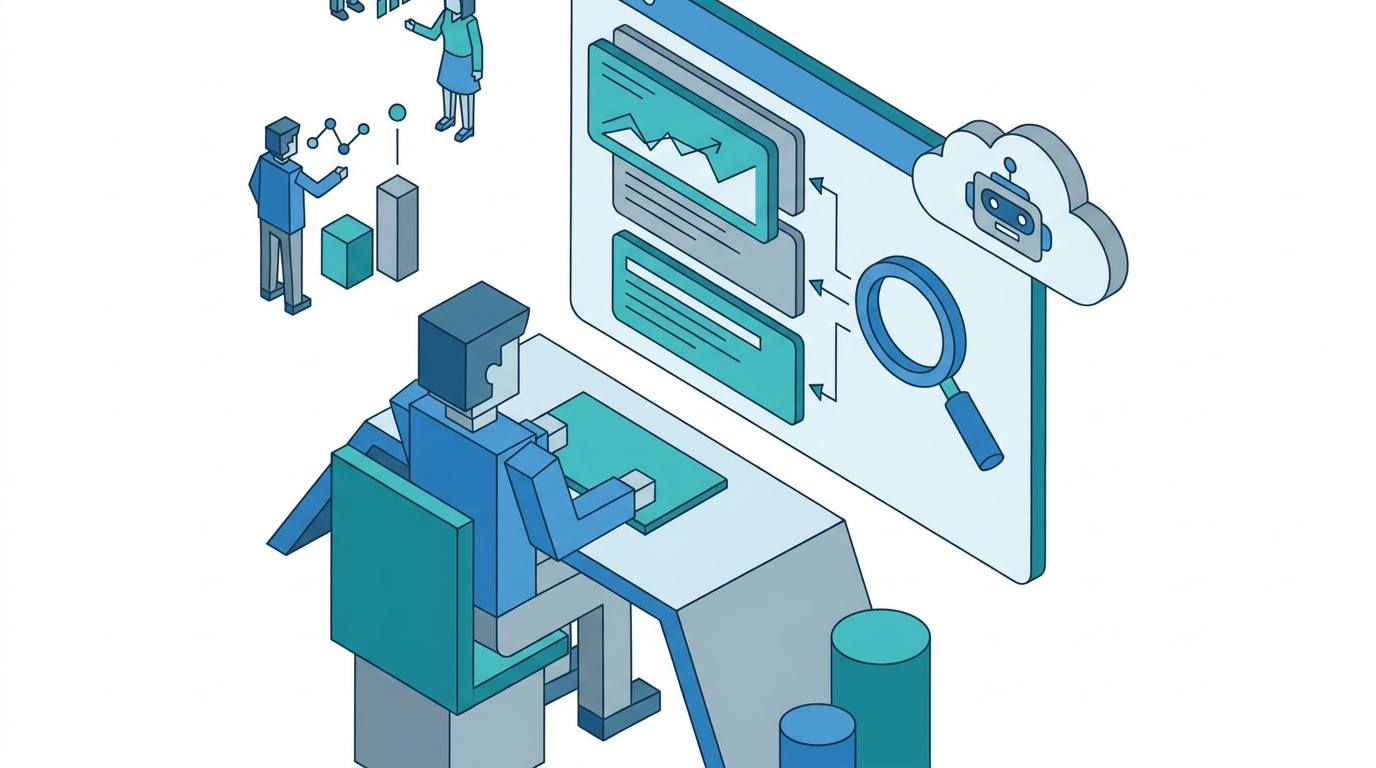
Google just made AI search more link-driven, and that matters a lot more than the feature list suggests.
In its May 6 update, Google said AI Mode and AI Overviews will now surface more direct links, deeper article suggestions, firsthand perspectives from forums and social media, and easier access to trusted subscription sources. Coverage from The Verge, 9to5Google, and ZDNET all pointed to the same takeaway: Google is not trying to replace the open web, it is deciding which sources deserve more visibility inside the answer layer.
That lines up with the bigger pattern search marketers have been tracking all week. Search Engine Land argued that brand authority beats topical authority in AI search, that AI visibility starts before search and ends with citations, and that marketers should use a 10-gate pipeline to find where content fails in AI search. Search Engine Journal pushed the same conversation forward with a blunt takeaway: Google AI Mode in Chrome is not killing SEO, it is exposing weak SEO. Put those together and one thing becomes hard to argue with: publishing more average content is no longer a reliable growth plan.
For agency owners, healthcare marketers, and in-house teams, the new question is not “how many posts should we publish?” The better question is “why would an AI system trust us enough to cite us, and why would a human want to click us after seeing the answer first?”
That is a different strategy.
Google’s update makes source quality more visible
The most important part of Google’s announcement is not that AI Mode got a few new interface touches. It is that Google keeps moving toward a model where AI answers act like guided pathways into the web.
That means the source behind the answer matters more. If Google is giving users deeper article paths, previewing firsthand perspectives, and making in-line links easier to understand before the click, then the competition is no longer just about being summarized. It is about being selected as a worthwhile destination.
That is a meaningful shift for agencies and in-house teams because it changes what a win looks like. A page does not just need to rank. It needs to look useful enough, specific enough, and trustworthy enough to earn placement inside an AI-assisted discovery flow.
The Verge noted that Google is now bringing in perspectives from Reddit, social media, and forums because people increasingly want advice from other people, not just polished publisher copy. Google’s own post also emphasized original content and trusted sources. That should be a warning to every marketing team still treating content volume as a moat.
If your pages sound interchangeable, AI search has less reason to surface you. If your brand is clearly associated with expertise, stronger evidence, and distinct points of view, your odds improve.
AI visibility is now a trust problem before it becomes a content problem
Traditional SEO taught marketers to think in a clean sequence: target a keyword, publish a page, rank for it, get the click, convert the visitor. That model still exists, but AI search has inserted a new layer between the query and the click.
Large language models and AI-enhanced search tools do not simply pass through the highest ranking blue link. They assemble answers from sources they believe are safe, clear, and credible enough to repeat. That means your page is being judged inside a larger reputation system.
If your brand shows up rarely outside your own website, your authority is harder to prove. If your company information is inconsistent across the web, your expertise signals are thin, or your best content says nothing different from the next ten agencies, you are making citation harder than it needs to be.
That is why the recent Search Engine Land piece on AI visibility starting before search matters so much. The article points marketers away from the narrow idea that AI search is just another content formatting challenge. Visibility begins long before the prompt is entered. It starts with what the web already says about you.
This is especially important in healthcare marketing, where trust standards are higher and AI systems have more reason to be selective. A generic service page with soft claims and no proof is a weak candidate. A brand with consistent expertise signals, strong topical pages, recognized mentions, and useful supporting content is easier to surface.
Why topical authority is losing ground to brand authority
For years, content strategy has revolved around topical authority. Publish enough coverage around a subject, build internal links, answer related questions, and over time your site earns more trust from search engines. That framework still has value. It just does not explain enough of what is happening now.
Search Engine Land’s article on brand authority beating topical authority in AI search gets at the real shift. Traffic used to justify mass content production because even a lightly differentiated article could bring in visitors, impressions, and some assisted conversions. In AI search, the economics are different. If the model can answer without sending the click, then publishing another lookalike article has less upside.
That pushes marketers toward a harsher standard. A page now needs a reason to exist beyond “this keyword has volume.”
Another recent Search Engine Land piece made the same point even more directly: more content is no longer a reliable way to grow SEO. That is not a niche opinion anymore. It is becoming the operating reality for teams watching zero-click behavior increase while their content calendars keep expanding.
The smarter play is to build content that strengthens the brand itself. That means:
- Publishing pages that answer high-intent questions with specifics
- Creating assets that are more citable than the generic alternatives
- Using every page to reinforce expertise, proof, and market positioning
- Connecting on-site content with off-site signals that validate the brand
In other words, topical breadth still helps, but only when it supports a brand the model can recognize as legitimate.
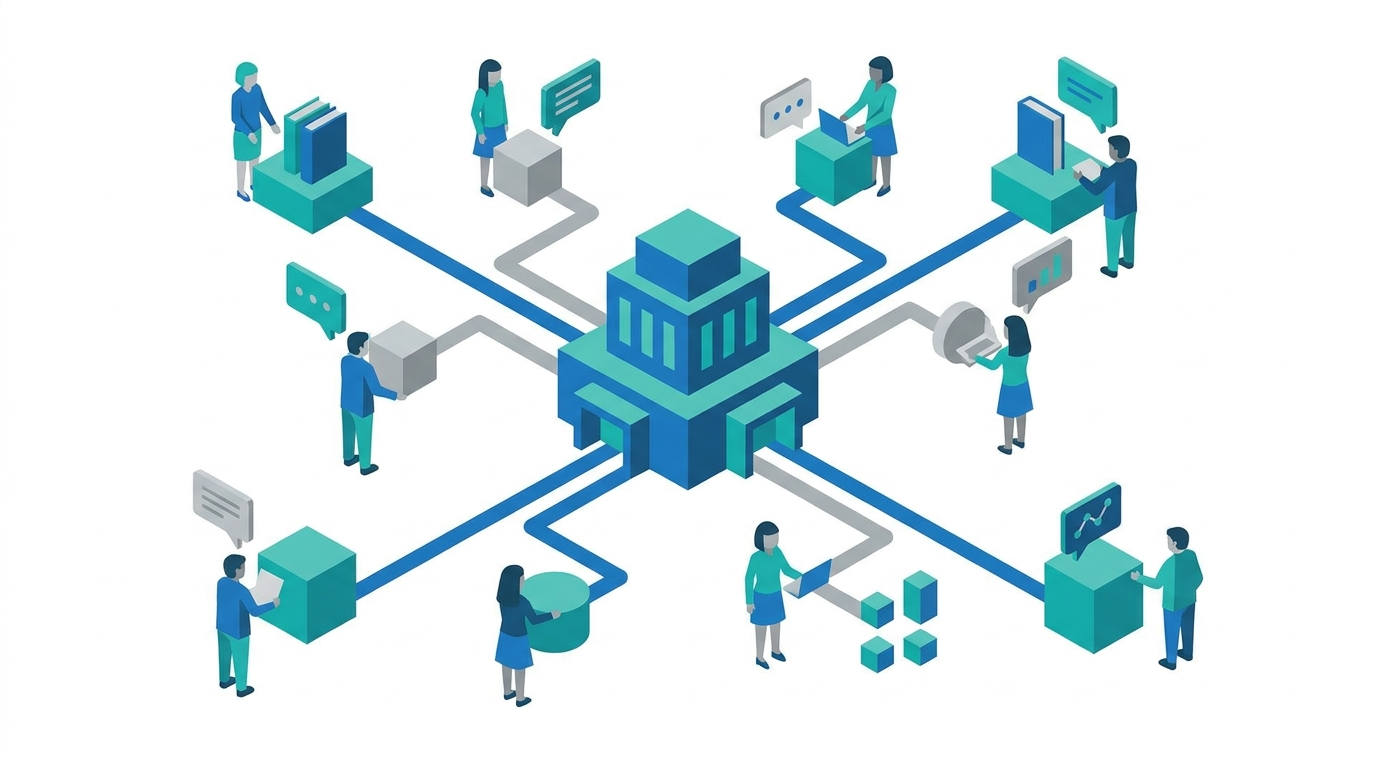
The signals AI systems appear to trust most
Marketers love the idea of one ranking factor because it feels actionable. AI search does not seem to work that way. The better way to think about it is as a stack of trust signals that work together.
The Search Engine Land article on four signals that now define visibility in AI search points in a useful direction. The names of the signals may vary by platform, but the pattern is stable enough to act on.
1. Clear entity identity
Your brand should be easy to identify across your site and across the web. That includes a consistent business name, accurate contact information, clear descriptions of your services, structured data where appropriate, solid author profiles, and an about page that says something real.
When identity is messy, models have a harder time connecting your expertise to the topic in front of them. If you operate in healthcare, B2B, or local markets, this matters even more because ambiguity makes trust weaker.
2. Third-party validation
AI systems do not want to rely only on what you say about yourself. Independent support matters. That can come from reputable mentions, interviews, citations in respected publications, relevant directories, review signals, expert roundups, and well-earned backlinks from sites that make contextual sense.
This is where many agency content plans break down. They are built almost entirely around owned content, with very little effort going into the off-site evidence that tells machines the brand matters.
3. Decision-stage content
Search Engine Land’s piece on what blog posts get mentioned in ChatGPT is worth paying attention to because it highlights something many marketers miss. AI systems seem more likely to pull from content tied to real decision-making.
That means service comparisons, implementation guides, category explainers, FAQ pages, pricing context, buyer checklists, and sharply argued blog posts often do more than another broad awareness article.
This does not mean top-of-funnel content is dead. It means your content mix should reflect how people actually use AI tools. Many prompts are not casual research prompts. They are shortcuts to evaluation.
4. Reinforced reputation across channels
If the same brand shows up in search results, reviews, social conversations, directories, industry writeups, and useful content pages, it becomes easier for a model to treat that brand as known.
That repeated presence acts like a confidence layer. One page can be ignored. A pattern is harder to dismiss.
What this looks like in the real world
The easiest way to understand the shift is to look at how strong brands behave in zero-click environments. They do not panic every time a click disappears. They ask whether visibility is still producing business value.
That is exactly why Emarketed’s own client results matter here. Seasons in Malibu grew monthly audience from 209K to 13.8M, increased AI mentions from 49 to 122, expanded cited pages from 122 to 190, now ranks for 4,200+ keywords, drives about 4,100 organic visits per month, and holds an estimated $25,000 in monthly traffic value.
That is the pattern marketers should study. Organic traffic can soften as AI answers absorb some clicks, while brand visibility and business outcomes stay strong or improve. If your dashboard only tracks clicks, you miss the more important story.
Healthcare marketers should pay special attention here because patient journeys are fragmenting. People no longer move from Google to one website in a straight line. They compare providers, ask AI tools for recommendations, scan reviews, revisit branded content, and make decisions after multiple micro-checks. Brand authority is what holds that journey together.
The 10-gate way to audit your weak spots
One reason marketers get stuck is that “be more authoritative” sounds vague. The better approach is diagnostic.
That is where the Search Engine Land piece on the 10-gate AI search pipeline is useful. Instead of assuming a content problem, it encourages teams to identify where the failure happens.
A practical version of that audit looks like this:
Gate 1: Are you even retrievable?
If your content is blocked, poorly structured, hidden behind weak architecture, or otherwise difficult for systems to access and interpret, nothing else matters.
Gate 2: Are you understandable?
If your page buries the answer, uses vague language, or lacks clean structure, it is harder to extract and cite.
Gate 3: Are you credible?
Do you show authorship, expertise, proof, and clarity around who is making the claim?
Gate 4: Are you distinct?
If ten other pages say the same thing, why would your page be chosen?
Gate 5: Are you supported elsewhere?
Can the wider web confirm that your brand is legitimate and relevant to the topic?
Most struggling sites fail more than one gate. They are not losing because one title tag is weak. They are losing because the overall brand package is too thin.

What agencies should change this quarter
This shift is big enough that agencies should change both deliverables and reporting.
First, stop selling output as the main product. A bigger content calendar is not a strategy by itself. If a page does not strengthen trust, earn citations, support high-intent discovery, or help close a business gap, it should be harder to justify.
Second, audit brand signals with the same seriousness you apply to technical SEO. Check whether the client has consistent positioning, a credible about page, expert bios, strong reviews, relevant mentions, and pages that actually deserve citation.
Third, treat AI visibility and traditional SEO as connected but different systems. Search Engine Journal’s point that AI Mode is exposing weak SEO is useful because it prevents the lazy conclusion that SEO no longer matters. Strong SEO still matters. It is just being judged inside a more demanding context.
Fourth, give clients a better way to measure progress. Citation growth, branded search lift, high-intent page engagement, assisted conversions, and lead quality may tell a more honest story than raw traffic alone. If you need a deeper primer on operational changes, Emarketed’s guide to optimizing for AI search is a useful next read.
Fifth, review which pages are actually worth a click when AI answers show the first layer of information. Google is making the handoff from answer to source more intentional. That means weak service pages, vague category pages, and filler blog posts will struggle even more than they did before.
The practical question is simple: if a prospect sees your link inside AI Mode, will they feel like clicking it gives them something better than the answer they already got?
If the honest answer is no, that page is underbuilt for 2026.
Sixth, build more pages that take a position. Safe content is easy to replace. Original framing, real examples, hard-won data, and clearly argued points are much more likely to earn attention.
A simple content filter for the AI search era
Before publishing any new page, ask five questions.
- Does this page say something more specific than the current top results?
- Does it help a real buyer make a decision?
- Does it reinforce our authority in a way an AI system could recognize?
- Is there proof, data, or experience here that generic competitors do not have?
- Would this still deserve to exist if it sent fewer clicks but improved citations and conversion quality?
If the answer is no to most of those, the page is probably content volume, not content strategy.
That is the real divide opening up in 2026. Teams that keep publishing for volume will keep wondering why visibility feels weaker. Teams that publish to strengthen brand authority will have a much better chance of being the source AI tools repeat.

FAQ
Is SEO still worth investing in if AI search reduces clicks?
Yes. Strong SEO is still the foundation for discoverability, crawlability, and content quality. The difference is that traffic is no longer the only payoff. SEO now also supports citations, branded recall, and conversion influence inside AI-assisted journeys.
What changed in Google’s May update to AI Mode and AI Overviews?
Google added more direct links inside AI answers, suggestions for deeper article exploration, easier access to trusted subscription content, and more firsthand perspectives from forums and social platforms. The update makes source selection and click confidence more important.
What is the difference between topical authority and brand authority?
Topical authority comes from covering a subject deeply and consistently. Brand authority comes from being recognized and trusted as a real source on that subject across your website and the wider web. In AI search, brand authority appears to have more influence than many marketers expected.
Why does this matter more for healthcare marketers?
Healthcare prompts often involve trust, safety, and higher-stakes decisions. That makes AI systems more cautious about what they surface. Brands with stronger expertise signals, cleaner entity identity, and more supporting evidence have an advantage.
Should we stop publishing blog content?
No. The better move is to publish fewer generic posts and more useful ones. Content should support authority, answer decision-stage questions, and give AI systems a reason to cite your brand instead of another source.
What kinds of pages are most likely to help with AI citations?
Service pages, FAQ hubs, implementation guides, comparison pages, category explainers, and original insight posts often have more citation value than broad awareness content. High-intent, clear, and evidence-backed pages tend to be stronger assets.
What to do Monday morning
Start with an authority audit, not a blank content calendar.
Review your top service pages, your about page, your author and expertise signals, your reviews, your third-party mentions, and the content most likely to influence a buying decision. Then look for the gap between what your brand claims and what the web can verify.
That gap is where most AI visibility problems live.
The agencies that win this year will not be the ones that publish the most. They will be the ones that make their clients the easiest brands to trust, cite, and choose.