LinkedIn Is Now the #1 Cited Source in AI Search: What B2B Marketers Need to Do About It
New data from Profound shows LinkedIn ranks first for professional queries across ChatGPT, Google AI Mode, Copilot, and Perplexity. Here is what that means for your B2B visibility strategy.

Most B2B marketers spend their optimization budget on their website. That is a reasonable instinct. But a new data set suggests the platform getting your brand cited in AI-generated answers is not your website at all. It is LinkedIn.
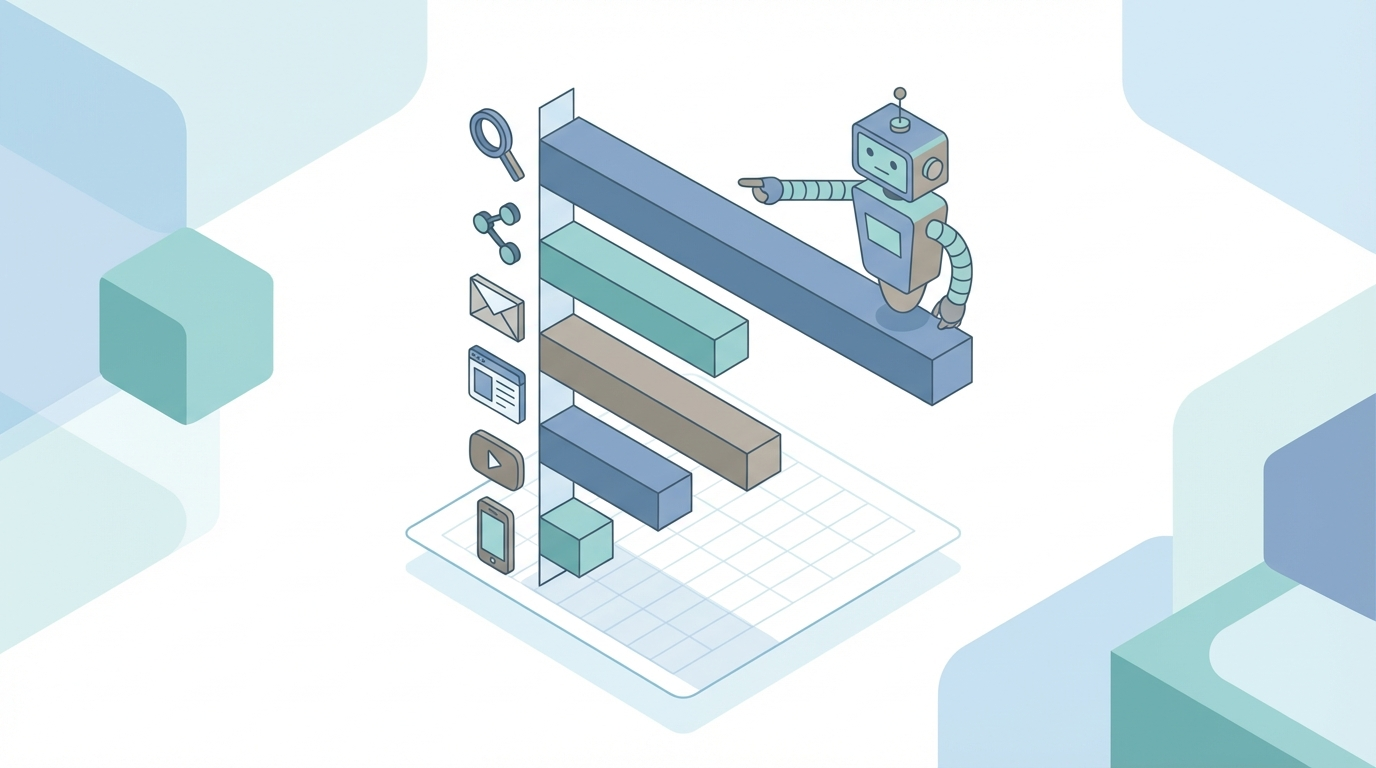
Research published this month by Profound analyzed 325,000 prompts across the major AI search platforms: ChatGPT, Google AI Overviews, Google AI Mode, Microsoft Copilot, and Perplexity. The finding that stopped marketers mid-scroll: LinkedIn ranks as the #1 most-cited domain for professional queries across every platform examined.
That is not a footnote. That is a strategy shift.
What the Data Actually Shows
The Profound study looked at professional and B2B-adjacent queries across AI systems. LinkedIn’s citation dominance was not close. In the professional query category, it ranked ahead of Reddit, Wikipedia, and most major news publishers.
Separately, Semrush’s own prompt analysis across 12 major industry categories found LinkedIn as the second most-cited source overall, just behind Reddit, across all query types. When filtered to professional and business-intent queries, LinkedIn jumped to first.
What explains this? AI models train on structured, high-trust content. LinkedIn has several properties that make it attractive as a citation source:
- Public, structured profiles that establish authority and expertise signals clearly
- Company pages that aggregate verifiable business information
- Articles and posts with explicit authorship and professional context
- Consistent format that machines can parse for entity, role, and claim
Put simply: LinkedIn looks like an authority source to AI models in ways that many corporate blog pages do not.
The B2B Visibility Blind Spot
Here is the gap most agencies and brand managers are sitting in right now. They are tracking Google keyword rankings. Some are starting to track AI Overview appearances. Almost none are systematically managing their LinkedIn presence as an AI citation asset.
That gap is costing visibility in the exact queries their ideal clients are running.
Think about the searches a potential client runs before booking a call with an agency: “best digital marketing agencies in Los Angeles,” “what does AEO mean for my business,” “how do I know if my marketing agency is good.” Those are high-intent professional queries. LinkedIn content and company profiles now show up inside the AI answer to many of them, whether the brand planned for it or not.
The brands that show up are not necessarily better. They are just better represented on the platform AI currently trusts most for professional queries.
What Makes LinkedIn Content Citable
Not all LinkedIn activity earns citations. The platforms tend to pull from content that has the following characteristics:
Specific, structured claims. Vague thought leadership (“great to be at this event!”) does not give an AI model much to work with. Posts that make specific, factual, and well-framed arguments about a topic are far more likely to be extracted and cited.
Expertise signals tied to a named person or company. LinkedIn’s structure naturally surfaces who said what and from what professional context. A post by a founder of a 10-year-old agency about a specific marketing challenge carries more citation weight than an anonymous article on a generic blog.
Consistent topic focus. Profiles and company pages that post regularly about a narrow set of topics build what you might call topical authority on LinkedIn itself. That mirrors how Answer Engine Optimization works more broadly: depth and consistency beat breadth.
Engagement from relevant audiences. While AI models do not parse likes directly, high-engagement posts often accumulate more indexed content around them, which strengthens their citation signal.
Company pages with complete, updated information. Thin or outdated company pages are a missed opportunity. The About section, specialties field, and linked website all contribute to how AI systems interpret and cite the entity.
Practical Steps to Improve Your AI Citation Presence on LinkedIn
The good news: you do not need to reinvent your marketing strategy. You need to redirect some of it.
Audit your company page as a citation asset. Read your About section as if you were an AI model trying to summarize what your company does. Is it specific? Does it name your services, your city, your industry focus? If it reads like a generic values statement, rewrite it.
Post original perspectives, not reposts. AI models prefer primary content. Sharing someone else’s article adds no original claim for citation. Writing your own take on a trend does. Aim for 2-3 original posts per week from the company page and from key executives.
Use structured formats. Lists, numbered frameworks, and Q&A formats within posts align well with how AI models extract information. If your post answers a specific question in a scannable format, it is easier to cite.
Build the executive voice. The Profound data suggests that individual LinkedIn profiles of company leaders carry significant citation weight for professional queries. The CEO or lead strategist at your firm should have an active, well-maintained LinkedIn presence with consistent posting on relevant topics.
Track where you are being cited. You cannot improve what you cannot measure. Tools like our Brand Presence Checker can show you how your brand appears across AI platforms today, which gives you a baseline for what your LinkedIn optimization efforts are actually moving.

The Broader Shift This Reflects
The LinkedIn citation story is one piece of a larger pattern. AI models are building their own trust hierarchy, and it does not map 1:1 to Google’s authority signals.
Reddit for conversational queries. LinkedIn for professional ones. Wikipedia for factual definitions. YouTube for how-to and instructional content. Each platform has carved out a domain where AI engines consistently lean on it.
For B2B brands, the implication is specific: your LinkedIn presence is now part of your AI citation strategy, not just your social media calendar. The companies treating it as a structured optimization layer, rather than a broadcast channel, are the ones appearing in AI answers to the queries their clients are asking right now.
The shift also applies to content topics. Professional services firms, agencies, and consultants who regularly publish on LinkedIn about their area of expertise are accruing citation authority that did not exist two years ago. That authority compounds over time, the same way backlinks used to compound in traditional SEO.
The question is when you start treating it that way.
FAQ: LinkedIn and AI Search Citations
Why does LinkedIn rank so highly in AI search citations? LinkedIn combines structured professional data, explicit authorship, and high domain authority. AI models use it as a reliable source for professional context because it surfaces verifiable claims tied to named individuals and organizations.
Does LinkedIn company page content get cited the same way individual posts do? Both are cited, but for different query types. Company pages tend to appear in brand-level queries (“what does [company] do”). Individual posts and articles from executives tend to appear in topic-level queries (“what is the best approach to [problem]”).
How often should we be posting on LinkedIn to build citation authority? Consistency matters more than volume. Two to three substantive posts per week from the company page, with at least one weekly post from key executives, is a reasonable starting point. Posting daily filler is less effective than posting twice weekly with real insight.
Does LinkedIn optimization replace website optimization for AI search? No. They work together. Answer engine optimization on your website builds the foundation: structured content, FAQ sections, schema markup, and clear entity signals. LinkedIn adds a trusted third-party citation layer that reinforces what your website claims about your brand.
Can small businesses compete on LinkedIn citation authority against large enterprises? Yes, particularly in niche topics. AI models do not exclusively favor big brands. A smaller firm that posts consistently and specifically about a narrow professional problem can earn more citation authority on that topic than a large generalist firm that barely touches LinkedIn.
How do I know if my LinkedIn content is being cited in AI answers? Start by running your own brand queries in ChatGPT, Perplexity, and Google AI Mode. Ask about your company directly, then ask topic questions where you would expect to appear. For a more systematic view, use an AI visibility monitoring tool to track citation patterns over time.
Where This Goes Next
The Profound data is a snapshot. The citation patterns will shift as AI models update, as platforms change their indexing policies, and as more brands catch on and start optimizing deliberately.
What will not change is the underlying logic: AI models need trusted, structured sources to cite. The platforms that have built structural trust signals over years, LinkedIn chief among them for professional content, have a durable advantage.
For B2B marketers, the window to build citation authority before the space gets crowded is open now, not indefinitely. The brands that move first on a structured LinkedIn optimization strategy will look like the obvious citations for professional queries in their niche. The ones that wait will spend the next three years trying to catch up.
If you want to understand where your brand currently stands in AI search, and what it would take to improve that positioning, get in touch. That is exactly what we do.