AI Is Displacing Websites: The New Reality for Marketers
Harvard Business Review reports AI is displacing websites and traditional search. Learn what this means for your marketing and how to adapt.
Key Takeaways
- Conversational AI is displacing websites as the primary way customers learn about products
- Traditional search is shrinking as AI generates answers directly
- Businesses must rethink visibility when answers are generated rather than clicked
- Brand presence in AI responses is becoming the new SEO
The Shift Is Happening Now
For twenty years, your website was the digital hub of your business. You drove traffic through search engines, social media, and advertising. Visitors landed on your pages, browsed your content, and took action.
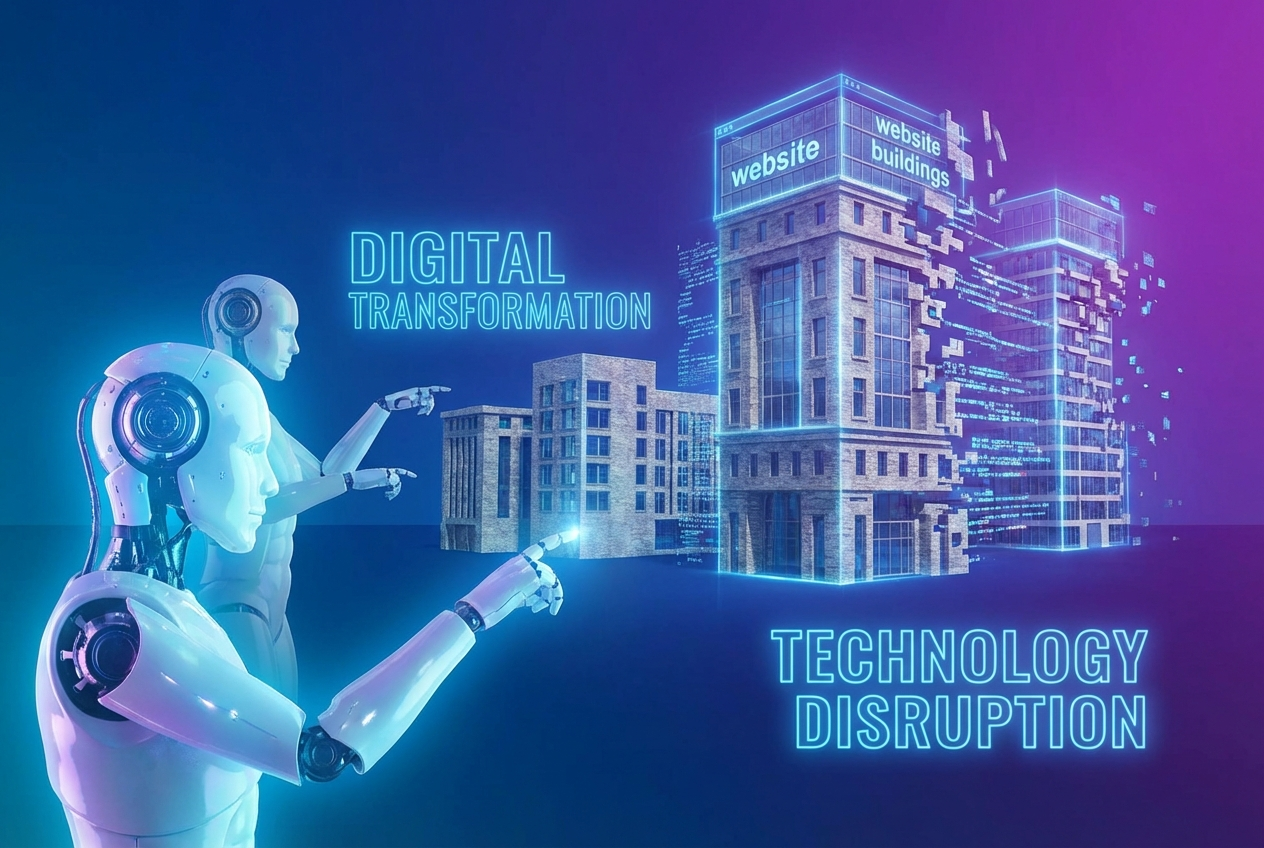
That model is breaking. Harvard Business Review recently published an article confirming what marketing leaders have been sensing: conversational AI is displacing websites and traditional search as the way people learn about products.
This is not a prediction for some distant future. This is happening right now in February 2026.
How AI Displaces Websites
The displacement happens through several interconnected mechanisms that are reshaping how customers find and engage with businesses.
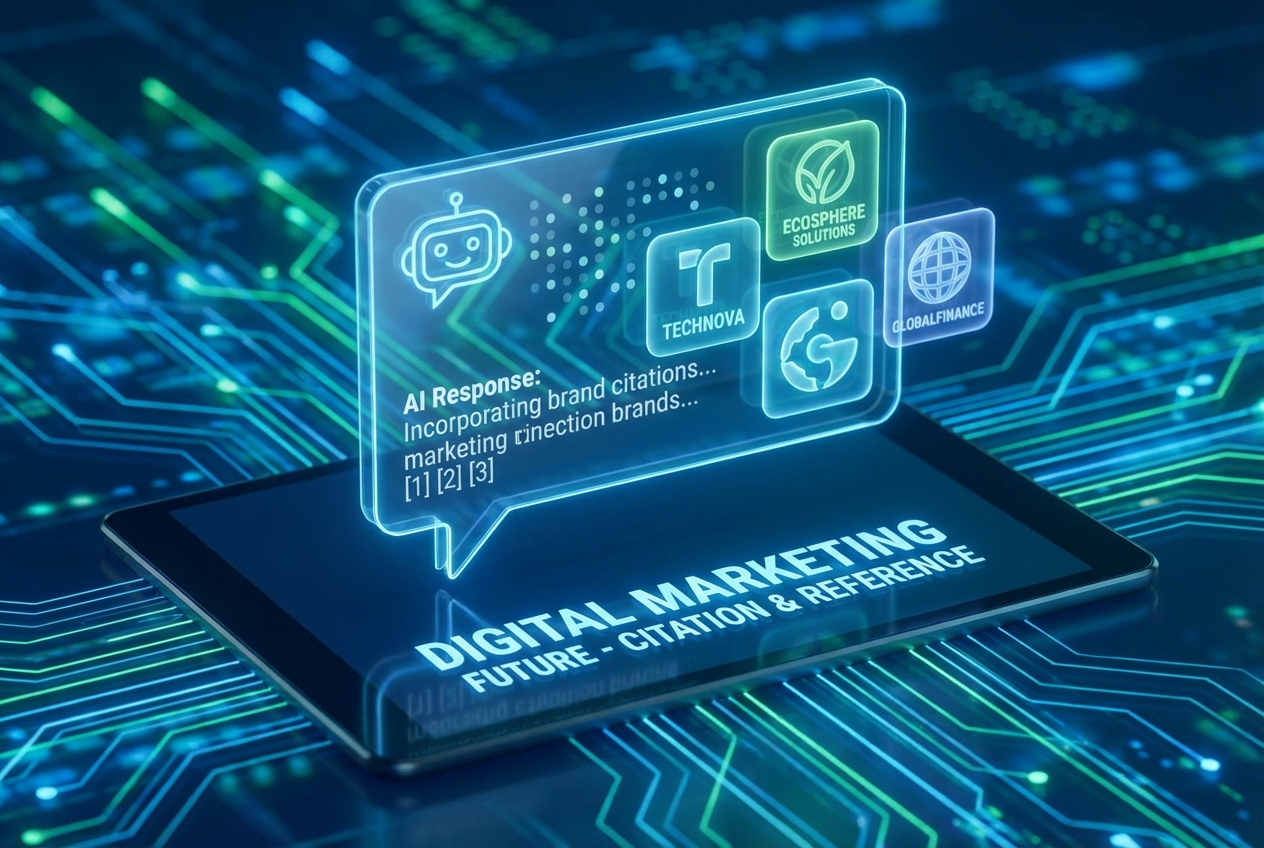
AI Answers Replace Searches. When someone wants to know about a product or service, they increasingly ask an AI chatbot rather than typing keywords into Google. The AI provides a direct answer, complete with recommendations and reasoning. The user never clicks through to a website.
Choice Narrowing. AI systems synthesize information and present curated recommendations. Rather than showing users dozens of options, AI narrows choices to the most relevant few. If your brand is not included in those recommendations, you might as well not exist.
Conversation Replaces Browsing. Traditional website marketing relied on users browsing through pages, comparing options, and gradually moving toward a decision. AI accelerates this by handling the comparison work directly. Users get answers in seconds rather than spending minutes on your site.
Trust Shifts to AI. Customers increasingly trust AI recommendations over company-generated content. When an AI vouches for a brand, that carries more weight than self-published marketing materials.
What This Means for Your Business
The implications are profound for how you think about digital presence and customer acquisition.
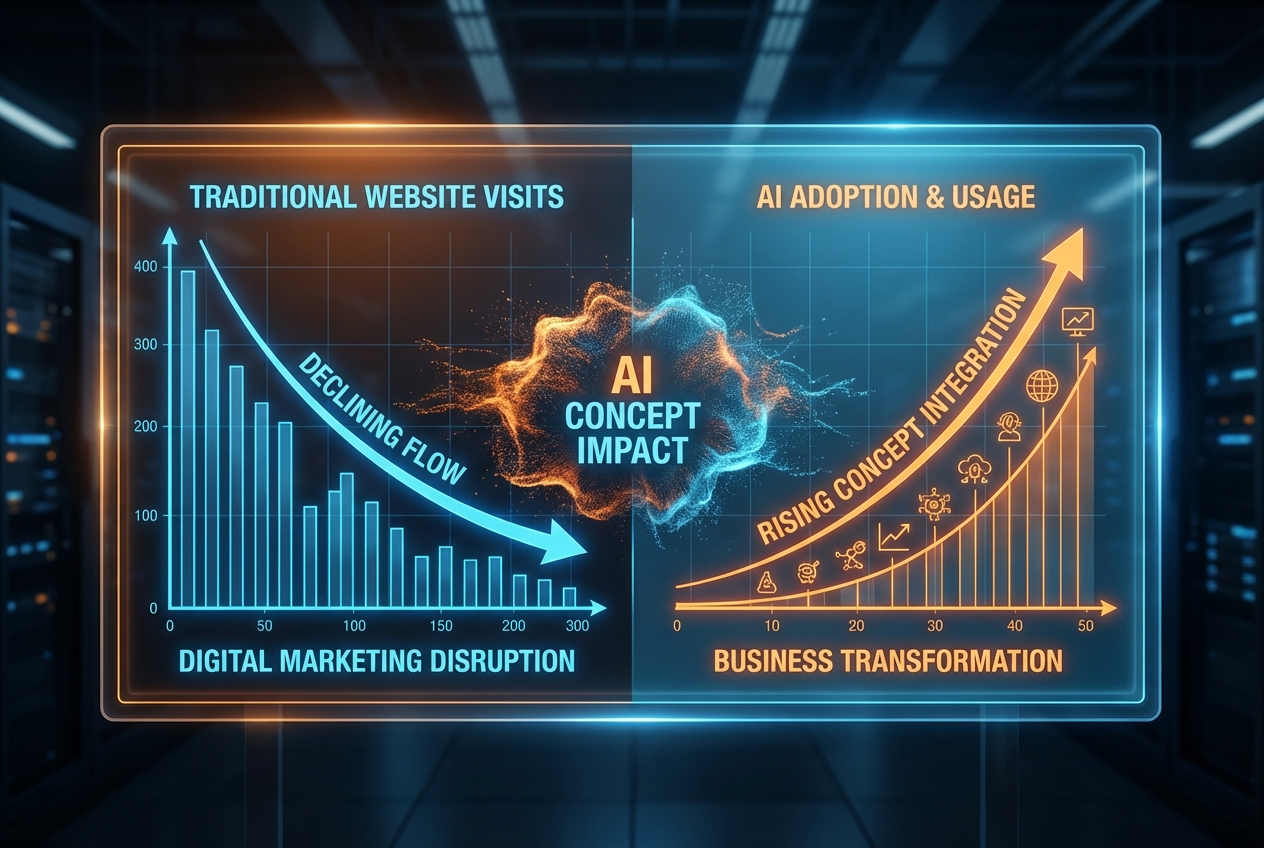
Website Traffic May Decline Without Performance Issues. Your website could be performing perfectly well while traffic steadily declines. The reason has nothing to do with your site. It is that AI is answering questions before users ever need to visit. This aligns with the Gartner prediction of 25% search volume decline by 2026.
SEO Is No Longer Enough. Traditional search engine optimization ensured your site appeared in search results. But AI generates its own answers, pulling from multiple sources. Being visible to AI requires a different approach called answer engine optimization.
Brand Reputation Matters More. When AI recommends products or services, it considers brand authority, citations, and trust signals. Building a recognizable, authoritative brand is no longer optional. It is essential for AI visibility.
Content Must Be AI-Ready. The content you create trains AI systems to understand and recommend your business. Content that AI can easily cite, reference, and synthesize becomes more valuable than ever. This builds on our guide to answer engine optimization.
Adapting Your Strategy
You cannot stop this shift, but you can adapt to thrive within it.
Optimize for AI Citations. Structure your content so AI systems can easily understand and cite your expertise. Clear answers to common questions, authoritative data, and well-sourced information get referenced more often.
Build Topical Authority. Create comprehensive resources that demonstrate deep knowledge in your field. AI systems recognize and reward genuine expertise with citations and recommendations.
Invest in Brand Recognition. A recognizable brand with strong trust signals gets recommended more often. Focus on building brand equity through consistent messaging, thought leadership, and customer satisfaction.
Diversify Beyond Your Website. Do not rely solely on website traffic for customer acquisition. Develop presence across platforms where AI systems gather information, including industry publications, podcasts, and social platforms.
Measure New Metrics. Track how often your brand appears in AI responses. Monitor share of voice in AI-generated recommendations. These metrics will increasingly predict business outcomes.
The Opportunity Within the Disruption
While this shift creates challenges, it also creates opportunity. Businesses that adapt quickly can capture market share from competitors who cling to outdated models.
The brands that will thrive are those that understand AI is not just another channel. It is becoming the primary interface between businesses and customers. Those who treat it as such will find new ways to build trust, demonstrate value, and earn recommendations. This represents the next evolution beyond chatbots that we explored recently.
The question is not whether AI will displace websites. It already has. The question is whether your business will adapt quickly enough to remain visible in the places where customers are making decisions.
Frequently Asked Questions
Will websites become obsolete?
Websites will not become obsolete, but their role is changing. They become destinations for deeper engagement after AI has made initial recommendations. The customer journey now often starts with AI rather than your website.
How do I know if AI is displacing my website traffic?
Check your analytics for declining organic traffic despite stable rankings. Monitor direct traffic patterns and watch for increased brand searches, which often indicate AI-driven awareness. Test your keywords in AI tools to see if your brand appears in responses.
What is the difference between SEO and answer engine optimization?
SEO focuses on ranking in search engine results pages. Answer engine optimization focuses on being cited as a source in AI-generated responses. AEO requires structured content, clear expertise signals, and authoritative sourcing.
How long will this transition take?
The displacement is already underway. Businesses that adapt in the next 12 to 18 months will have significant advantages over those that wait. The transition will likely complete within three to five years.