Get Started with AI Search Optimization for Your Business Today
Ready to optimize for AI search but don't know where to begin? This practical guide walks you through immediate steps to make your business visible on ChatGPT, Perplexity, and Google SGE. Start today.

You’ve heard about AI search optimization. You know it’s important. But where do you actually start?
The good news: You don’t need a massive budget or a complete website overhaul to begin optimizing for AI search engines like ChatGPT, Perplexity, and Google’s Search Generative Experience (SGE). You need a clear plan and the willingness to take action today.
This guide gives you that plan. We’ll walk through practical, immediate steps you can implement right now to make your business visible in the new era of AI-powered search.
Why AI Search Optimization Matters for Your Business
The numbers tell the story: Over 60% of internet users now regularly use AI chatbots for search queries. Perplexity processes over 3 billion queries annually. ChatGPT has 300+ million weekly active users asking questions your business could answer.
If your content isn’t optimized for AI search, you’re invisible to a massive, rapidly growing audience.
Traditional SEO still matters, but AI citations matter more than keywords in 2026. When someone asks an AI “What’s the best marketing agency in Los Angeles?” or “How do I automate my small business marketing?” your business should be the answer the AI provides.
The question isn’t whether to optimize for AI search. It’s how to start.
Step 1: Audit Your Current Content for AI-Readiness (30 Minutes)
Before you create anything new, assess what you already have. AI search engines favor clear, well-structured, authoritative content. Most businesses already have content that can be optimized with minor tweaks.
What to Do Right Now:
- Pick your top 5 most important pages (homepage, key service pages, best blog posts)
- Check for answer-ability: Does each page immediately answer a clear question? If someone asks “What does [your company] do?” can an AI find a direct, quotable answer in the first 2 paragraphs?
- Review your heading structure: Do you use proper H1, H2, H3 hierarchy? AI crawlers rely on this structure to understand your content
- Identify your unique value: What do you know, offer, or have data on that your competitors don’t? This is your citation goldmine
Quick Win: Take your most important page and rewrite the opening paragraph to directly answer the main question someone would ask about that topic. Make it clear, simple, and quotable. This single change can dramatically improve your AI search optimization potential.
Step 2: Implement Basic Schema Markup (1-2 Hours)
Schema markup is the “cheat sheet” for AI. It explicitly tells search engines and AI crawlers what your content is about, who wrote it, and what questions it answers.
Priority Schema Types for AI Search:
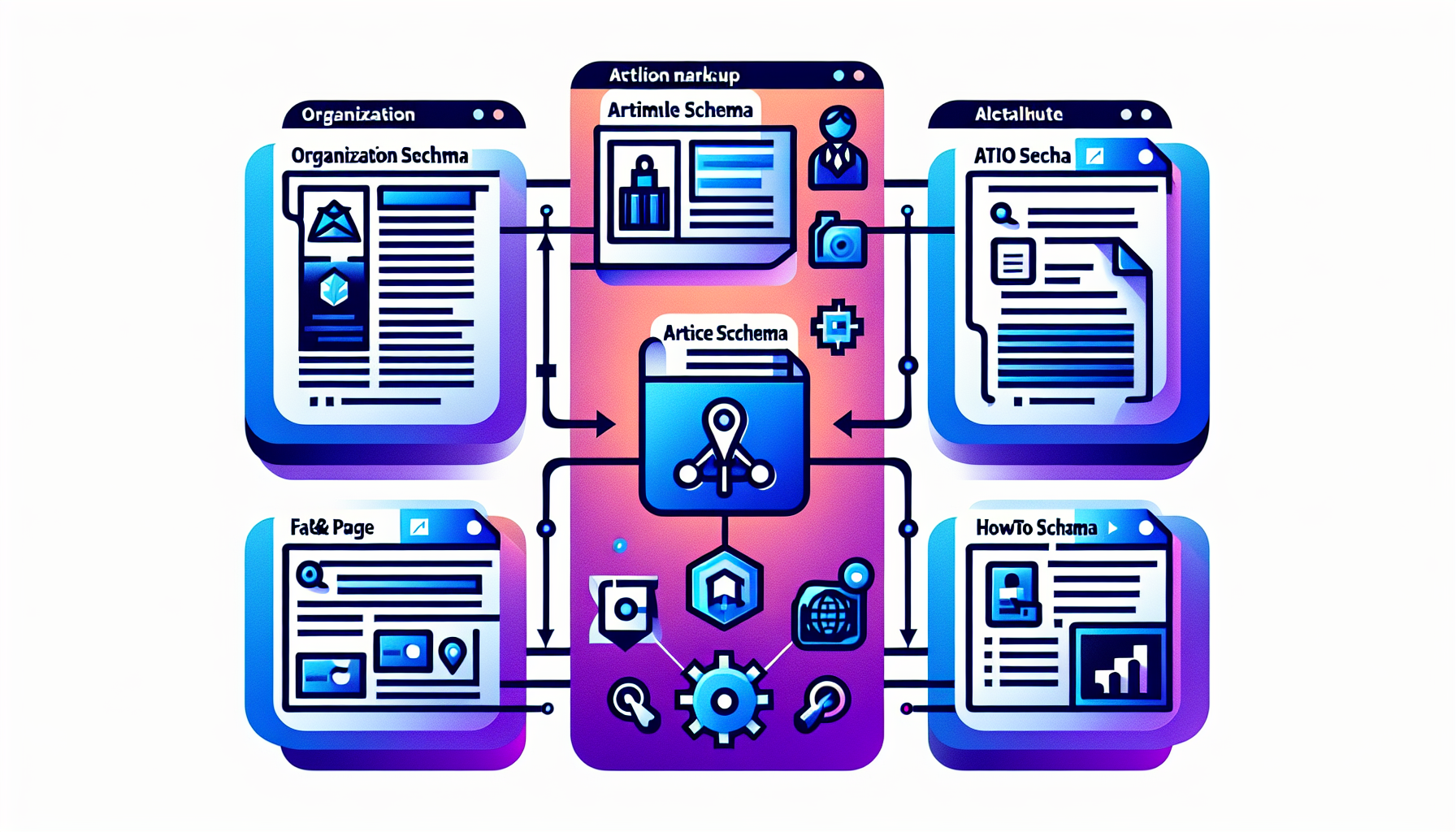
- Organization Schema: Establishes your business identity and authority
- Article Schema: Helps AI understand the structure and authorship of your content
- FAQPage Schema: Directly feeds Q&A pairs to AI search engines
- HowTo Schema: Perfect for instructional content that answers “how to” queries
Action Step: If you’re on WordPress, install a schema plugin like Rank Math or Yoast. If you’re on a custom platform, use Google’s Schema Markup Generator. Start with Organization and Article schema on your homepage and top blog posts.
Why It Works: When Perplexity or ChatGPT crawls your site, schema markup provides pre-formatted, structured data that AI can immediately understand and cite. Without it, the AI has to “guess” what your content means. With it, you’re handing the AI exactly what it needs.
Step 3: Create Your First AI-Optimized FAQ Section (2-3 Hours)
FAQ sections are AI gold. They provide direct question-answer pairs in a format AI search engines love to cite. This is one of the fastest ways to rank on Perplexity and appear in ChatGPT responses.
How to Build an Effective FAQ Section:
- Use real customer questions: Check your support emails, sales calls, and social media DMs. What do people actually ask you?
- Write conversational questions: Use natural language. Instead of “Pricing,” write “How much does [your service] cost?”
- Answer directly first, then expand: Put the core answer in the first sentence, then provide supporting details
- Target long-tail queries: Focus on specific, detailed questions (7-10 words), not generic keywords
Example Framework:
### How long does it take to see results from AI search optimization?

Most businesses see initial citations in AI search results within 2-3 months of implementing structured optimization. However, full visibility across ChatGPT, Perplexity, and Google SGE typically takes 4-6 months of consistent effort including content creation, schema markup, and authority building.
Add FAQs to your key service pages and implement FAQPage schema to maximize their visibility. This is fundamental conversational search optimization.
Step 4: Publish One Original Research Piece or Case Study (Ongoing)
This is your citation superpower. AI search engines prioritize original data and research because it’s citable, authoritative content that can’t be found anywhere else.
You don’t need to conduct a massive industry survey. Small, focused research works beautifully:
Quick Research Ideas You Can Execute This Month:
- Client case study: Document results from 3-5 clients with specific metrics
- Industry analysis: Analyze 20-30 competitor websites for a specific trend
- Survey your audience: Send a 5-question survey to your email list or LinkedIn network
- Process documentation: Document your unique methodology with before/after examples
Why This Works: When you publish “We analyzed 50 B2B websites and found that 73% lack basic AI search optimization,” that statistic is yours. Perplexity will cite you. ChatGPT will reference you. You become the source.
This approach is core to building topic authority with AI and establishing your business as a trusted expert in your field.
Step 5: Optimize for “How to” and “Best” Queries (1-2 Hours Per Article)
AI search engines excel at answering “how to” and “best” queries. These are high-intent searches where users want specific, actionable answers - exactly what your business should provide.
Content Formula for AI-Optimized “How To” Articles:
- Answer the question in the first paragraph: Don’t make readers (or AI) hunt for the answer
- Use numbered steps with clear H2/H3 headings: AI loves structured, sequential information
- Include specific examples: Real scenarios, screenshots, and data make content citable
- Add a quick-reference summary: Bullet points at the top help AI extract key information
Content Formula for AI-Optimized “Best” Articles:
- State your criteria upfront: “Best based on price, features, support, and user reviews”
- Use comparison tables: AI can parse structured data easily
- Provide specific recommendations: “Best for small businesses,” “Best for enterprise,” etc.
- Back claims with data: Reference reviews, surveys, or your own testing
Action Step: Identify the top 5 “how to” or “best” questions in your industry. Create comprehensive guides for 2-3 of them this month. These become your AI search visibility foundation. For more guidance on content creation, check out our Content Marketing Playbook.
Wondering how this fits into your broader strategy? Check out our guide on automation in marketing to see how AI optimization complements your overall digital presence.
Step 6: Set Up Monitoring and Iteration (15 Minutes Weekly)
AI search optimization isn’t set-and-forget. You need to track what’s working and iterate based on real data.
What to Monitor:
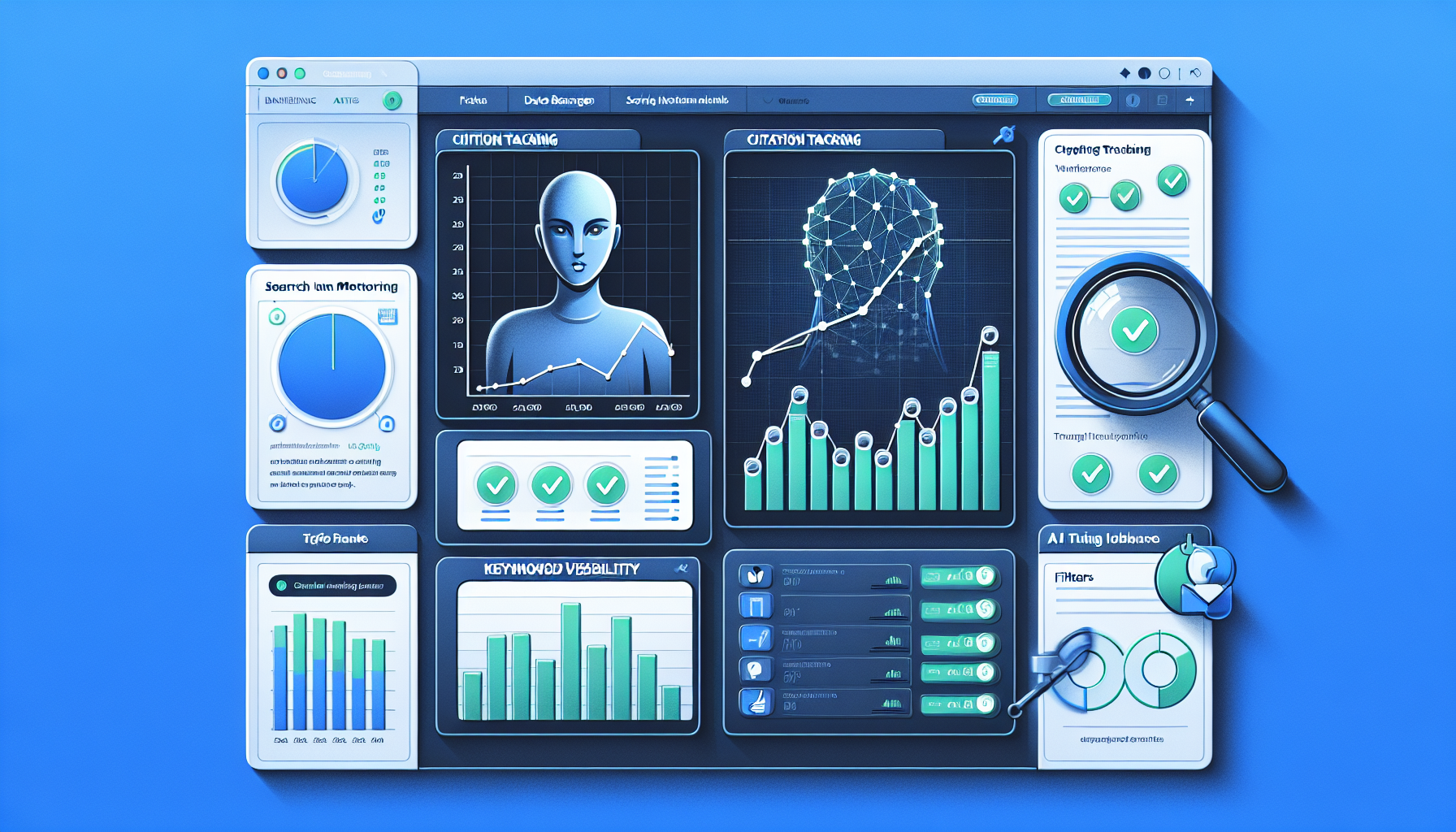
- AI citations: Search for your brand and key topics in ChatGPT, Perplexity, and Bing Chat weekly
- Traffic sources: Use Google Analytics to track referrals from AI platforms
- Featured snippets: Monitor your appearance in Google’s featured snippets (strong SGE indicator)
- Competitor citations: See who’s getting cited in your space and analyze why
Quick Tool: Create a simple spreadsheet with columns for Date, Platform (ChatGPT/Perplexity/SGE), Query, and Citation (Yes/No/Partial). Check your top 10 target queries weekly. You can also use our AI Keyword Researcher to identify the most impactful queries to track.
Iteration Strategy: If you’re not getting cited after 4-6 weeks:
- Simplify your language (aim for 8th-grade reading level)
- Add more specific data and examples
- Improve your schema markup
- Build more internal links to show content relationships
Need help comparing different approaches? Our comparison of AEO agencies can show you what professional optimization looks like.
Common Mistakes to Avoid
1. Writing for Humans Instead of AI (First)
You still write for humans ultimately, but your content must be structured for AI to understand it first. AI can’t infer meaning from creative prose the way humans can.
Fix: Lead with direct answers, then add personality and nuance in supporting paragraphs.
2. Ignoring Mobile and Page Speed
AI crawlers consider user experience signals. A slow, poorly structured mobile site hurts your AI search optimization regardless of content quality.
Fix: Use Google PageSpeed Insights to identify issues. Aim for a mobile score above 80.
3. Not Building Internal Links
Internal linking helps AI understand the relationship between your content pieces and establishes topical authority. It’s how you show AI you’re an expert on a subject, not just a one-off article.
Fix: Link to related content naturally. Every article should have 5-10 internal links to other relevant pages.
4. Keyword Stuffing for AI
Some businesses think AI optimization means stuffing “ChatGPT,” “AI search,” and “Perplexity” into every paragraph. It doesn’t work and can hurt readability.
Fix: Focus on answering questions clearly and comprehensively. Use natural language and conversational phrasing. The keywords will appear naturally.
For B2B companies, also check out our B2B marketing trends to understand how AI search fits into broader marketing evolution.
Your 30-Day AI Search Optimization Launch Plan
Here’s a realistic timeline for getting started:
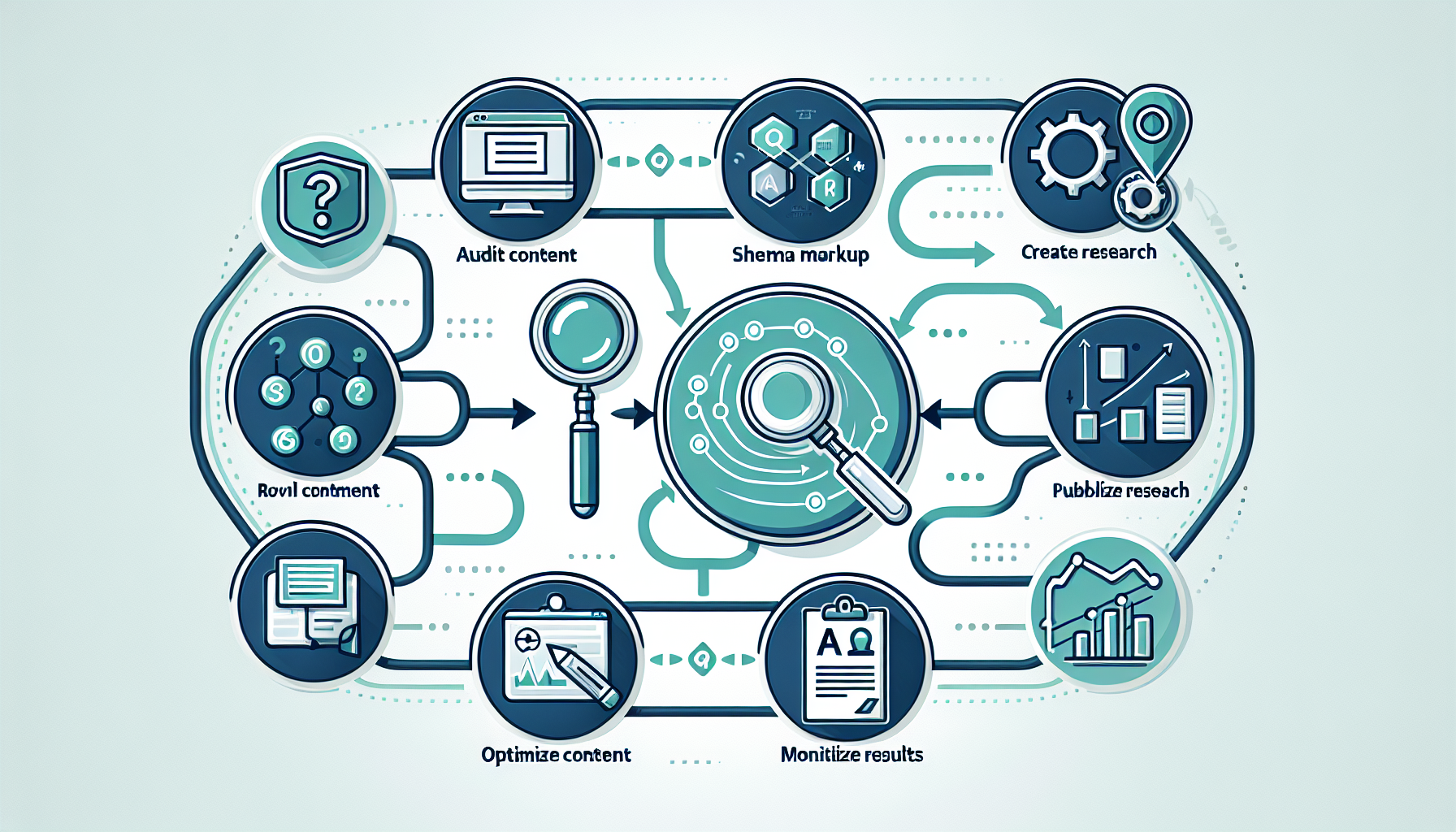
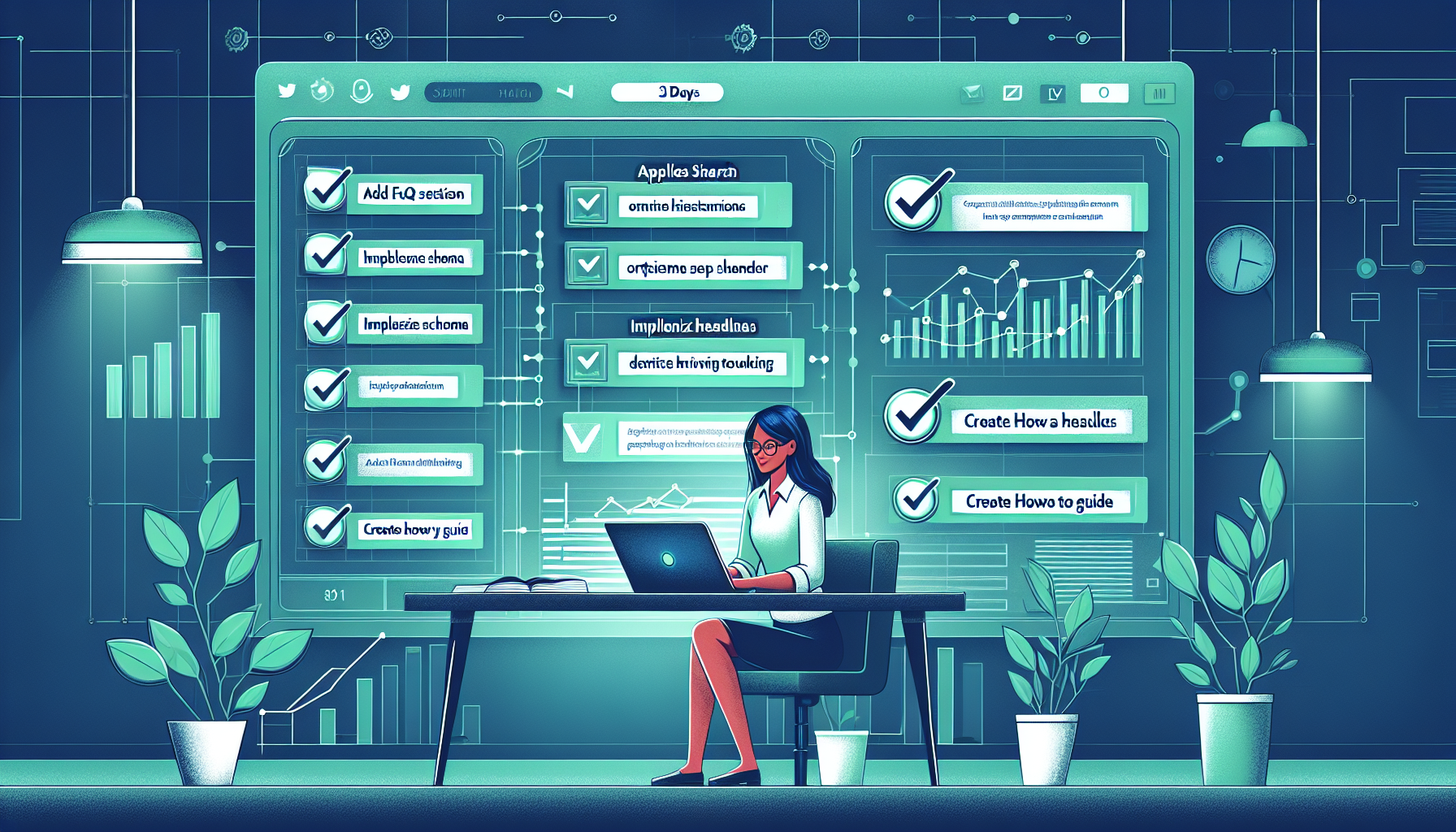
Week 1: Foundation
- Audit top 5 pages (Day 1-2)
- Implement Organization and Article schema (Day 3-5)
- Create 1 comprehensive FAQ section (Day 6-7)
Week 2: Content Creation
- Publish 1 “How To” guide optimized for AI (Day 8-11)
- Start work on original research/case study (Day 12-14)
Week 3: Expansion
- Publish 1 “Best” comparison article (Day 15-18)
- Add FAQ sections to 3 more key pages (Day 19-21)
Week 4: Optimization & Monitoring
- Finish and publish original research (Day 22-25)
- Set up monitoring system (Day 26-27)
- Conduct first citation audit (Day 28-30)
Result: In 30 days, you’ll have a solid AI search optimization foundation with 5-7 optimized pages, multiple FAQ sections, original research, and a monitoring system in place.
For smaller businesses just getting started with digital marketing, pair this with our guide on marketing tips for new businesses for a complete strategy.
Tools You’ll Need (Most Are Free)
- Schema Markup: Rank Math (WordPress), Yoast, or Google’s Schema Markup Generator
- Readability: Hemingway Editor (free), Grammarly
- Page Speed: Google PageSpeed Insights (free), Website Audit Tool
- AI Testing: ChatGPT (free tier with marketing prompts), Perplexity (free tier), AI Search Optimizer
- Analytics: Google Analytics 4 (free), Google Search Console (free)
Optional (But Helpful):
- Ahrefs or SEMrush for keyword research
- Screaming Frog for site audits
- Clearscope or MarketMuse for content optimization
- AI Prompt Generator for content ideation
- Topic Authority Builder for strategic content planning
Many businesses also benefit from professional help. If you’re looking for expert guidance, explore AI search optimization agencies in Los Angeles or your local market.
When to Consider Professional Help
You can absolutely start AI search optimization yourself with this guide. But consider hiring an agency or consultant when:
- You have 50+ pages that need optimization
- Your technical team is overwhelmed
- You need original research at scale
- You want to move faster than your internal team allows
- Your industry is highly competitive and you need an edge
Professional AI search optimization services typically cost $3,000-$15,000/month depending on scope. For most businesses, starting with DIY implementation and hiring help after 3-6 months provides the best ROI.
Looking to build expertise across multiple marketing channels? Our article on AI-powered content prompt generation can help you scale content creation while maintaining quality.
The Bottom Line: Start Today, Iterate Tomorrow
AI search optimization isn’t a one-time project. It’s an ongoing practice of creating clear, authoritative, well-structured content that AI search engines can understand and cite.
You don’t need perfect. You need to start.
Pick one action from this guide - audit your top page, add an FAQ section, or implement basic schema - and do it today. Then build momentum by tackling another action each week.
In 90 days, you’ll be ahead of 90% of businesses who are still “planning to get started someday.”
The AI search revolution is happening right now. Your competition is either already optimizing or will be soon. The businesses that start today will be the ones AI recommends tomorrow.
For ongoing support and strategies, download our free AI Search Optimization (AEO) Checklist and explore our growing library of AI marketing resources.
FAQs
How much does AI search optimization cost?
AI search optimization costs range from $0 (DIY using free tools) to $3,000-$15,000/month for professional agency services. Most small businesses can start with free tools and achieve meaningful results in 2-3 months by following the steps in this guide.
How long does it take to see results from AI search optimization?
Initial citations in AI search results typically appear within 2-3 months of implementing proper optimization. However, consistent visibility across ChatGPT, Perplexity, and Google SGE usually requires 4-6 months of sustained effort including content creation, schema implementation, and authority building.
Do I need to hire an agency or can I do AI search optimization myself?
You can absolutely start AI search optimization yourself using the steps outlined in this guide. Most businesses should begin with DIY implementation for 3-6 months to understand the fundamentals, then consider hiring an agency if they need to scale faster or handle more complex optimization across large sites.
What’s the difference between SEO and AI search optimization?
Traditional SEO focuses on ranking in the “10 blue links” by targeting keywords and building backlinks. AI search optimization focuses on being cited as an authoritative source in AI-generated answers. While they overlap significantly, AI search optimization prioritizes clear structure, direct answers, E-E-A-T signals, and schema markup more heavily than traditional SEO.
Which AI search platforms should I optimize for first?
Start with Google SGE, ChatGPT, and Perplexity - these are the three largest AI search platforms. Good news: optimization for one generally helps with all three since they all prioritize well-structured, authoritative, clear content. Focus on fundamentals (schema markup, FAQ sections, clear answers) rather than platform-specific tactics.
Can small businesses compete with large companies in AI search?
Yes! AI search optimization actually levels the playing field. Unlike traditional SEO where domain authority and backlinks matter heavily, AI platforms prioritize content quality, clarity, and authority signals. A small business with well-structured, expert content can absolutely outperform a large company with poor AI optimization. Focus on your unique expertise and original insights.
What’s the single most important factor for AI search success?
Clarity and directness. AI search engines need to quickly understand what your content says and whether it’s trustworthy. The single best thing you can do is answer questions directly in simple, quotable sentences. Everything else - schema markup, FAQs, E-E-A-T signals - amplifies this core principle.
Ready to take the next step? Explore more AI marketing strategies in our comprehensive guide to AI search vs traditional search or learn advanced techniques for conversion rate optimization to maximize the traffic you earn from AI search.