AEO Was Just the Warmup: What Assistive Agent Optimization Means for Your Agency
AI agents now research, compare, and execute decisions without a human clicking anything. Here is what Assistive Agent Optimization (AAO) is, why it changes agency strategy, and the exact steps to act on it now.
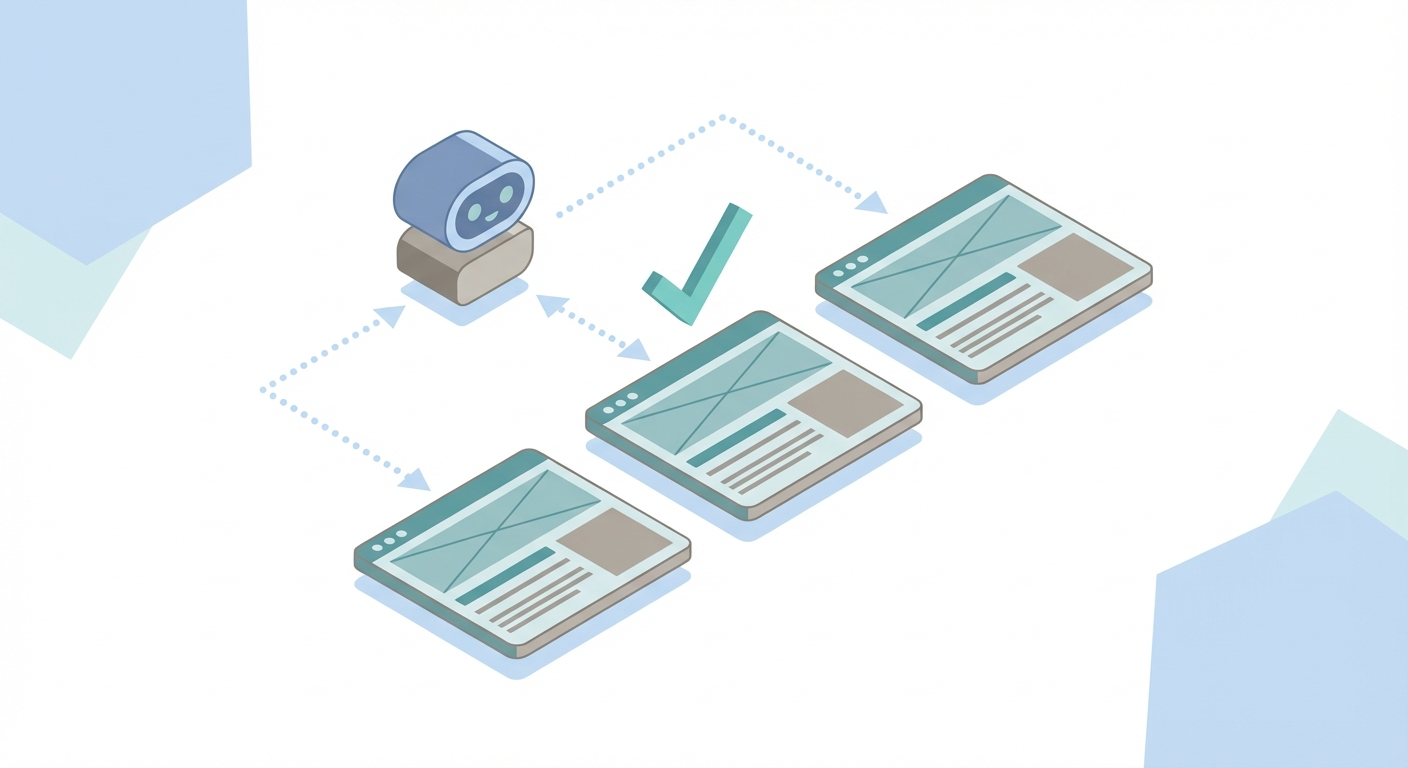
The conversation in digital marketing for the past year has been AEO this, GEO that. Answer Engine Optimization. Generative Engine Optimization. Agencies scrambled to understand why ChatGPT wasn’t citing their clients, and marketers started obsessing over AI Overviews. That was all legitimate. But this week, a new term landed in Search Engine Land that changes the frame entirely: Assistive Agent Optimization, or AAO.
Here is the distinction that matters. AEO is about getting your brand cited in an answer. AAO is about getting your brand chosen when no human is in the loop at all.
That is a bigger deal than most agencies have processed yet.
What “Agentic AI” Actually Means for Search

The AI tools most marketers think about, ChatGPT, Perplexity, Google’s AI Overviews, are primarily answer machines. A person asks a question. The AI generates a response. The person reads it. Maybe they click a source. That is the AEO world: optimize your content so the AI picks you as the source it cites.
Agentic AI is different. These are AI systems that take actions, not just produce answers. Think of tools like OpenAI’s Operator, Google’s Project Astra, or the wave of AI agents being built into enterprise software. These agents don’t wait for a human to read a response and decide. They research, evaluate options, compare providers, and in some cases complete a purchase, a booking, or a form submission on a person’s behalf.
The user’s role shifts from decision-maker to goal-setter. They say “find me the best healthcare marketing agency in Los Angeles under X budget and request a proposal from the top two.” The agent handles the rest.
This already exists. It is not a 2027 scenario. An agent tasked with finding an answer engine optimization Los Angeles agency will independently research options, compare reviews, and submit a contact form—no clicks required.
According to Search Engine Land’s February 24, 2026 piece formally defining AAO, the key insight is this: “People aren’t searching, they’re researching, and some have agents researching for them.” The AEO frameworks most agencies are building don’t account for the action layer, which is where agents actually execute.
The practical implication: a brand that is perfectly optimized for AEO can still be invisible to agentic systems if it hasn’t structured itself to be actionable by those systems.
Why the AEO Playbook Falls Short
Most AEO advice centers on a few things: write clear headers, answer questions directly, earn citations from authoritative sources, maintain consistent NAP data, and use structured schema markup. All of that still matters. But it addresses only one layer of the funnel.
The AEO playbook assumes there is still a human at the end of the chain who reads the AI answer and decides to click, call, or convert. AAO acknowledges that the chain is shortening. By the time an agentic system has evaluated your business, it has already made a recommendation or taken action. If you weren’t in the evaluation set, you never existed.
Three things determine whether AI agents include your brand in their consideration set:
1. Structured, machine-readable identity. Agents pull from structured data sources: your Google Business Profile, schema.org markup on your website, your llms.txt file, review platforms, and directory listings. If these sources are inconsistent, incomplete, or missing, agents skip you. Not because they are penalizing you, but because they cannot confidently parse who you are and what you offer.
2. Clear task-match signals. Agents are goal-oriented. They need to quickly determine: does this brand do what my user wants? This is different from keyword relevance. It is functional relevance. Your service pages need to explicitly answer capability questions: what tasks can this business perform, for whom, in what geography, at what price range. The more specifically your site answers these questions, the easier it is for an agent to match you to a user’s goal.
3. Social proof structured for machines. Human readers assess credibility from design, tone, and reviews. Agents assess credibility from quantifiable signals: review count, average rating, third-party mentions, citations in authoritative sources, and the freshness of that evidence. A well-designed website that hasn’t been cited anywhere meaningful will be deprioritized by an agentic system regardless of how good it looks.
Use the AI Search Optimizer to audit your current visibility across AI platforms. It shows you which signals are missing and which are working.
The Three-Layer AAO Framework Agencies Should Start Using
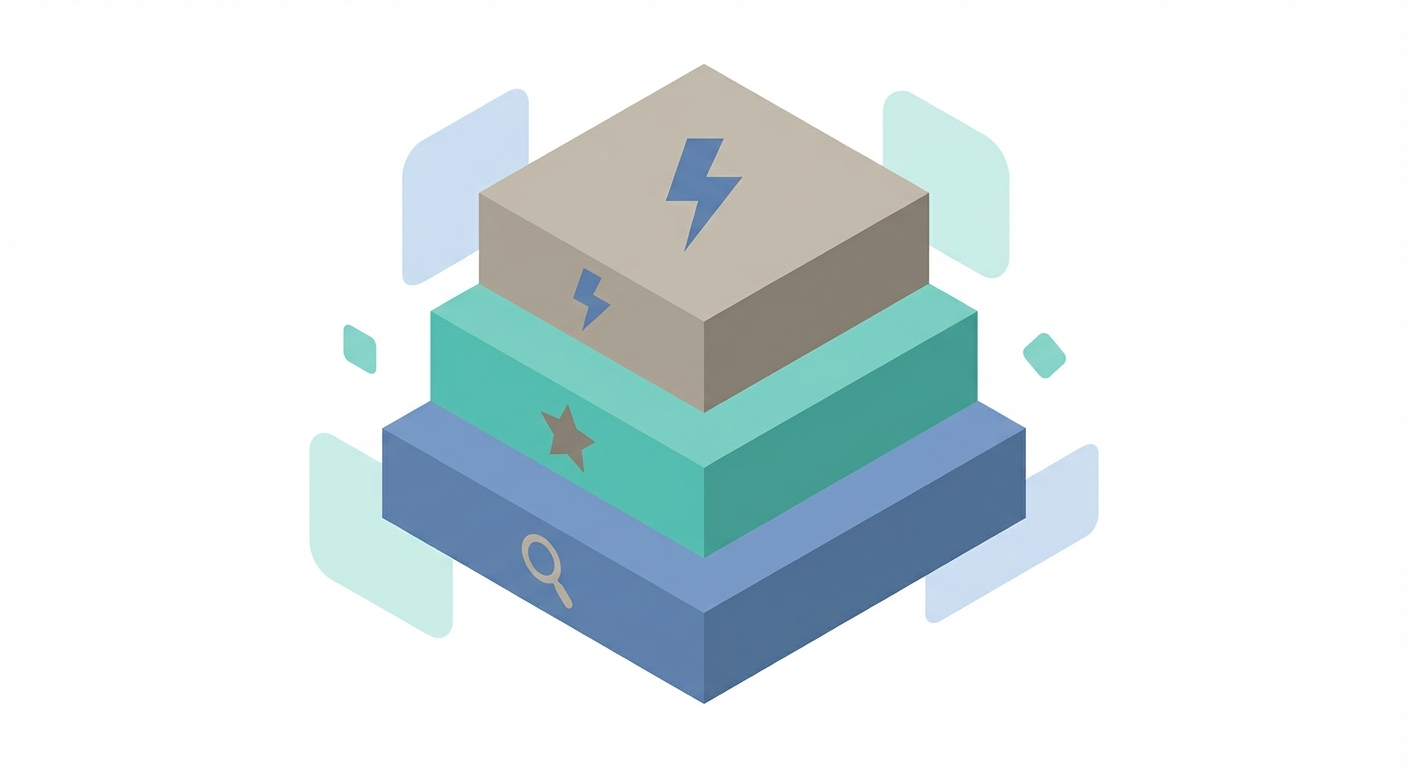
Think of AAO as three concentric layers of optimization. Most agencies are working in layer one. Very few are working in all three.
Layer 1: Discoverability (AEO Territory)
This is the foundation. Can AI systems find you, read you, and understand what you do? This covers the basics most people are already working on:
- Schema markup: LocalBusiness, Service, FAQPage, Review
- Consistent NAP across all directories and platforms
- Clear, header-structured content with direct answers
- An llms.txt file that tells AI crawlers exactly what your site contains and who it serves
- Active citation profile: third-party mentions in industry publications, news sites, and authoritative directories
If layer one is weak, nothing else matters. Get this right first.
Layer 2: Evaluability (The AAO Differentiator)
This is where most agencies have a gap. Evaluability is about making it easy for an agent to compare you against alternatives and form a confident recommendation.
Specific tactics:
- Explicit capability statements. Don’t just list services. Specify use cases. “We manage Google Ads for plastic surgery practices in California with budgets between $5,000 and $30,000 per month” is infinitely more useful to an agentic system than “digital marketing for healthcare.”
- Structured pricing signals. Agents handling commercial research look for pricing context. That doesn’t mean publishing a full rate card. It means giving range signals: “starting from,” “typical engagement size,” “pricing depends on.” Agents de-risk recommendations for their users, and pricing opacity creates risk.
- Process clarity. How do you work? What does onboarding look like? What’s the timeline? Case study formats that walk through client outcomes step by step are highly evaluable. Vague “we’ll craft a custom strategy” copy is not.
- Third-party validation layers. G2, Clutch, Yelp, Google Reviews, BBB. Agents aggregate across sources. If you have 80 Google reviews and nothing anywhere else, you are weaker than a competitor with 30 reviews spread across six platforms.
Layer 3: Actionability (The New Frontier)
This is the most underbuilt layer across the industry. Actionability is about whether an agent can actually do something with your business on behalf of a user.
Examples of actionable integration:
- Booking systems that can be triggered without a human navigating your site (OpenTable-style integrations, Calendly or equivalent for services businesses)
- Quote request forms with structured fields that agents can programmatically complete
- API endpoints or structured data feeds that allow agent platforms to pull real-time availability, pricing, or capacity
- Participating in platforms that agents already use as trusted data sources: Google Business Profile appointments, platforms like Service Titan or Zocdoc for specialized verticals
For most agencies, layer three feels premature. It’s not. The businesses building actionability now will have a structural advantage in 18 months that will be very difficult for late movers to close.
Use the Topic Authority Builder to build out the content ecosystem that supports evaluability. Topical authority is what gives AI agents confidence to recommend you over a competitor.
What This Means if You’re an Agency Selling AI Optimization Services
This is the strategic opportunity. Right now, most agencies are selling AEO as a content and SEO service. They audit a client’s site, improve their schema, write FAQ content, and call it done. That is table stakes by 2026.
AAO gives you a new service line with three components that command higher retainers:
Technical audit and build. Review a client’s discoverability layer: schema, llms.txt, directory consistency, citation profile. Then their evaluability layer: capability statements, case studies, review spread, pricing signals. Then their actionability layer: booking integration, API readiness, agent-platform presence. Each layer is a deliverable.
Ongoing citation and reputation management. Agents refresh their data. A citation that existed six months ago carries less weight than one from last week. Agencies that build recurring citation programs, getting clients mentioned in industry publications, earning new reviews, maintaining active profiles, will be essential infrastructure for clients navigating the agentic landscape.
Monitoring and reporting. There are emerging tools tracking brand mentions across AI platforms. OtterlyAI, for example, has surpassed 20,000 users and was just named a top AEO platform on G2’s Best New Software Awards for 2026. These tools are becoming the analytics layer for the agentic web. Agencies that learn them now will be the ones explaining results to clients in Q4.
FAQ: AAO and What to Do About It

What’s the difference between AEO, GEO, and AAO?
AEO (Answer Engine Optimization) focuses on getting your content cited in AI-generated answers. GEO (Generative Engine Optimization) focuses on earning visibility specifically in generative search results like Google AI Overviews. AAO (Assistive Agent Optimization) is a layer above both: it’s about ensuring your brand is findable, evaluable, and actionable by autonomous AI agents that take actions on users’ behalf, not just surface information.
Do I need to start AAO from scratch or does my existing AEO work carry over?
Your AEO foundation carries over. Schema markup, clear content structure, citation building, and technical SEO all feed into AAO discoverability. The new work is in evaluability and actionability: explicitly stating your capabilities and geography, building structured social proof across platforms, and where possible creating integrations that allow agents to trigger actions with your business.
How do I know if AI agents are sending traffic or leads to my clients right now?
It’s hard to measure directly. Most analytics platforms don’t yet tag agentic referral traffic separately. The practical approach is to watch for unexplained referral sources, check your Google Business Profile activity for sourcing patterns, survey new leads on how they found you (“an AI assistant suggested you”), and use tools like OtterlyAI or similar to monitor brand mentions in AI responses.
Which industries are most at risk from agentic AI selection replacing traditional search?
Professional services (legal, marketing, healthcare, financial) are highest risk because these are exactly the types of decisions people are starting to delegate to AI assistants: “find me a good accountant,” “book me a marketing consultation,” “compare rehab facilities near me.” Healthcare, in particular, is a category where AI agent behavior is accelerating rapidly as patient-facing tools become more capable.
Is the llms.txt file actually important for AAO?
Yes. The llms.txt file is effectively a machine-readable introduction to your website. It tells AI crawlers what’s here, what’s important, who you serve, and what you want systems to know about you. It’s one of the fastest, lowest-cost steps a business can take. If your clients don’t have one yet, use the free llms.txt generator to build one in minutes.
How soon do I need to act on AAO?
Now. The agencies building AAO infrastructure today are the ones who will be able to demonstrate measurable results when client demand spikes, which is already happening. Waiting until AAO is a mainstream term means entering a market where competitors have a 12-month head start.
Where This Goes From Here
The agentic web isn’t a prediction. It’s already operating at the margins of how people find and hire businesses. The volume is small today and growing fast. Gartner has projected that AI agents will handle 15% of day-to-day work decisions by end of 2026. Every one of those decisions is a moment where a business either shows up in an agent’s consideration set or doesn’t.
The agencies that thrive in this environment won’t be the ones who mastered AEO in 2025. They’ll be the ones who recognized that AEO was always the first layer, not the final destination, and started building the evaluability and actionability layers before they became obvious requirements.
Start with a website audit to see where your technical foundation stands. Then layer in the capability statements, the citation work, and the structured proof that agents need to confidently choose you. The window to build this before it becomes competitive is right now, and it’s closing.
AAO is not a new buzzword to dismiss. It’s the next logical step in a progression that has been building for two years. The agencies who see it clearly will write the case studies that future clients read when they’re deciding who to hire.