Reviews of Generative Engine Optimization Services for Startups
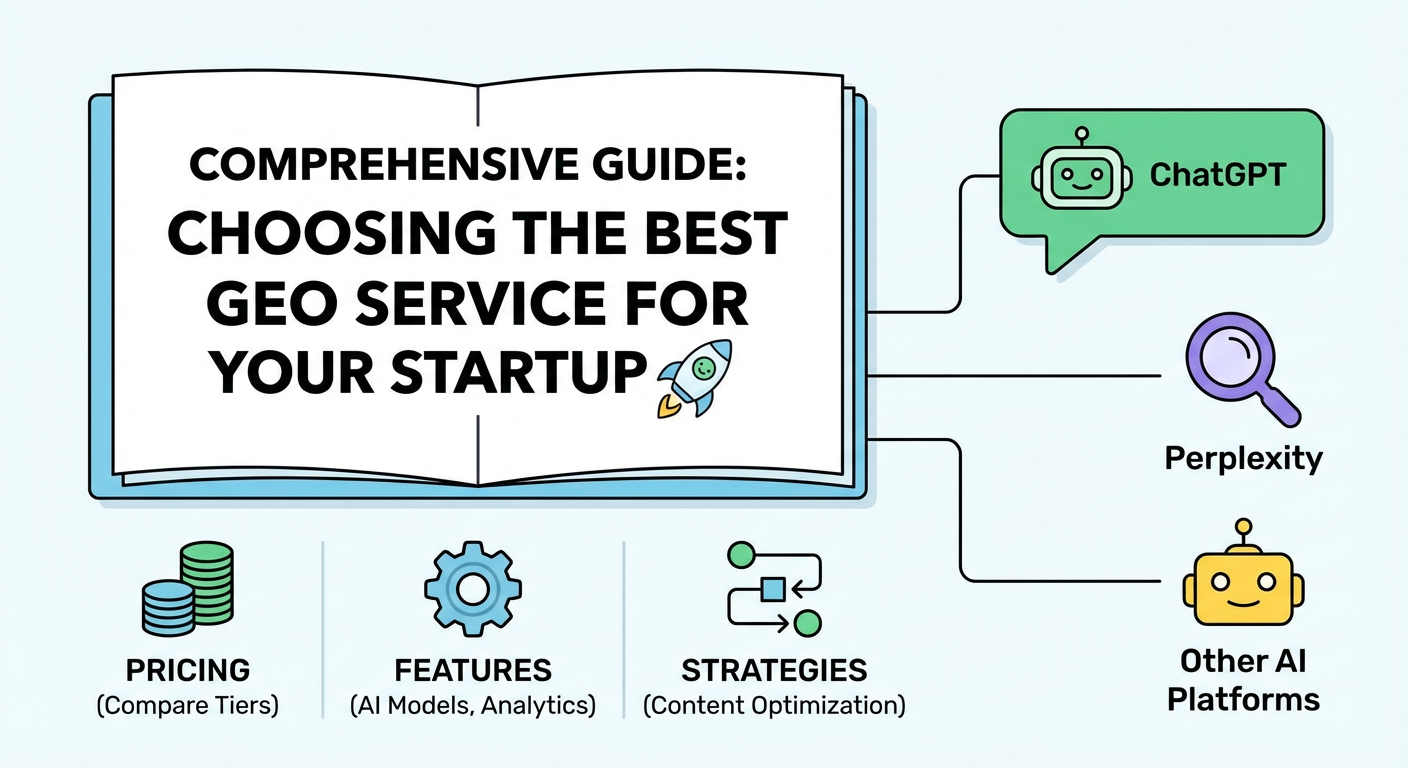
Comprehensive guide to choosing the best GEO (Generative Engine Optimization) service for your startup. Compare pricing, features, and strategies to get found in ChatGPT, Perplexity, and other AI platforms.
Reviews of Generative Engine Optimization Services for Startups
If you’re running a startup in 2026, you’ve probably noticed something: your target customers aren’t Googling anymore -they’re asking ChatGPT, Perplexity, Claude, and Gemini.
When someone asks an AI “What’s the best project management tool for remote teams?” or “Which CRM should a 10-person startup use?”, your brand either gets cited in that answer, or it doesn’t exist in the buyer’s consideration set. That’s the brutal reality of Generative Engine Optimization (GEO).
The problem? Most startups are still optimizing for traditional search engines while their competitors are already dominating AI-generated recommendations. And with limited budgets, founders can’t afford to waste money on agencies that simply rebrand old SEO tactics with new buzzwords.
This guide reviews the landscape of GEO services specifically designed for startups, breaking down what works, what doesn’t, and how to choose the right partner without burning through your runway.
What Is GEO and Why Startups Need It Now
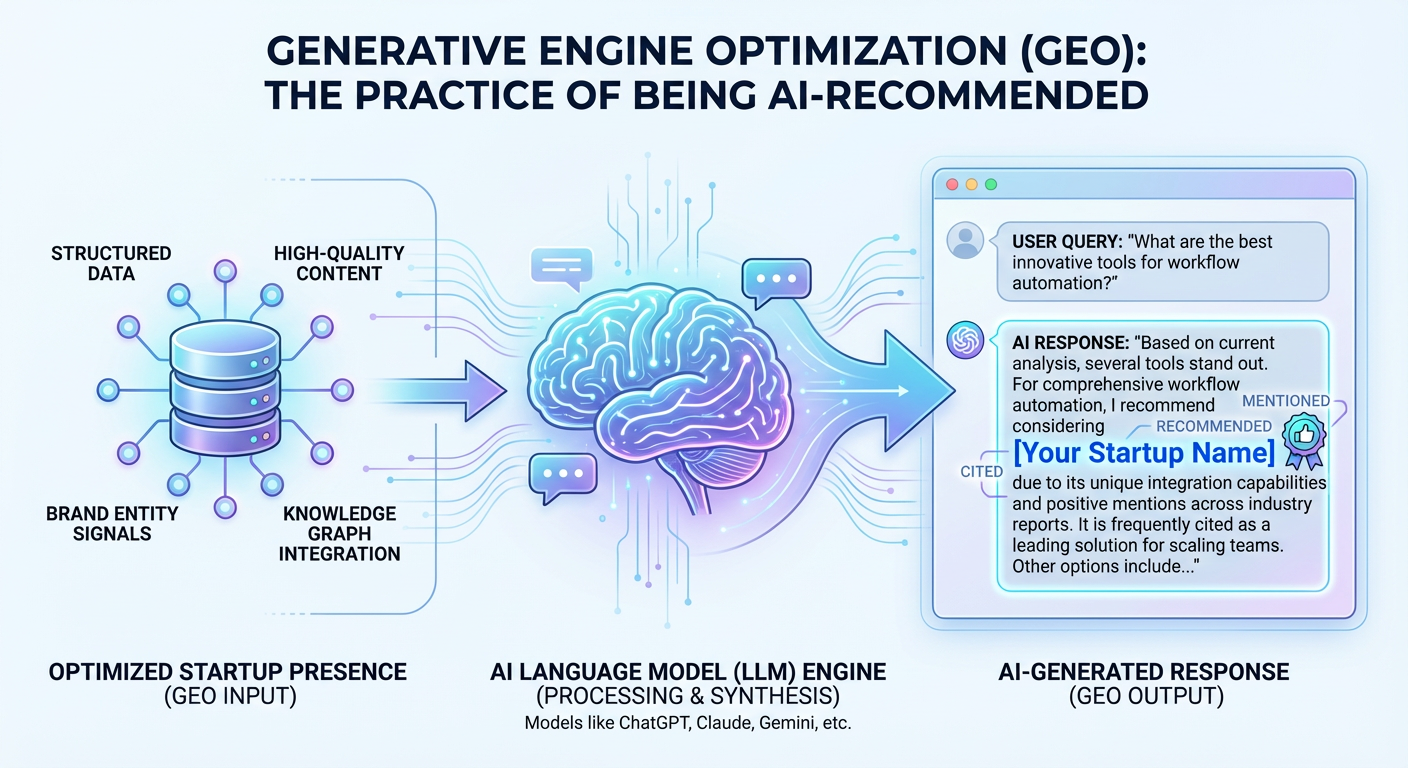
Generative Engine Optimization (GEO) is the practice of ensuring your startup gets cited, recommended, and mentioned by AI language models when they generate responses to user queries. Unlike traditional SEO which focuses on website traffic and rankings, GEO focuses on AI citations and direct recommendations.
Here’s why this matters for startups specifically:
1. Early-stage visibility at zero marginal cost
Once your brand is embedded in an AI’s knowledge base, it can be recommended thousands of times without additional ad spend. Unlike PPC campaigns that require constant funding, AI citations work 24/7 to bring your brand into relevant conversations.
2. Bypass established competitors
Traditional SEO heavily favors domain authority and backlink profiles built over years. GEO levels the playing field -if your startup solves a problem better and communicates it clearly, AI models can recommend you over established brands.
3. Capture high-intent users
People asking AI for recommendations are often in decision-making mode. They’re not just browsing -they’re ready to evaluate solutions. Getting cited in these moments means reaching buyers when they’re most receptive.
4. Build category authority early
For startups creating new categories or disrupting existing ones, being recognized as an entity by AI platforms helps establish thought leadership and brand awareness at a crucial growth stage.
The statistics back this up: Research shows that 54% of consumers now use AI chatbots during their product research phase, and that number jumps to 67% among tech-savvy startup founders and decision-makers -exactly the audience most startups need to reach.
The State of GEO Services in 2026
The GEO services market is young, evolving rapidly, and frankly, a bit chaotic. Here’s what the landscape looks like:
Tier 1: Full-Service GEO Agencies ($3,000-$10,000+/month)
These agencies offer comprehensive GEO strategies including content optimization, entity building, structured data implementation, and multi-platform AI monitoring. Most require 6-12 month commitments.
Best for: Well-funded startups (Series A+) with complex products or significant competitors.
Red flags: Agencies that can’t explain the difference between AEO and GEO, or promise “guaranteed AI rankings.”
Tier 2: Hybrid SEO/GEO Agencies ($1,500-$5,000/month)
These providers combine traditional SEO with AI optimization strategies. They’re transitioning from pure SEO and adding GEO capabilities.
Best for: Startups with existing SEO programs looking to expand into AI visibility.
Red flags: Agencies treating GEO as a minor add-on rather than a distinct discipline.
Tier 3: Specialized GEO Consultants ($100-$300/hour or $2,000-$4,000/month)
Solo practitioners or small teams focused exclusively on GEO. Often more affordable and nimble than agencies.
Best for: Bootstrapped startups, pre-seed companies, or businesses with specific GEO needs.
Red flags: Lack of case studies or measurable results from previous clients.
Tier 4: DIY Tools & Platforms ($50-$500/month)
Software platforms that help you implement GEO strategies yourself, with varying levels of guidance and automation.
Best for: Technical founders or startups with in-house marketing resources.
Red flags: Tools that only monitor AI citations without helping you improve them.

What to Look for in a GEO Service Provider
After reviewing dozens of GEO providers and speaking with startup founders who’ve tried them, here are the critical factors to evaluate:
1. Multi-Platform Optimization
Your ideal GEO partner should optimize for multiple AI platforms, not just ChatGPT. Look for expertise in:
- ChatGPT (OpenAI’s GPT-4 and beyond)
- Perplexity AI
- Google’s Gemini and AI Overviews
- Claude (Anthropic)
- Bing Copilot
- Emerging platforms
Single-platform specialists might get you short-term wins, but the AI landscape is too dynamic to bet on one horse.
2. Transparent Measurement & Reporting
Ask potential providers exactly how they measure success. The best ones track:
- Citation frequency: How often your startup gets mentioned in AI responses
- Recommendation positioning: Where you appear relative to competitors
- Query coverage: The breadth of relevant questions that trigger your citations
- Sentiment: Whether AI mentions are positive, neutral, or (hopefully never) negative
- Conversion impact: How AI citations translate to actual traffic and conversions
If an agency can’t show you specific metrics and reporting samples, walk away.
3. Content Strategy, Not Just Technical Tweaks
The foundation of GEO is high-quality, authoritative content that AI models want to reference. Look for providers who emphasize:
- Thought leadership and original research
- Conversational content that mirrors natural language queries
- Entity-based content architecture
- Multi-format content (text, video transcripts, podcasts, etc.)
Beware of providers who focus solely on technical schema markup or “AI prompt hacking” -that’s necessary but insufficient.
4. Understanding of Startup Constraints
The best GEO partners for startups understand your unique challenges:
- Limited budgets requiring ROI within 3-6 months
- Small teams with limited bandwidth
- Pivot potential (your product might change)
- Need for flexible, month-to-month arrangements
Agencies that insist on year-long contracts or require extensive in-house resources probably aren’t startup-friendly.
5. Proven Track Record with Similar Companies
Ask for case studies from startups in similar stages or industries. Specifically request:
- Before/after citation examples
- Timeline to first measurable results
- Budget ranges and actual ROI
- References you can contact
If they only have Fortune 500 case studies, they may not understand startup dynamics.
Service-by-Service Breakdown: What We’ve Seen Work
Based on our research and conversations with startup founders, here’s an honest assessment of different GEO service approaches:
Authority Building Services
What they do: Create high-quality, citable content and build your startup’s authority through guest posts, expert quotes, podcast appearances, and media mentions that AI models reference.
Startup fit: ★★★★★
Typical cost: $2,000-$5,000/month
Time to results: 2-4 months
Why it works: This is arguably the highest-ROI approach for startups. When you become a cited authority in your space, AI models naturally include you in responses. Building topic authority creates compounding returns.
Best providers: Look for agencies with strong media relationships and content production capabilities.
Structured Data & Technical Optimization
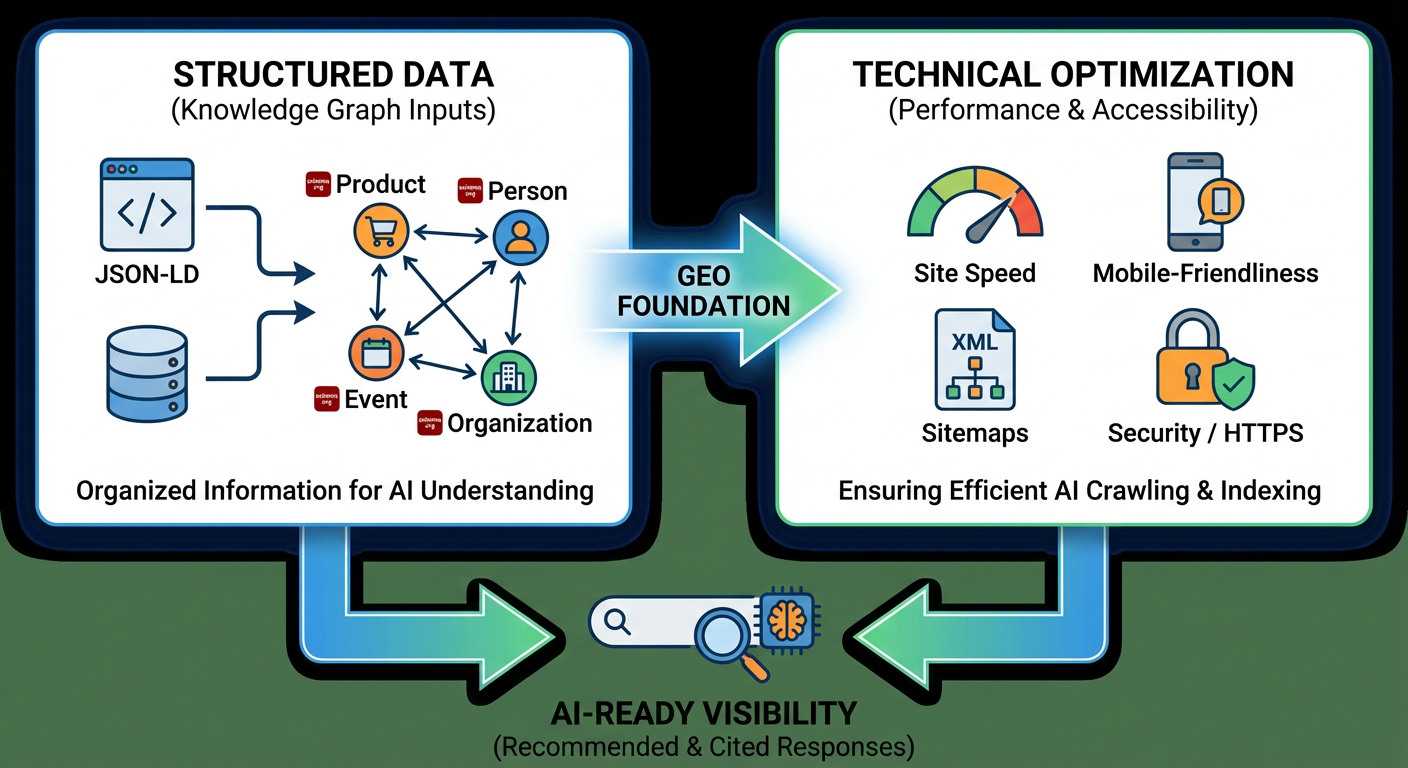
What they do: Implement schema markup, optimize your site structure, and ensure AI can easily parse and understand your content.
Startup fit: ★★★☆☆
Typical cost: $1,000-$3,000 one-time + $500-$1,000/month maintenance
Time to results: 1-3 months
Why it’s limited: Technical optimization is necessary but not sufficient. You still need the content and authority layer. However, if you already have great content, this can be a relatively quick win.
Best providers: Technical SEO specialists who’ve expanded into GEO.
AI Monitoring & Optimization Platforms
What they do: Track how often your startup appears in AI responses, which queries trigger citations, and provide recommendations for improvement.
Startup fit: ★★★★☆
Typical cost: $200-$800/month
Time to results: Immediate insights, 2-3 months for optimization impact
Why it’s valuable: You can’t optimize what you don’t measure. These platforms help you understand your current AI visibility and guide improvement efforts. Great for DIY-oriented founders.
Best providers: Newer platforms specifically built for AI citation tracking (not repurposed SEO tools).
Content Syndication & Distribution
What they do: Amplify your content across platforms where AI models crawl and learn, ensuring maximum exposure.
Startup fit: ★★★☆☆
Typical cost: $500-$2,000/month
Time to results: 3-6 months
Why it’s hit-or-miss: Distribution alone doesn’t guarantee quality citations. However, combined with strong content, it can accelerate AI model awareness of your brand.
Best providers: PR/distribution specialists who understand AI training data sources.
Competitor Citation Analysis
What they do: Analyze which competitors are getting cited by AI platforms and reverse-engineer their strategies for your startup.
Startup fit: ★★★★☆
Typical cost: $1,000-$3,000 one-time audit
Time to results: Immediate insights
Why it works: Understanding why AI recommends competitors helps you identify gaps and opportunities. This is excellent as a starting point before implementing broader GEO strategies.
Best providers: GEO consultants with competitive analysis expertise.
Red Flags: Services to Avoid
Not all GEO providers are created equal. Watch out for these warning signs:
1. “Guaranteed #1 AI rankings”
AI responses are probabilistic and context-dependent. Anyone guaranteeing specific rankings either doesn’t understand how AI works or is being dishonest.
2. Black-hat tactics
Some providers attempt to “poison” AI training data or manipulate responses through deceptive techniques. This can backfire spectacularly and damage your brand permanently.
3. Single-tactic focus
GEO requires a multi-faceted approach. Providers who claim one simple trick (schema markup, keyword stuffing, etc.) will solve everything are oversimplifying.
4. No measurement framework
If they can’t explain how they’ll measure success beyond vague promises of “increased visibility,” they’re not serious professionals.
5. Outdated “SEO thinking”
Providers who talk exclusively about keywords, backlinks, and domain authority without discussing conversational queries, entity optimization, or AI-specific strategies haven’t made the shift to GEO.
Budget-Conscious Strategies for Early-Stage Startups
If you’re pre-seed or bootstrapped, you might not have $3,000-$5,000/month for GEO services. Here’s how to approach it:
Option 1: The DIY Starter Kit ($200-$500/month)
- Subscribe to an AI monitoring platform ($200-$400/month)
- Invest time in creating high-quality, conversational content
- Implement basic schema markup yourself (plenty of free guides available)
- Focus on one or two key topic areas where you can become the definitive authority
Time investment: 10-15 hours/week
Expected timeline: 4-6 months to see meaningful citations
Option 2: The Hybrid Approach ($1,000-$2,000/month)
- Hire a GEO consultant for monthly strategy sessions (4-6 hours)
- Use AI monitoring tools
- Outsource specific content creation to freelancers
- Handle technical implementation with consultant guidance
Time investment: 5-8 hours/week
Expected timeline: 3-4 months to see meaningful citations
Option 3: The Sprint Model (One-time $3,000-$5,000)
- Engage a GEO consultant for an intensive 2-week sprint
- Get a complete audit, strategy, and implementation roadmap
- Implement recommendations internally over the following months
- Return for quarterly check-ins
Time investment: 15-20 hours/week during sprint, 5-8 hours ongoing
Expected timeline: 2-4 months to see meaningful citations
All three approaches can work if you’re committed and strategic. The key is consistency and quality over quick wins.
Making the Decision: A Framework for Choosing Your GEO Partner
Here’s a practical decision framework based on your startup’s stage and resources:
Pre-Seed / Bootstrapped (0-10 employees, limited funding)
Best option: DIY or GEO consultant on project basis
Budget range: $500-$2,000/month or one-time sprints
Priority: Build foundational content and authority in your core topic area
Key metric: Get cited for your top 5-10 money queries within 6 months
Seed Stage ($1M-$3M raised, 10-30 employees)
Best option: Hybrid -consultant strategy + platform tools
Budget range: $2,000-$4,000/month
Priority: Establish multi-platform presence and systematic content production
Key metric: 50+ monthly citations across target queries
Series A+ ($3M+ raised, 30+ employees)
Best option: Full-service GEO agency or in-house specialist
Budget range: $4,000-$10,000+/month
Priority: Dominate your category in AI recommendations and monitor competitive positioning
Key metric: Top-3 citation positioning for 80%+ of category queries
Remember: marketing automation and data-driven strategy apply to GEO just as they do to other channels. Start with measurement, then optimize systematically.
The Future of GEO Services for Startups
Looking ahead to the rest of 2026 and beyond, here are the trends we’re seeing:
1. Vertical-specific GEO specialists
Expect to see GEO agencies specializing in SaaS, fintech, healthcare, or other verticals with deep understanding of industry-specific AI platforms.
2. Real-time optimization
As AI models update more frequently, GEO services will shift from quarterly optimizations to continuous, real-time adjustments based on citation performance.
3. Voice and multimodal integration
GEO will expand beyond text to optimize for voice assistants, image generation prompts, and video-based AI interactions.
4. Attribution and ROI tracking
Better tools for connecting AI citations to actual conversions and revenue, making GEO measurement as sophisticated as paid search attribution.
5. Regulatory considerations
As AI platforms face scrutiny around bias and representation, there may be guidelines or best practices that affect GEO strategies -especially in regulated industries.
For startups, the message is clear: getting started with GEO now positions you ahead of the curve before the market becomes saturated.
Final Recommendations
After reviewing the GEO services landscape for startups, here’s our bottom-line advice:
If you can only do one thing: Invest in creating genuinely authoritative, helpful content in your niche. AI models reward expertise and usefulness above all else.
If you have limited budget: Start with an AI monitoring platform and a one-time consultant audit to understand where you stand and what your highest-leverage opportunities are.
If you have moderate budget: Hire a specialized GEO consultant or boutique agency on a 3-month trial. Measure rigorously and continue only if you see clear citation improvements.
If you have significant budget: Engage a full-service GEO agency but maintain close oversight, demand transparent reporting, and ensure they’re not just repurposing SEO tactics.
For all startups: Remember that GEO is fundamentally about providing value. The AI models that cite you are simply reflecting the quality and authority of your content. There are no shortcuts, but there are smarter strategies.
The startups winning in AI citations aren’t necessarily those spending the most -they’re the ones thinking strategically about how to become the definitive voice in their space. That’s a competition any startup can win with the right approach.
Ready to get started with GEO for your startup? Our team at Emarketed specializes in affordable, results-driven GEO strategies for early-stage companies. We understand startup constraints and focus on high-impact, capital-efficient approaches that deliver measurable citations within 90 days. Contact us to schedule a free GEO audit and see where you stand in AI recommendations today.